




Try these creative garden tips from our readers
1. Winning reader tip: Movable fences hide garden supplies
Without a shed or work area in my garden to store extra pots, bags of potting soil, and other gardening supplies, my shady wooded area became an unsightly mess. I solved this problem by creating movable fences, which allow me to easily get to my stuff and to hide it when access is not needed. All I did was purchase several sections of wood fence panels and staple black privacy-fence screen fabric to the back. Then I lean the fence panels against adjacent trees, but they can also be supported by large stakes.
—Nancy Kressin, West Roxbury, Massachusetts
2. Tiles as edging materials
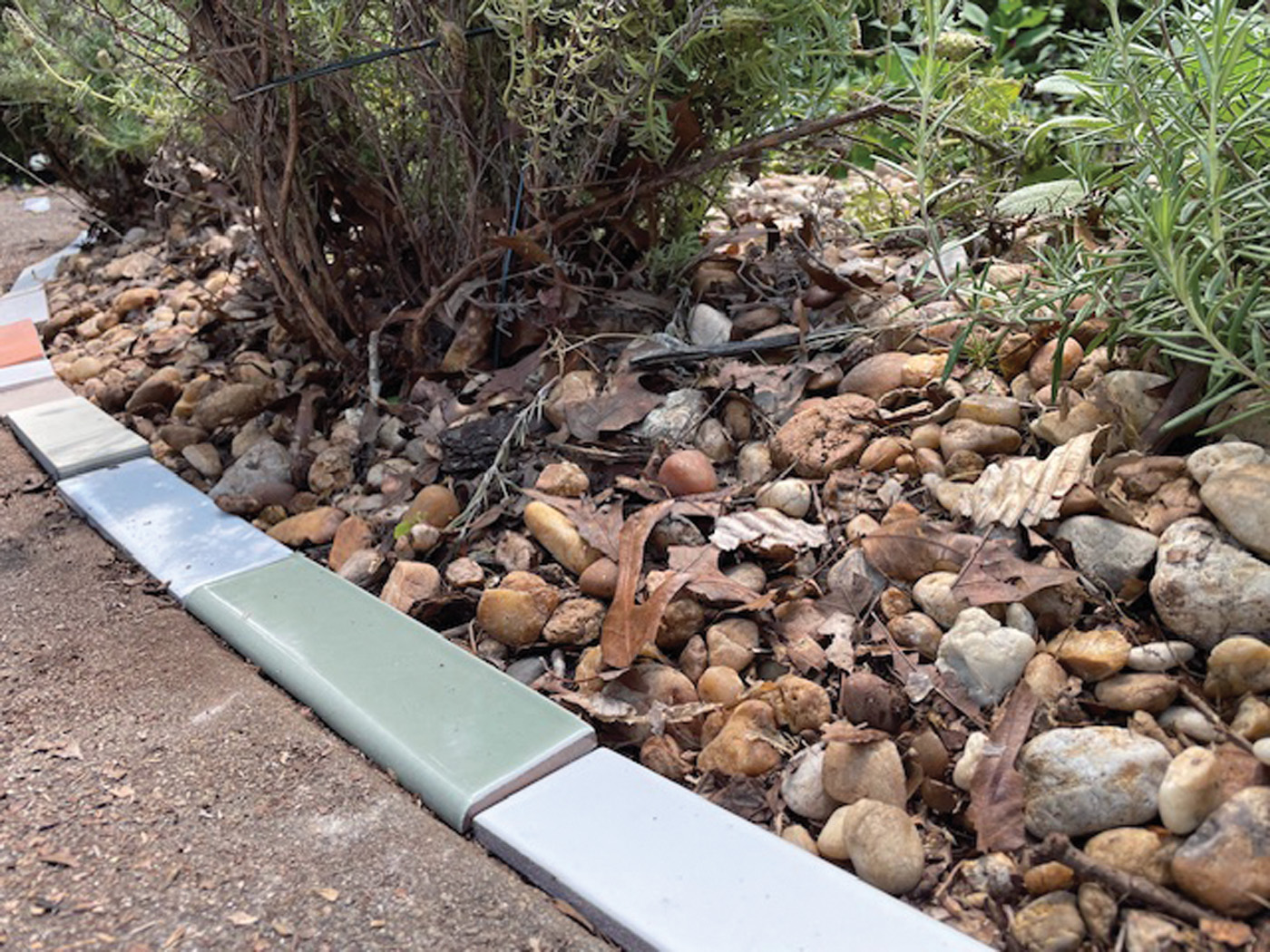
I had a few surplus wall tiles, which I added to some my neighbors were giving away, and created a border for my front garden. Not only did this give me an inexpensive edging material, but it also saved those gorgeous tiles from the landfill.
—Caroline Lontoc-Diaz, Doraville, Georgia
3. Prechilling perennial seed hack for snowbirds
I have some insights about starting perennials that may be helpful to folks who don’t winter in their northern homes. We go from central New York to southwestern Florida from mid-November to mid-April. I order seeds while I’m in Florida, and when they arrive, I place them in the salad drawer of my fridge in a closed plastic bag. That gives them the cold three-month minimum to replicate what winter would do.
When I get back north, I plant them in the house as directed on each package and cover all trays with a lightweight, clear plastic sheet that is supported by a frame. They sit on a table in a sunny area on heat mats, and germination happens within days. As they grow, I move them to individual cells or pots. I use a peat-free mix of coco bricks, chicken compost, and vermiculite or rice hulls. No fertilizer is needed, and the deer are less likely to chomp them without the salt residue. In mid-May, every pot goes into my pop-up 8-foot by 8-foot greenhouse and gets planted out after mid-June.
—Nancy Hook, Cazenovia, New York
Read More: Get a Head Start with Winter Sowing
4. Overwintering leeks
Leeks can be frustrating to remove from the soil in early summer when the weather is dry. Sometimes I hose the bed with water and that helps, but even then, some of the leeks split when I try to extract them. The split bulbs that are stuck in the soil continue
to live and show themselves in late summer and early fall, but they are small and may have tiny bulbils hanging on. When the
soil is damp, I divide some of the small leftovers and give them plenty of space to overwinter in the soil, where they will sprout and grow in the spring.
—Mary Crum, Bonita Springs, Florida
5. Bargain saucers for plant pots
Instead of paying top dollar for special saucers under my ceramic flowerpots, I find inexpensive dishes at thrift shops or dollar stores. Dinner plates in matching colors work very well and look great.
—Barb Coe, Newport, Kentucky
See More Reader Tips: 5 Everyday Hacks for Garden Chores
6. Shelter for a garden speaker
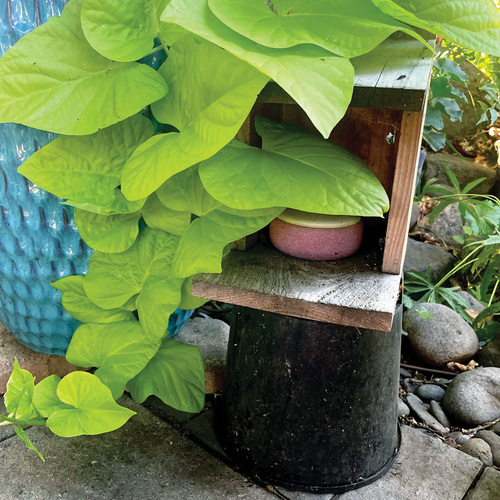
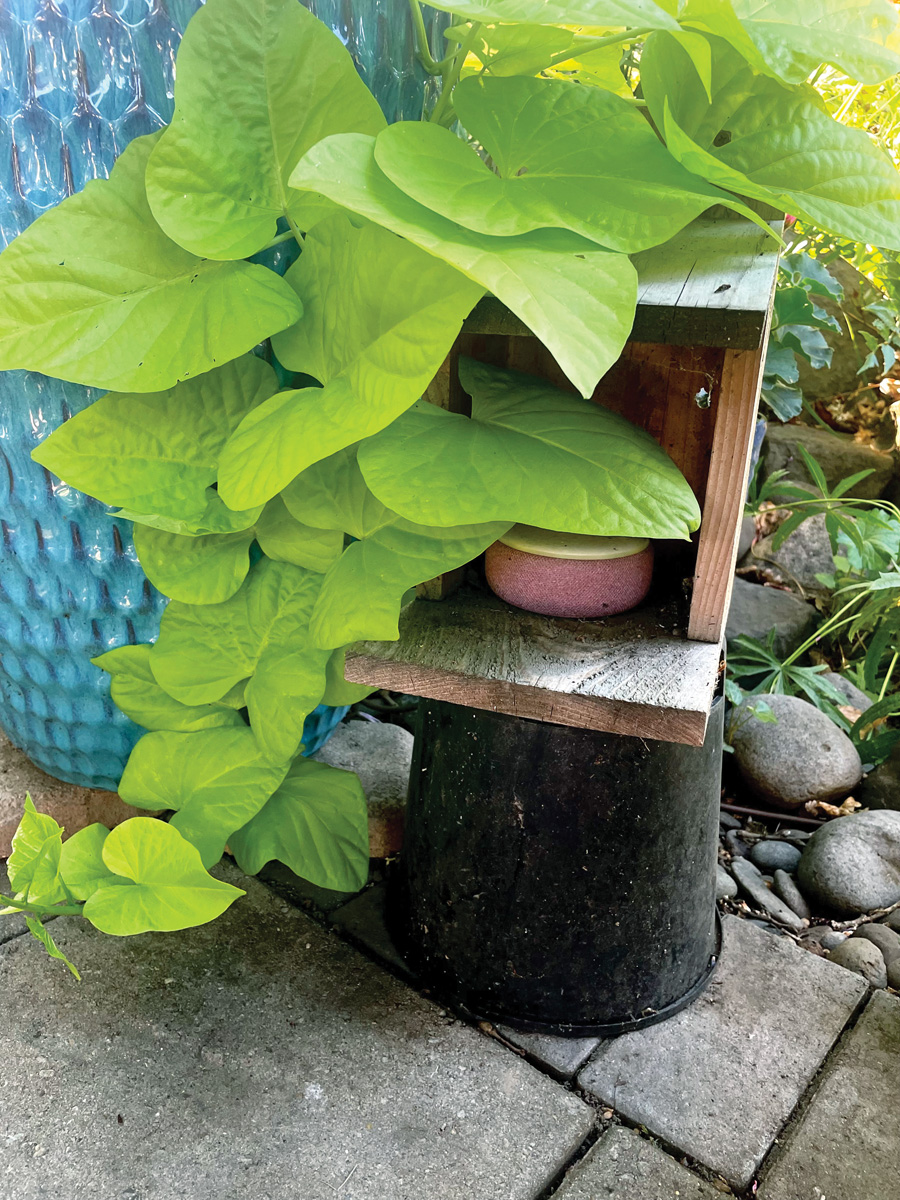
An unfinished birdhouse set on a pot makes a fine protective shelter for a smart speaker in the garden. Add a sweet potato vine trailing down from a neighboring planting pot, and no one will know where the background ambient sound is coming from. The shelter protects the electronic device from the occasional summer rain shower or a wayward squirt from a watering hose.
—Jeffrey Steiner, Albany, Oregon
If you have a gardening tip, send it to fg@taunton.com. The prize for the winning tip is a one-year subscription to Fine Gardening with an All Access membership!
Photos: courtesy of the contributors
Read More:
See More of This Magazine Issue
Watch Our Gardening Videos on YouTube
Sign Up for Fine Gardening All Access!
Fine Gardening Recommended Products
Planting in a Post-Wild World: Designing Plant Communities for Resilient Landscapes
Fine Gardening receives a commission for items purchased through links on this site, including Amazon Associates and other affiliate advertising programs.
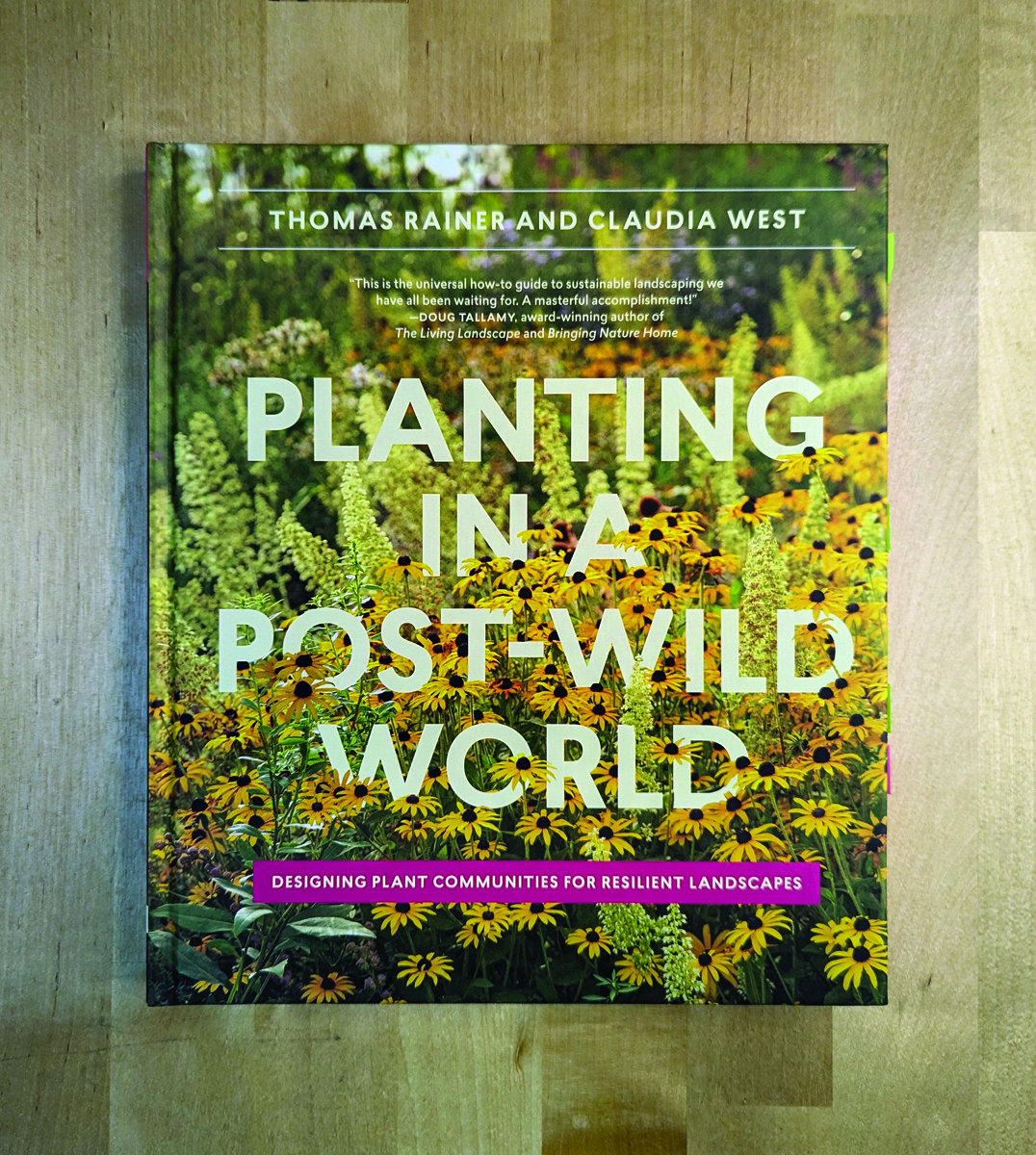
Featuring gorgeous photography and advice for landscapers, Planting in a Post-Wild World by Thomas Rainer and Claudia West is dedicated to the idea of a new nature—a hybrid of both the wild and the cultivated—that can nourish in our cities and suburbs.
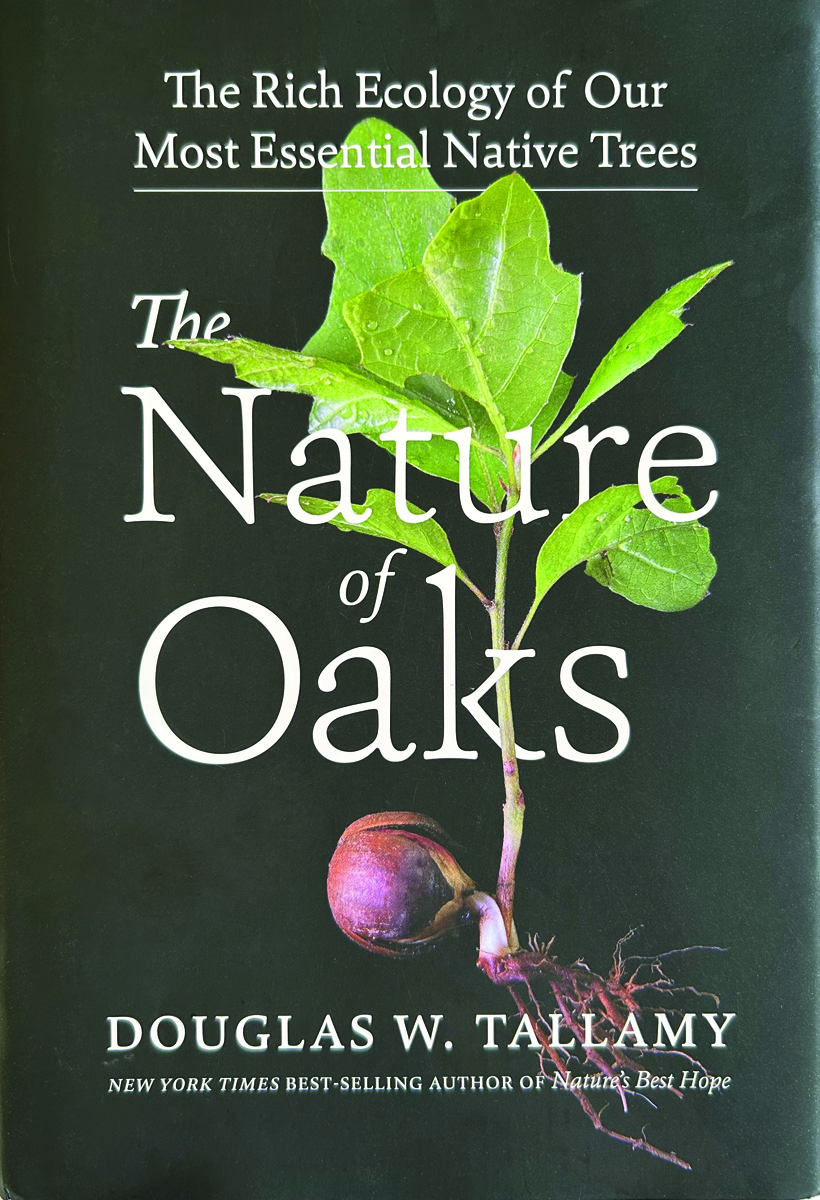
The Nature of Oaks: The Rich Ecology of Our Most Essential Native Trees
Fine Gardening receives a commission for items purchased through links on this site, including Amazon Associates and other affiliate advertising programs.
The Nature of Oaks reveals what is going on in oak trees month by month, highlighting the seasonal cycles of life, death, and renewal. From woodpeckers who collect and store hundreds of acorns for sustenance to the beauty of jewel caterpillars, Doug Tallamy illuminates and celebrates the wonders that occur right in our own backyards. He also shares practical advice about how to plant and care for an oak, along with information about the best oak species for your area.
ARS Telescoping Long Reach Pruner
Fine Gardening receives a commission for items purchased through links on this site, including Amazon Associates and other affiliate advertising programs.
Telescopes from 4 to 7′. Cut and Hold (160) Blades. Drop forged blades for unsurpassed long lasting sharpness. Lightweight, 2.3 lbs., for continued use. Perfectly balanced for easy pruning.