



Almost any garden could benefit from this jewel of a penstemon
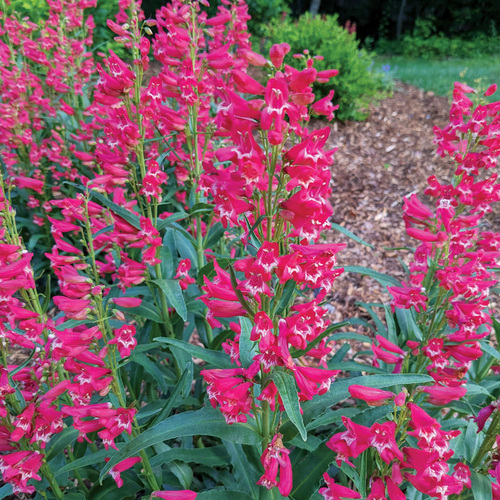
Call us pessimists, but we don’t normally hold out much hope for penstemons grown outside of the Mountain West. Whether it’s their resentment of wet winters, or the fungal diseases that plague them in Southern locales, this beautiful perennial always seemed better suited to places with perfect views of the Rockies. So it was quite shocking when the Bejeweled™ series showed up and cultivar after cultivar performed well in gardens along the East Coast and in the South. ‘Rose Rhinestones’ is the latest introduction to this group, and for two years it has stood up to humid summers and soggy winters without skipping a beat. The blue-green foliage looks good all year, and the rosy-pink, tubular blooms are a favorite of energetic hummingbirds. If you’ve tried and failed with penstemons in the past, it’s time to try again.
‘Rose Rhinestones’ bearded penstemon
Penstemon barbatus ‘Rose Rhinestones’
Zones: 4–8
Size: 14 to 18 inches tall and 20 to 24 inches wide
Conditions: Full sun; average, fertile soil
Native range: Southwestern United States and Northern Mexico
Learn more:
See More Super Cool Plants!
Watch Gardening Videos on Fine Gardening‘s YouTube Channel
Listen to Our Podcast: Let’s Argue About Plants!
Stacie Crooks is a landscape designer in Seattle and also a contributing editor.
Fine Gardening Recommended Products
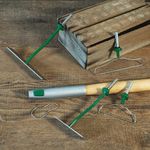
Johnny’s Selected Seeds Connecta® Cultivation Kit
Fine Gardening receives a commission for items purchased through links on this site, including Amazon Associates and other affiliate advertising programs.
Choose the right tool head for the job and switch out quickly with a simple push-button release. Includes the Connecta receiver, Connecta Collinear 4 head, Connecta Collinear 7 head, Connecta Contour Wire 4 head, Connecta Contour Wire 6 head, a sustainably harvested oiled ashwood handle, and a stainless-steel carrying clip.
National Wildlife Federation®: Attracting Birds, Butterflies, and Other Backyard Wildlife, Expanded Second Edition (Creative Homeowner) 17 Projects & Step-by-Step Instructions to Give Back to Nature
Fine Gardening receives a commission for items purchased through links on this site, including Amazon Associates and other affiliate advertising programs.
From the National Wildlife Federation, the largest U.S. nonprofit conservation organization, with 6 million members and 51 state and territorial affiliated organizations. 17 step-by-step projects that everyone can do together make getting your family back to nature easy, educational, and fun. Over 200 color photos of backyard wildlife habitats and the wide variety of creatures they attract, plus step-by-step photos and illustrations for family projects. Learn wildlife-friendly practices for gardening, landscape design, supplemental feeders, birdbaths, nesting places, and more. Learn how to attract backyard pollinators, from bees and butterflies to beetles, bats, and hummingbirds
Get your garden certified by the National Wildlife Federation’s Garden for Wildlife(TM) program by following the included certification application checklist.
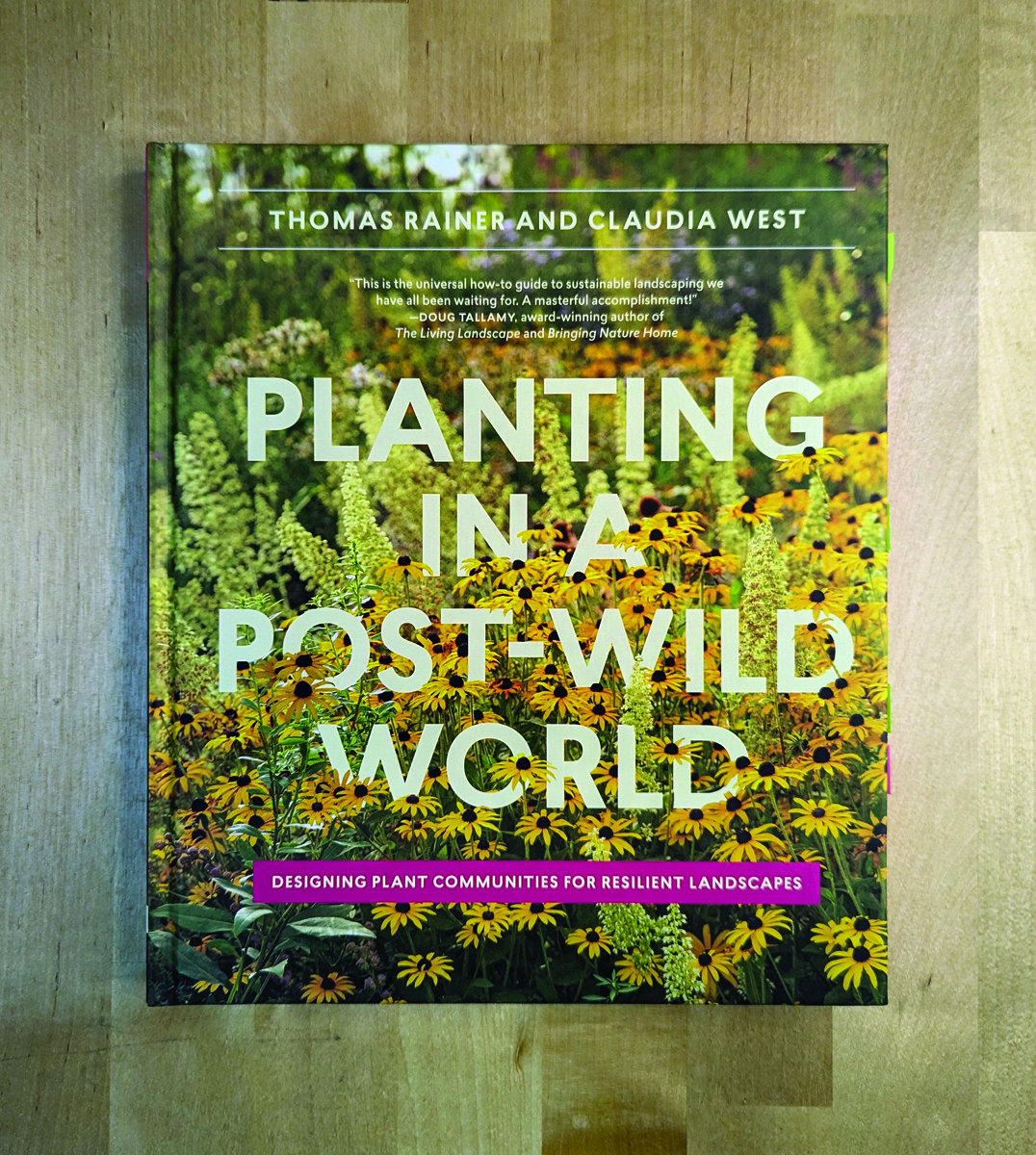
Planting in a Post-Wild World: Designing Plant Communities for Resilient Landscapes
Fine Gardening receives a commission for items purchased through links on this site, including Amazon Associates and other affiliate advertising programs.
Featuring gorgeous photography and advice for landscapers, Planting in a Post-Wild World by Thomas Rainer and Claudia West is dedicated to the idea of a new nature—a hybrid of both the wild and the cultivated—that can nourish in our cities and suburbs.