

Happy Monday GPODers!
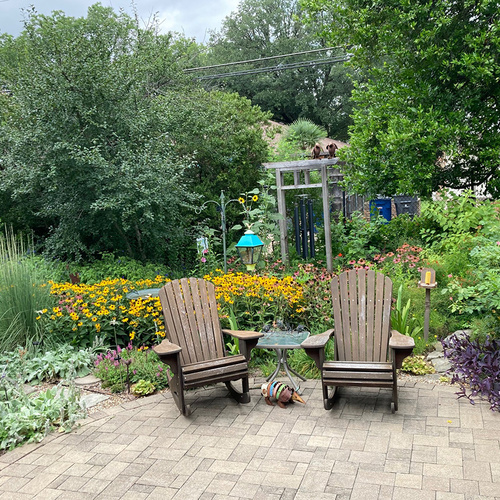
Last summer we were introduced to Sharon Holmes and her incredible wildlife-friendly garden in Dallas, Texas (Check out that submission here: Survivors in Sharon’s Dallas Garden). That introduction focused on her fabulous front garden during spring, and today she has returned with an update that highlights her flower-filled backyard. Sharon doesn’t have a ton of space in her back garden, but has made the most of every possible inch and created a sustainable and beneficial landscape in the process.
I cannot tell you how happy I am to see the Fine Gardening blog in my inbox! The creativity of the gardens I get to see is so inspiring.
I was delighted to share my front yard, and I decided to submit some pictures of my backyard. I am an organic gardener, and have both a National Wildlife Habitat and a Texas Wildscapes certification since 1998. Learning about these programs and supporting native plants and wildlife changed my gardening. We ditched the lawn in the backyard. We’ve had a wet early summer, and things are now out of control! This summer, a Cooper’s hawk (Astur cooperii) decided to nest in our front yard magnolia, and we took down our bird feeders to limit their free lunches.
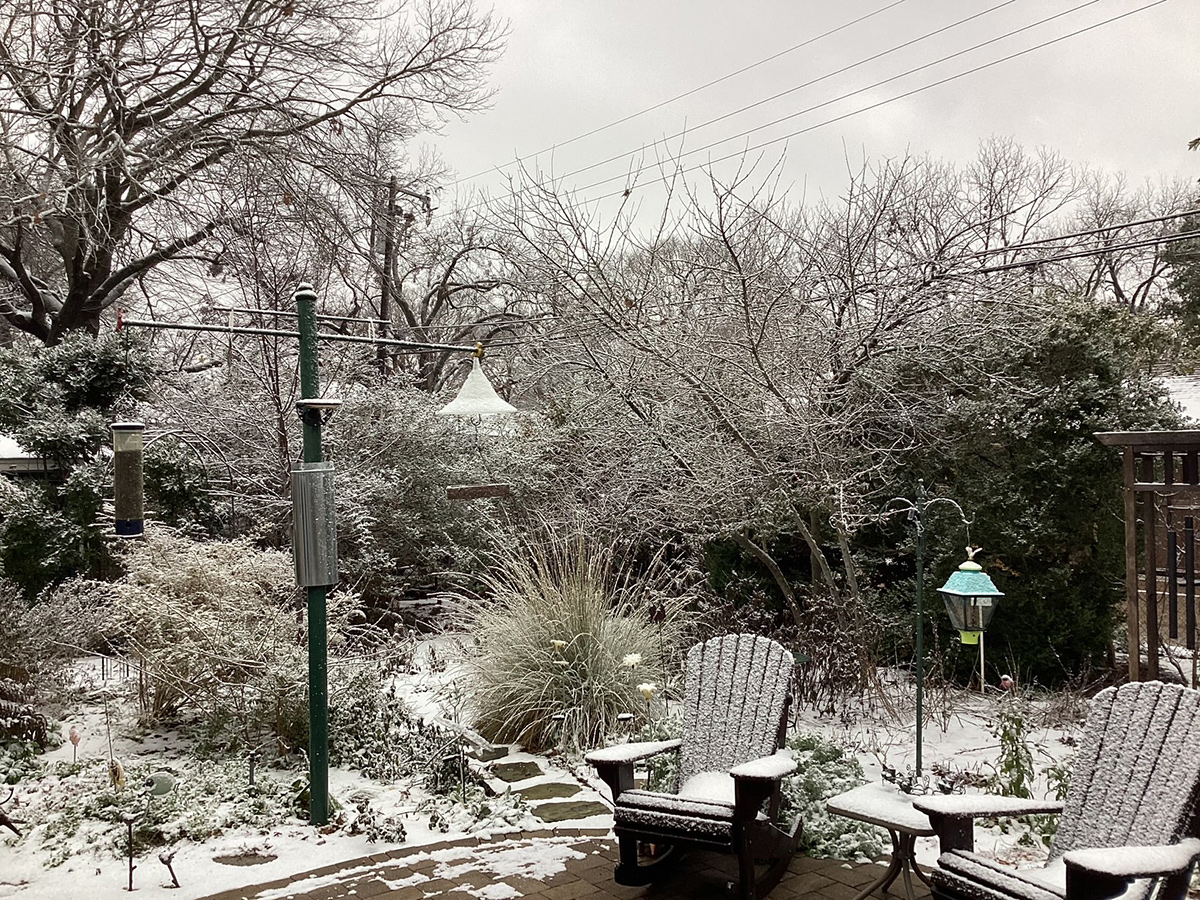 I wanted to submit the view in January this year (snow!)
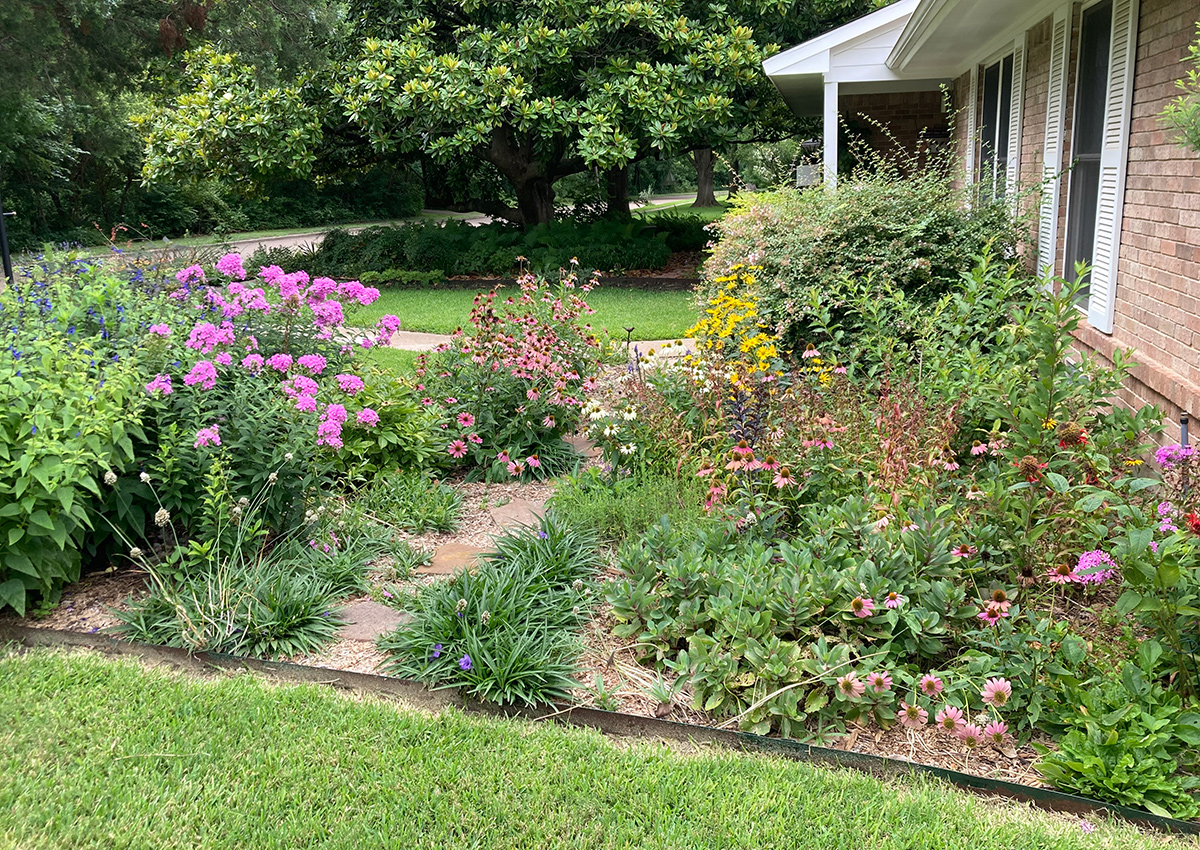 I’ll start in the front yard you saw last year, and walk to the backyard via the east garden.
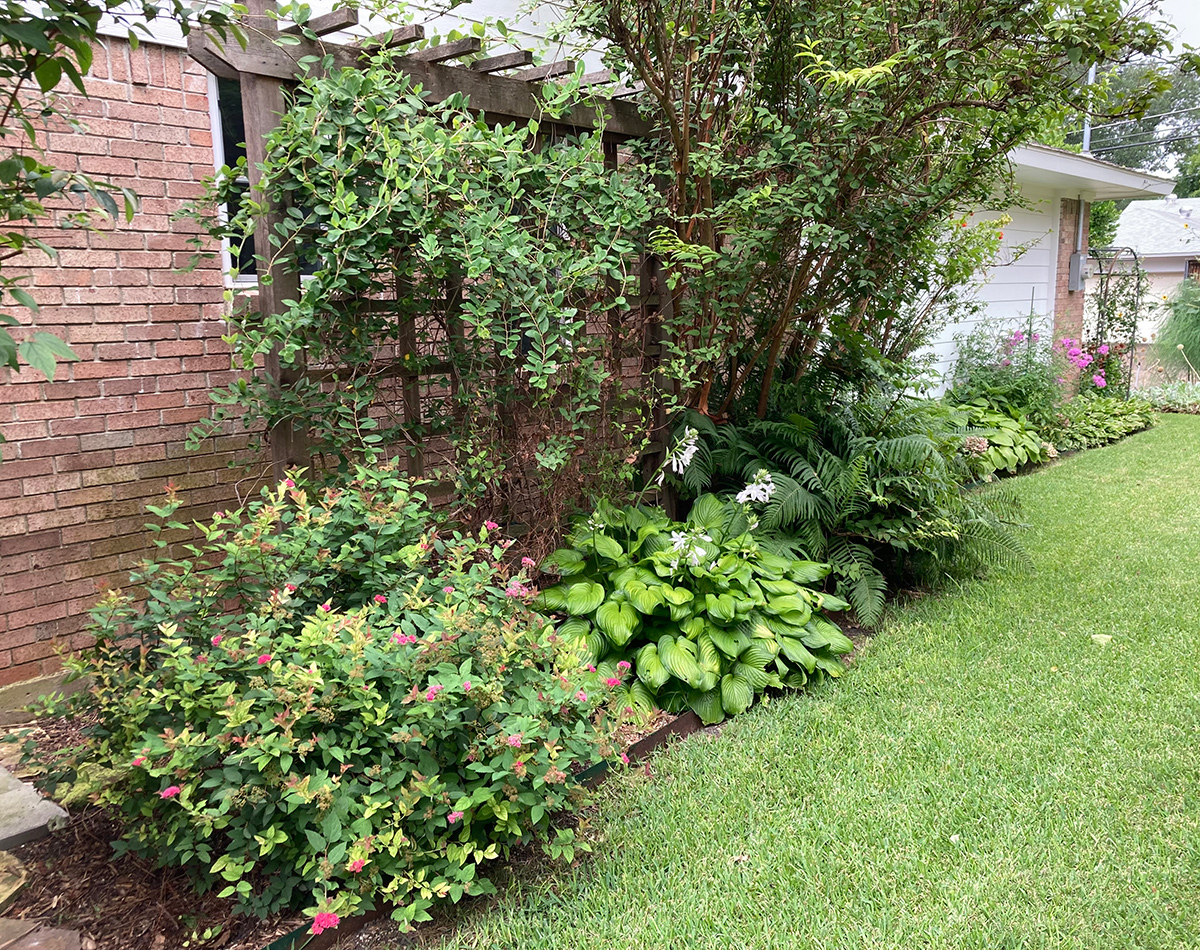 The east side garden has a Double Play Doozie spirea (Spiraea x ‘NCSX2’, Zones 3–8), a yellow native honeysuckle (Lonicera flava, Zones 5–8) on a trellis, a deutzia, ferns, Guacamole hosta (Hosta ‘Guacamole’, Zones 3–8), pomegranate (Punica granatum, Zones 8–10), Aphrodite hosta (Hosta ‘Aphrodite’, Zones 3–8), pink phlox, and box-store hosta my papa gave me when we moved in.
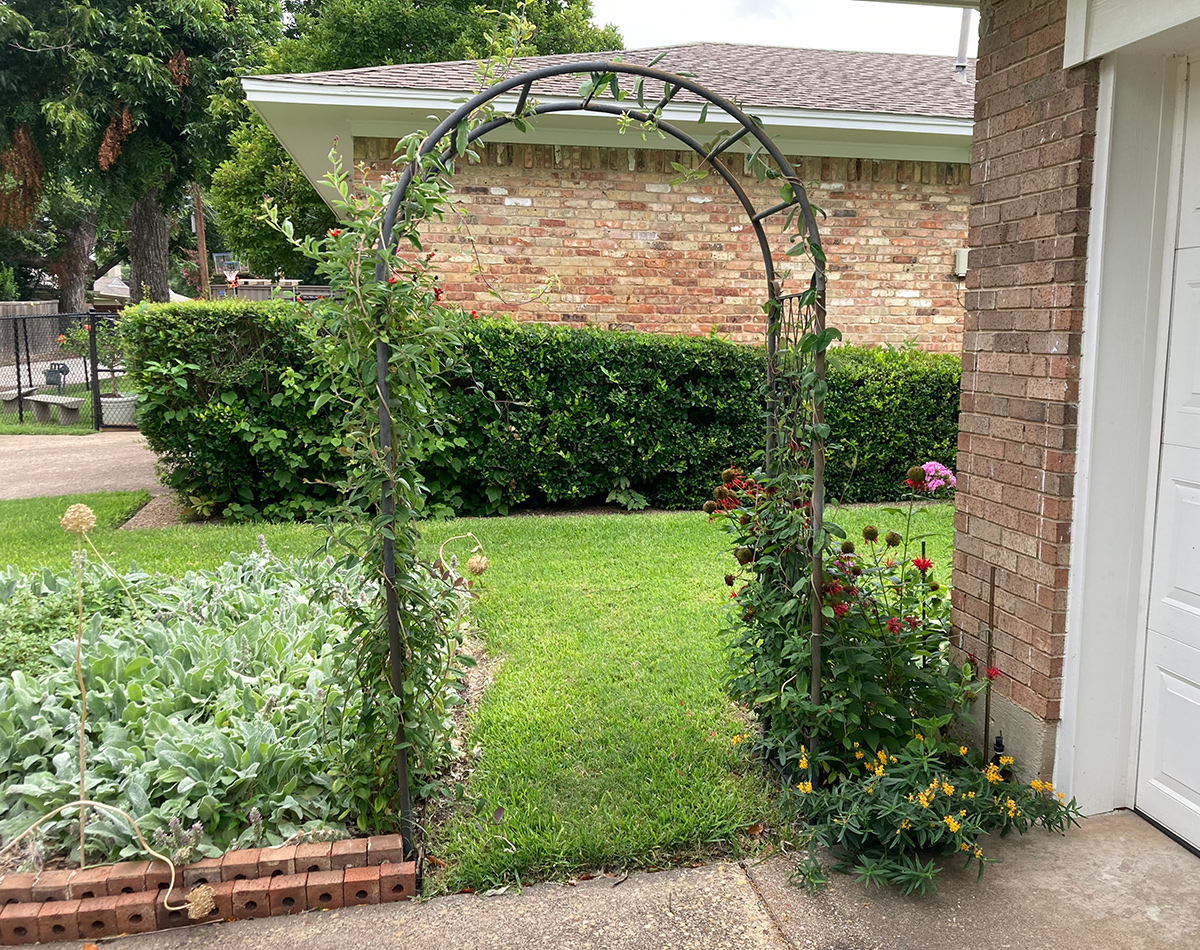 At the backyard gate, looking back on the east arch with a Scentsation honeysuckle (Lonicera periclymenum ‘Scentsation’, Zones 4–9), relocated there this spring. The Jacob Cline bee balm (Monarda didyma ‘Jacob Cline’, Zones 4–9) is taking a rest, the butterfly weed below hasn’t stopped since spring.
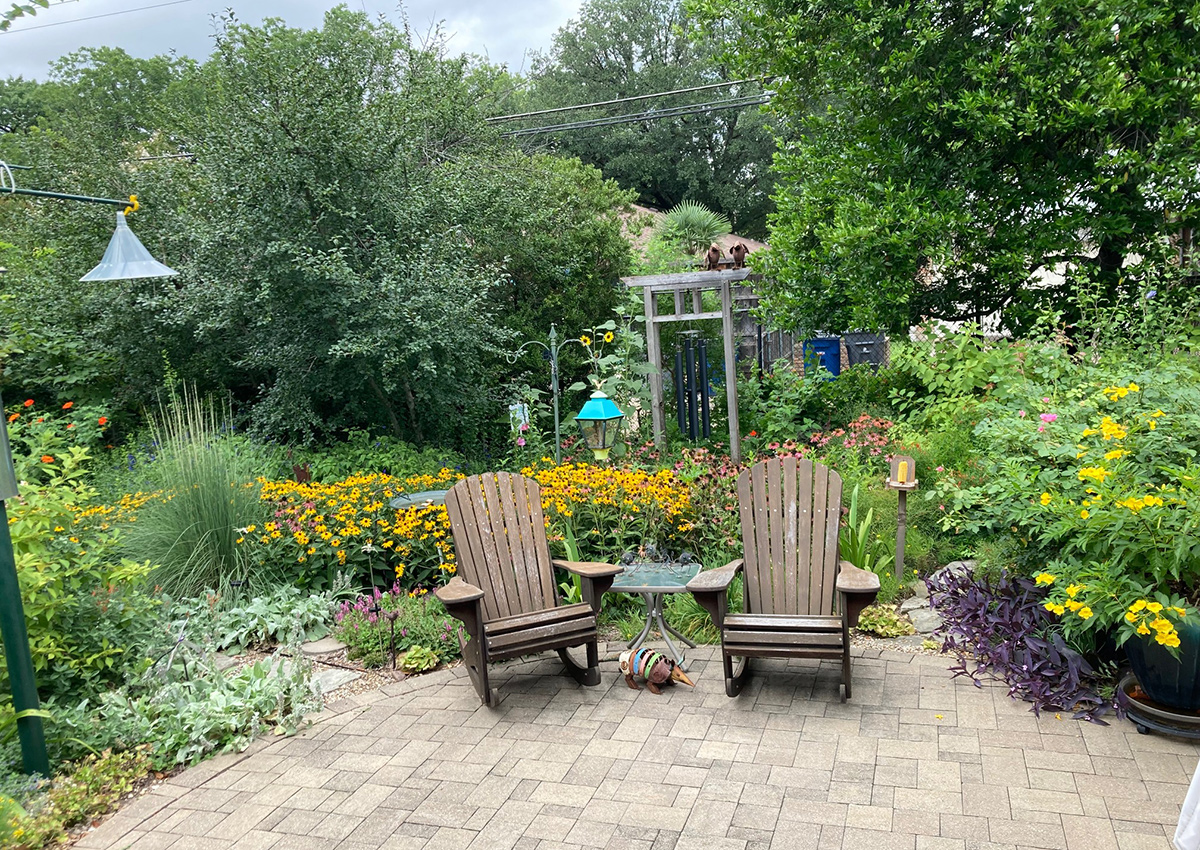 Overview of the backyard. Ignore the neighbor’s trash bins peeking into the garden, the Turk’s cap (Malvaviscus arboreus var. drummondii, Zones 7–11) will hide them later this year. Goldsturm Black-eyed Susan (Rudbeckia fulgida var. sullivantii ‘Goldsturm’, Zones 3–9), Mexican sunflower (Tithonia rotundifolia, annual), Lindheimer’s muhly (Muhlenbergia lindheimeri, Zones 6–9), possumhaw (Ilex decidua, Zones 5–9), Black and Blue salvia (Salvia guaranitica ‘Black & Blue’, Zones 7–10), coneflower, beautyberry (Callicarpa americana, Zones 6–10), esperanza (Tecoma stans, Zones 10–11).
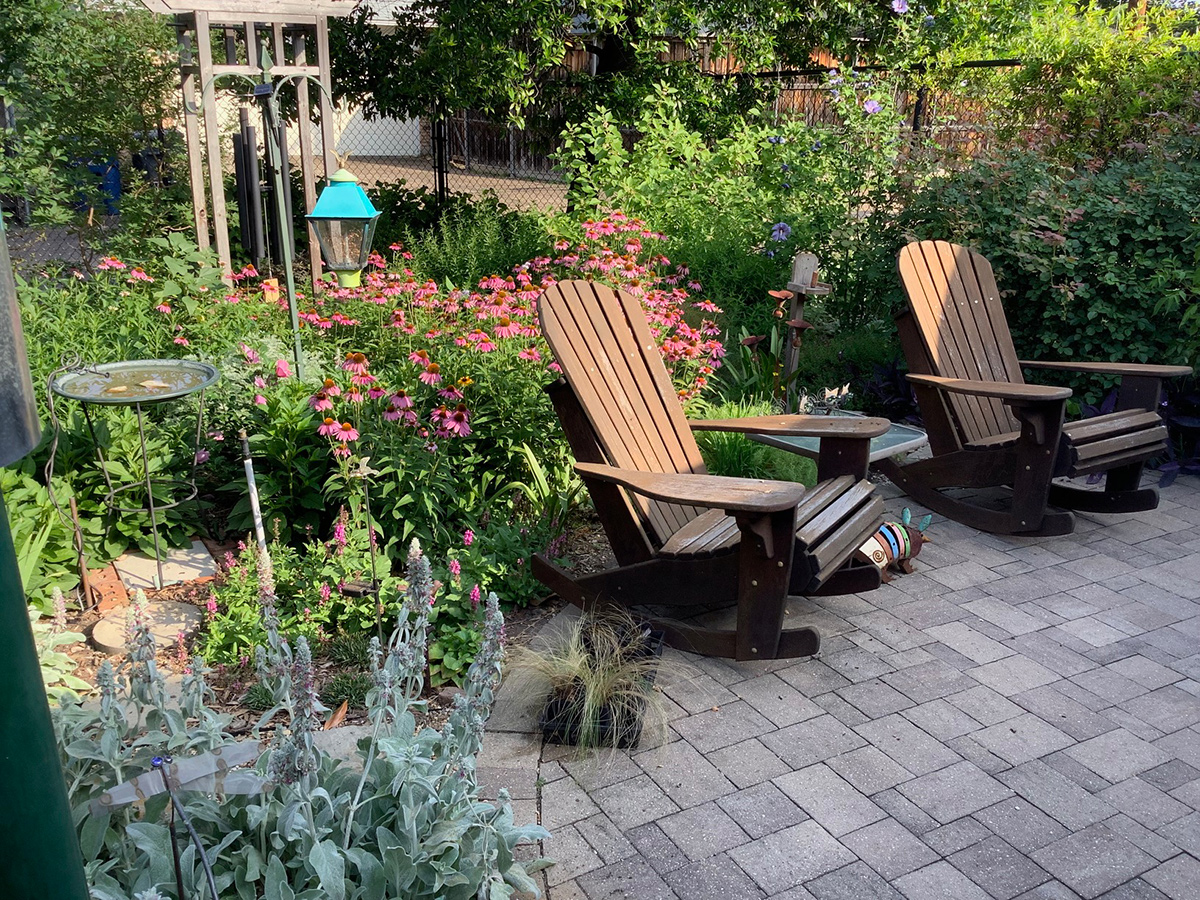 |
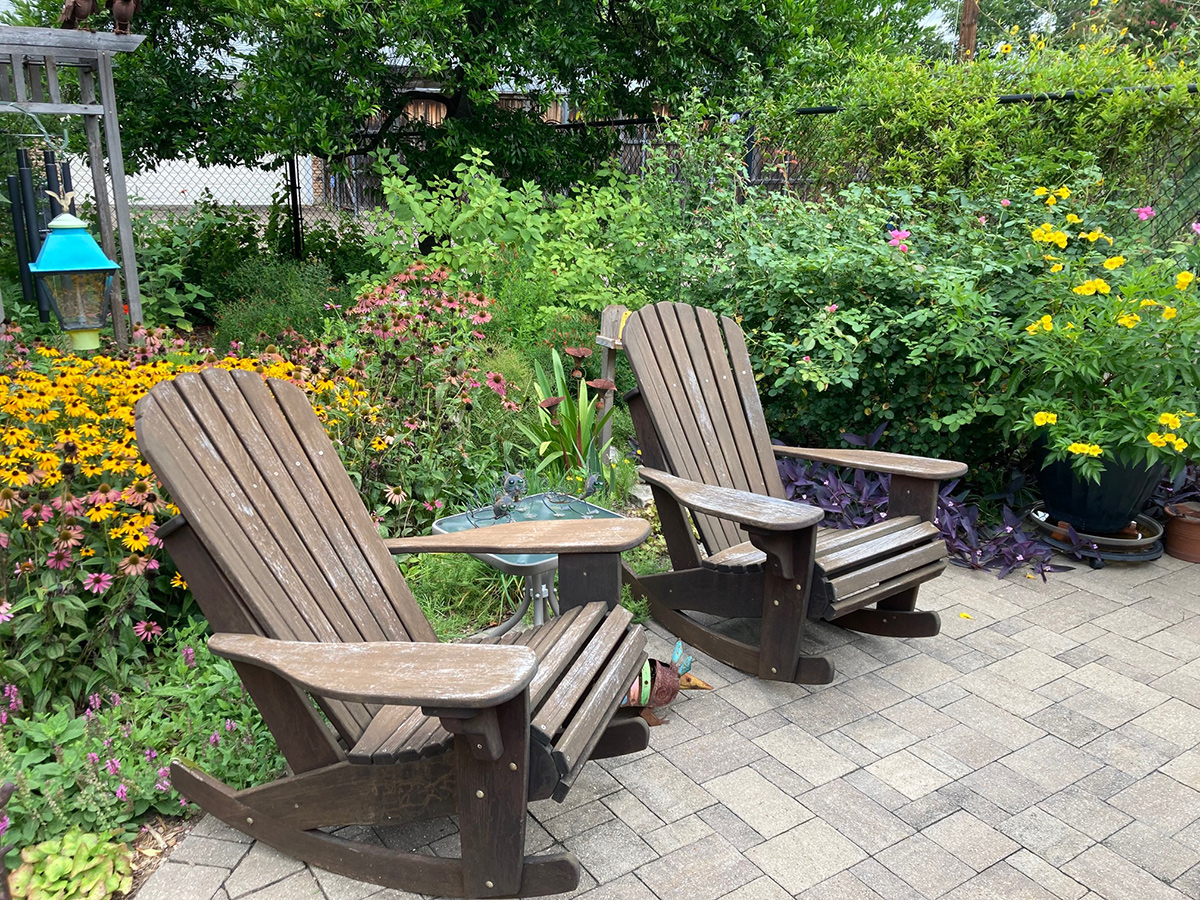 |
Two views, one early June, one July. Coneflowers give way to Goldsturm Black-eyed Susans. The potted Gold Star esperanza (Tecoma stans ‘Lonesp’, Zones 9–11) is blooming, the Pink Nebula salvia (Salvia nemorosa ‘Pink Nebula’, Zones 4–9), purple spiderwort (Tradescantia pallida, Zones 10–11), beautyberry, Katy Road Pink rose (A.K.A. ‘Carefree Wonder’) (Rosa ‘Meipitac’, Zones 4–9).
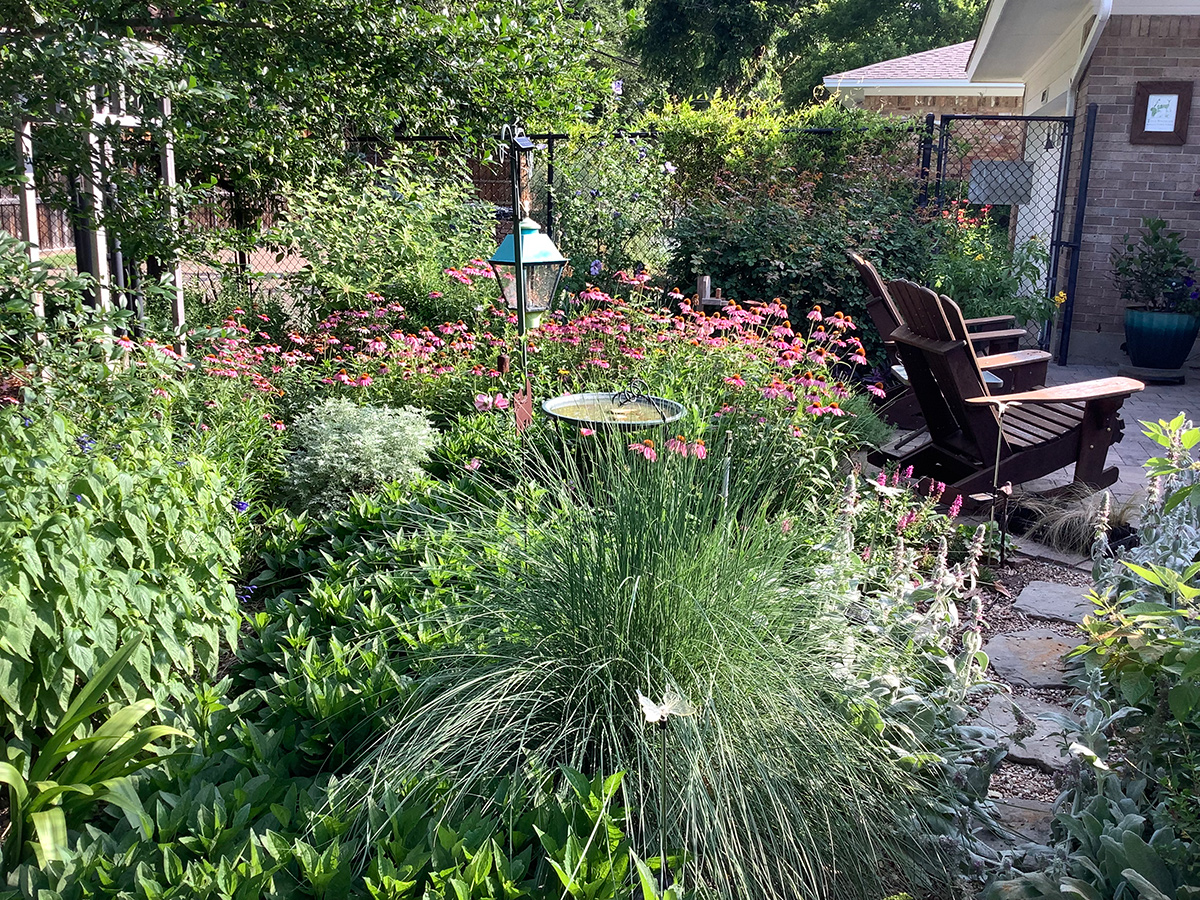 Stepping back, Lindheimer’s muhly, Black and Blue salvia, Twist of Lime abelia (Abelia x grandiflora ‘Hopley’s’, Zones 6–9). redbud, possumhaw, and cherry laurel trees (Prunus laurocerasus, Zones 6–8).
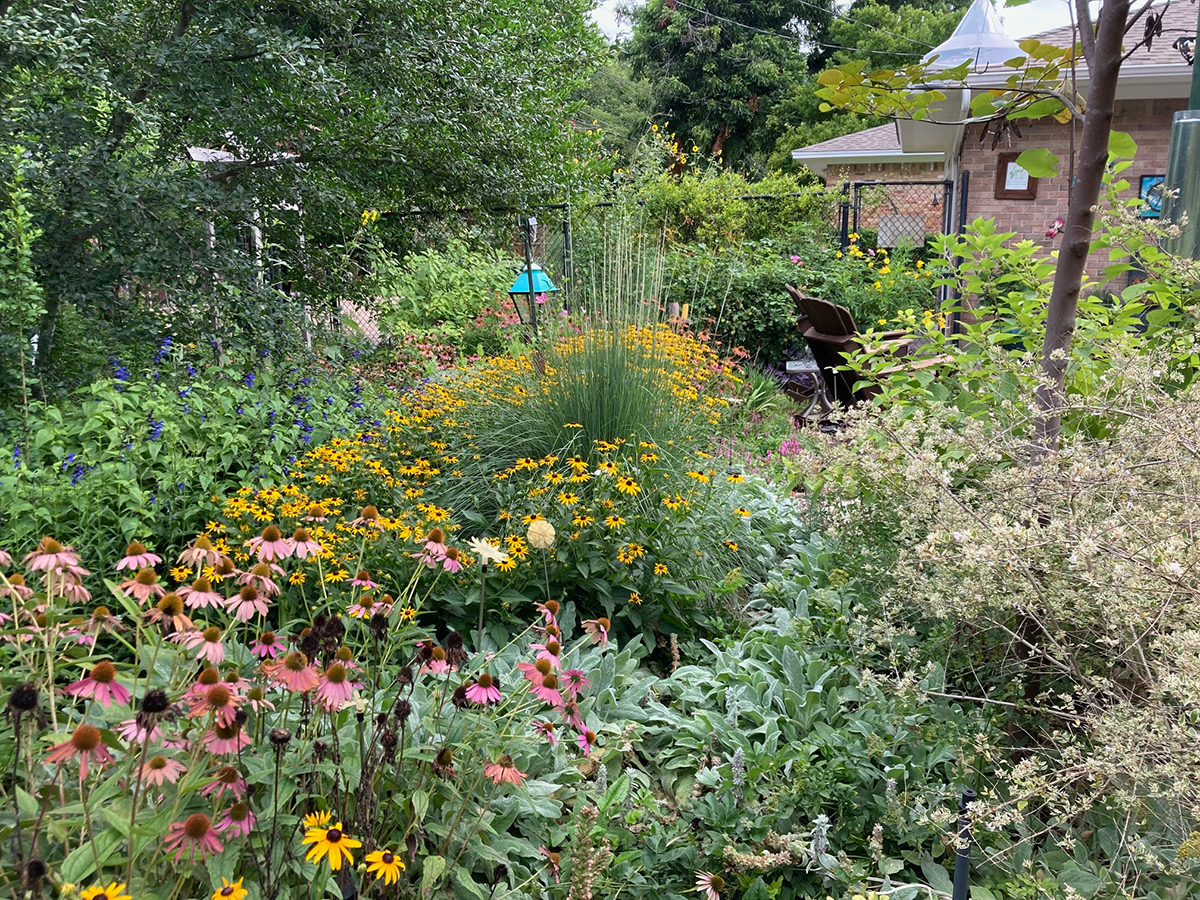 In just a month the path has been covered!
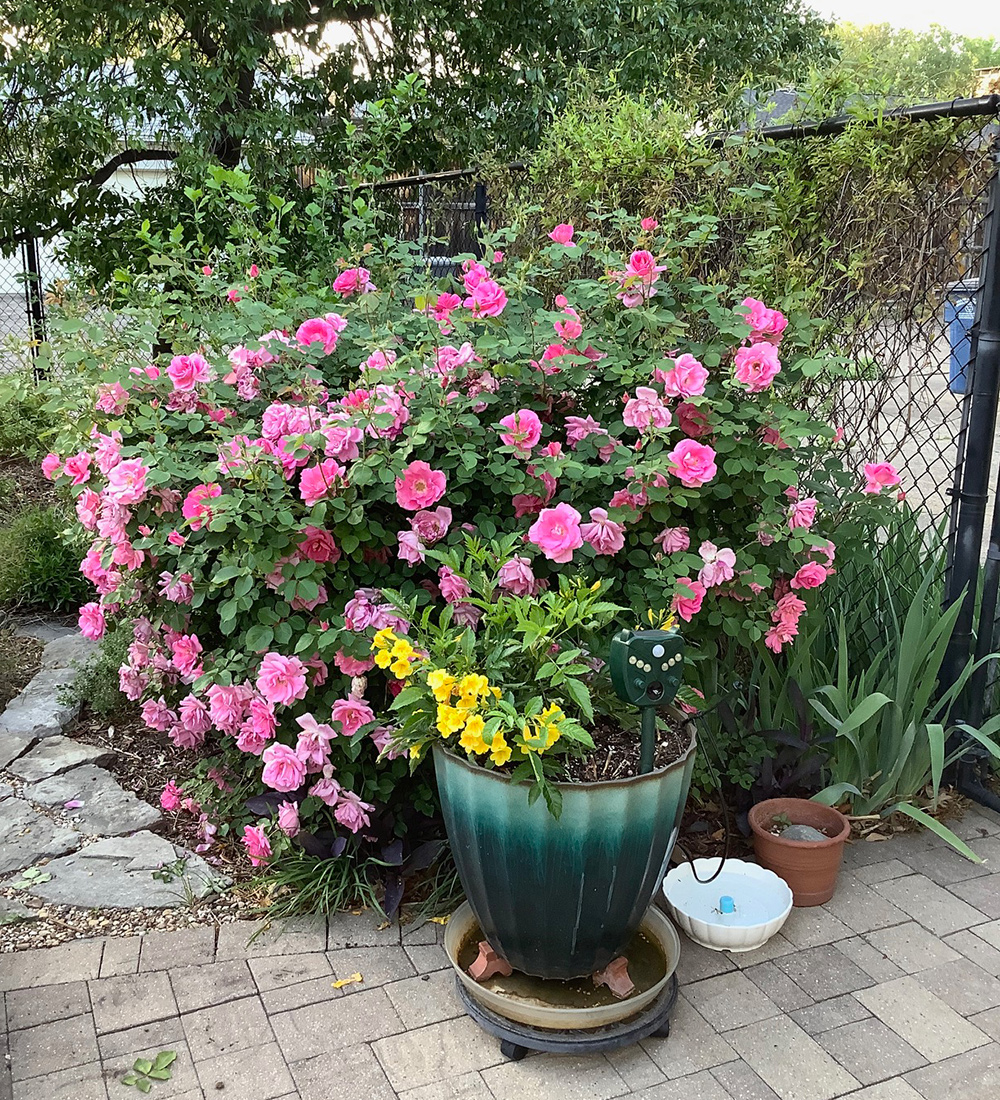 Two antique roses survived the rose rosette virus. Here they are from April: Carefree Wonder pink with a cherry laurel behind…
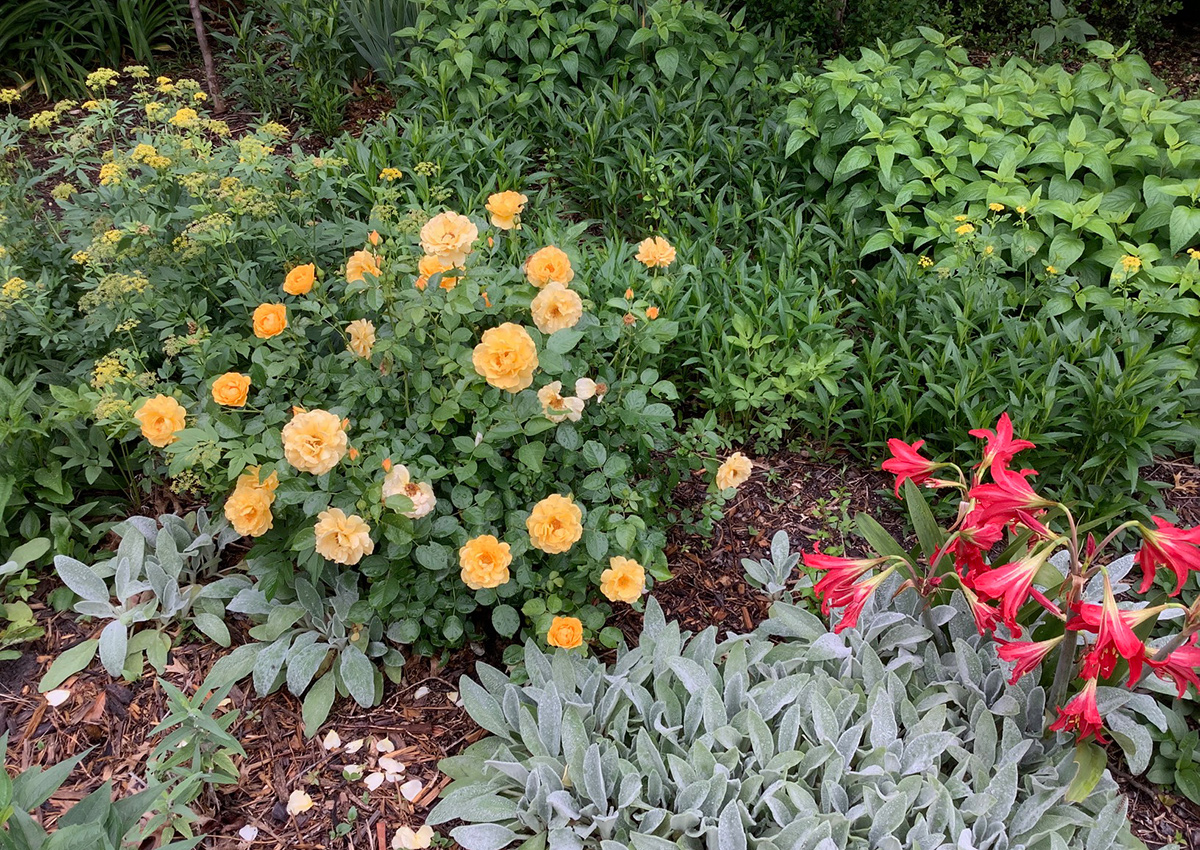 And Harison’s Yellow (Rosa foetida ‘Harison’s Yellow’, Zones 3–9). Harison’s is near some golden alexander (Zizia aurea, Zones 3–8), lambs ear (Stachys byzantina and cvs., Zones 4–8), and a red antique garden amaryllis.
Thank you so much for sharing more of your gorgeous gardens with us, Sharon! It’s incredibly inspiring to see the beauty you are able to cultivate while prioritizing beneficial plants and wildlife-friendly practices.
Is your garden a haven for local wildlife and pollinators like Sharon’s? What plants native to your region do you enjoy growing? Let us know in the comments below how you garden in harmony with the ecosystem, or consider sharing your pollinator paradise with Garden Photo of the Day! Follow the directions below to submit photos via email, or send me a DM on Instagram: @agirlherdogandtheroad.
We want to see YOUR garden!
Have photos to share? We’d love to see your garden, a particular collection of plants you love, or a wonderful garden you had the chance to visit!
To submit, send 5–10 photos to [email protected] along with some information about the plants in the pictures and where you took the photos. We’d love to hear where you are located, how long you’ve been gardening, successes you are proud of, failures you learned from, hopes for the future, favorite plants, or funny stories from your garden.
Have a mobile phone? Tag your photos on Facebook, Instagram, or Twitter with #FineGardening!
Do you receive the GPOD by email yet? Sign up here
Fine Gardening Recommended Products

Lee Valley Mini Garden Shear Set
Fine Gardening receives a commission for items purchased through links on this site, including Amazon Associates and other affiliate advertising programs.
These shears have a distinctive finger rest that not only aids grip but allows greater freedom of movement than a conventional handle design. They have a durable powder-coat finish to resist rust and wear, and a simple clasp that locks the spring-action stainless-steel blades closed. The set includes one pair of round-nose shears measuring 5 1/2″ overall with 1″ blades for cutting stems up to 3/8″ in diameter, and one pair of 6 1/2″ needle-nose shears with 2″ fine-tip blades for precise work.
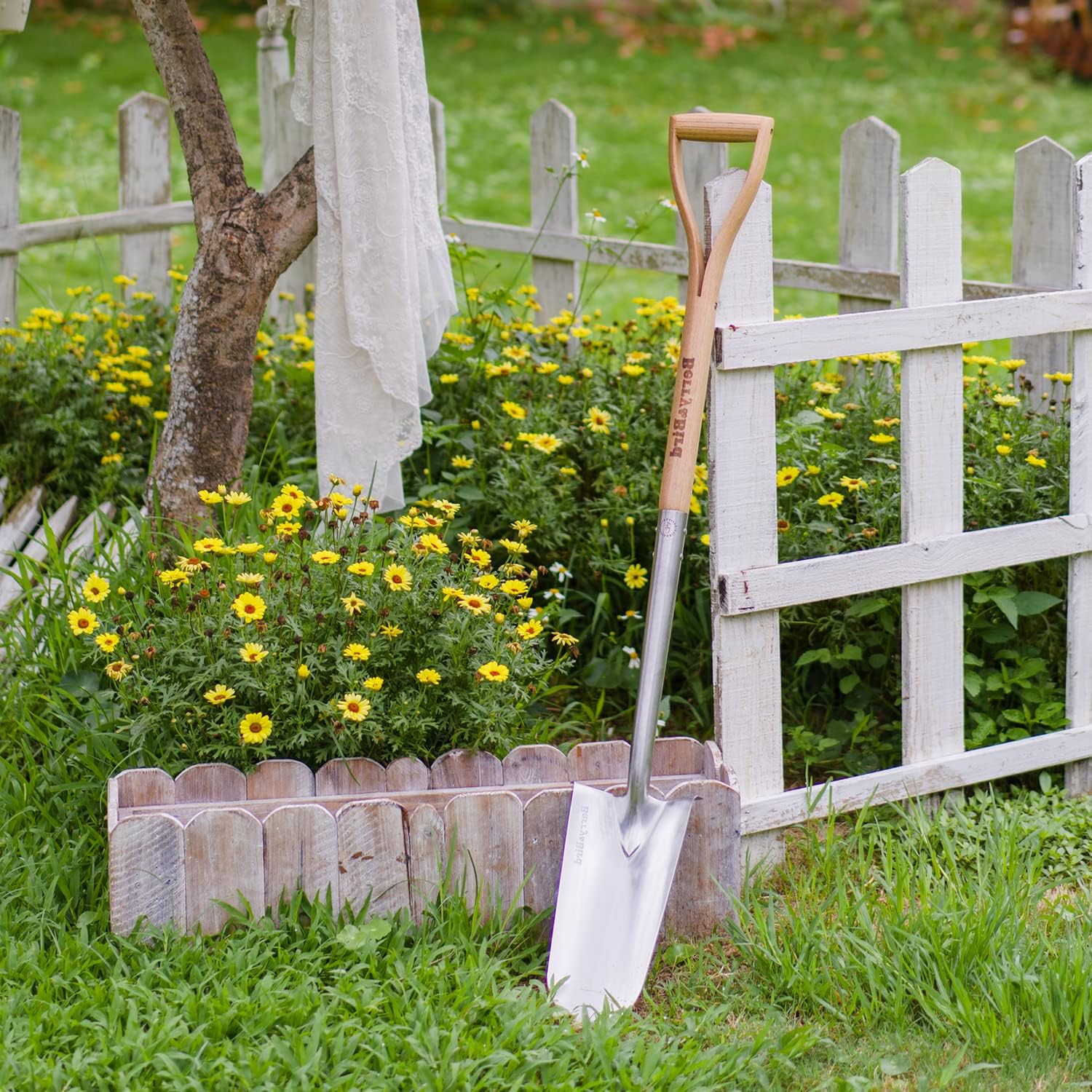
Berry & Bird Rabbiting Spade, Trenching Shovel
Fine Gardening receives a commission for items purchased through links on this site, including Amazon Associates and other affiliate advertising programs.
Ideal Tool for All Gardeners Use: Our heavy duty trenching shovel is designed by a professional gardening tool designer. Lifetime Durability: This heavy duty drain spade is made of high-quality stainless steel, it is very strong and durable, even if it is used for high-strength work, it will not bend. Ergonomic Wood Handle: The handle of this planting spade is made of ash hardwood harvested from FSC-certified forests and has an ergonomically streamlined design, making it very suitable for everyone’s hands. Multi-Use: This digging shovel is generally used for digging trenches, digging holes, transplanting, edging, moving compost, cutting thick turf and furrowing. The sharp blade allows you to cut, scoop, dig, lift and dice in hard soil.