



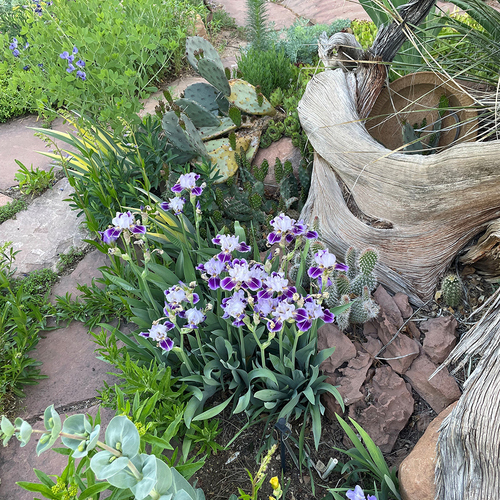
A garden without bearded irises (Iris germanica) just seems to be missing something. Yes, they are common, ubiquitous, old-fashioned. With a limited flowering season, they flash intensely and then they burn out, leaving simple strappy foliage to endure the summer heat. But if we’re being honest, many showy plants do something similar. Tulips, poppies, and crabapples all come and go, glorious in their season, then make way for whatever is next.
Irises have been cultivated for hundreds of years, but their heyday began in the mid 1800s (among many horticultural crazes), as hybridization was better understood and collectors with means had leisure time to pursue such things. Now there seems to be no end in sight, with new forms and colors still being developed every year. If you happen to live near a commercial iris grower, going for a stroll in their fields can be a transformative experience.
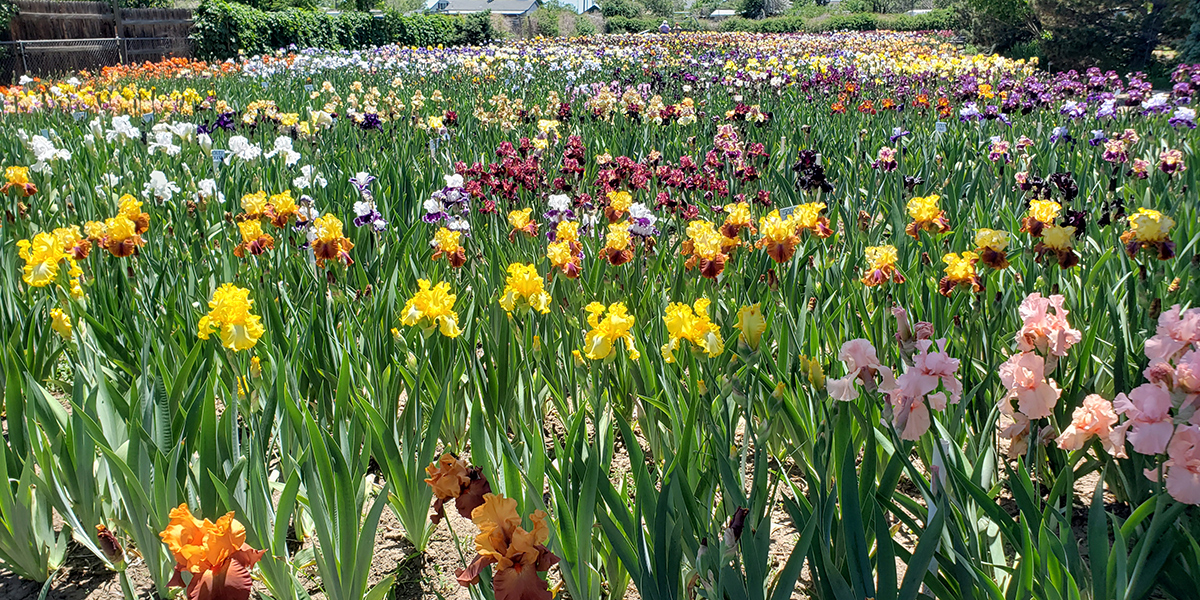
Why irises are still garden worthy
What they may lack in extended display, irises more than compensate for with ease of care, dependability, variety in size and form, and shareability. Traditional, tall bearded irises may be the most common, but a bit of investigation quickly turns up miniature, dwarf, remontant, and complex arilbred forms, to name a few.
I grow many types, and they all put on their show at the appropriate time. They give me months of color, unifying texture scattered throughout the garden, and are great companions to many other plants. They even thrive among cacti and agaves in the drier parts of my gardens. Pairing them with tulips, lilies, daylilies, salvias, and even annuals ensures a long season of succession. In areas with colder winters, planting some in warm pockets and others in cooler spots—where snow lingers the longest—you can extend the flowering season by nearly a month.
The ideal growing conditions for bearded irises
- Zone: 3–9, depending on cultivar
- Size: 12–42 inches tall, depending on cultivar
- Flowering: From mid-spring to early summer, depending on cultivar
- Conditions: Full sun; light afternoon shade in desert areas. Moderate water use; better to let dry a bit between watering
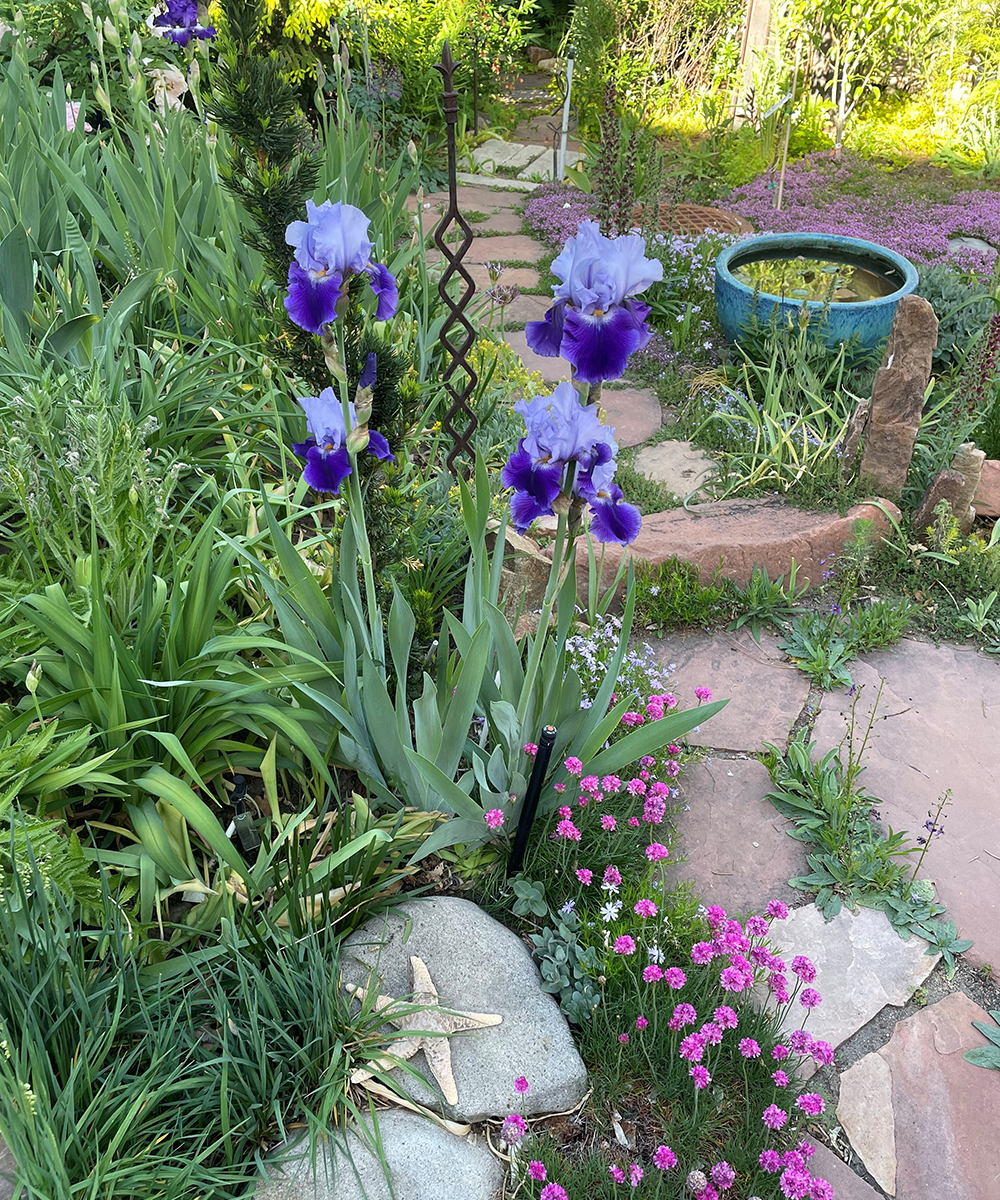
Irises love the sun and dry air found in most of the Southwest and are not subject to most of the pests and diseases that are problematic elsewhere. Old colonies have been known to persist indefinitely along the foundations of crumbling homesteads and cabins from a century ago. However, they can find lean soils challenging. In my Tucson garden, they do best with filtered bright shade in the heat of the afternoon, but my gritty rocky soils are not quite to their liking without some modification. Preparing a deeper bed of good loamy soil with a bit of compost makes a big difference, and incorporating balanced fertilizer or bone meal will ensure strong growth and flowers. Drip irrigation is fine, and a little mulch between plants (not covering the shallow horizontal rhizomes) helps maintain moisture and moderate soil temperatures. While they are good companions to most plants, they do not like to be crowded by plants with highly competitive root systems or buried by ground covers. Give them room to thrive on their own.
Iris maintenance
After a few years, irises will multiply, their rhizomes slowly branching out along the surface of the soil. The weaker or crowded sections are easy to dig up in mid to late summer and plant elsewhere or to share with friends or neighbors. Leave your strongest sections in place, or dig and replant them back where they started, trimming their foliage down about halfway to ease their transition.
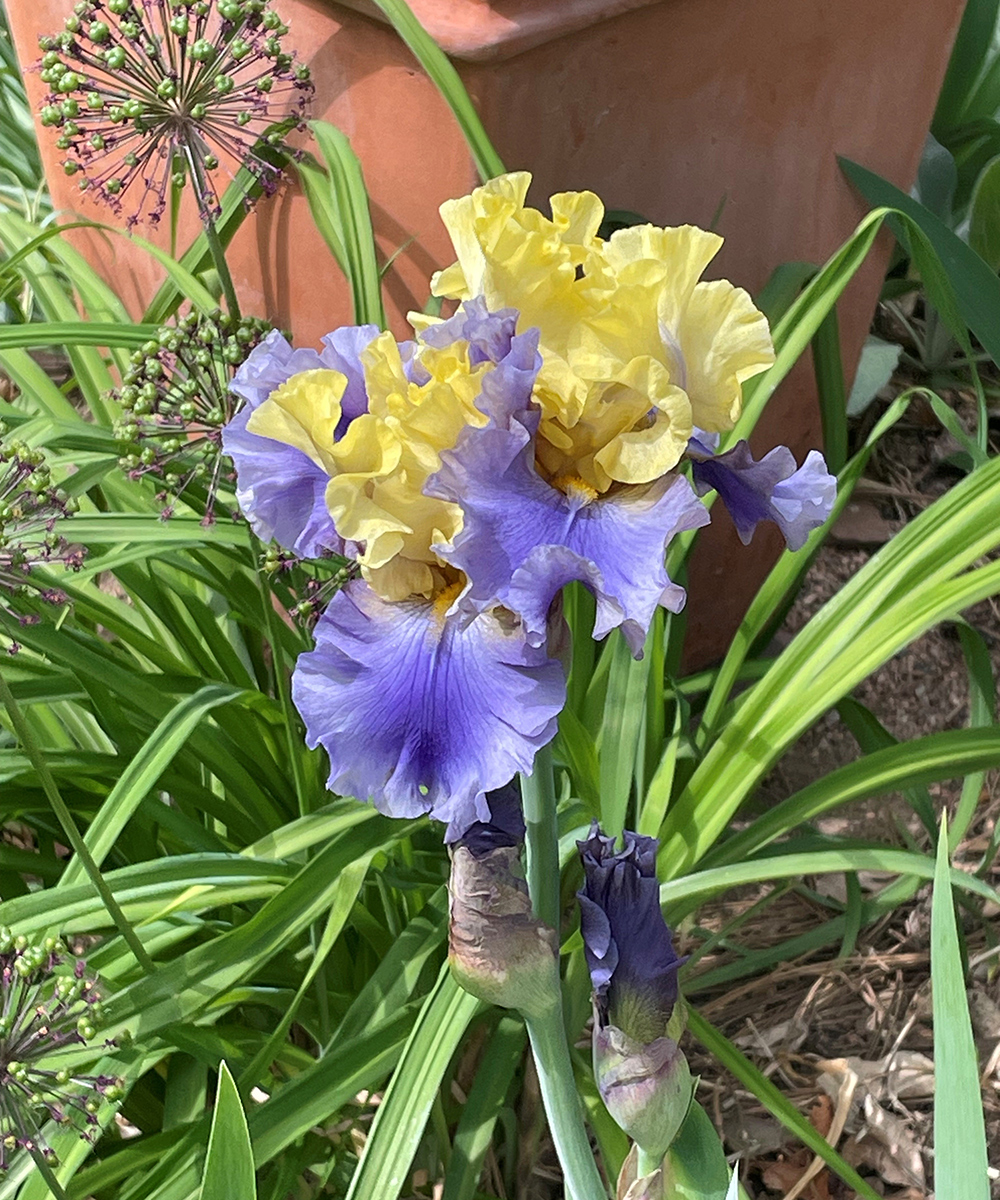
Some Favorite Bearded Iris Varieties for the Southwest
My gardens are comprised of mainly three bearded types, but don’t be afraid to experiment. With many regional and online suppliers, and thousands of cultivars out there, you may be swept away by a completely different form. The true joy in the variety of irises is that you can easily embark on a new garden obsession of your own!
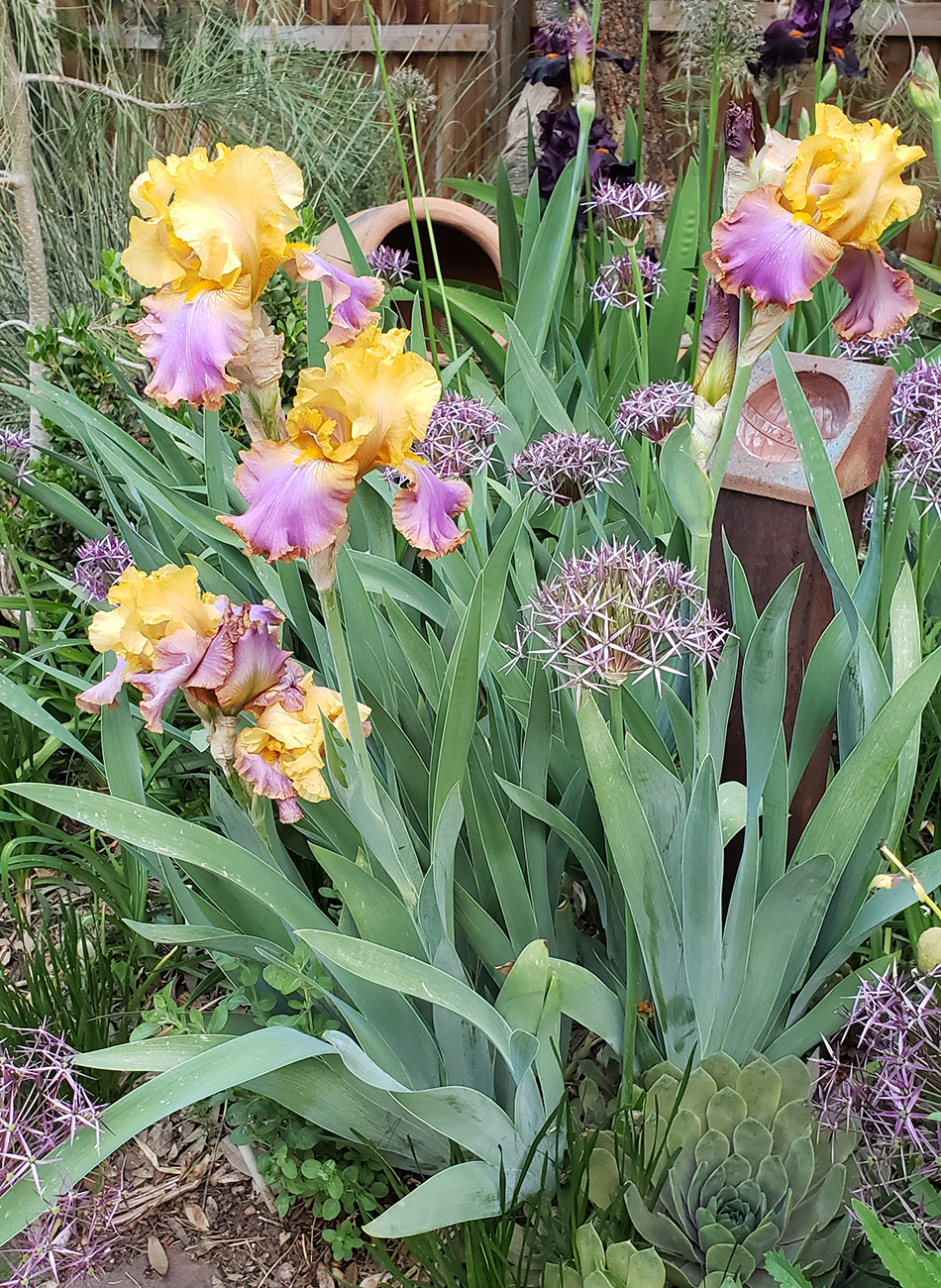
Tall bearded iris
These are the giants of the genus, and the type most people think of. Newer hybrids can reach waist-high, with many buds on multiple branches. Flowers may be 6 or more inches in height and width, gleaming in every color imaginable. Cultivars can be found with picotees, splashes, or bicolors on their iconic lush, ruffled blooms. Most have a sweet fragrance that is a quintessential feature of spring for me.
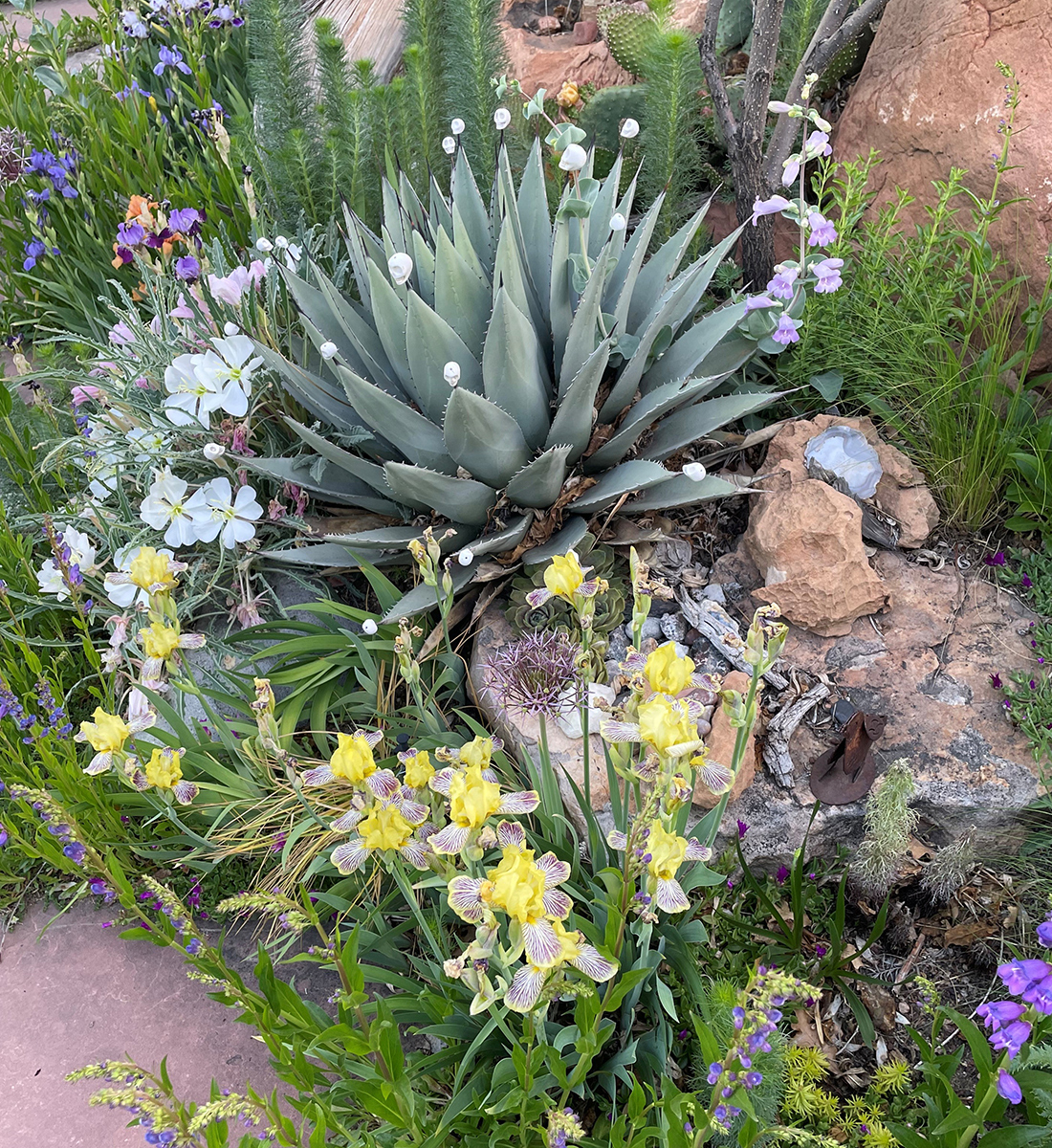
Miniature tall bearded iris
Unlike the shorter true dwarf iris that stands just 4 or 5 inches tall, these are proportioned much like the iris above, with all features shrunk down in perfect balance to their height. Reaching from 9 to 16 inches tall, they come in a similar array of colors, perfect for a more intimate section of the garden, or a tall accent in an otherwise short border planting.
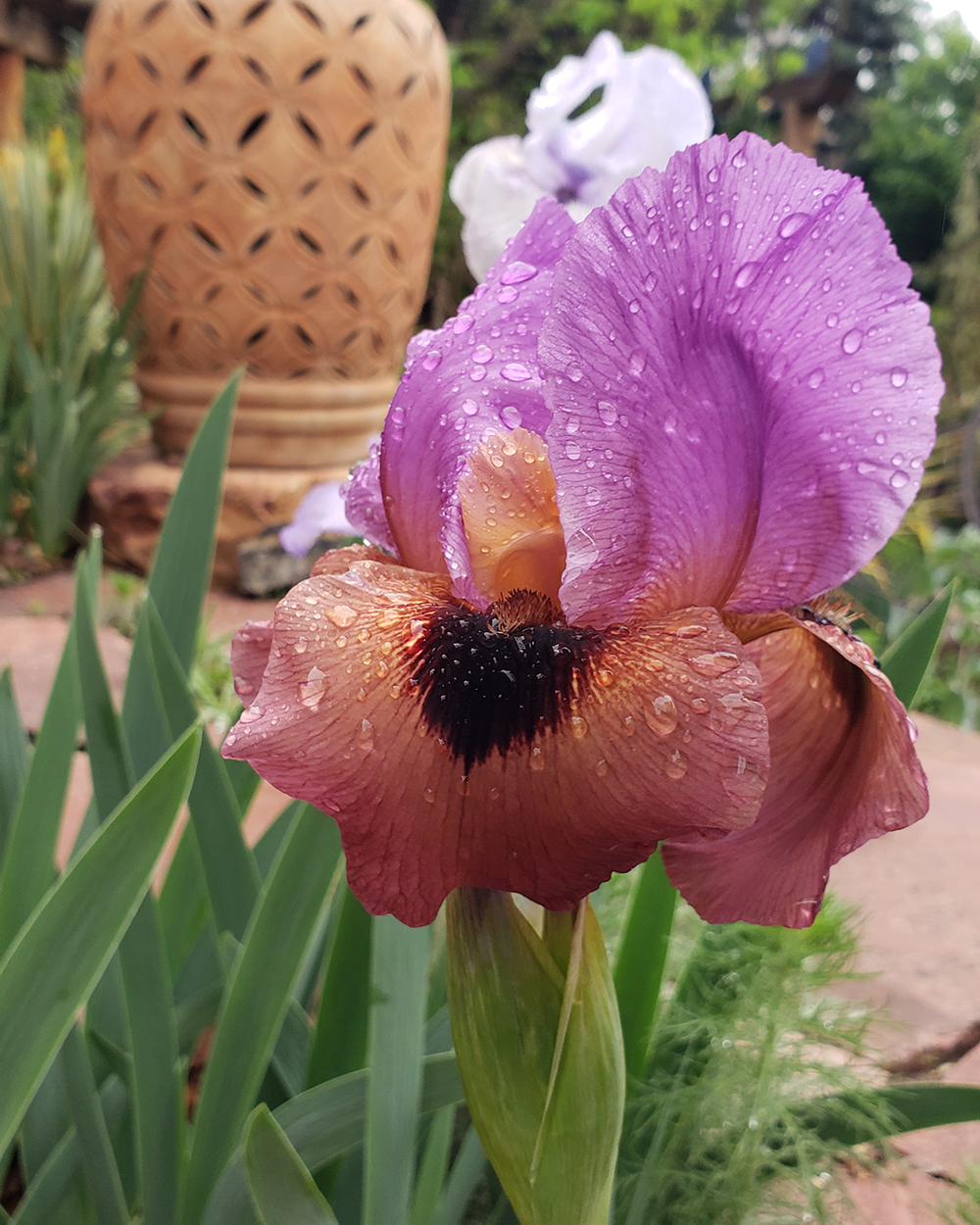
Arilbred iris
Aril irises are a wild type found in semi-arid regions of the Middle East, usually with single stems of ornately patterned flowers. From desert-like habitats, the original species are challenging, but hybrids made with tall bearded iris bring us the best of both worlds. Easy to grow and tolerant of drought, they are medium-height plants (12 to 20 inches) with multiple flowers that retain the ornate veining and bold patterns of contrasting color that the aril species have. For me, these are some of the earliest to flower in the garden, starting the iris season off with an exotic flourish.
Learn more about irises:
Discuss this article or ask gardening questions with a regional gardening expert on the Gardening Answers forum.
For more Southwest regional reports, click here.
Dan Johnson lives and gardens in Denver, Colorado, and in Tucson, Arizona. He is an associate director of horticulture for the Denver Botanic Gardens.
Photos: Dan Johnson
Fine Gardening Recommended Products

Gardener’s Supply Company Summerweight Fabric Plant Cover
Fine Gardening receives a commission for items purchased through links on this site, including Amazon Associates and other affiliate advertising programs.
Ideal for summertime pest control, this garden cover effectively screens out Japanese beetles, potato beetles, cabbage worms, leaf miners, carrot flies and most vine borers. It transmits 97.6% of the light to your plants without allowing heat build-up, and it provides cold protection down to 41° F, to extend your growing season.
Bee Watering Station with Vivid Flower Design
Fine Gardening receives a commission for items purchased through links on this site, including Amazon Associates and other affiliate advertising programs.
Thoughtful Combo: You will receive a bee feeder and 30 glass marbles. This thoughtful combo can provide clean water for the bees, you just need to put the marbles into the bee watering station, add water (note: the water level should not exceed the height of the marbles) and hang them in the right place. The round, colored marbles can provide a place for the bees to stand and prevent them from falling into the water, effectively keeping the bees safe. Fine Material: This exquisite bee bath is made of high quality iron material, smooth surface, rust and weather resistant, not easy to fade, sturdy and reliable. Bee cups for garden can well meet the drinking water needs of lovely bees, and it can also provide food for bees, such as sugar water, nectar, etc., attracting more bees to your outdoor area and making your garden full of vitality. Perfect Size: The butterfly watering station has an overall height of 13.4 inches, a bowl diameter of 9.4 inches, and a weight of 0.44 pounds. The bee cup serves the needs of the bees well without plunging them into dangerously deep water or taking up unnecessary space in your garden, and this compact and efficient design makes it a practical addition to any outdoor space. Elegant Design: Our bee watering cups are designed in unique flower shapes with vibrant and realistic colours to attract lovely bees to your garden and patio, bee feeders for outside are not only functional but can also be used as a landscaping element, their vibrant floral patterns enhance the beauty of your garden. Multicolored Decoration: Colorful bee water stations look like flowers in a garden, flower bed or pot and attract bees and butterflies. They can drink or bathe in bee feeders, which are highly decorative and practical.
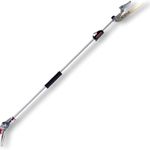
ARS Telescoping Long Reach Pruner
Fine Gardening receives a commission for items purchased through links on this site, including Amazon Associates and other affiliate advertising programs.
Telescopes from 4 to 7′. Cut and Hold (160) Blades. Drop forged blades for unsurpassed long lasting sharpness. Lightweight, 2.3 lbs., for continued use. Perfectly balanced for easy pruning.