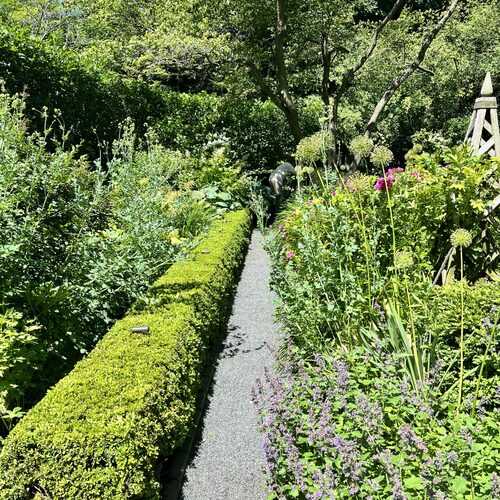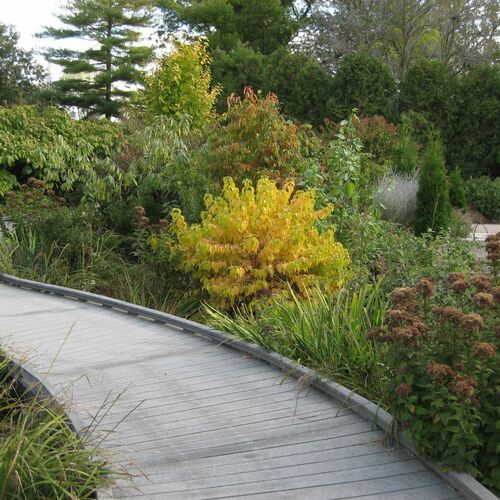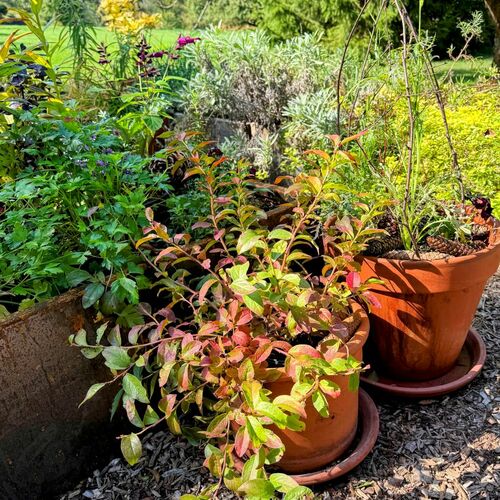





People often ask how I approach the garden design process and what information I gather before developing a plan. While every client and garden is different, I usually start with the same basic questions.
I like to create purpose-driven designs. For example, I’m often called on to solve a problem, even if it is simply “I have a new house and a blank slate.” It may be just a section of the garden, the front yard, or something specific like repairing a garden after a new septic system installation or after a new house is built next door.
Start by asking yourself questions
Design is all about solving problems and connecting clients to their gardens, usually beginning with a questionnaire to bring all those unspoken needs to light. Questions help people consider things they would not normally think about. As a result, these conversations define their needs and desires, helping me combine different elements into a cohesive design.
Identifying Garden Challenges
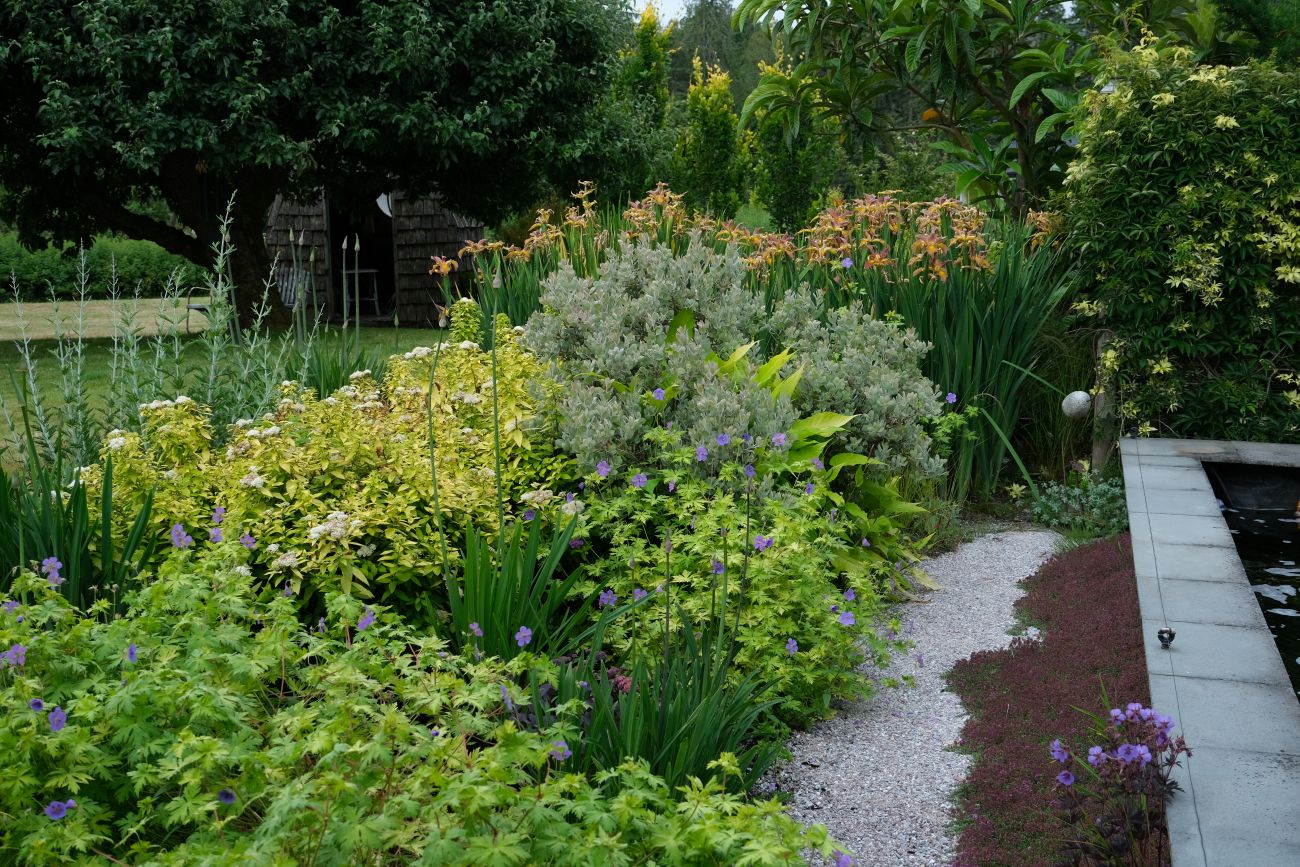
The same approach applies to projects in my own garden. I don’t give myself a questionnaire, but I do ask myself the same questions. First, I assess the challenges, the location of the area in relation to the rest of the property, and the environmental conditions that will influence the planting.
Adding privacy and screening
In a new garden, the major goal is often screening. Most people want privacy to live their lives outside without having to see a neighboring house, road, commercial area, or vacant lot.
Privacy was one of the big considerations when planning my grass garden. There was no privacy between my property and the neighboring property. I could see my neighbors eat their dinner, watch them play with their grandchildren, and even see them argue. Their house was also too close to the property line, and in fact, their sidewalk was on my property. That was a problem.
Because the sidewalk was already there when I moved in, I had to incorporate it into my design, but I could still make it disappear visually.
I started out with some tall elements at the back of the bed to start the screening process. I positioned these plants so I could maintain them from my property without having branches extend over the property line. Keeping their mature size in mind also helped avoid potential conflicts with the neighboring property. Soft screens made of trees and tall shrubs (both evergreen and deciduous) offer privacy without creating a harsh, artificial boundary line.
Read More: 20 Unique Hedging Plant Options
Work with the Site, Not Against It
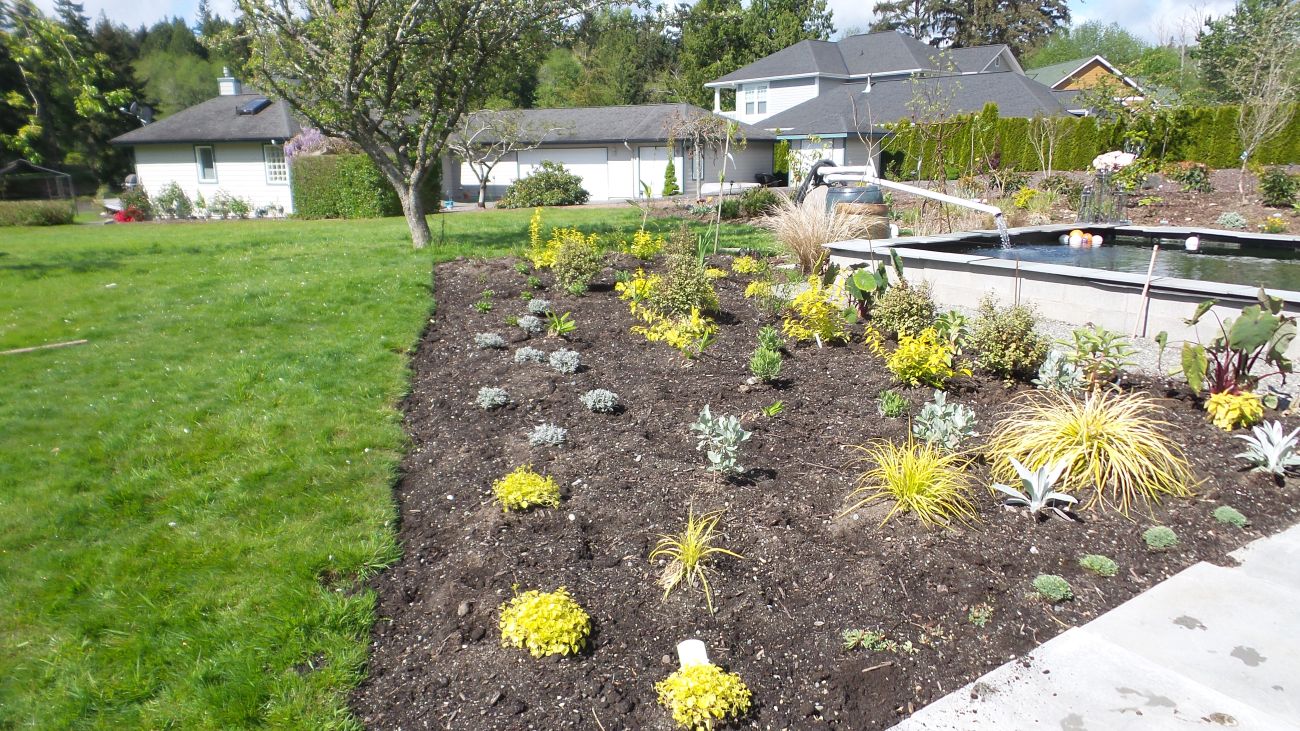
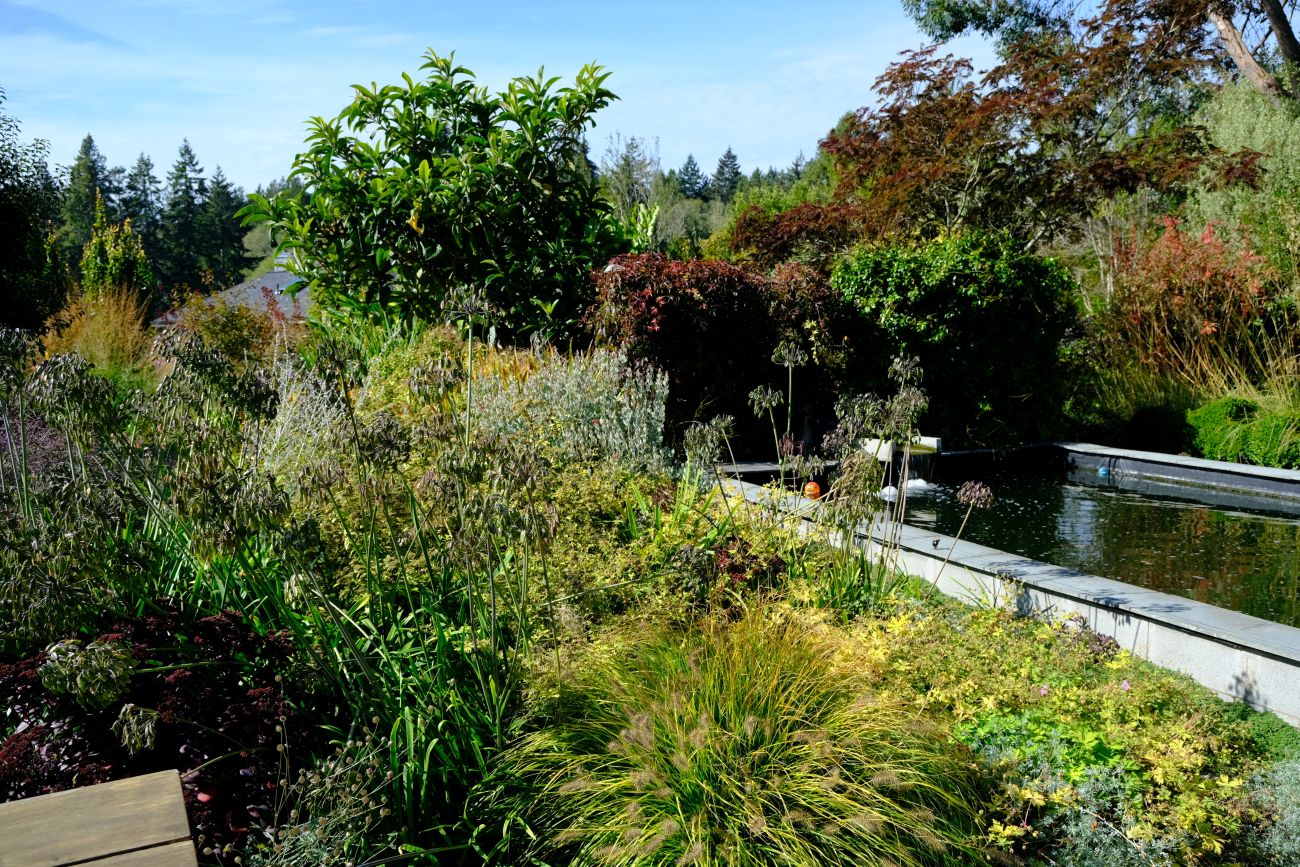
Looking at the space, I could see a definite focal point within my property. With the neighbor behind me, the view naturally led the eye toward the water. Therefore, I designed a one-sided border rather than an island bed meant to be viewed from multiple directions. Making the border as deep as 20 feet in places gave me enough room to continue screening the neighboring property while also providing some sound buffering.
Understanding the environmental conditions was the next step. The back edge is on the north side of my property. The large trees and shrubs would not shade the rest of the bed. This meant the bed would be in full sun all day, all season long.
What a challenge for this PNW native who grew up mostly in the forest (or woods, as we called it). I had to learn about plants that liked full sun, drying winds, and dry soil so they could thrive. Rather than trying to re-create the shaded woodland conditions I knew best, I needed to work with what the site naturally offered.
Read More: Summer-Dry Gardening: A Visit to Beth Chatto’s Gravel Garden
Create a Garden You Can Experience
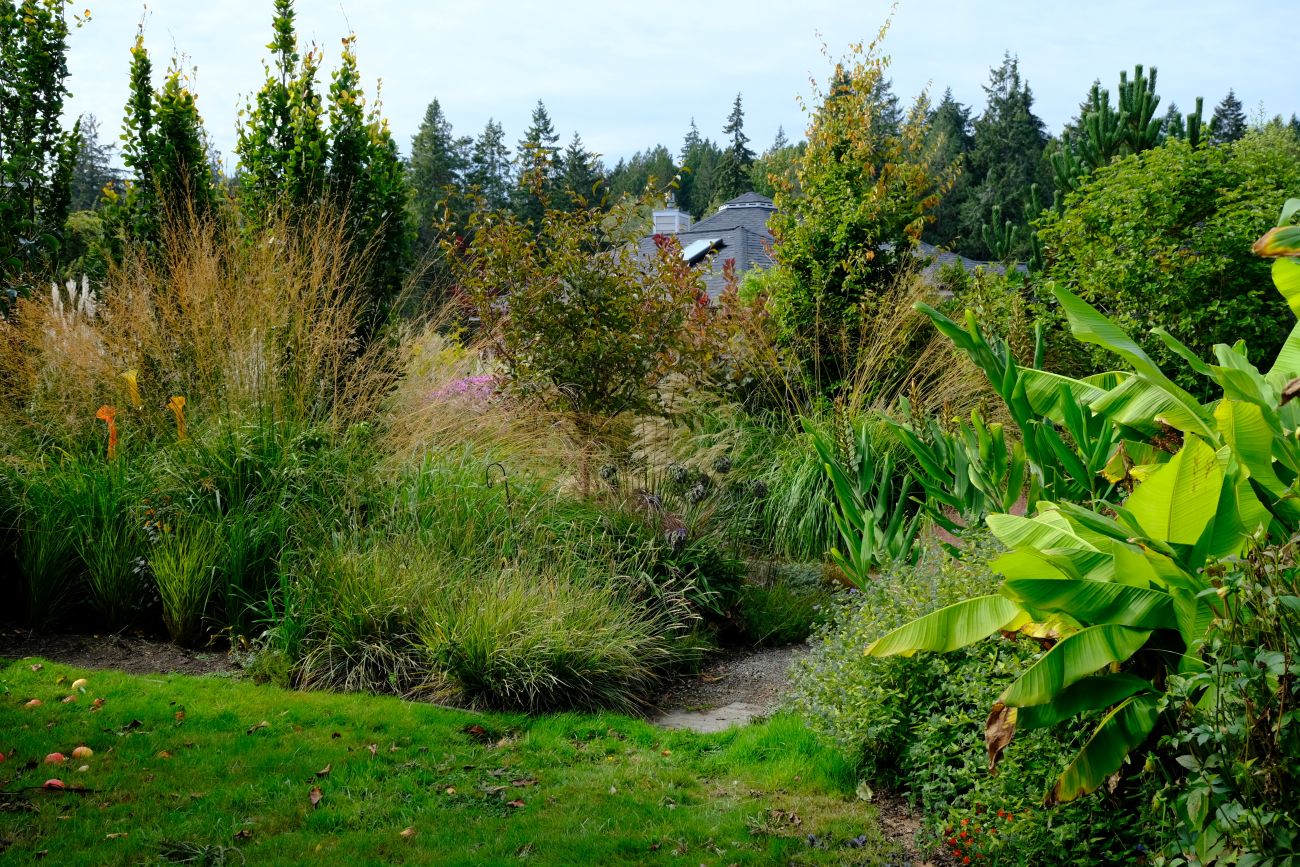
Growing up in the forest, I longed for wide-open sky and long views. Above all, I wanted to immerse myself in the garden. A long row of hedging plants that I could only look at wasn’t what I had in mind. I wanted to become part of the blowing, rustling movement of the grasses. While experiencing the plants, I also wanted to connect with insects, pollinators, birds, frogs, and even a few rabbits.
I consider the challenge met. The amount of wildlife activity surrounding me in the garden never ceases to amaze me. I feel as if I’m in a different world while surrounded by all the action and movement of the grasses and perennials, far away from big cedar trees, moss, and ferns. Sun, wind, fragrant flowers, and the smell of warm earth are all-encompassing there.
Even during the winter, this garden pulls me out, bundled up and coffee in hand, to see what is happening. Early spring bulbs push through the soil, mice shelter under the evergreen sedges, and birds search for a breakfast of grass seeds and gather bits and pieces to build new nests.

The ultimate goal of any designer is finding the right outdoor elements to pull people outside and connect them with nature. Those elements are individual to each client. They could be an eating area, outdoor kitchen, hot tub, play area, pond, fountain, or hidden sitting area. Maybe the goal is plant-driven, with a vegetable garden, cutting garden, or collection of conifers.
When these features are thoughtfully integrated with immersive, naturalistic plantings, the result is an outdoor space that invites people to experience their gardens throughout the year.
Find more on garden design and ornamental grasses:
Discuss this article or ask gardening questions with a regional gardening expert on the Gardening Answers forum.
And for more Pacific Northwest regional reports, click here.
Susan Calhoun is the owner and principal designer of Plantswoman Design in Bainbridge Island, Washington.
Photos: Susan Calhoun
Fine Gardening Recommended Products
DeWalt Variable-Speed Cordless Reciprocating Saw with 6-Piece Saw Blade Set
Fine Gardening receives a commission for items purchased through links on this site, including Amazon Associates and other affiliate advertising programs.
You can fit a variety of blades to this saw to cut fallen branches or prune larger limbs from trees in a pinch. It’s fast, tough, easy to use, and extremely versatile.
– 18.31 x 6.13 x 4 inches
– 1-1/8-inch stroke length
– Variable speed trigger with 0-3000 spm
– DW4856 Metal/Woodcutting Reciprocating Saw Blade Set, 6-Piece

SHOWA Atlas 370B Nitrile Palm Coating Gloves, Black, Medium (Pack of 12 Pairs)
Fine Gardening receives a commission for items purchased through links on this site, including Amazon Associates and other affiliate advertising programs.
Lightweight and close-fitting for excellent dexterity. Machine washable. Breathable back of hand to reduce perspiration. Designed for easy movement and continuous wear. Ideal for aerospace, assembly, automotive, construction, final fix, gardening, manufacturing, operating machinery, packaging, precision handling, tiling, warehousing.
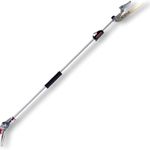
ARS Telescoping Long Reach Pruner
Fine Gardening receives a commission for items purchased through links on this site, including Amazon Associates and other affiliate advertising programs.
Telescopes from 4 to 7′. Cut and Hold (160) Blades. Drop forged blades for unsurpassed long lasting sharpness. Lightweight, 2.3 lbs., for continued use. Perfectly balanced for easy pruning.