


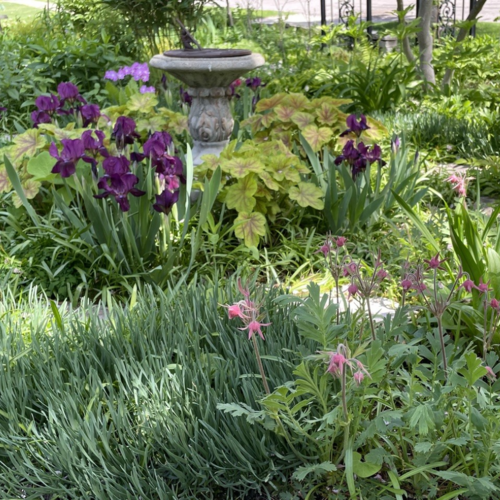
Hi GPODers! We’re heading back to St. Paul, Minnesota, today for another look at Susan Warde’s garden. We’ve already followed Susan’s garden from late summer into fall and then looked back at spring and summer. This time, Susan is taking us back even further to April and May, when the garden was just getting going.
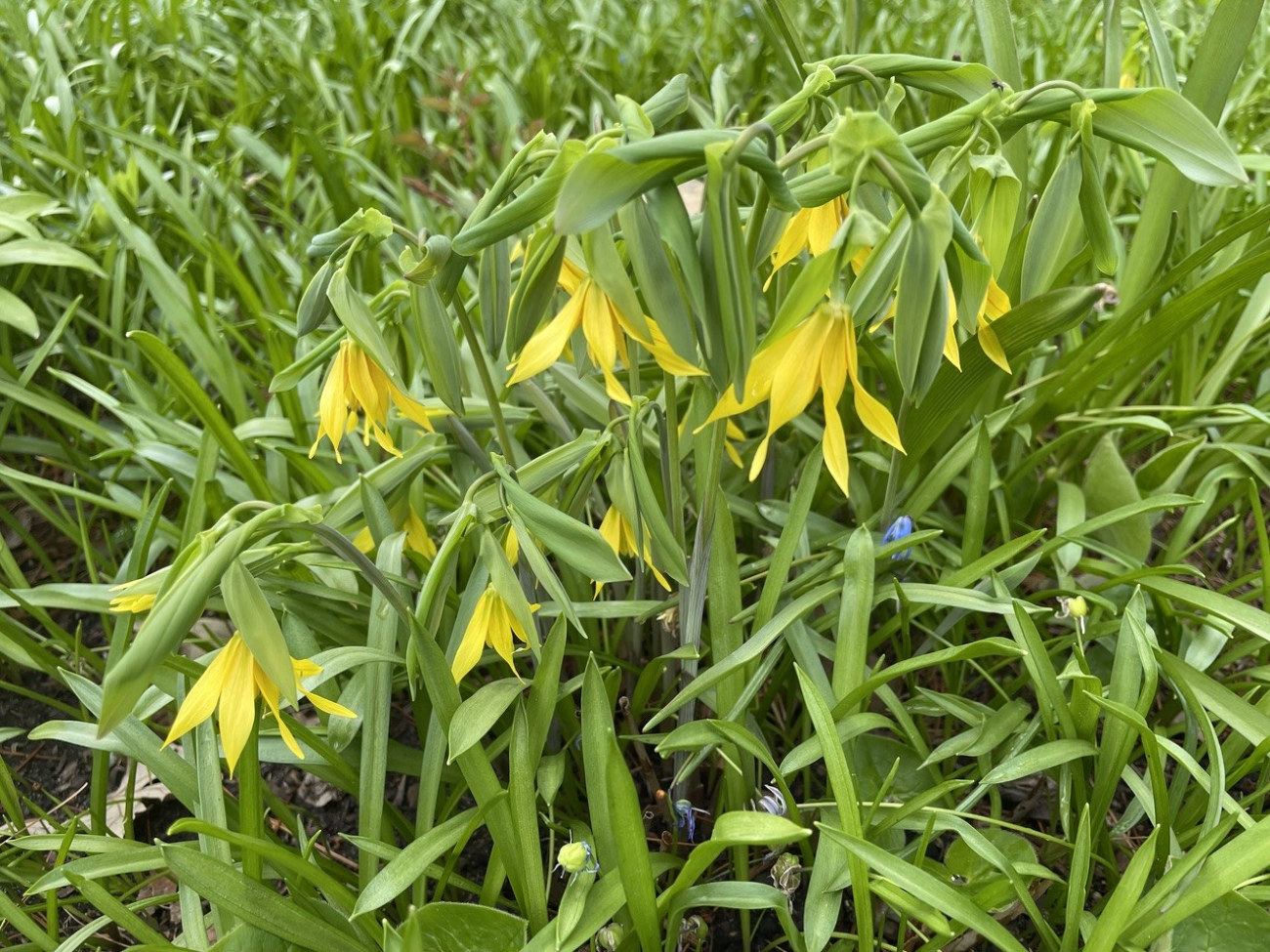
Large-flowered bellwort (Uvularia grandiflora, Zones 3–8), April 26. This is a Minnesota native. It spreads enthusiastically via seeds and rhizomes. Siberian squill (Scilla siberica, Zones 2–8), which earlier formed a solid blue carpet, is winding down.
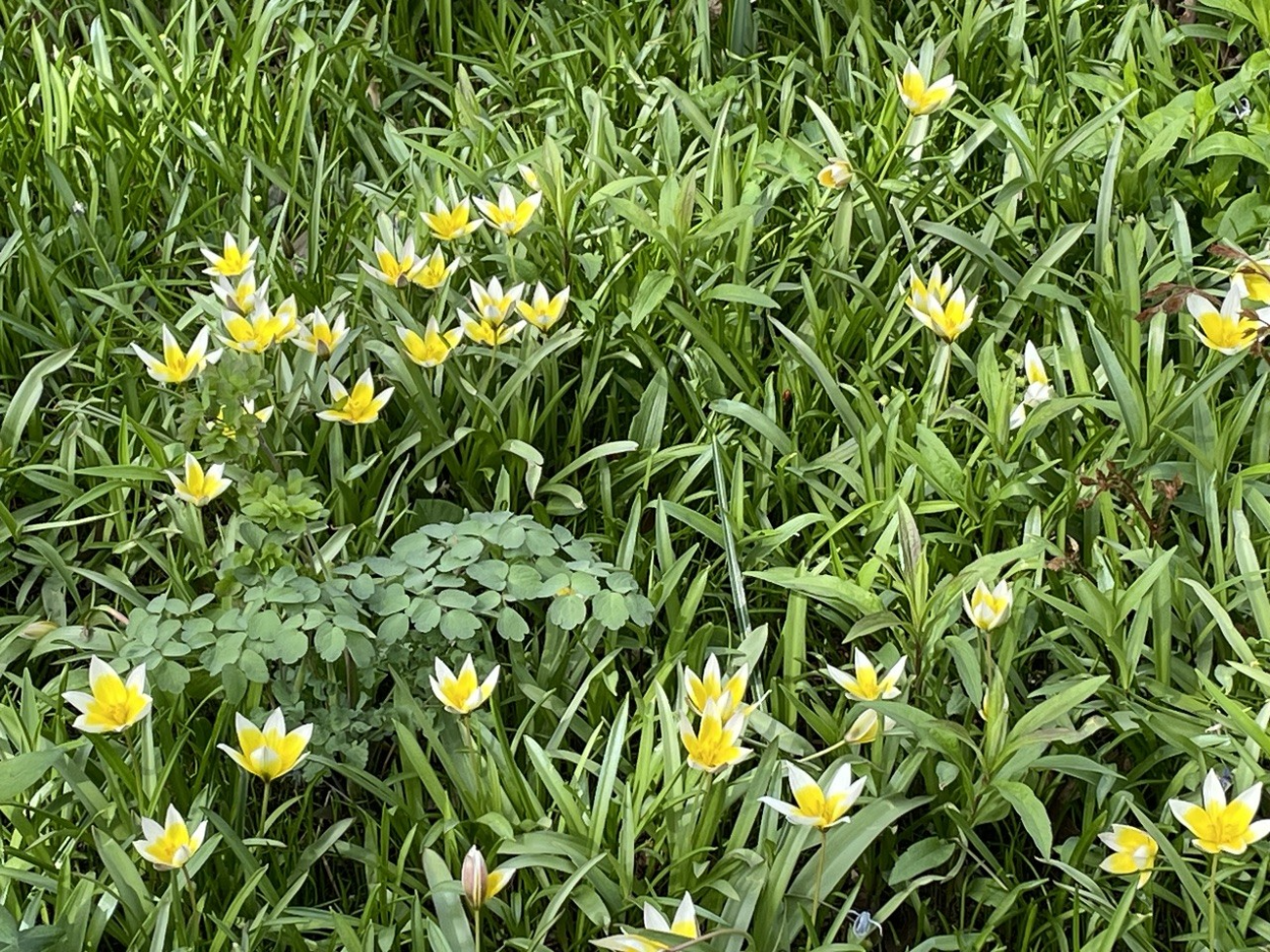
Tarda tulip (Tulipa urumiensis, Zones 3–8), April 26. It’s not at all “tardy” and flowers well before the horticultural varieties. This little naturalizer forms large, cheerful patches. Its one drawback is that it only opens in sunshine.
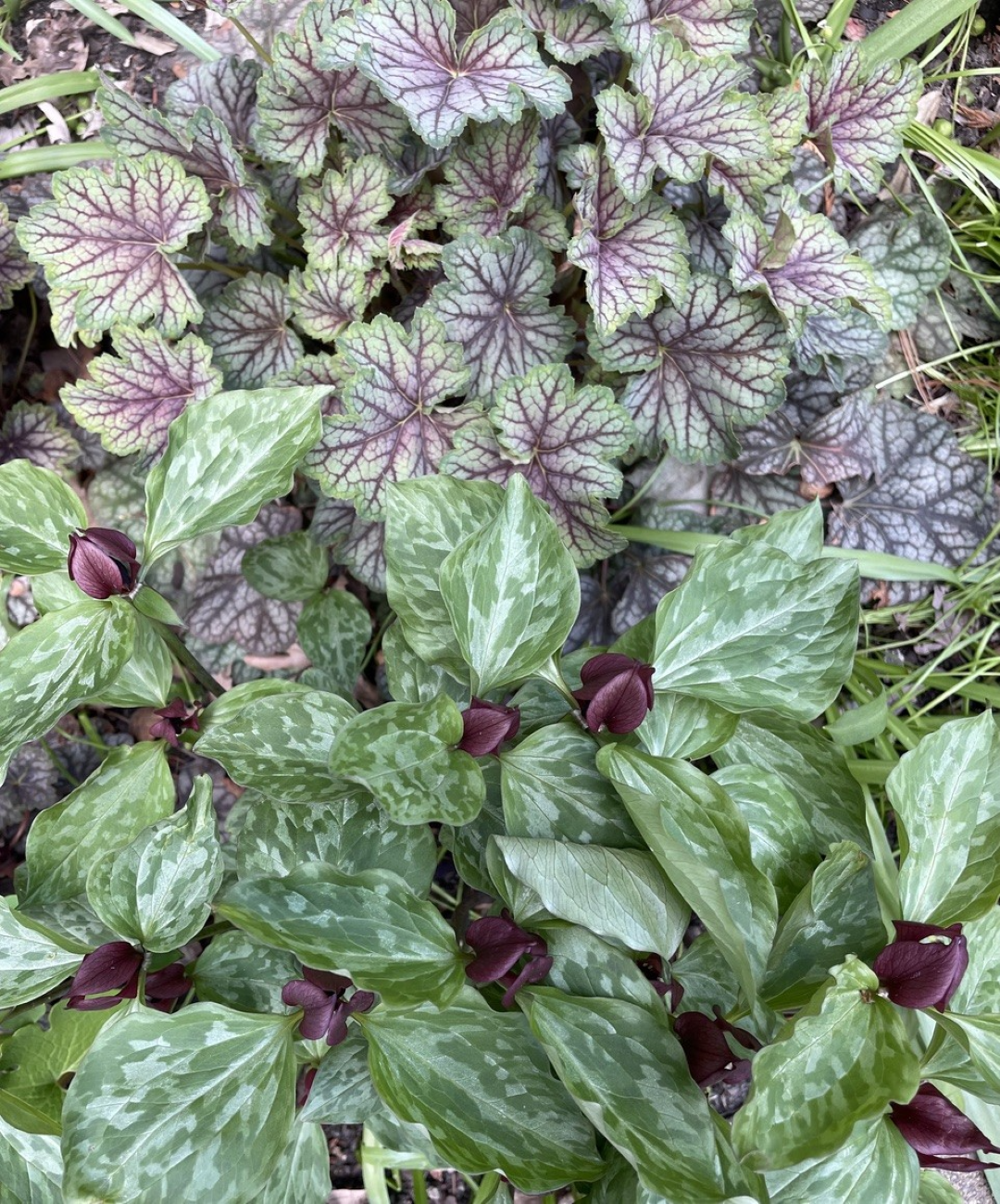
April 29. I love the pattern and color combinations here. The upper plant is ‘Green Spice’ heuchera (Heuchera ‘Green Spice’, Zones 4–9). The lower one is red trillium (Trillium recurvatum, Zones 4–9). It was a gift from a friend and languished for a number of years in its original tucked-away spot. Three years ago I moved it, and it has flourished. Like the trillium below, it’s a spring ephemeral that eventually dies back to the ground.
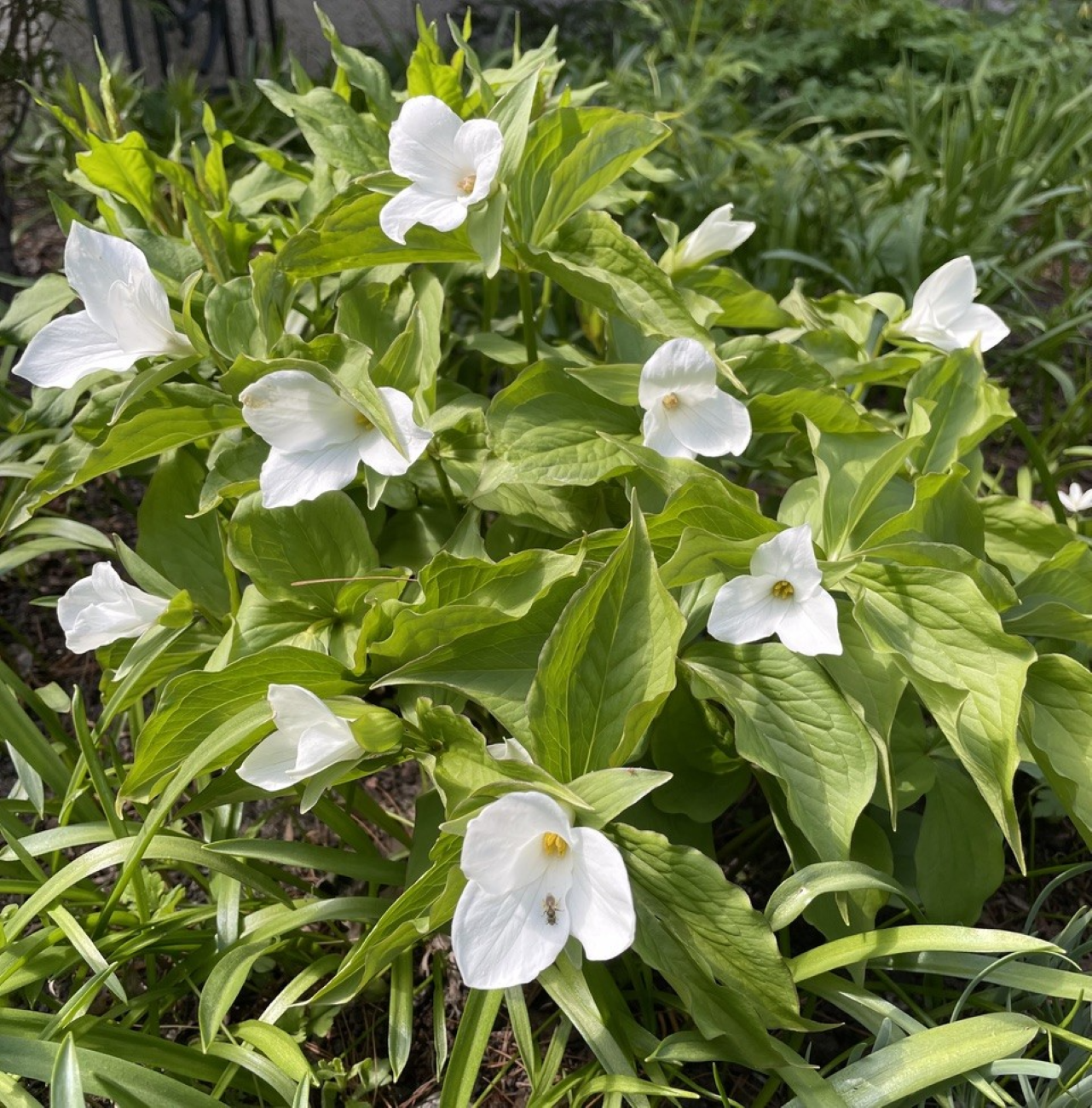
Large-flowered trillium (Trillium grandiflorum, Zones 4–8), May 2. It provides a food source for early pollinators (note the little bee in the lowest flower). I have various clumps of this in the shadier back garden, but obviously it doesn’t seem to mind several hours of morning sun.
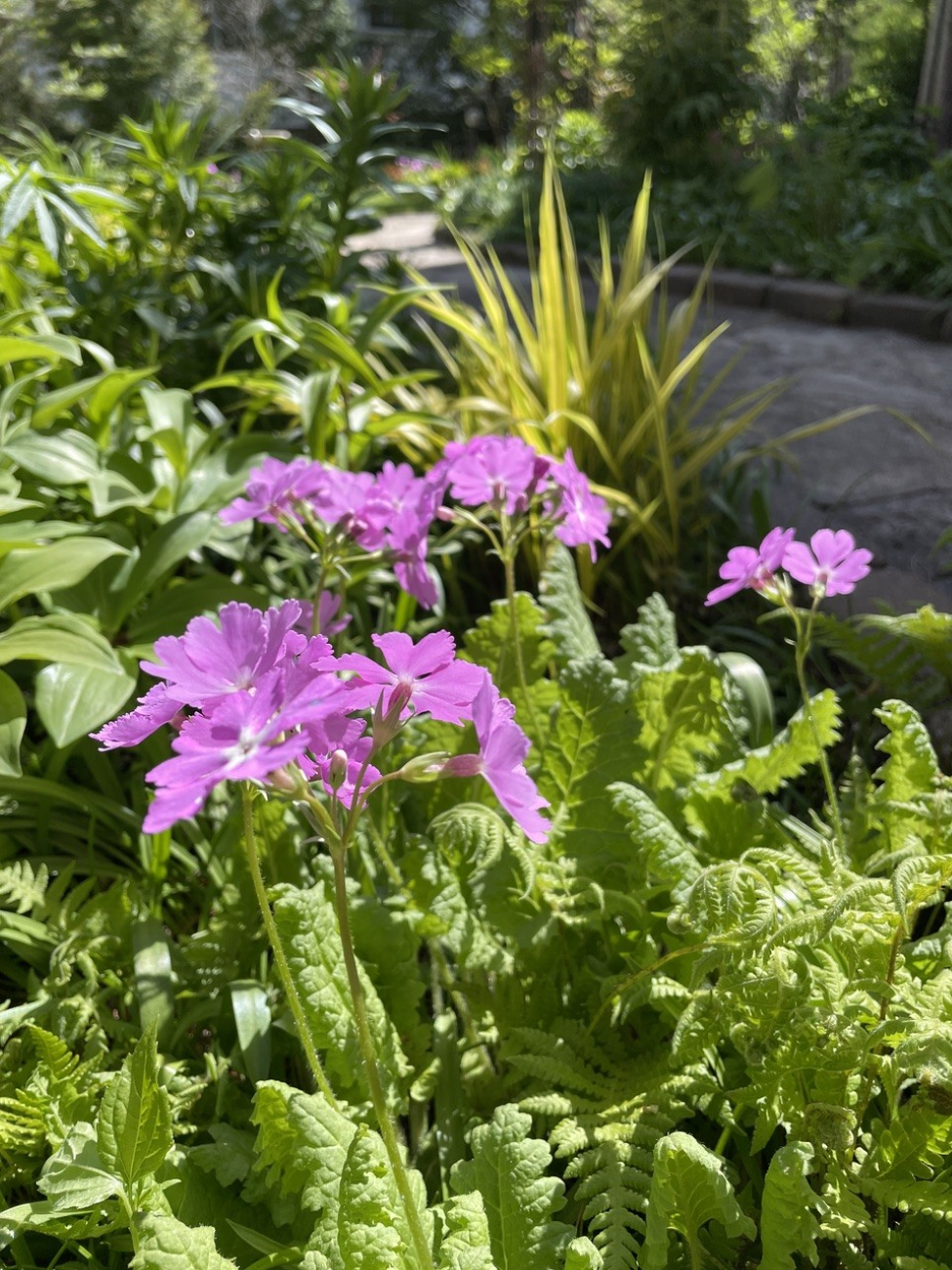
Japanese primrose (Primula sieboldii, Zones 3–8), May 8. This is one of my favorites in spite of the fact that its foliage starts looking pretty disreputable as the season progresses. It spreads like crazy but is easily transplanted or pulled up. I had also purchased the much less vigorous white variety, which died out. Then a few years later it appeared again, presumably from seed, and I have coddled it into three diminutive clumps.
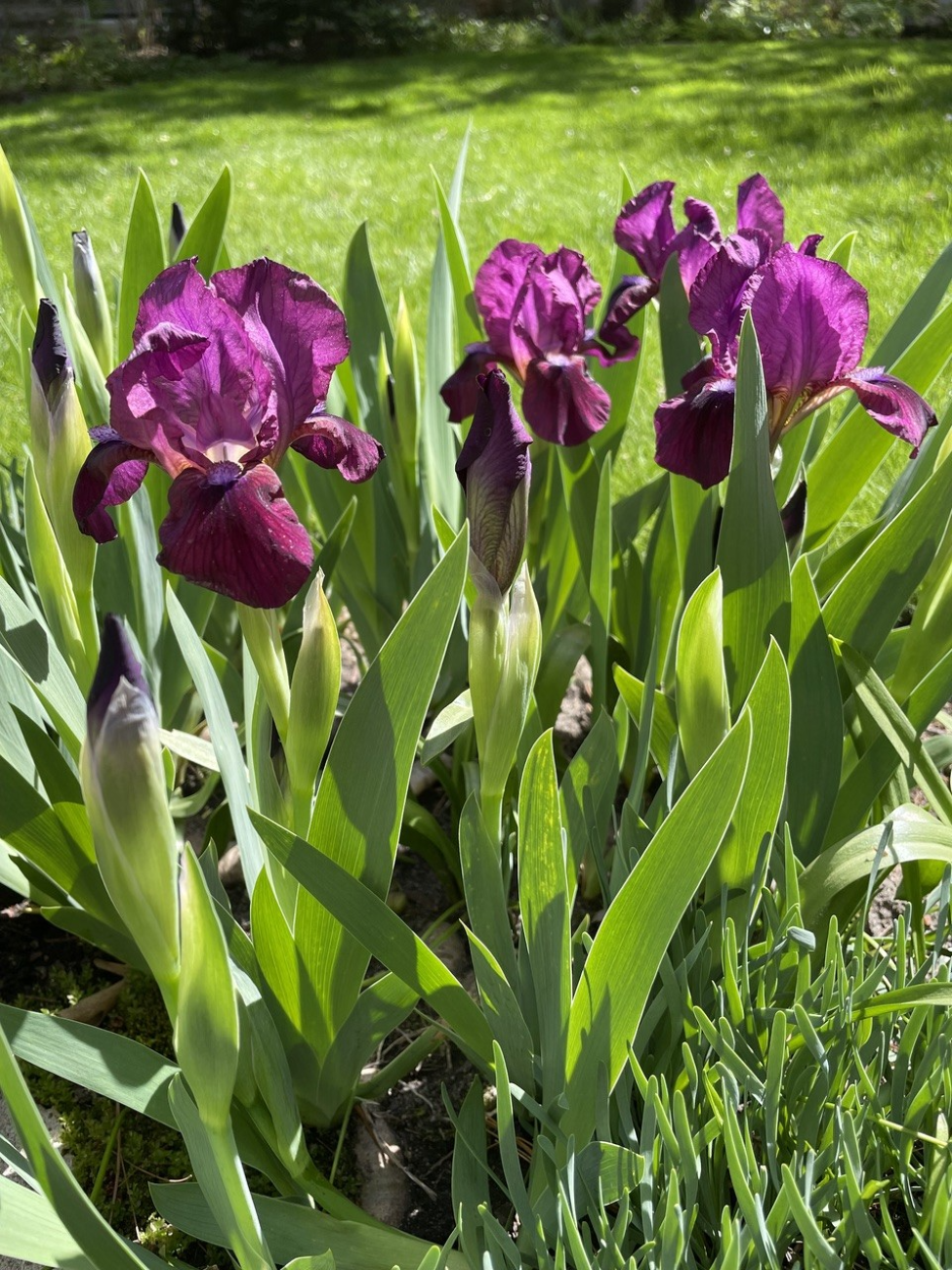
‘Cherry Garden’, a standard dwarf bearded iris (Iris ‘Cherry Garden’, Zones 3–9), May 8. This is a very vigorous little iris, purchased from the same nursery as the Japanese primroses.
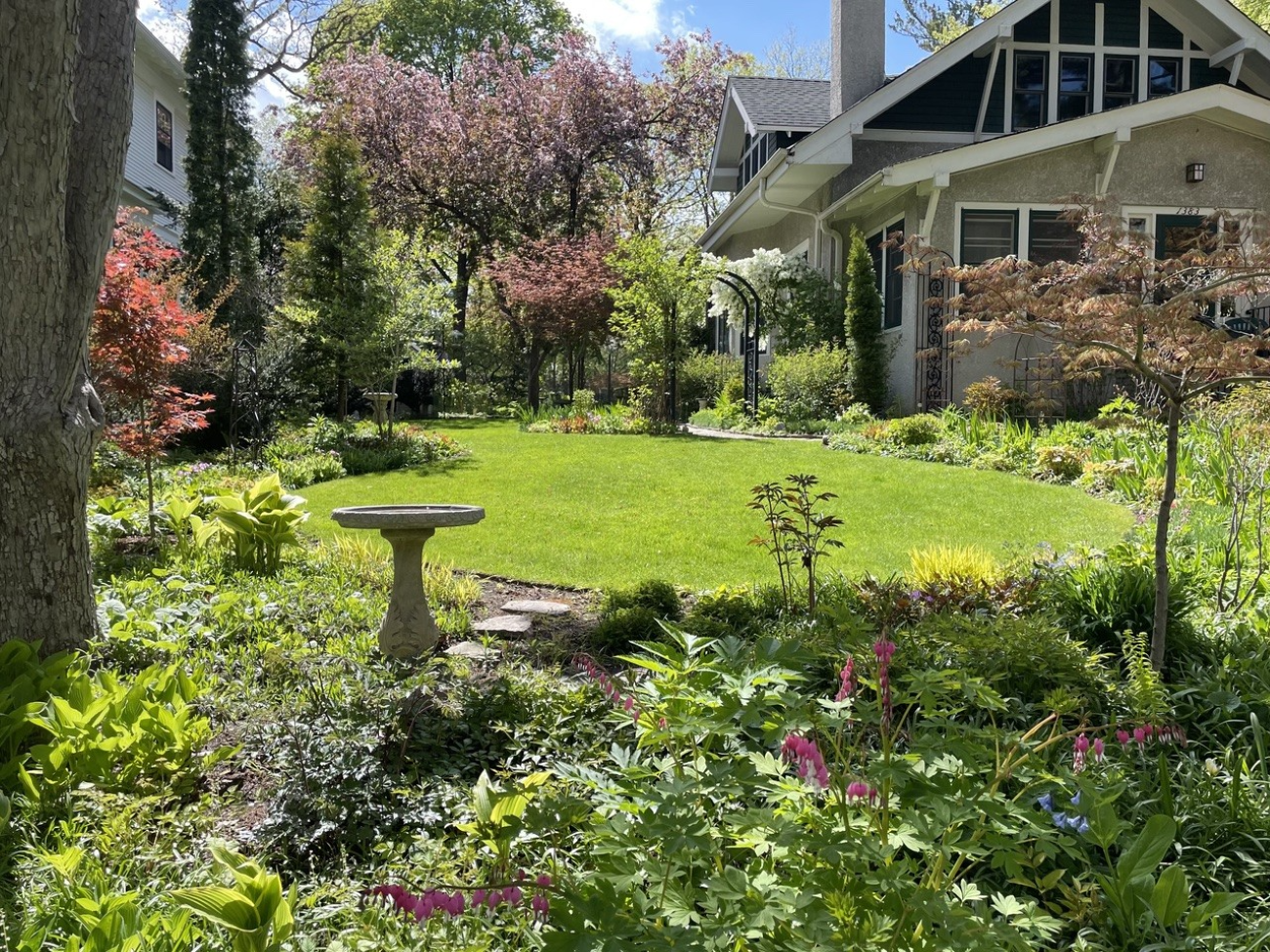
I particularly enjoy seeing GPOD photos that show more than one or two single plants, so here’s a general view of the front garden (May 8) for those who feel as I do. The garden goes virtually all the way up to the neighbors’ house on the left.
In the foreground are bleeding heart (Lamprocapnos spectabilis, Zones 3–9) and a small clump of Virginia bluebells (Mertensia virginica, Zones 3–8) that seems to have escaped from the back garden. The large trunk on the left and the pink-flowered tree in the background are ‘Red Splendor’ crabapples (Malus ‘Red Splendor’, Zones 3–8). They are now no longer in the garden, having been taken down in September (but that’s another story).
The tree with the reddish foliage (upper center) is a Japanese-Korean hybrid, ‘North Wind’ (Acer × pseudosieboldianum ‘North Wind’, Zones 4–7). There are two other Japanese-Korean hybrids in the photo, ‘Ice Dragon’ on the right and ‘Alpen Glow’ on the left. The latter was new this spring. It’s gorgeous in the spring and has now turned a pretty orangey red, but I found its summer foliage color disappointing, a rather dull brownish green.
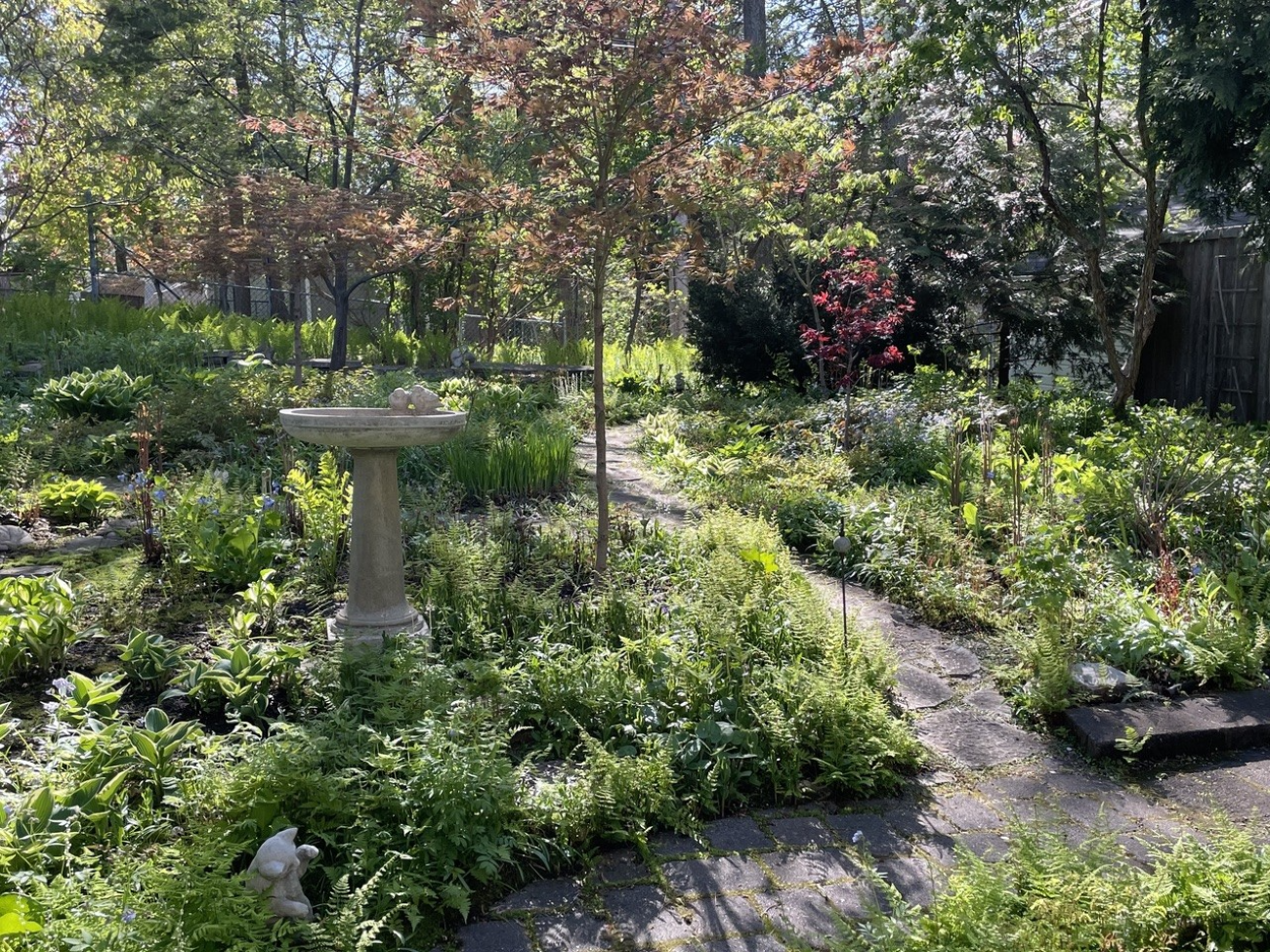
General view of the back garden, May 9. ‘North Wind’ and ‘Ice Dragon’ maples are pictured here, along with an actual, less hardy Japanese maple (Acer palmatum ‘Emperor I’, Zones 5–8). It has now survived its first winter in my garden (and so, giddy with success, I recently planted another where the back crabapple was taken down). I love its early red color that echoes the red stems on emerging ferns.
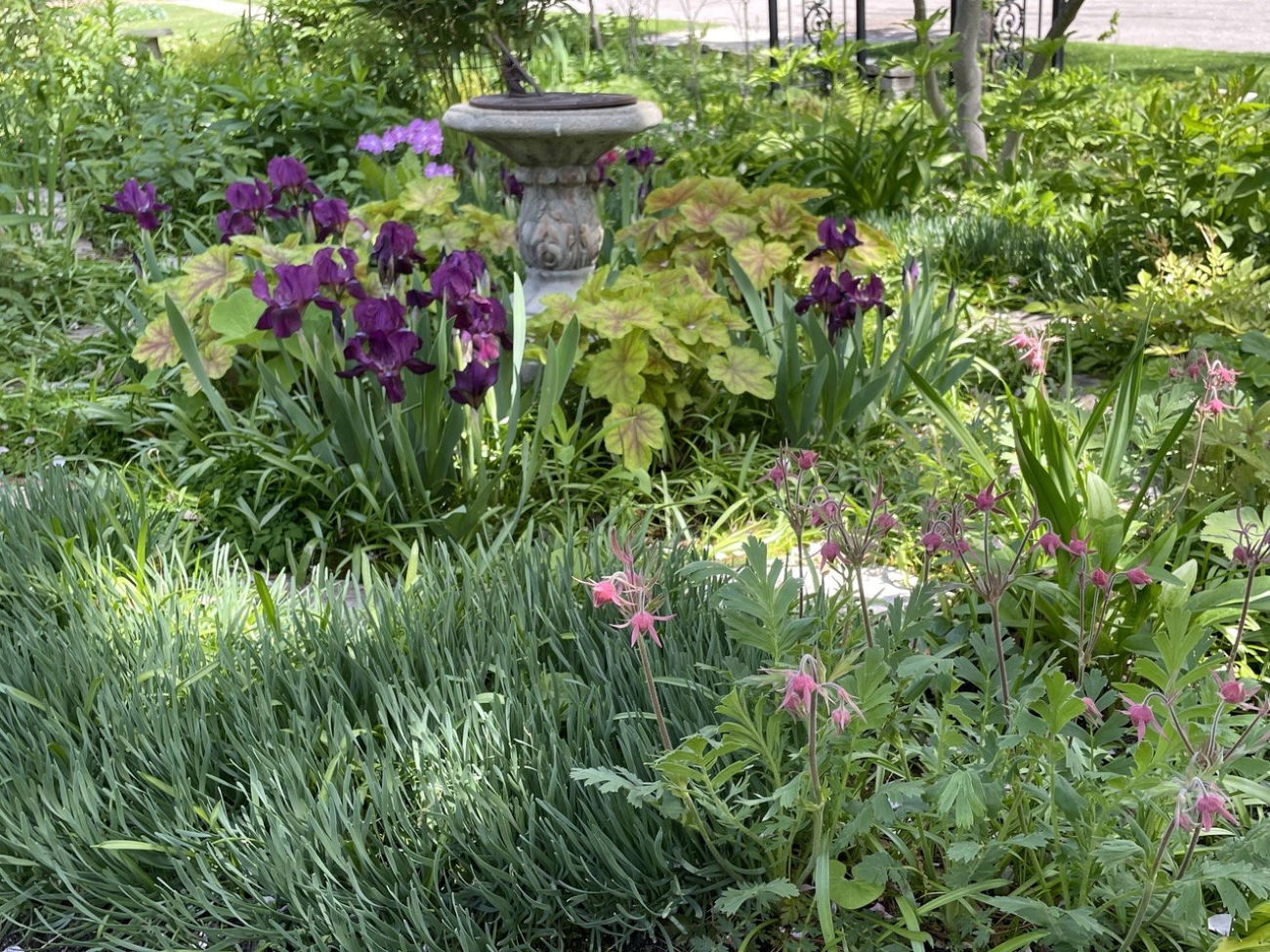
Here is ‘Cherry Garden’ again, May 14, along with another clump of the ubiquitous Japanese primrose. I don’t know the name of the heuchera that also surrounds the sundial, having acquired it from someone selling plants out of his garden (long before jumping worms became a worry). It produces stalks of tiny white blossoms that continue sporadically throughout the summer.
The narrow bluish leaves in the lower left belong to curly onion (Allium senescens ‘Glaucum’, Zones 4–8), which won’t bloom until late in the season. In the lower right you can see prairie smoke (Geum triflorum, Zones 3–7) in flower, a vigorous grower like the other four plants featured here.
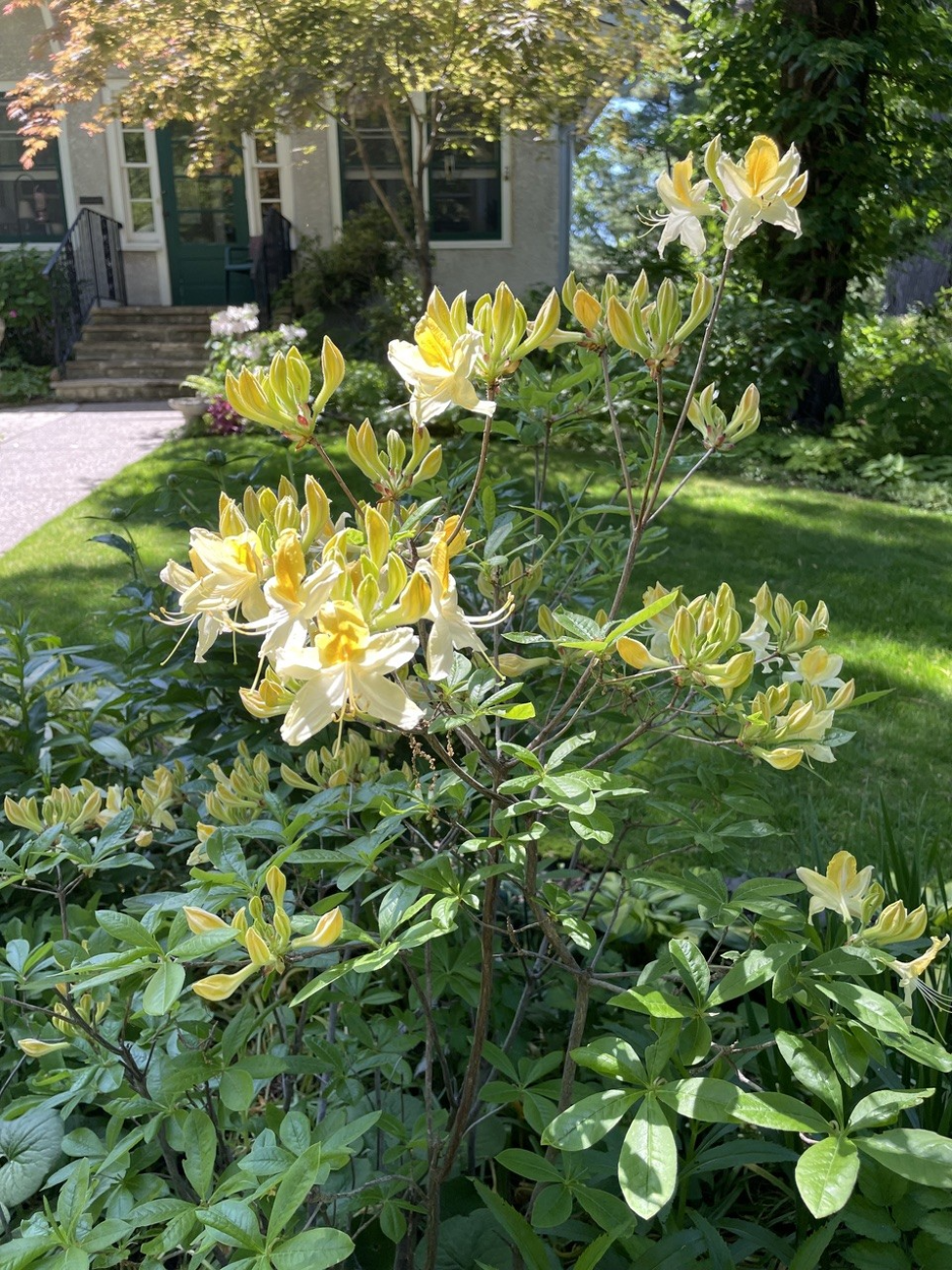
May 24, front garden. In the foreground is a ‘Northern Hi-Lights’ azalea (Rhododendron ‘Northern Hi-Lights’, Zones 4–7), hardy down to –40°F. (My only winter worry about it is not low temperatures but rabbits…) That’s another ‘North Wind’ maple in the background.
Thanks for taking us even further back into your garden, Susan! It’s so much fun seeing how quickly the garden changes from those first April blooms to the much fuller landscape just a few weeks later. And I’m with you on the wider garden views. It’s always nice to see how all these individual plants come together!
We want to see YOUR garden!
Have photos to share? We’d love to see your garden, a particular collection of plants you love, or a wonderful garden you had the chance to visit!
To submit, fill out the Garden Photo of the Day Submission Form.
You can also send 5–10 photos to [email protected] along with some information about the plants in the pictures and where you took the photos. We’d love to hear where you are located, how long you’ve been gardening, successes you are proud of, failures you learned from, hopes for the future, favorite plants, or funny stories from your garden.
Do you receive the GPOD by email yet? Sign up here
Fine Gardening Recommended Products
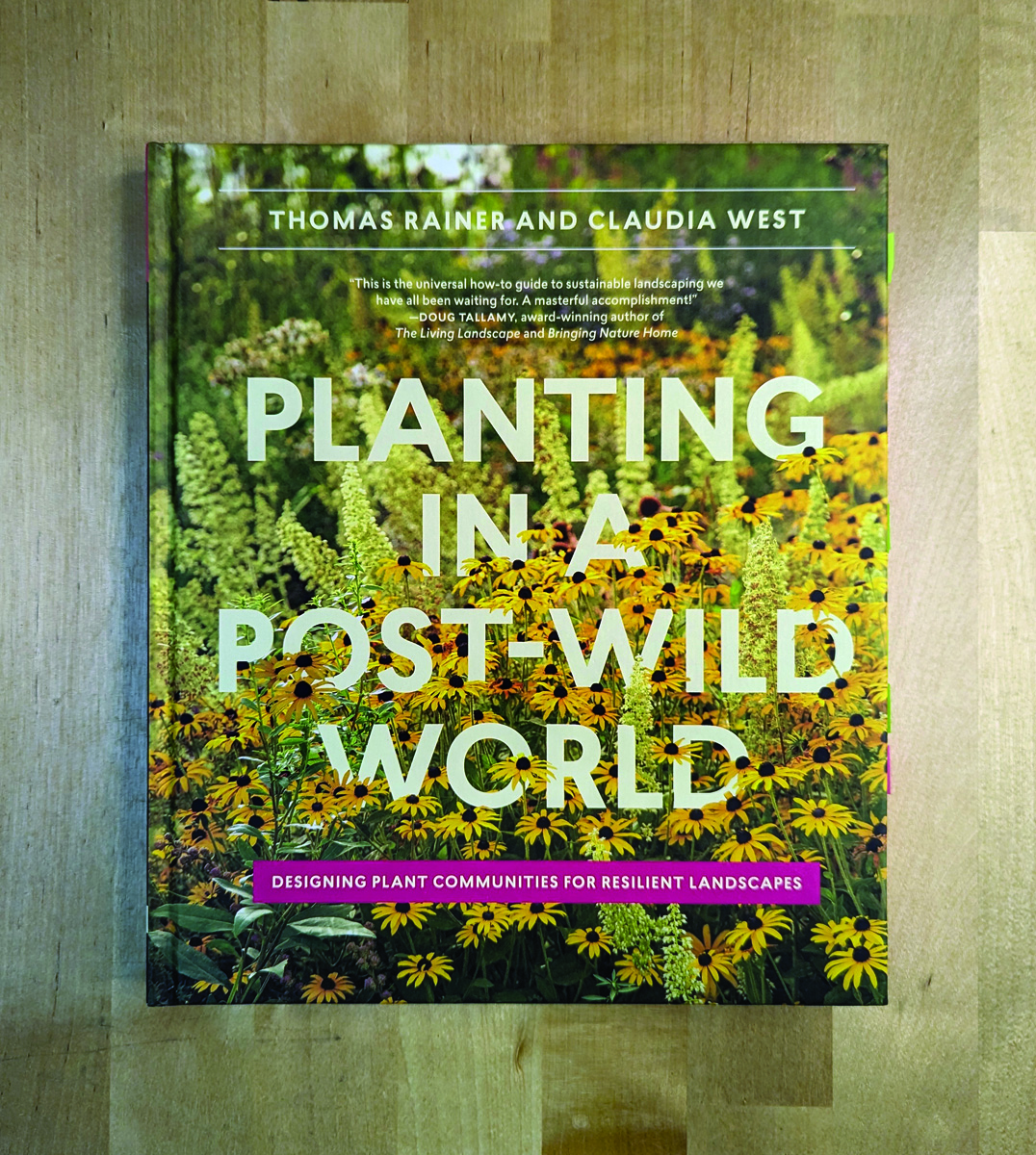
Planting in a Post-Wild World: Designing Plant Communities for Resilient Landscapes
Fine Gardening receives a commission for items purchased through links on this site, including Amazon Associates and other affiliate advertising programs.
Featuring gorgeous photography and advice for landscapers, Planting in a Post-Wild World by Thomas Rainer and Claudia West is dedicated to the idea of a new nature—a hybrid of both the wild and the cultivated—that can nourish in our cities and suburbs.

Scotts Cordless Grass-Shear/Shrub-Trimmer Combo
Fine Gardening receives a commission for items purchased through links on this site, including Amazon Associates and other affiliate advertising programs.
With a built-in 7.2-volt lithium-ion battery, this little guy weighs less than 2 lb. and can zip through all your minor pruning tasks quickly and easily.
– 13.5 x 3 x 5 inches
– Uses a 7.2-Volt 2Ah high-capacity built-in lithium-ion battery; Includes a fast charger
Pruning Simplified: A Step-by-Step Guide to 50 Popular Trees and Shrubs
Fine Gardening receives a commission for items purchased through links on this site, including Amazon Associates and other affiliate advertising programs.
Pruning Simplified shows you exactly how to do it. This must-have guide offers expert advice on the best tools for the job, specific details on when to prune, and clear instructions on how to prune. Profiles of the 50 most popular trees and shrubs—including azaleas, camellias, clematis, hydrangeas, and more—include illustrated, easy-to-follow instructions that will ensure you make the right cut the first time.