

To end the week, we’re heading to another stop on Fine Gardening’s Stunning Gardens of the Netherlands tour to visit the garden of flower stylist, gardener, and lecturer Marieke Nolsen in Leusden. Marieke describes her garden as a bouquet. How lovely is that? After looking through these photos, it’s easy to see why.
Marieke and her family moved to the property in 2002 and transformed what had been a fairly simple garden of lawn, conifers, paving, and hedging. She designed the roughly 1,600-square-meter property herself, dividing it into garden rooms with strong lines, paths, beech, and boxwood while filling the borders with perennials and shrubs. As a floral designer, she deliberately grows flowers, berries, and foliage she can use in natural arrangements, allowing her garden and floral work to overlap throughout the seasons.
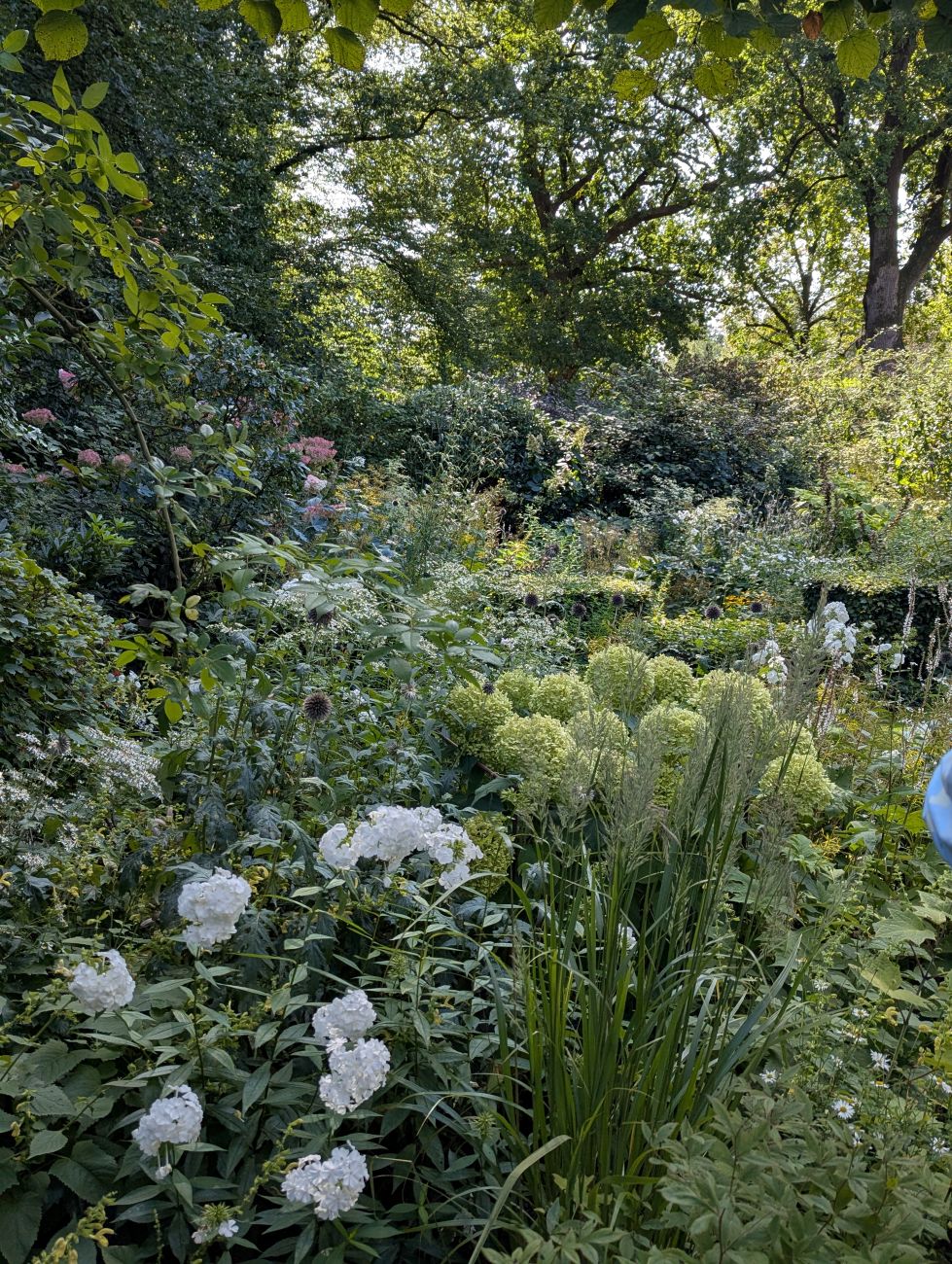
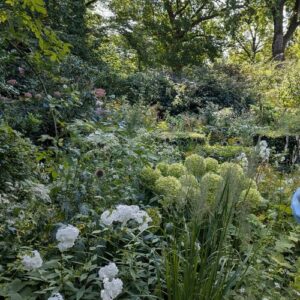
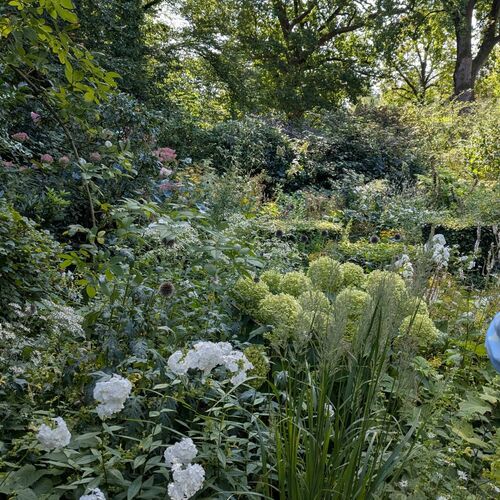
This border captures Marieke’s preference for weelderige, transparante borders—lush, airy plantings with a natural appearance. White blooms and seedheads rise through layers of foliage, while taller trees and shrubs give the planting its soft, billowing shape.
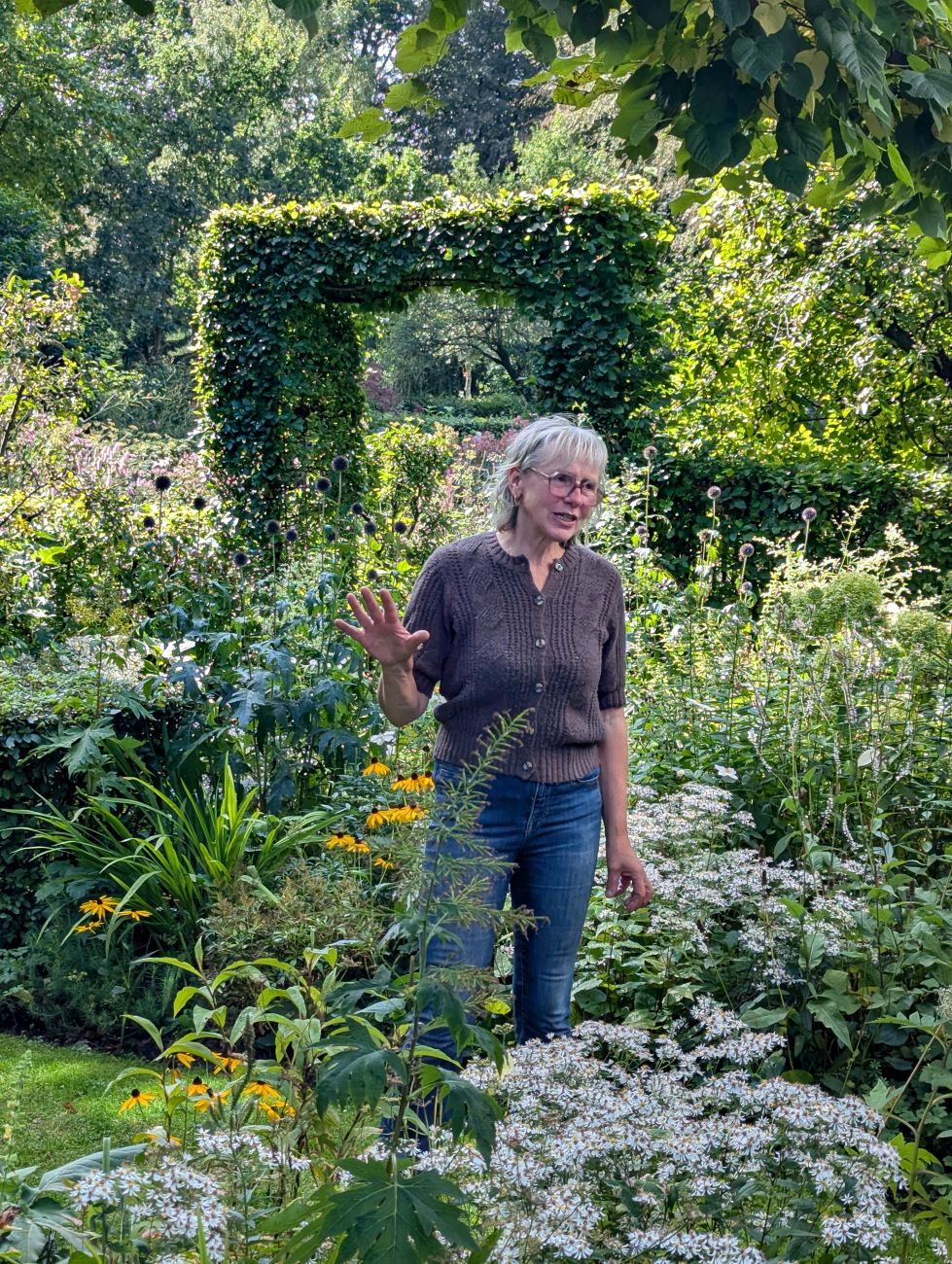
Marieke stands among the layered plantings of her garden on Landgoed Den Treek-Henschoten. She designed straight sightlines from the house and connected different sections with brick and grass paths. Openings like the one behind her offer only partial views into what comes next.
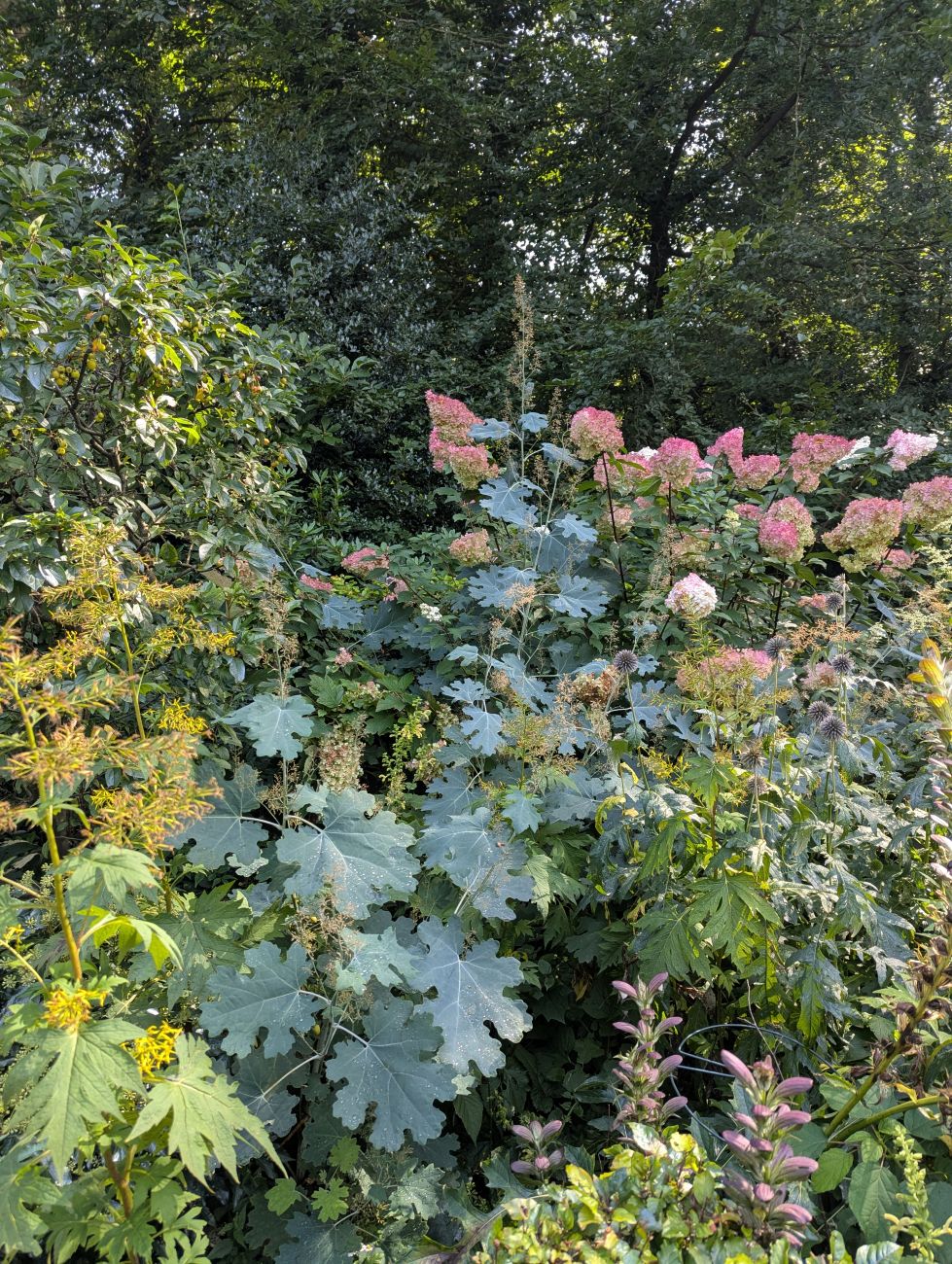
Pink hydrangeas mingle with plume poppy (Macleaya cordata, Zones 4–10) and globe thistle (Echinops cvs., Zones 3–8) in this border. Hydrangeas are Marieke’s favorite flower, and she cuts them freely throughout summer and fall for arrangements.
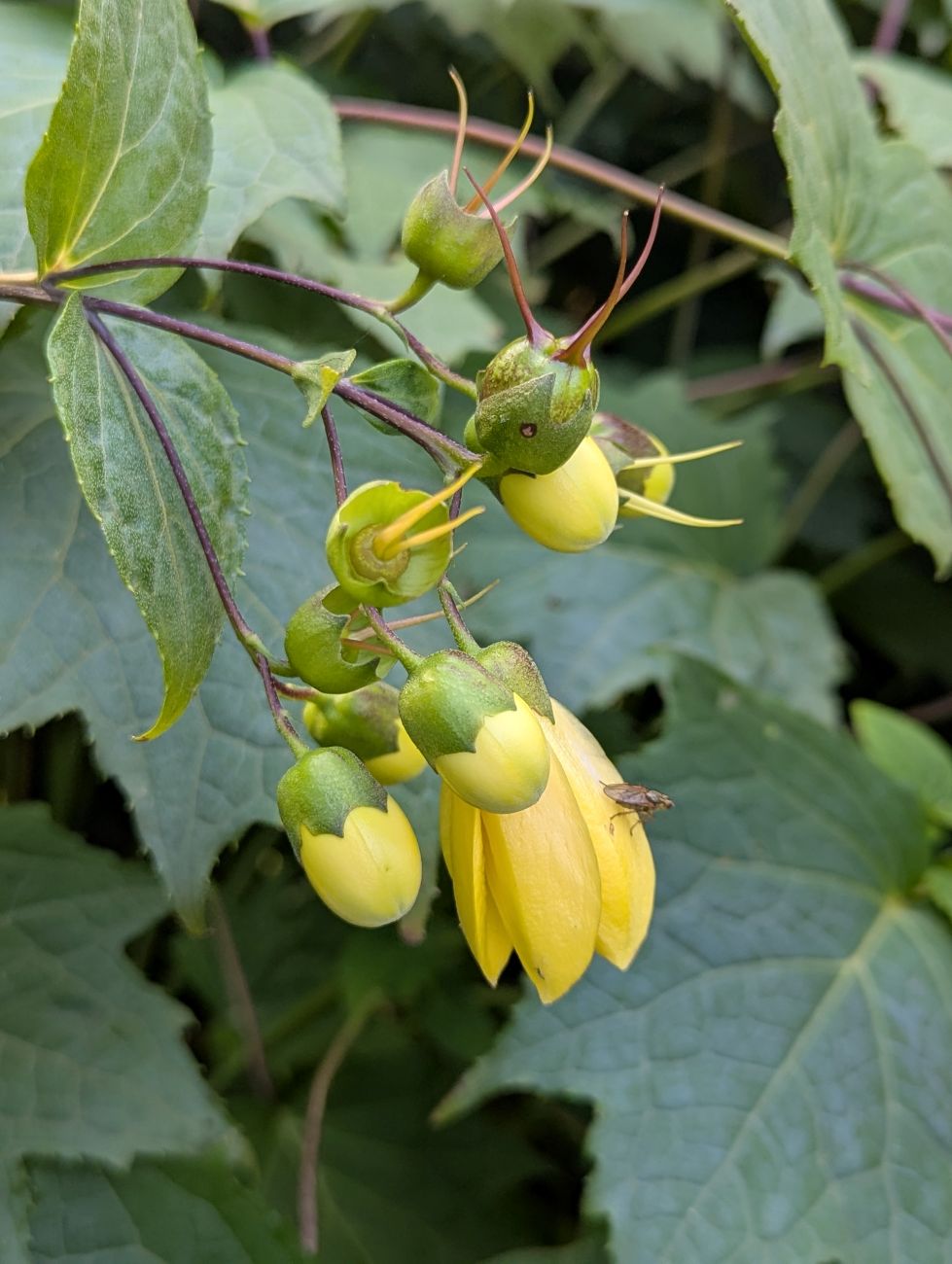
Yellow wax bells (Kirengeshoma palmata, Zones 5–8) add broad, maplelike foliage to the garden before their soft-yellow, nodding flowers appear in late summer and early fall.
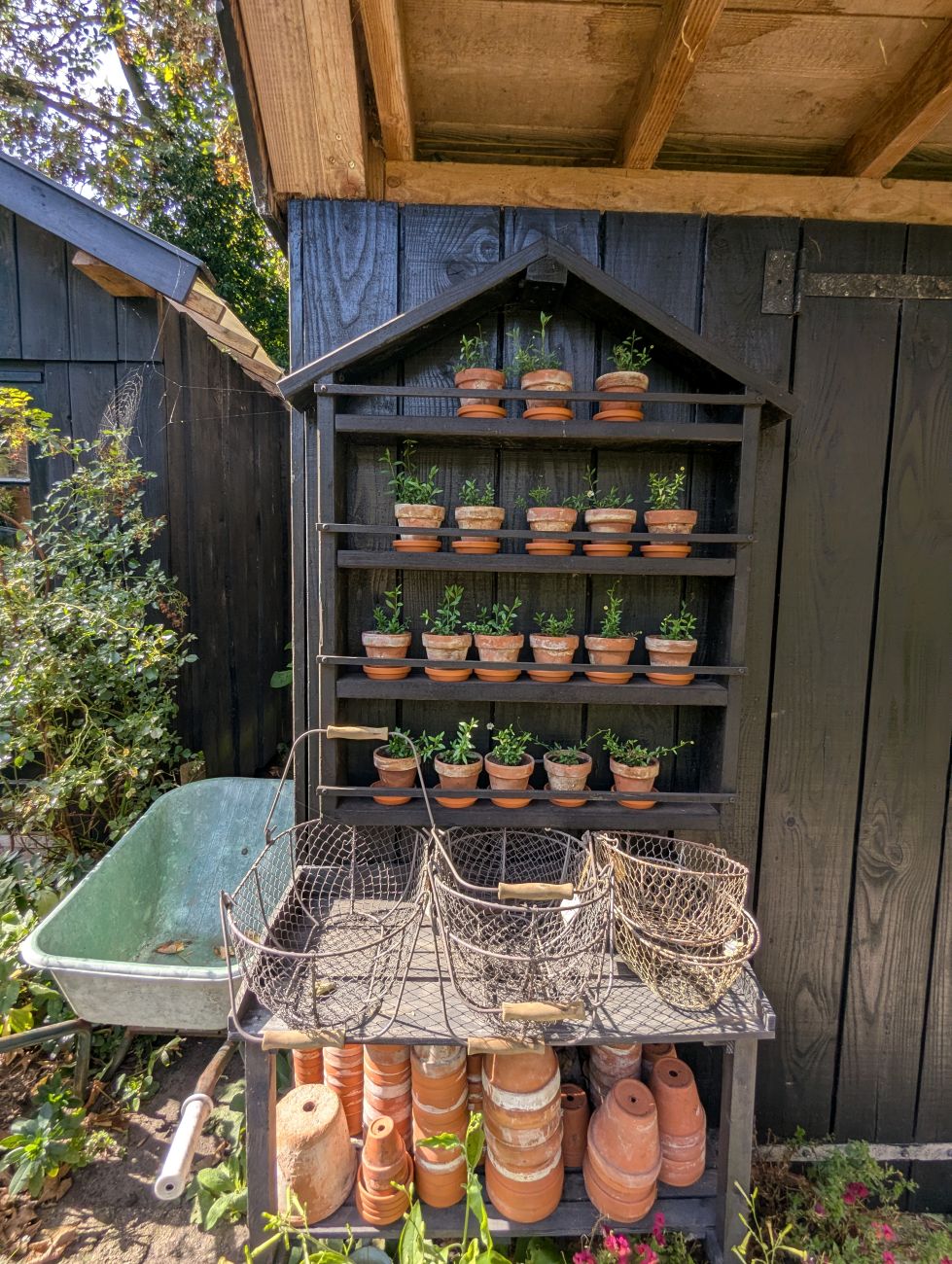
This potting area is used to store pots through the winter and pot up seedlings for the garden. The small garden house was built by Marieke’s husband, Martin.
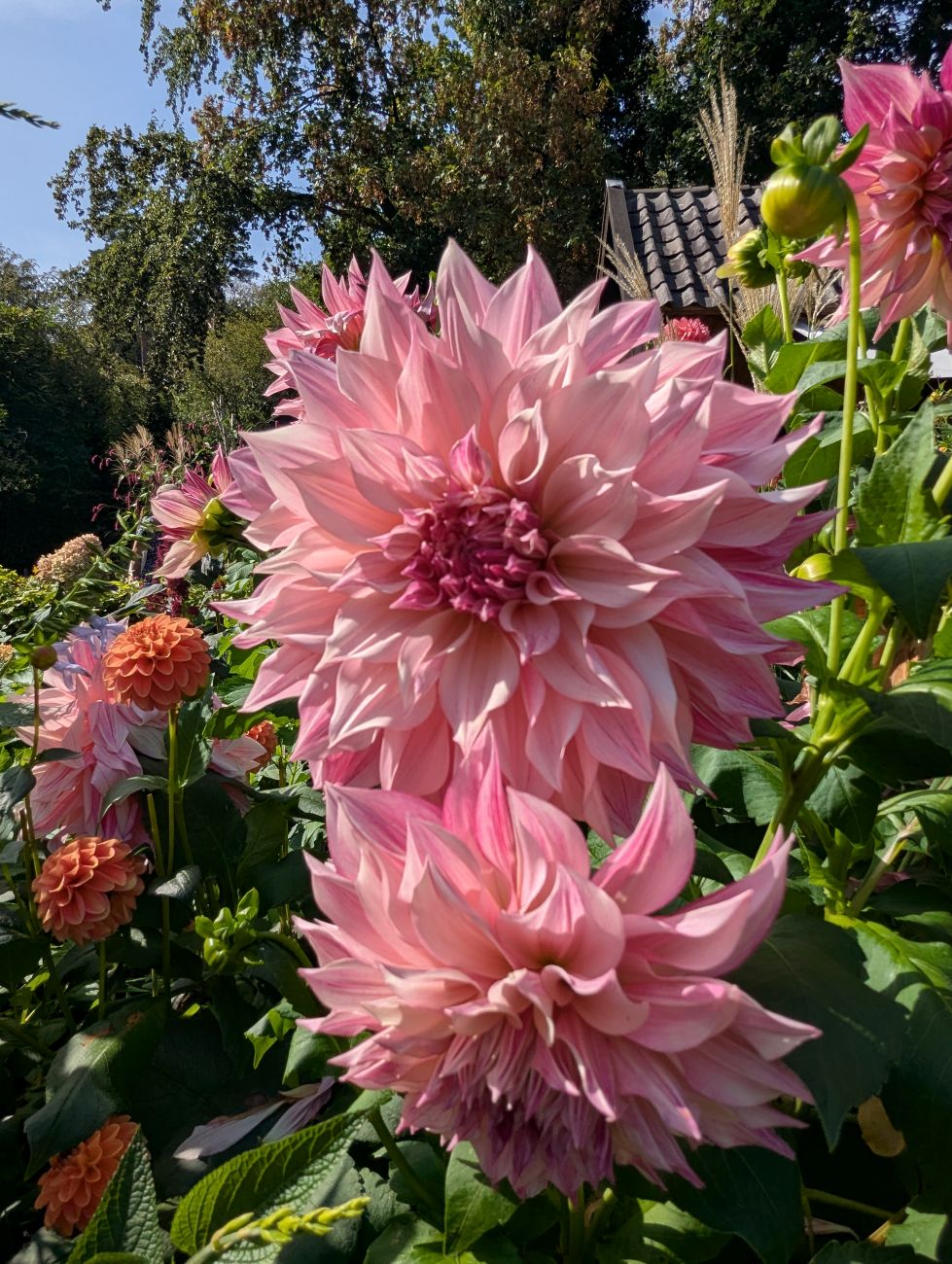
Dahlias (Dahlia cvs., Zones 8–11) are the stars of the cutting garden, which Marieke and Martin created from an old vegetable garden after visiting Sarah Raven’s Perch Hill Farm. She plans combinations with future bouquets in mind, grouping colors and flowers she knows will work well together.
Martin builds the natural supports from posts and hazel branches, while Marieke also uses woven birch twigs to support plants without distracting from the garden.
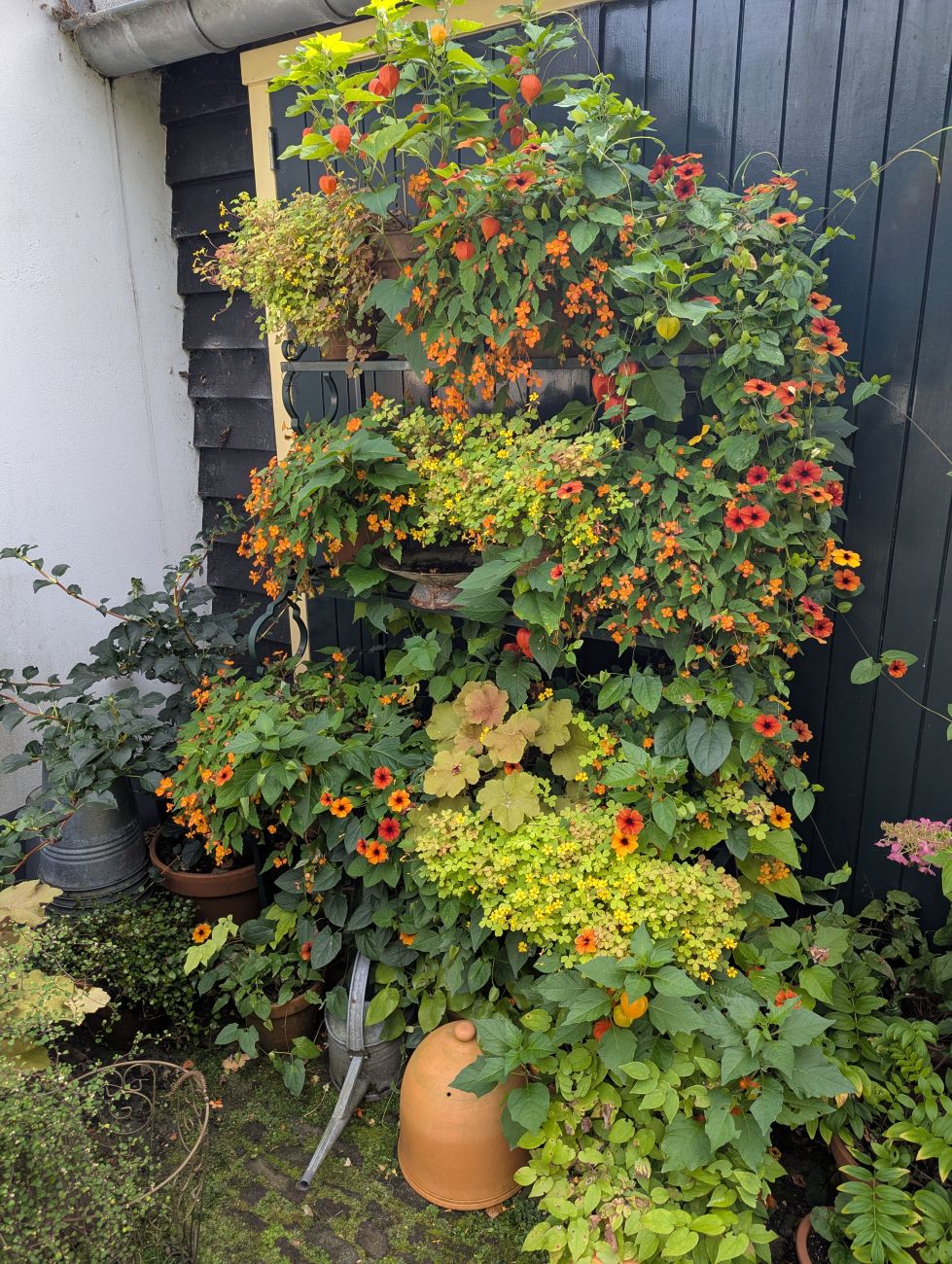
Her approach to containers borrows from floral design. She groups terracotta and zinc pots at varying heights and combines warm colors such as orange, salmon, yellow, pink, and red so the display reads as a composition rather than a collection of individual pots.
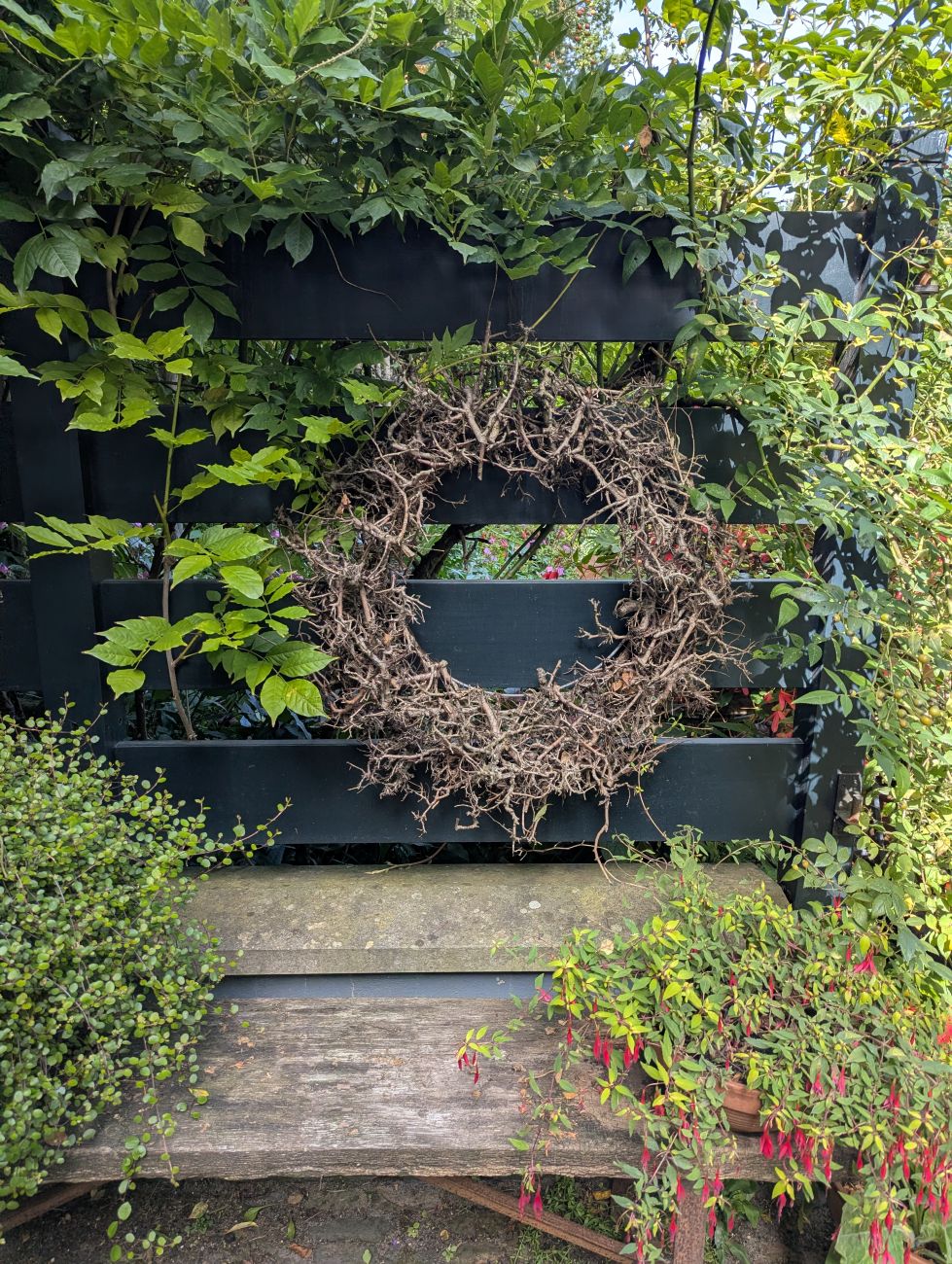
A natural wreath tucked into this vine-covered gate is another creative use of material gathered from the garden. Her workshops incorporate seasonal plants into natural decorations for both inside and outside the home.
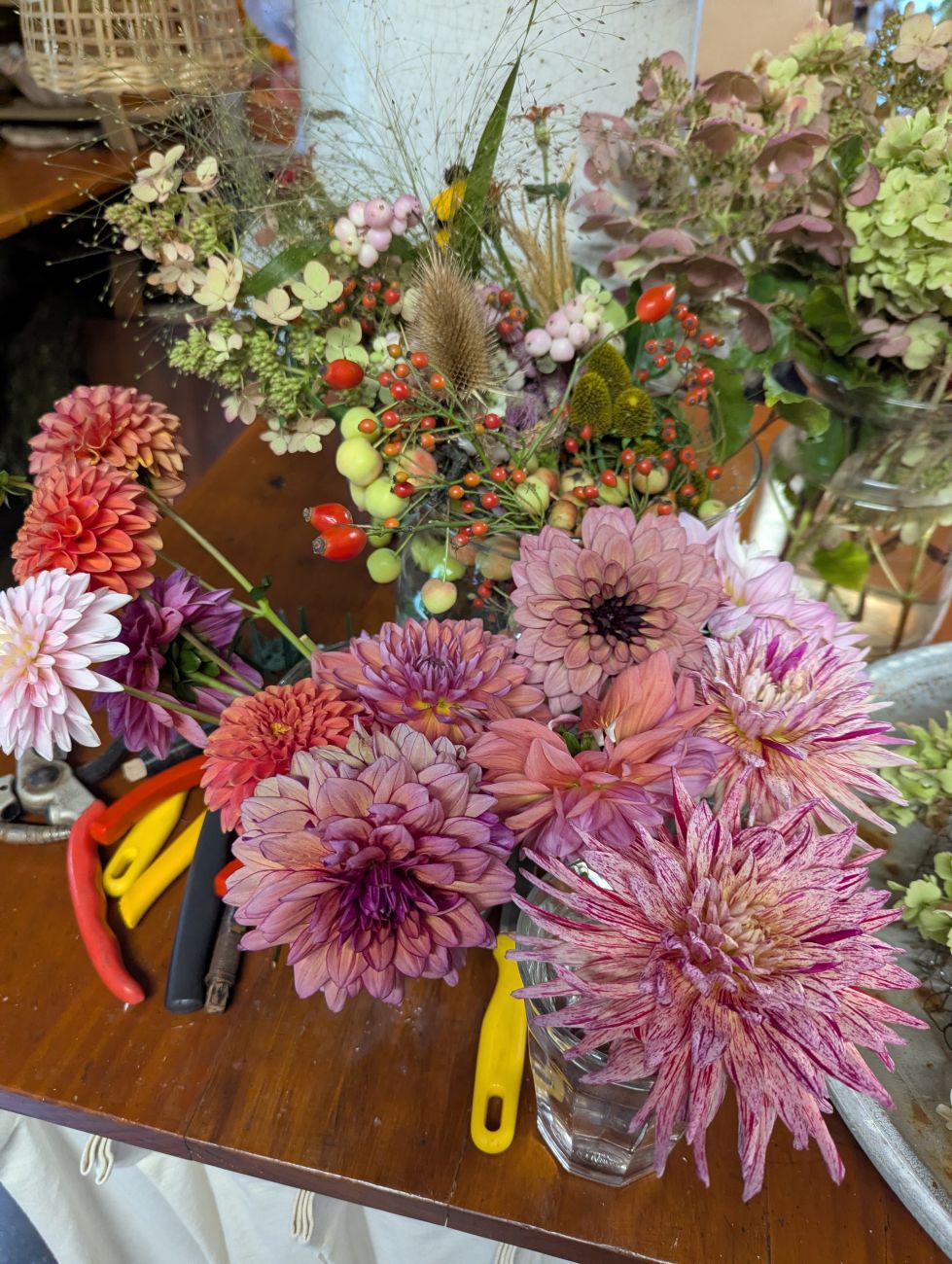
Dahlias, hydrangeas, rose hips, berries, seedheads, grasses, and foliage offer an incredible range of material for arrangements. Flowers are only part of the equation; interesting foliage, fruit, and even fading blooms can find their way into the finished designs.
And even Marieke admits that cutting from a beautiful garden can be hard. In her workshops, she jokes about having a little “cutting fear” when the garden is looking especially good because she doesn’t want to disturb the display.
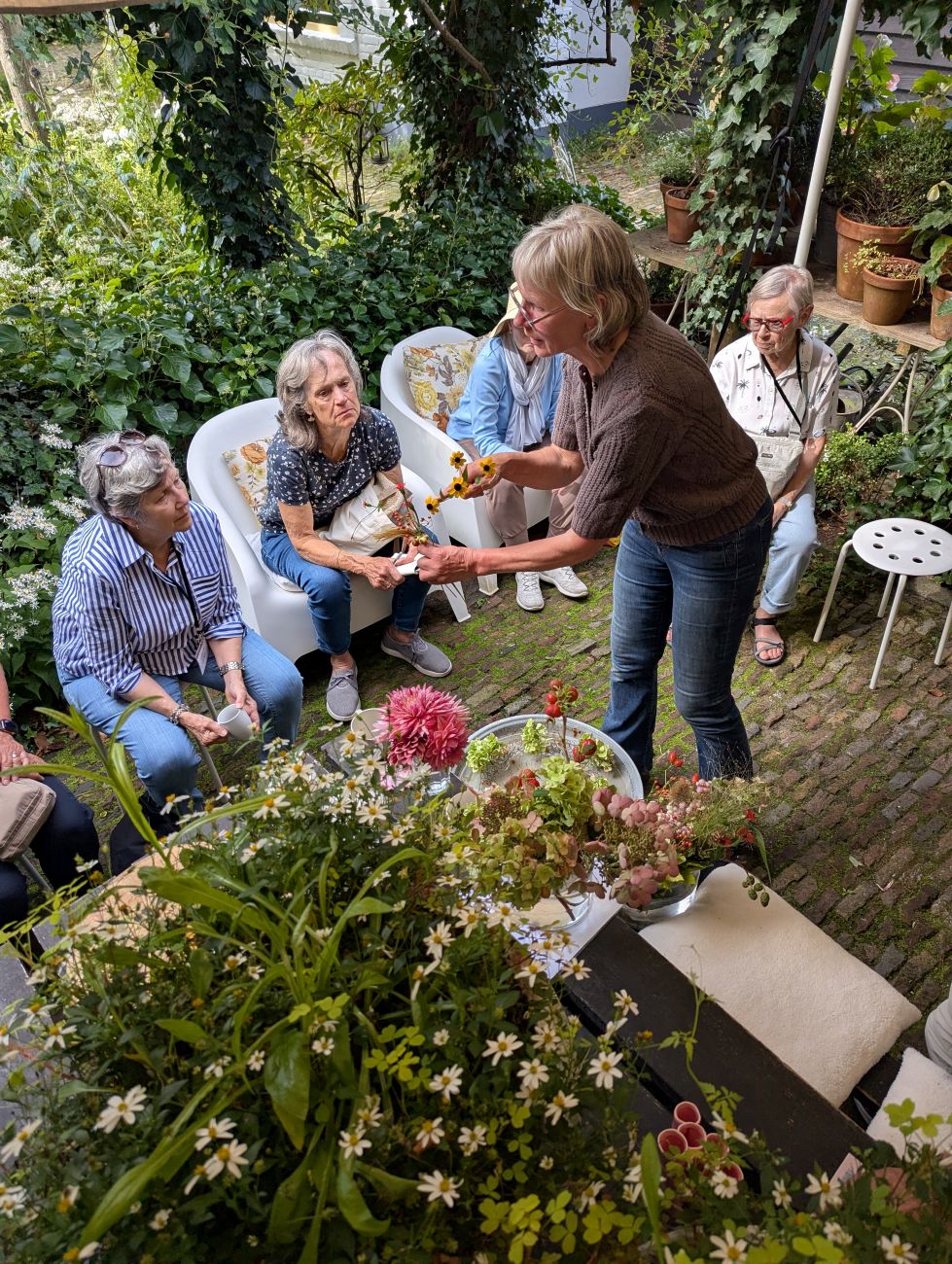
The visit ends with Marieke demonstrating how garden-grown flowers, foliage, and other seasonal materials come together in an arrangement.
Seeing Marieke’s garden has completely changed the way I picture a cutting garden. This isn’t simply a collection of flowers planted in rows to be harvested. It is a garden worth walking through and experiencing on its own, with the added bonus that each season provides something new to bring indoors.
And with that, we’ll wrap up another week of GPOD! I hope everyone has a wonderful weekend, and we’ll be back Monday with another garden to explore.
We want to see YOUR garden!
Have photos to share? We’d love to see your garden, a particular collection of plants you love, or a wonderful garden you had the chance to visit!
To submit, fill out the Garden Photo of the Day Submission Form.
You can also send 5–10 photos to [email protected] along with some information about the plants in the pictures and where you took the photos. We’d love to hear where you are located, how long you’ve been gardening, successes you are proud of, failures you learned from, hopes for the future, favorite plants, or funny stories from your garden.
Do you receive the GPOD by email yet? Sign up here
Fine Gardening Recommended Products
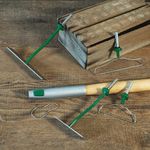
Johnny’s Selected Seeds Connecta® Cultivation Kit
Fine Gardening receives a commission for items purchased through links on this site, including Amazon Associates and other affiliate advertising programs.
Choose the right tool head for the job and switch out quickly with a simple push-button release. Includes the Connecta receiver, Connecta Collinear 4 head, Connecta Collinear 7 head, Connecta Contour Wire 4 head, Connecta Contour Wire 6 head, a sustainably harvested oiled ashwood handle, and a stainless-steel carrying clip.
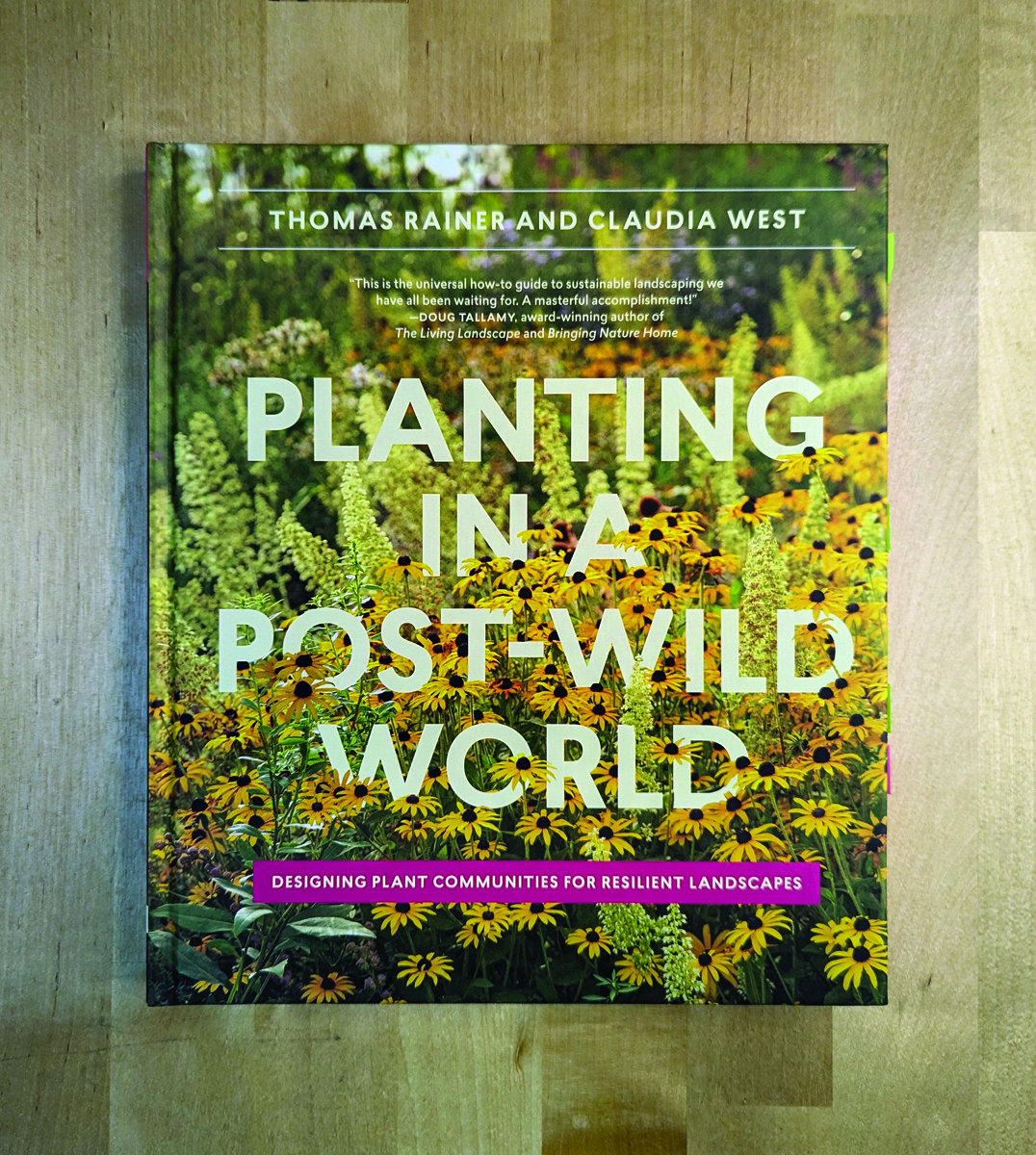
Planting in a Post-Wild World: Designing Plant Communities for Resilient Landscapes
Fine Gardening receives a commission for items purchased through links on this site, including Amazon Associates and other affiliate advertising programs.
Featuring gorgeous photography and advice for landscapers, Planting in a Post-Wild World by Thomas Rainer and Claudia West is dedicated to the idea of a new nature—a hybrid of both the wild and the cultivated—that can nourish in our cities and suburbs.
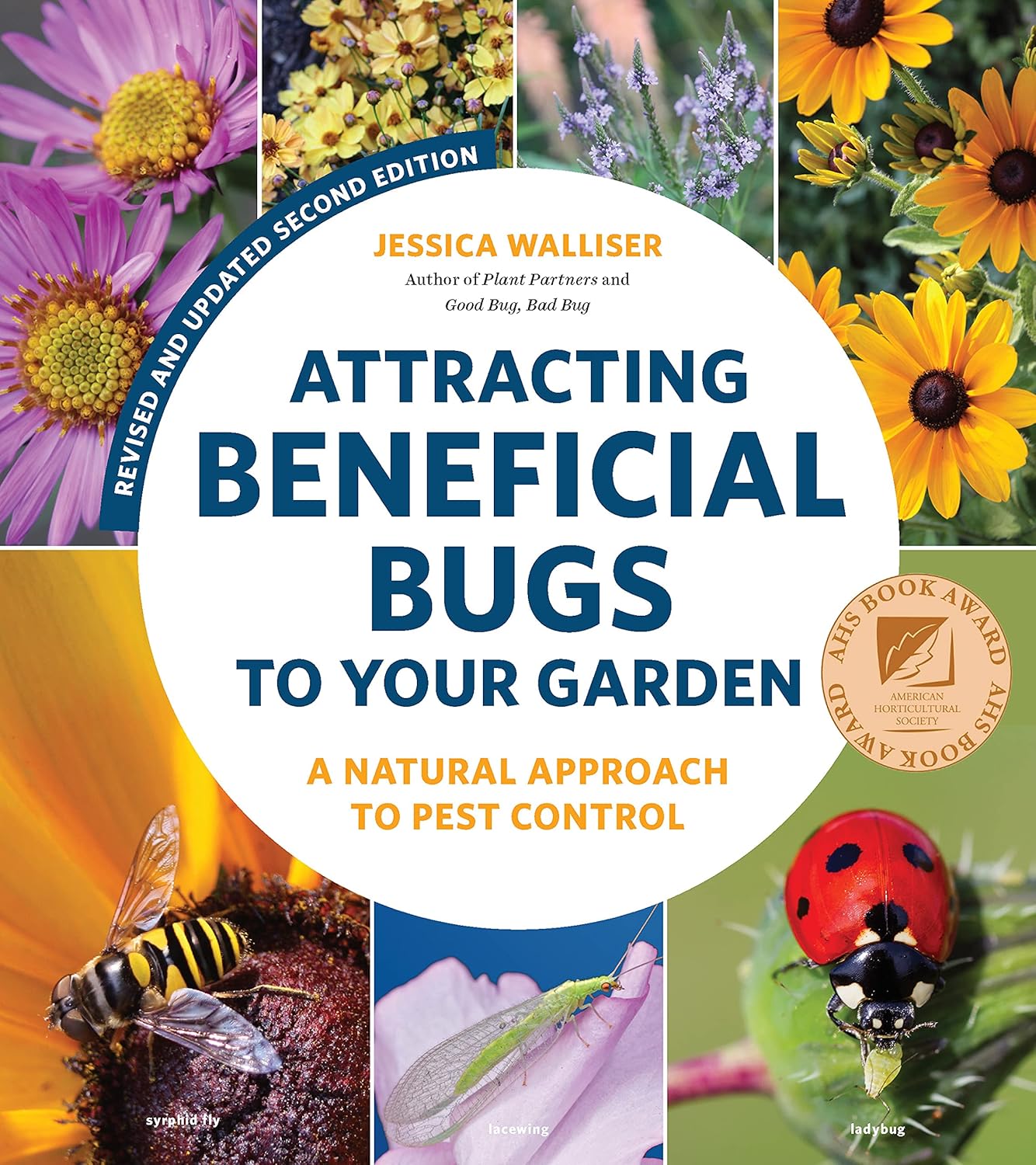
Attracting Beneficial Bugs to Your Garden, Revised and Updated Second Edition: A Natural Approach to Pest Control
Fine Gardening receives a commission for items purchased through links on this site, including Amazon Associates and other affiliate advertising programs.
This revised and updated edition of Jessica Walliser’s award-winning Attracting Beneficial Bugs to Your Garden offers a valuable and science-backed plan for bringing balance back to the garden. With this indispensable gardening reference—now updated with new research, insights, and voices—learn how to create a healthy, balanced, and diverse garden capable of supporting a hard-working crew of beneficial pest-eating insects and eliminate the need for synthetic chemical pesticides.