
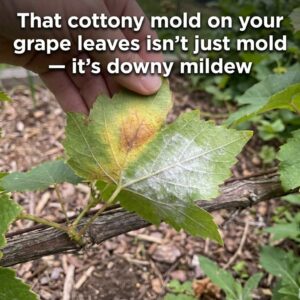
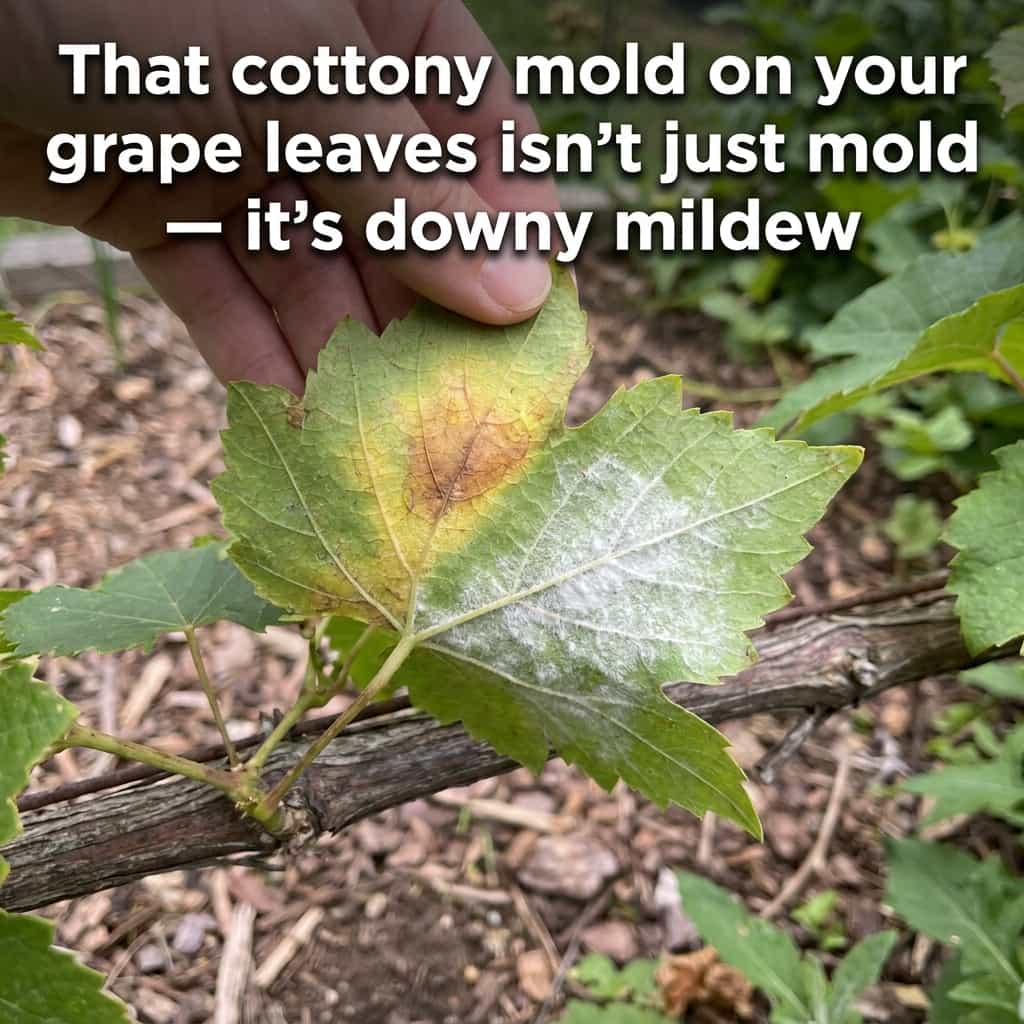
Cottony white mold on the underside of a grape leaf, sitting opposite a yellow blotch on top, is the fingerprint of downy mildew — not a coincidence.
Dense, cottony white mold on grape leaves, fruit, shoots, and tendrils in summer is almost always downy mildew (Plasmopara viticola), not powdery mildew. The tell is location: downy mildew’s fuzzy white growth appears on the leaf underside, opposite a yellow-to-brown spot on top, and it can spread into young shoots, tendrils, and green berries. Powdery mildew looks drier and more powdery, mostly on the upper leaf surface, without that paired yellow-spot/white-underside pattern.
It’s a water mold, not a true fungus, and it thrives in warm, humid summer weather.
What Is Actually Causing the Cottony Mold?
Downy mildew overwinters in fallen leaf debris and releases spores in spring rain that splash onto new growth. Once established, it produces the dense, cottony sporulation on leaf undersides, and in wet years it can move into shoot tips, causing a curled dieback, and into young berry clusters, turning them gray-brown. Leaving infected leaves on the ground over winter re-seeds the problem the following year.
Which Old-Guide Treatments Still Work?
Fixed copper fungicides and Bordeaux mixture (copper sulfate plus lime) are still current, labeled, effective options against grape downy mildew — exactly as they were decades ago.
Two products don’t hold up: zineb had its U.S. registration and food-crop tolerances canceled in the 1990s, and ferbam‘s registration was canceled in 2006, so neither can legally be bought or used today. Captan is still registered but under continued regulatory review, with reduced reliability against downy mildew in some regions — treat it as a rotation partner, not a first choice, and always follow the current label for rate and days-to-harvest.
How to Treat and Prevent It Now
Start protectant sprays with a current fixed-copper or Bordeaux product once mildew is first seen, or earlier in a vineyard with a history of the disease. Repeat on a 7 to 10 day interval while weather stays warm and wet, and follow the label’s exact rate and pre-harvest interval, since grapes are a food crop.
Prune and retie vines every year to open the canopy — the original advice on this point is still correct — since better airflow dries leaves faster and slows the disease. Rake up and destroy fallen leaves in autumn rather than composting them nearby, since that’s where the pathogen overwinters, and avoid overhead watering that wets the canopy in the evening.
Concord vines develop real resistance to leaf infection within a few weeks after bloom, confirmed by current research, though the berries stay vulnerable longer. Older names like ‘Clinton’ and ‘Lutie’ appear in vintage variety lists as mildew-tolerant, but neither has enough current documentation to recommend with confidence today. If mold keeps returning despite pruning and a copper program, a local extension office can confirm the exact disease and recommend a current, regionally labeled fungicide.
Frequently Asked Questions
Is cottony mold on grape leaves downy mildew or powdery mildew?
Almost always downy mildew, when the cottony growth is on the leaf underside opposite a yellow spot on top; powdery mildew looks drier and powdery, mostly on the upper surface.
Can I still use the zineb or ferbam my old garden book recommends?
No. Both have had their U.S. registrations canceled and cannot legally be purchased or applied; use a current fixed-copper or Bordeaux product instead.
Are Concord grapes really resistant to downy mildew?
Concord vines develop meaningful leaf resistance a few weeks after bloom, but the berries can still be infected, so a preventive spray program is still worth it in wet years.
[GUVNM]