9 insect pollinator species from 3 separate orders visited a single Jasminum species in one research context. The “jasmine” at most nurseries? A different genus altogether.
Many plants sold under the jasmine name — including star jasmine (Trachelospermum jasminoides) — belong to entirely different plant families from true jasmine. The real genus, Jasminum, runs a distinct pollinator operation, built around scent and flower structure that draws insects from across multiple orders.
That distinction matters more than most gardeners realize. A plant wearing the jasmine label is not guaranteed to offer what Jasminum actually delivers to visiting insects.
Why the Jasmine Name Gets Applied to So Many Different Plants
The name jasmine migrated across genera because fragrance and small white flowers kept appearing in unrelated species. Star jasmine, Cape jasmine, Madagascar jasmine, and Chilean jasmine all carry the name. None belong to Jasminum.
This taxonomic borrowing created a real gap in expectations. A gardener planting for pollinator support is working with a genuinely different plant depending on which “jasmine” ends up in the ground.
How True Jasminum Flowers Attract Insect Pollinators
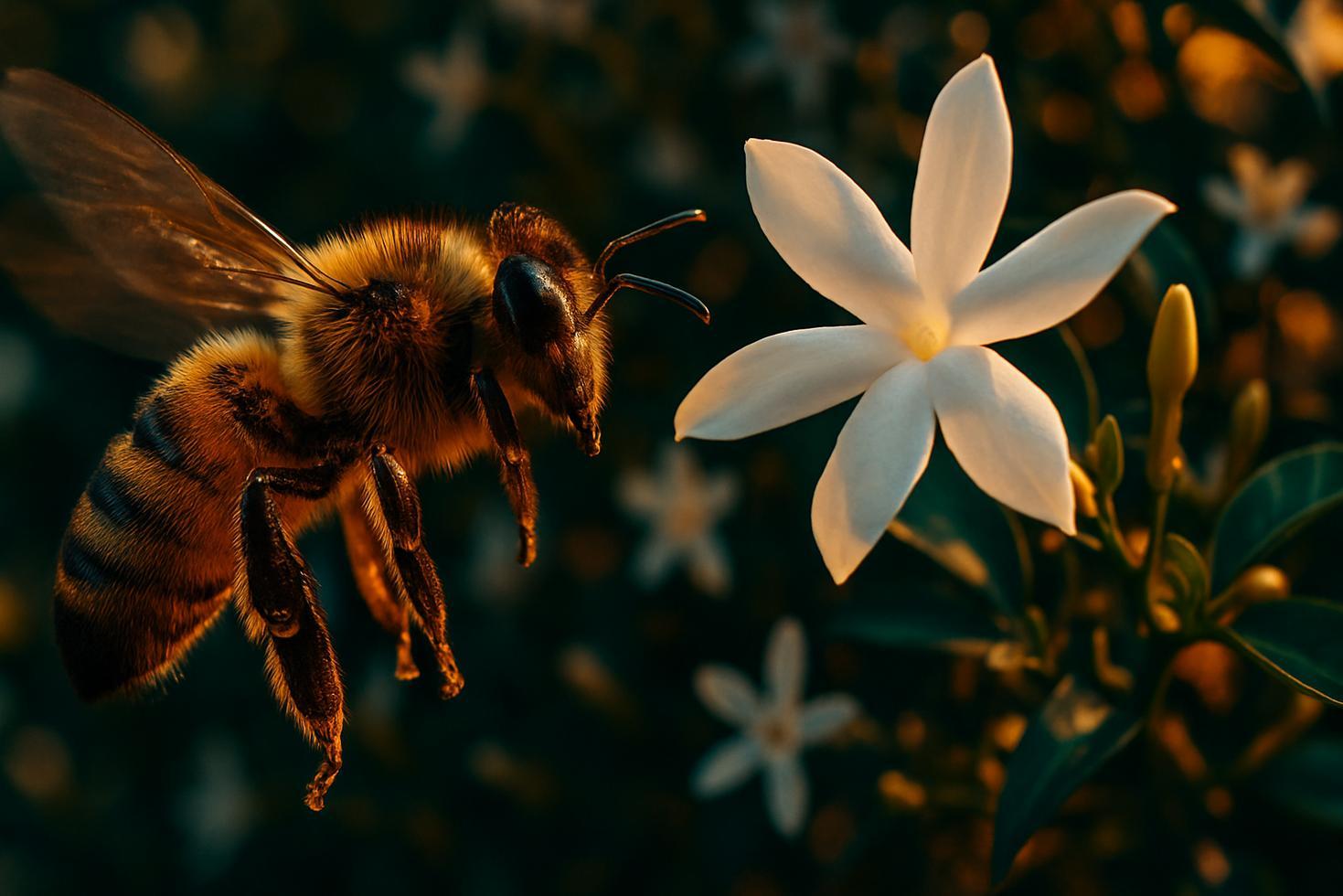
Fragrance is the primary draw. True jasmines release scent compounds that carry through cooler air, a trait that extends the flower’s effective broadcast range after dusk. Scent release linked to cooler evening temperatures makes Jasminum particularly effective at pulling in moths alongside daytime bee visitors.
Flower structure reinforces the selection. The narrow tube at the base of Jasminum flowers limits access, favoring insects whose tongue length or body size fits the geometry. That mechanical filter means not every insect that arrives can feed effectively.
Research on one Jasminum species recorded 9 distinct pollinator species drawn from 3 insect orders — bees, flies, and beetles all documented as visitors in a single study context.
Bee Visitation Rates Observed on Jasmine Flowers
The most specific visitation data available comes from observations on star jasmine, despite it not being a true Jasminum. One commercial gardening source reported 3–12 bee visits per flower cluster within a 10-minute window, with honeybees and native bumblebees both counted among visitors. That figure comes from a commercial rather than peer-reviewed source, so it describes conditions rather than a controlled result.
True Jasminum visitation data from research contexts confirms pollinator diversity spanning three separate insect orders, which points to a broad-spectrum attraction mechanism rather than a narrow specialist relationship.
The genus Jasminum and the plants that borrow its common name are doing genuinely different things in a garden. One has a documented record across multiple insect orders. The other shares a name and a passing resemblance. For anyone tracking what insects actually visit, that difference is the whole story.
Frequently Asked Questions
Is star jasmine a true jasmine?
No. Star jasmine (Trachelospermum jasminoides) belongs to a different genus and plant family from true jasmine (Jasminum).
What insects visit true Jasminum flowers?
Research documents bees, flies, and beetles visiting Jasminum — representing 3 insect orders and 9 recorded pollinator species in one study context.
How often do bees visit jasmine flowers?
One commercial-source observation recorded 3–12 bee visits per flower cluster per 10-minute window on star jasmine, with honeybees and bumblebees both present.
Which plants are confirmed true jasmines?
Jasminum sambac and Jasminum polyanthum are confirmed true jasmines within the Jasminum genus.