

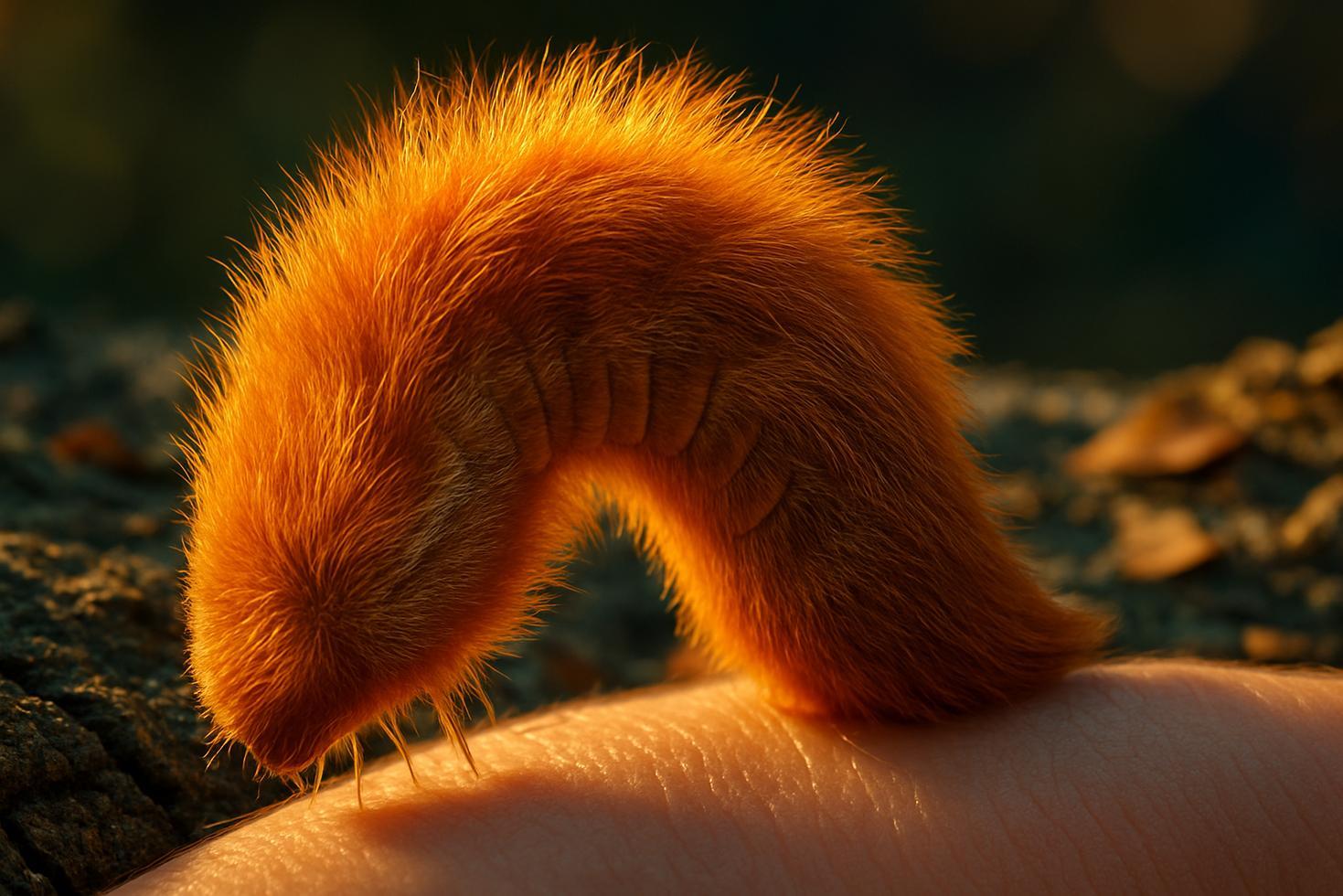
Hollow, glass-like spines hidden beneath that silky coat snap off into skin on contact — and keep delivering amino acid venom after they detach.
The puss caterpillar — the larval form of the southern flannel moth — carries hollow, glass-like spines loaded with amino acid venom beneath its soft, fur-like exterior. Those spines snap off into skin on contact and continue delivering venom after they detach. That is not a conventional sting. It is a passive, contact-triggered mechanism that requires no action from the caterpillar at all.
What makes this particularly striking is the sequence of events after the caterpillar is gone. The embedded spine keeps acting like a tiny channel, and venom continues moving through it while it sits in the skin. The burning that intensifies in the minutes following contact reflects exactly that ongoing delivery.
How the Puss Caterpillar’s Hollow Spines Work
Texas A&M’s IPM materials describe the spines as hollow and glass-like, containing amino acid venom. The dense coat hides dozens of these spines. A light brush against the caterpillar can drive multiple spines into skin simultaneously, all at once, without any deliberate action on the insect’s part. Contact alone triggers the sequence.
What Happens to the Venom After the Spines Detach
Once embedded, the spines do not simply stop. Venom continues moving through the hollow structure while it remains in the skin. This explains the characteristic pattern: pain and burning that can intensify for minutes after the caterpillar is no longer present. Poison Center Tampa confirms that the spines break off in the skin and cause severe pain.
First Response After a Puss Caterpillar Sting
The priority after contact is physical removal. Tape pressed firmly over the area and then peeled away lifts embedded spines from the skin. Washing with soap and water follows. Cold therapy — an ice pack or ice cube wrapped in cloth — addresses the pain and burning that remain after removal. Merck Manual supports ice for soothing pain and burning. Medical News Today notes that extended cold application can adversely affect skin, so shorter intervals are standard across guidance sources, though no single clinical protocol is universal.
Severe reactions — difficulty breathing, widespread hives, or swelling of the face or throat — require immediate medical attention.
The puss caterpillar does not hunt or strike. It simply exists inside a coat that does the work automatically. That combination of camouflage and passive delivery is what makes it the most venomous caterpillar in the United States.
Frequently Asked Questions
What is inside a puss caterpillar’s spines?
The hollow spines contain amino acid venom, according to Texas A&M IPM materials.
Why does the burning get worse after the caterpillar is gone?
The detached spines remain embedded in the skin and continue channeling venom after they separate from the caterpillar’s body.
How do you remove puss caterpillar spines from skin?
Press tape firmly over the contact area and peel it away to lift the spines out, then wash with soap and water.
Does ice actually stop the venom from spreading?
No. Cold therapy lowers local nerve conduction and may reduce pain and swelling, but it does not remove spines or neutralize venom — that is why tape removal comes first.