
Today we’re taking a trip across the Atlantic to Mrągowo, Poland, for a look at Magda’s newly planted Climate Adaptation Garden. Here’s what she has to say:
Since May this year, I have been creating a new 4,000-square-meter Climate Adaptation Garden in the Masurian region of Poland. So far, I have planted more than 6,000 perennials and ornamental grasses.
This garden will serve as a living laboratory where I will develop and study my original concept of the Plant Palimpsest, a method of designing perennial borders that are more resilient to climate change and increasingly extreme weather conditions.
I have been designing gardens for more than 20 years and run a collection of demonstration gardens in the Masurian region. Alongside my naturalistic gardens, I also have formal gardens that are open to visitors.
The new garden brings together my experience in garden design, plant composition, and long-term observation, with the aim of developing practical approaches to gardens that can adapt to a changing climate.
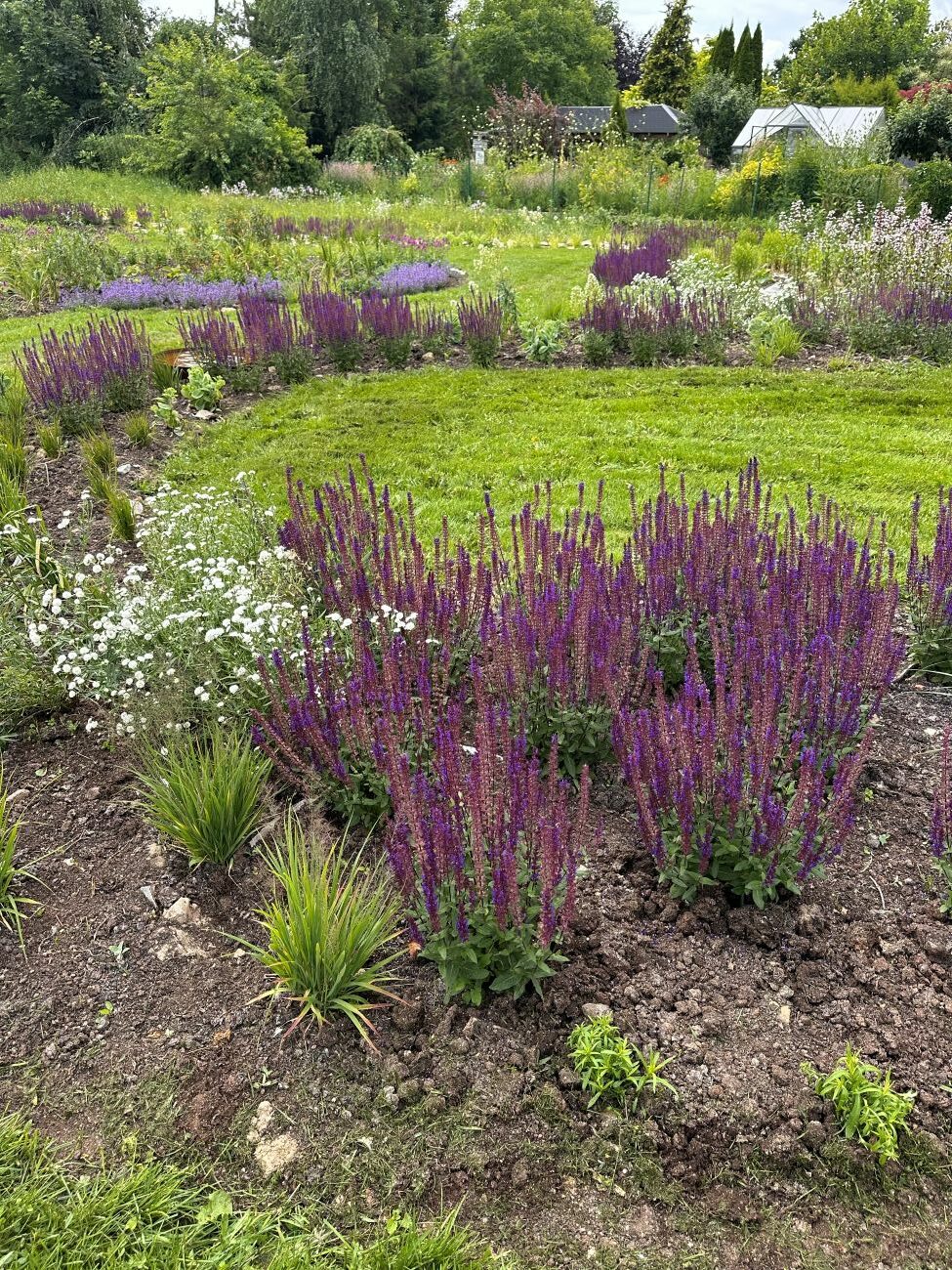
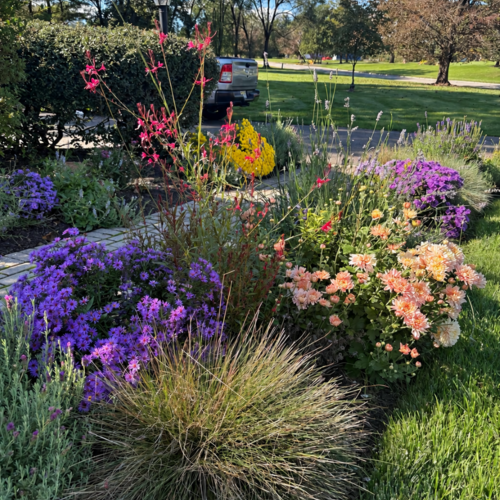
‘Caradonna Compact’ woodland sage (Salvia nemorosa ‘Caradonna Compact’, Zones 3–8), ‘Purrsian Blue’ catmint (Nepeta × faassenii ‘Purrsian Blue’, Zones 3–8), sneezewort (Achillea ptarmica, Zones 3–8), and ‘Paul Petersen’ purple moor grass (Molinia caerulea ‘Paul Petersen’, Zones 5–8).
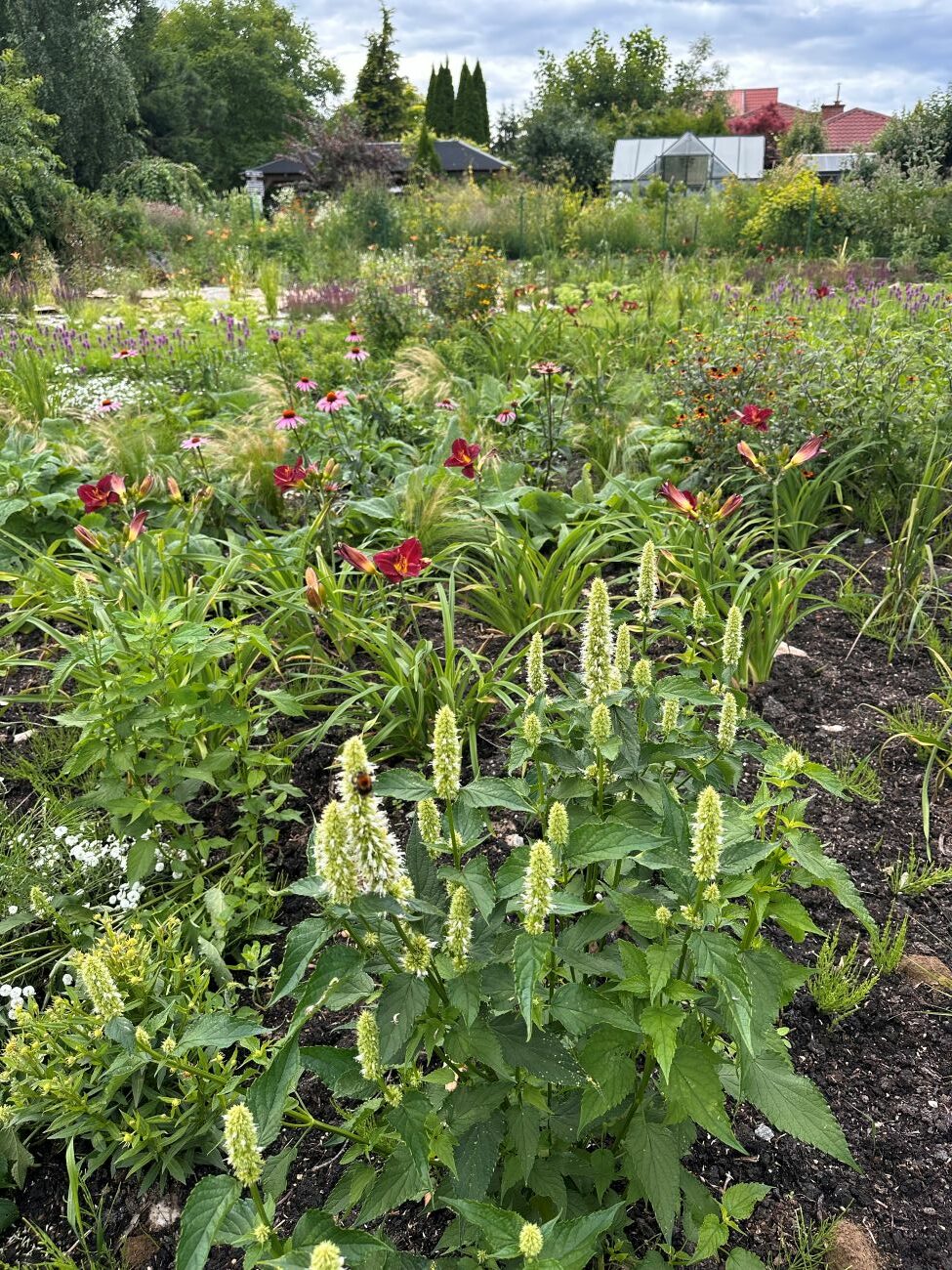
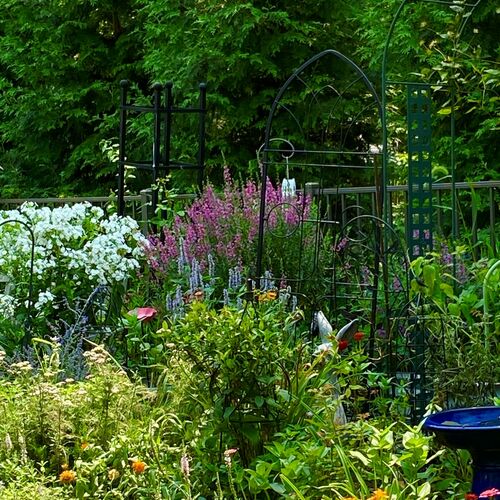
Field scabious (Knautia arvensis, Zones 3–8), daylilies (Hemerocallis cvs., Zones 3–9), and coneflowers (Echinacea cvs., Zones 3–9) mingle in this colorful planting.
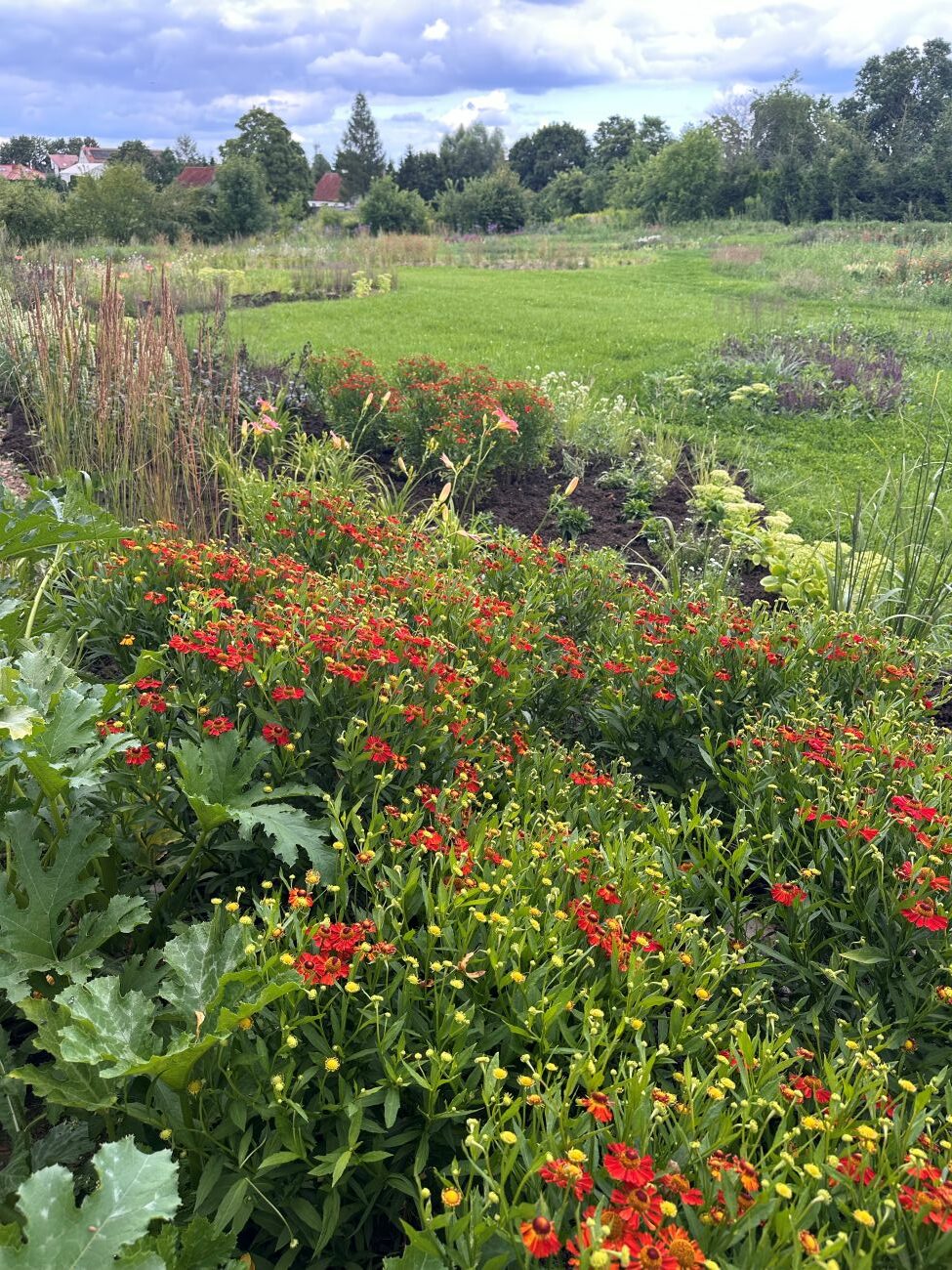
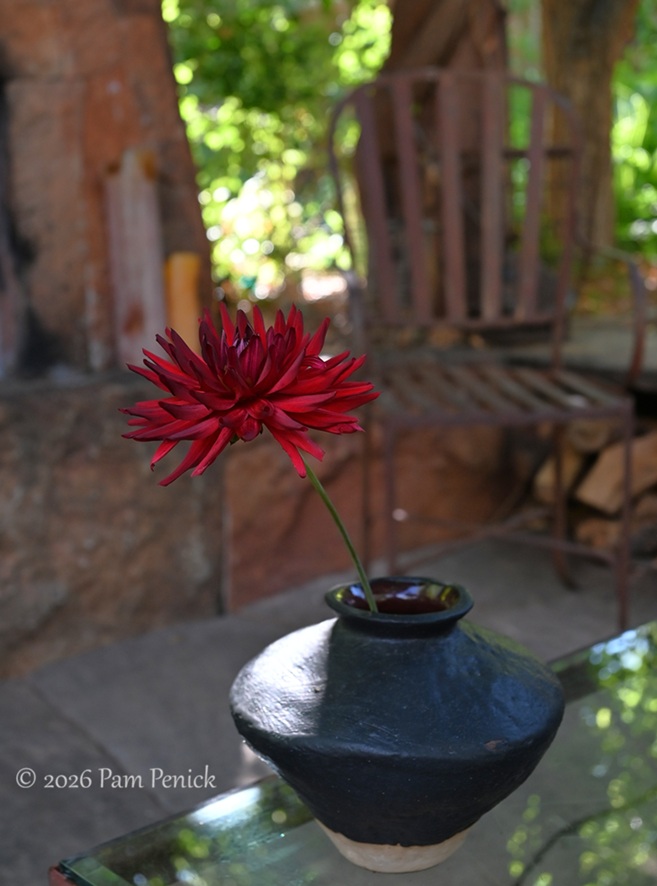
Coreopsis (Coreopsis cvs., Zones 3–9), stonecrop (Hylotelephium cvs., Zones 3–9), and feather reed grass (Calamagrostis cvs., Zones 3–9) add contrasting color, form, and texture to the planting.
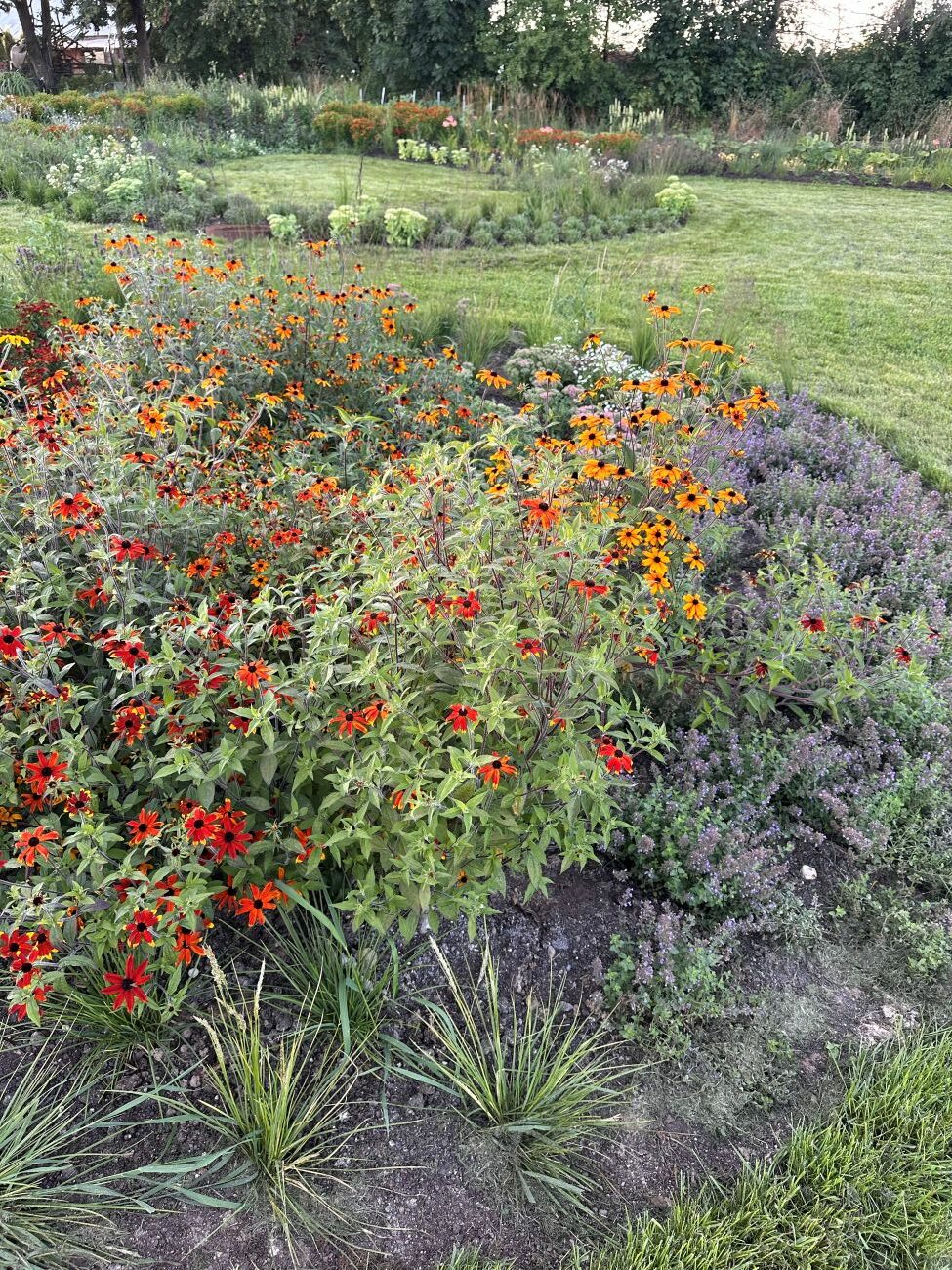
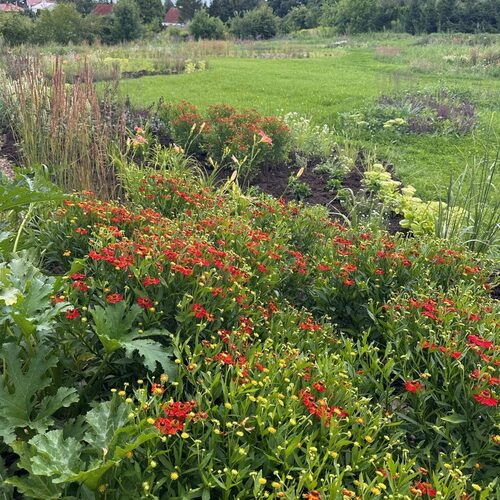
Moor grass (Sesleria cvs., Zones 4–8), black-eyed Susans (Rudbeckia cvs., Zones 3–9), and catmint (Nepeta cvs., Zones 3–9) weave together in this naturalistic planting.
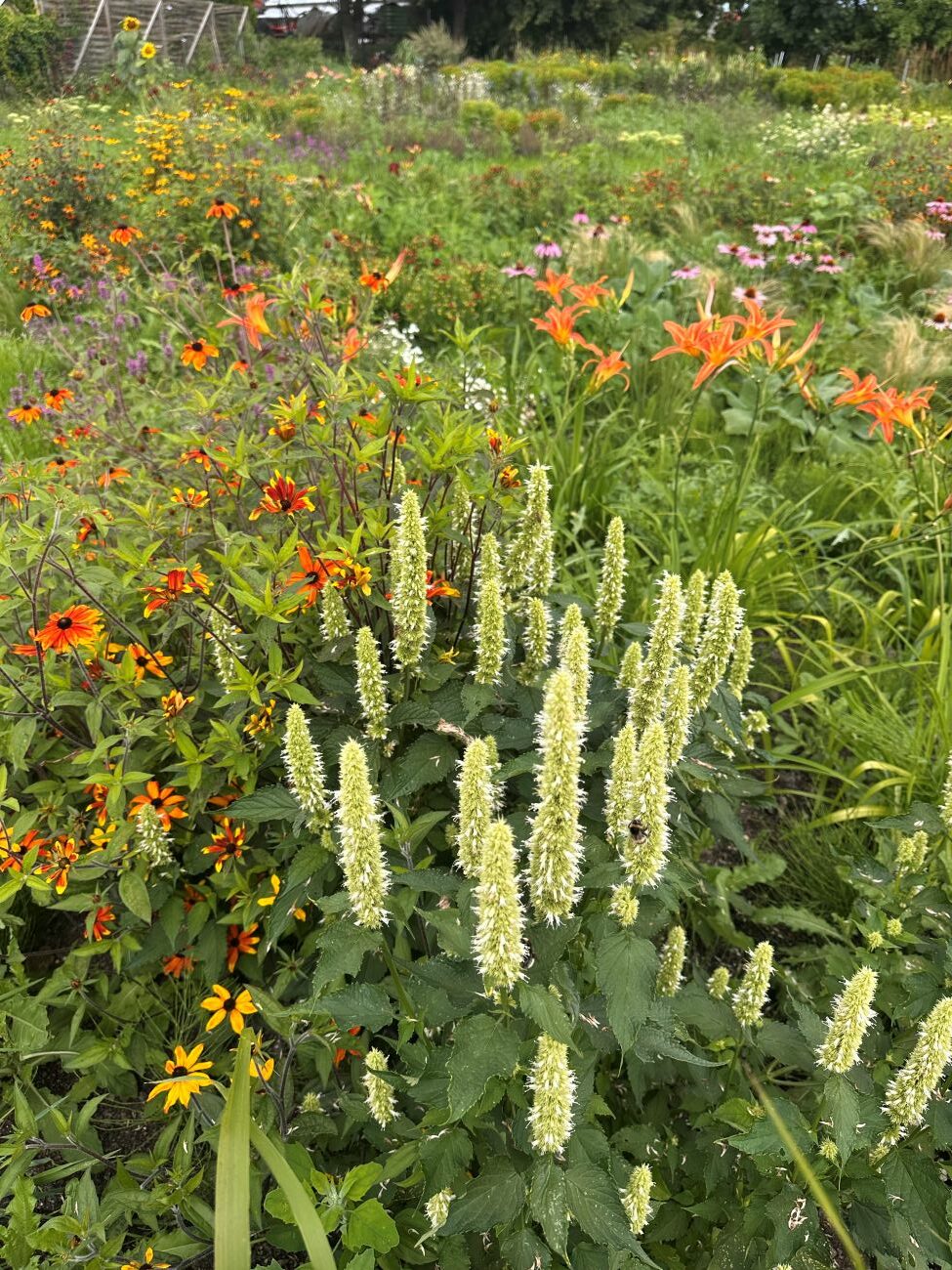
Flowering perennials and ornamental grasses mingle in broad, naturalistic layers, giving a glimpse of how the new garden is beginning to take shape.
Instagram: @magdalenamarkiewicz_com
Thank you, Magda, for sharing this ambitious new garden with us! It will be fascinating to watch these plantings mature and see how your Climate Adaptation Garden evolves over the seasons ahead.
We want to see YOUR garden!
Have photos to share? We’d love to see your garden, a particular collection of plants you love, or a wonderful garden you had the chance to visit!
To submit, fill out the Garden Photo of the Day Submission Form.
You can also send 5–10 photos to [email protected] along with some information about the plants in the pictures and where you took the photos. We’d love to hear where you are located, how long you’ve been gardening, successes you are proud of, failures you learned from, hopes for the future, favorite plants, or funny stories from your garden.
Do you receive the GPOD by email yet? Sign up here
Fine Gardening Recommended Products
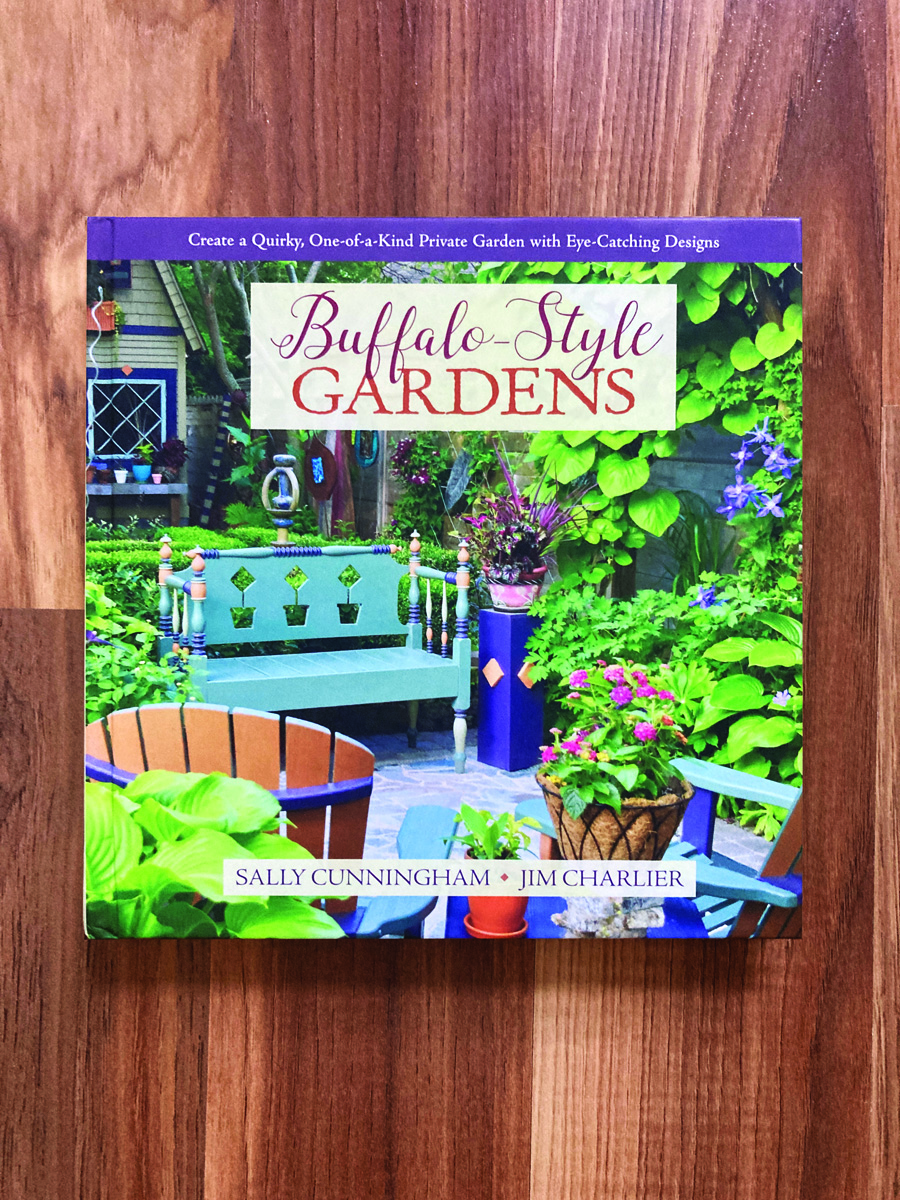
Buffalo-Style Gardens: Create a Quirky, One-of-a-Kind Private Garden with Eye-Catching Designs
Fine Gardening receives a commission for items purchased through links on this site, including Amazon Associates and other affiliate advertising programs.
Buffalo-Style Gardens is a one-of-a-kind, offbeat garden design book that showcases the wildly inventive gardens and gardeners of Buffalo – and offers readers “the best of the best” ideas to use in their own small-space gardens.
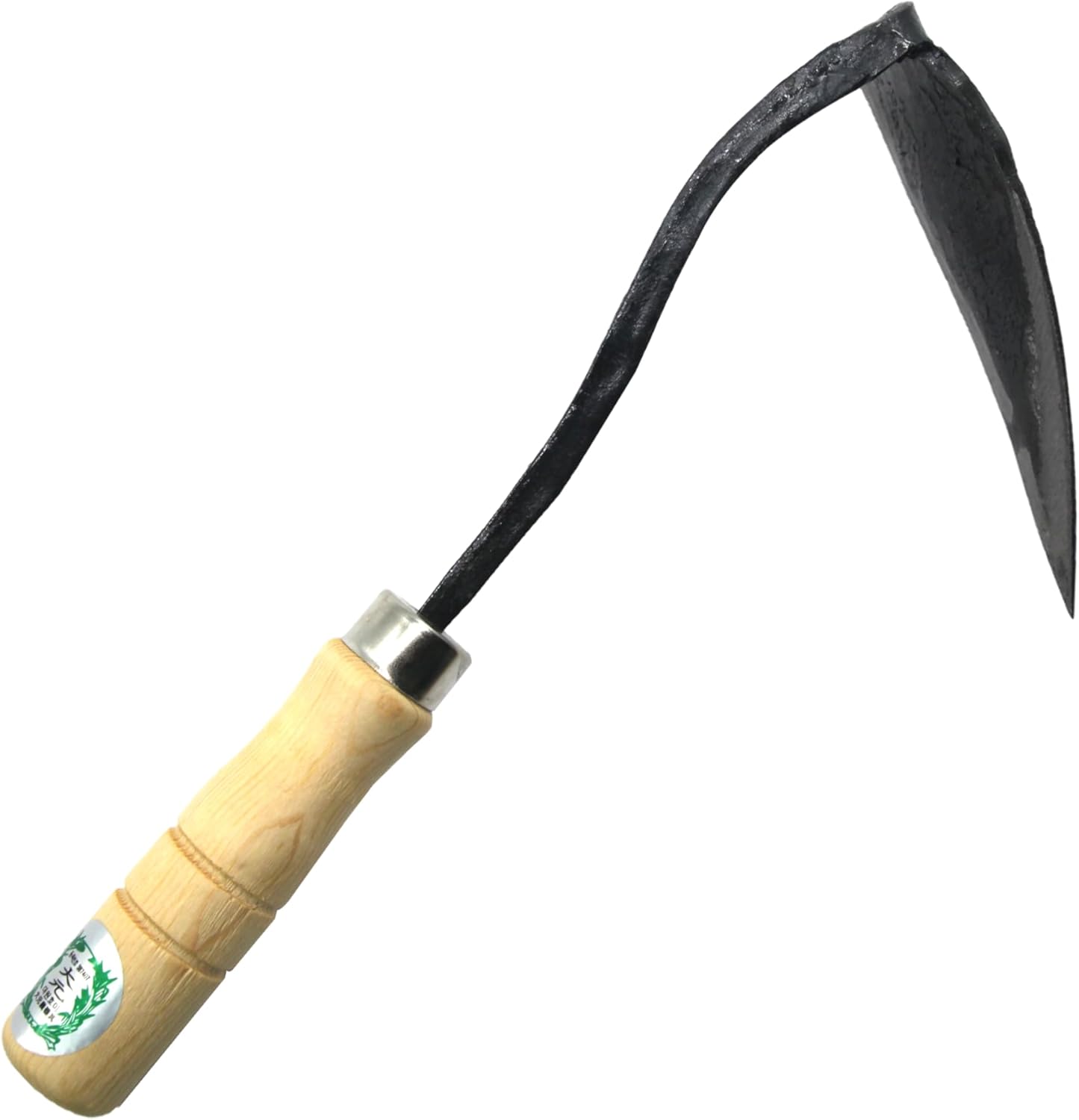
Ho-Mi Digger – Korean Triangle Blade
Fine Gardening receives a commission for items purchased through links on this site, including Amazon Associates and other affiliate advertising programs.
Versatile Tool: The Easy Digger Korean Triangle Blade Ho Mi Ho-mi is a versatile gardening tool designed for leveling and digging in home and garden settings. Efficient Design: Its unique triangular blade shape allows for easy soil penetration and efficient leveling of garden beds or landscaping areas. Durable Construction: Crafted with sturdy materials, this tool ensures long-lasting performance and reliability.
Ergonomic Handle: The comfortable handle provides a secure grip, reducing hand fatigue during extended use. Compact Size: Its compact design makes it easy to maneuver in tight spaces and store when not in use.
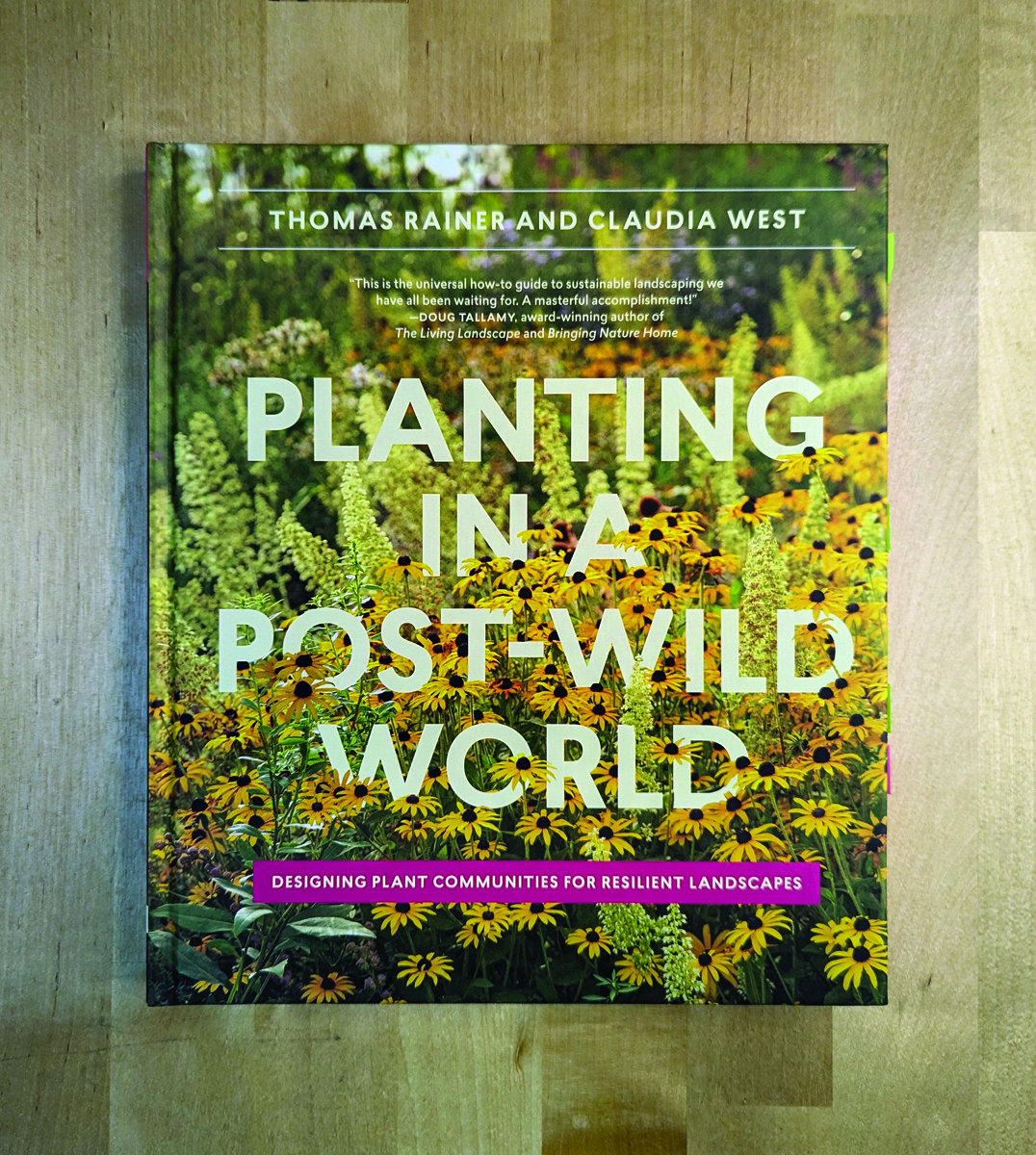
Planting in a Post-Wild World: Designing Plant Communities for Resilient Landscapes
Fine Gardening receives a commission for items purchased through links on this site, including Amazon Associates and other affiliate advertising programs.
Featuring gorgeous photography and advice for landscapers, Planting in a Post-Wild World by Thomas Rainer and Claudia West is dedicated to the idea of a new nature—a hybrid of both the wild and the cultivated—that can nourish in our cities and suburbs.