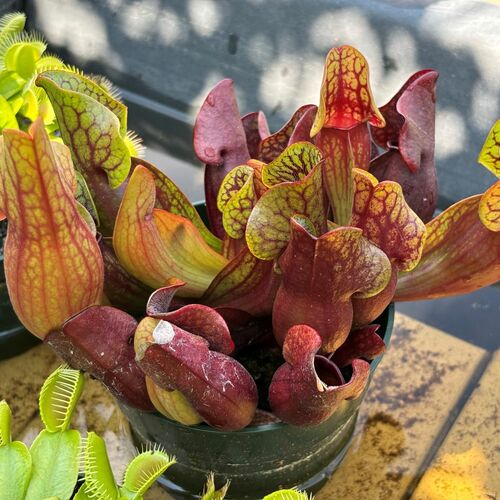
Not every plant collection is soft and sweet. Harriet’s carnivorous plant collection in Otisfield, Maine, features pitcher plants, sundews, and Venus flytraps in a slate sink summer display that is both ornamental and wonderfully unusual. Harriet says:
GPOD recently asked for collections. Mine is a collector’s garden put together as if it were an ornamental garden. There are peonies, daylilies, and irises, many of which have been featured in the blog over the years. Two compact collections are more recent, and both feature smaller containerized plants. The rock garden troughs are one, and the carnivorous plants, in this group of photos, are another.
I became interested in growing pitcher plants from a submission to this blog a few years ago. A container with one plant was part of someone’s garden. I now grow several species of pitcher plants (Sarracenia cvs., Zones 6–9), several species of sundews (Drosera cvs., Zones 3–10) as well as the Venus flytrap (Dionaea muscipula, Zones 7–10) in my Maine garden. All are outside in the summer. I display them in a slate sink. I use tiles to raise them if we have had ample rainfall and remove them as the level lowers. They must be watered with rain or distilled water, and never tap water, because of minerals. I stockpile rainwater collected from my roof for them.
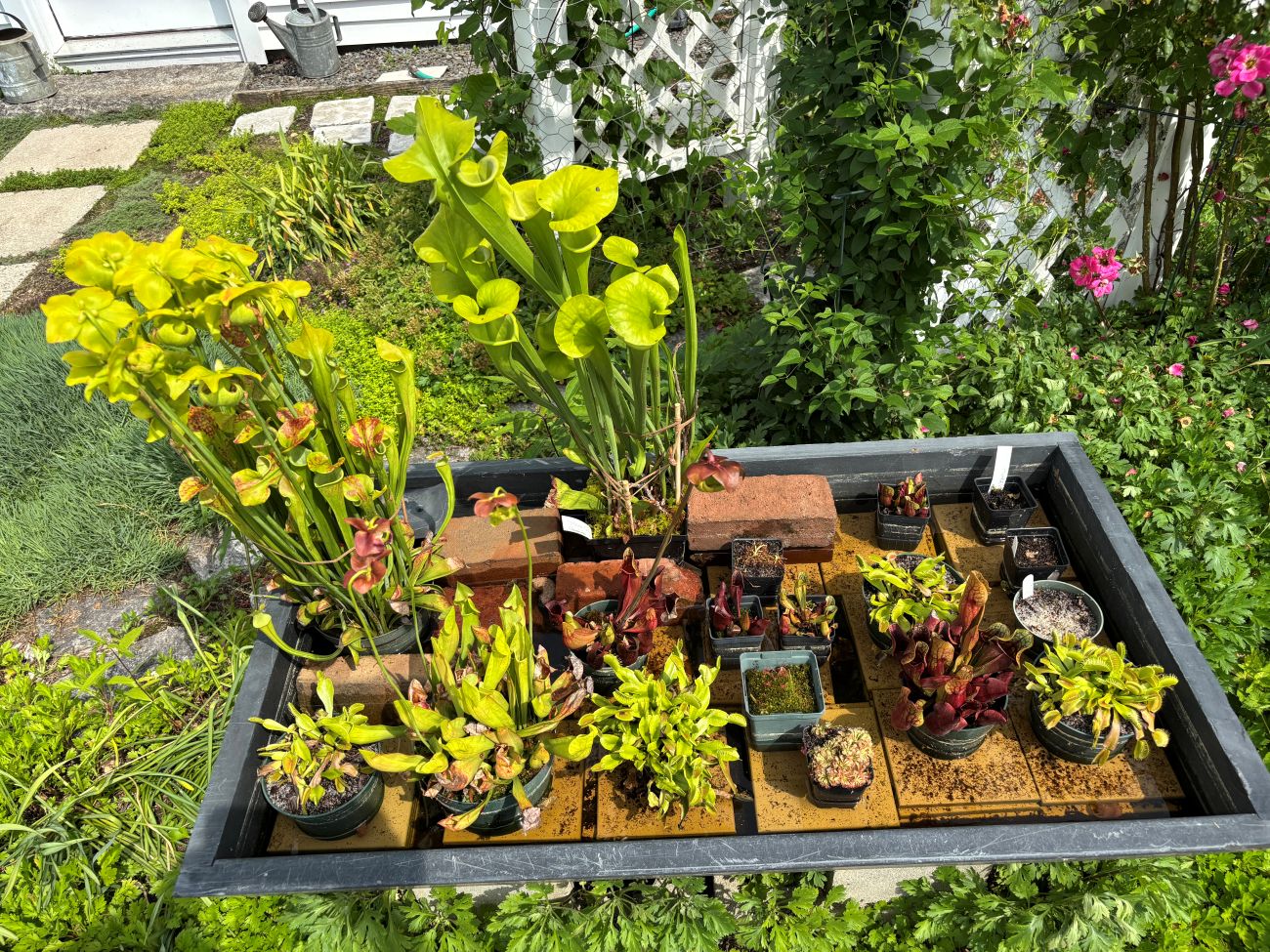
A slate sink holds the collection during the summer: tall in back, from left, green pitcher plant (Sarracenia oreophila, Zones 7–9) and yellow pitcher plant (Sarracenia flava, Zones 6–9). There are several pots of purple pitcher plant (Sarracenia purpurea, Zones 2–9) with shorter reddish pitchers. A hybrid pitcher plant is flowering in the front, second from the left. There are also three Venus flytraps in the photo, including the front left. There are several sundews, which are small and short, and several pots with germinating seeds (on the right).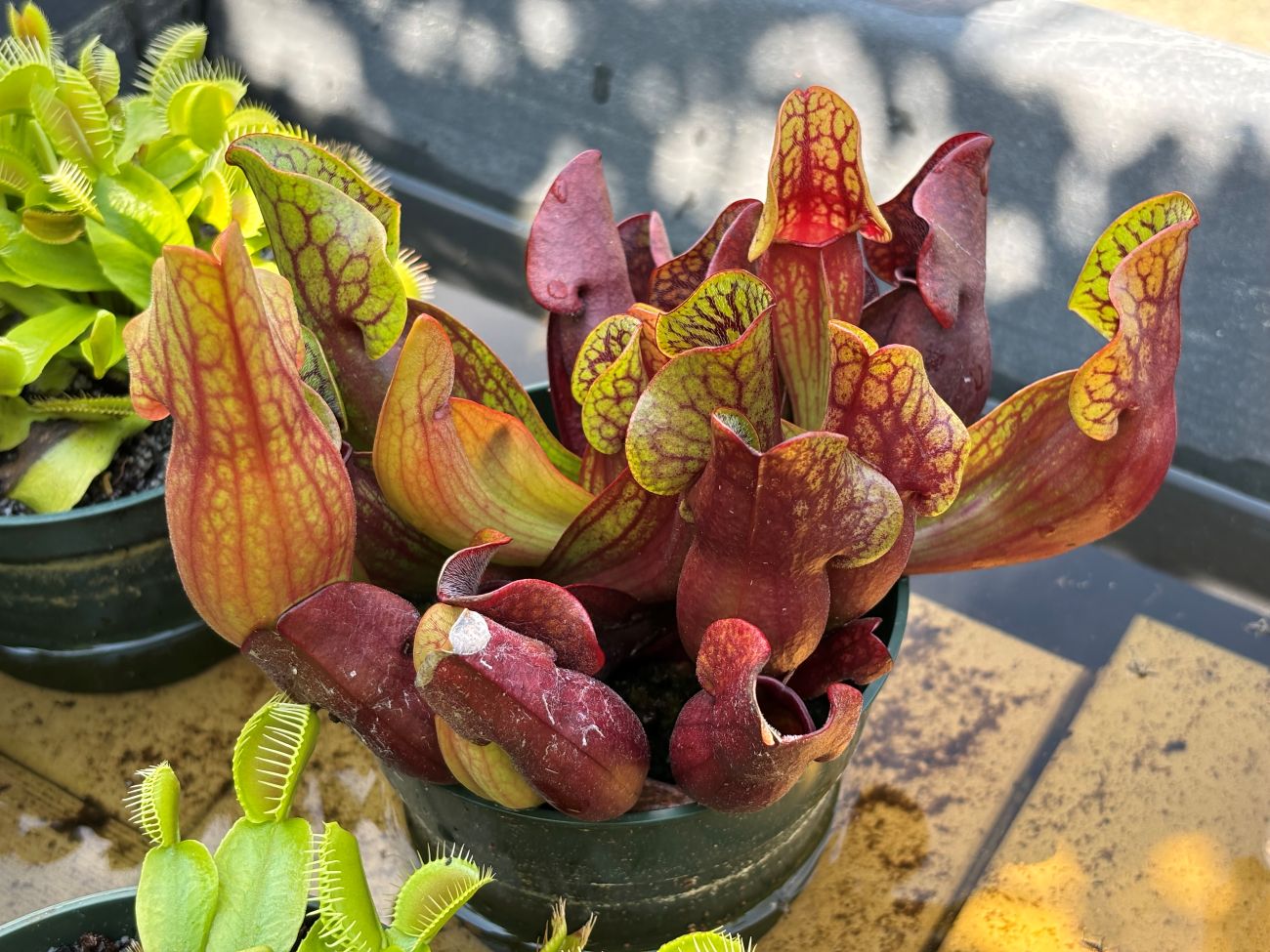
The hardiest pitcher plants are the purple pitcher plant, which are native to Maine. They can overwinter outside submerged in a vegetable bed.
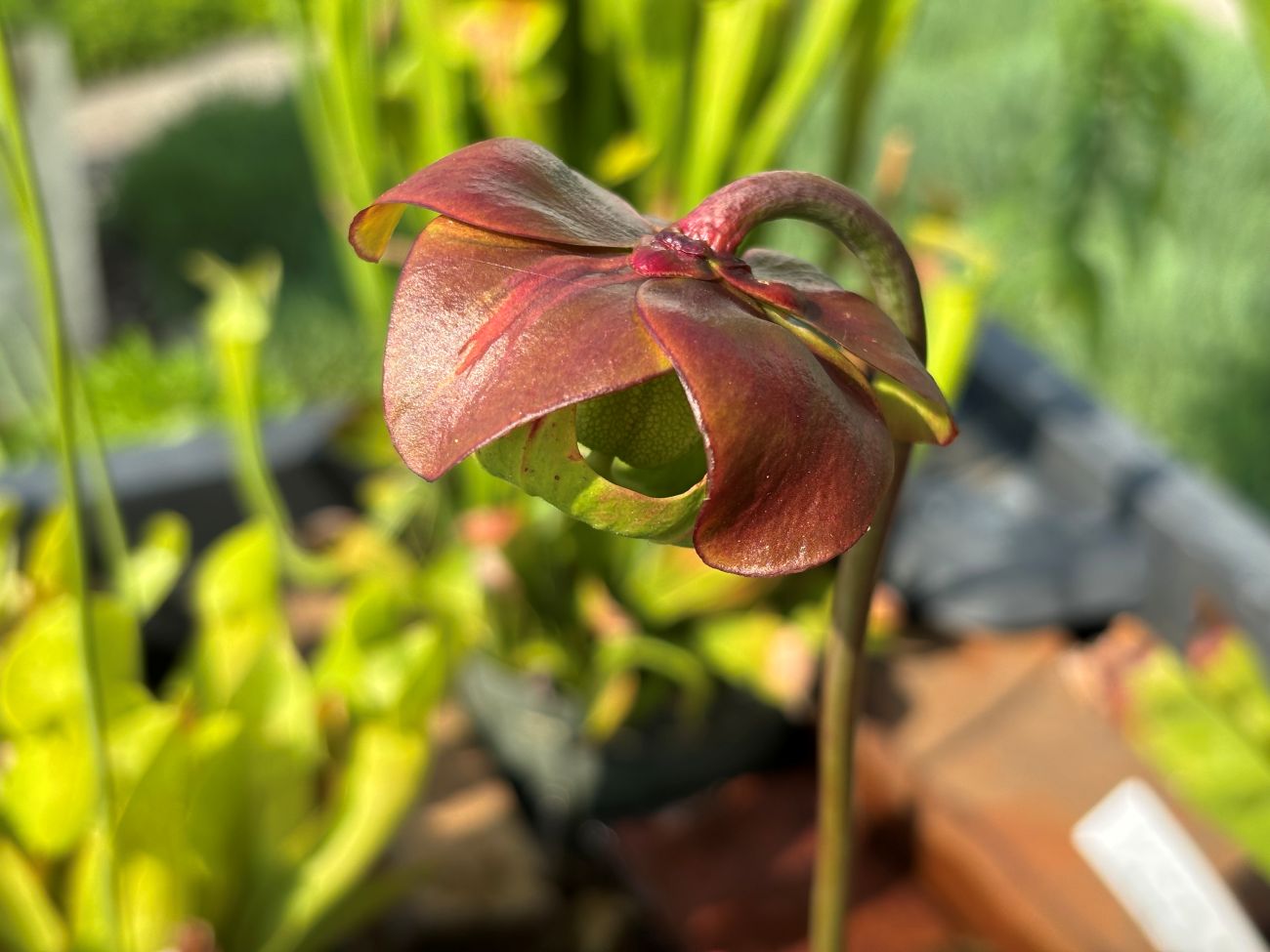
I grew some from seed, and the first bloomed this season. Like other pitcher plants, the flowers are unusual and last all season.
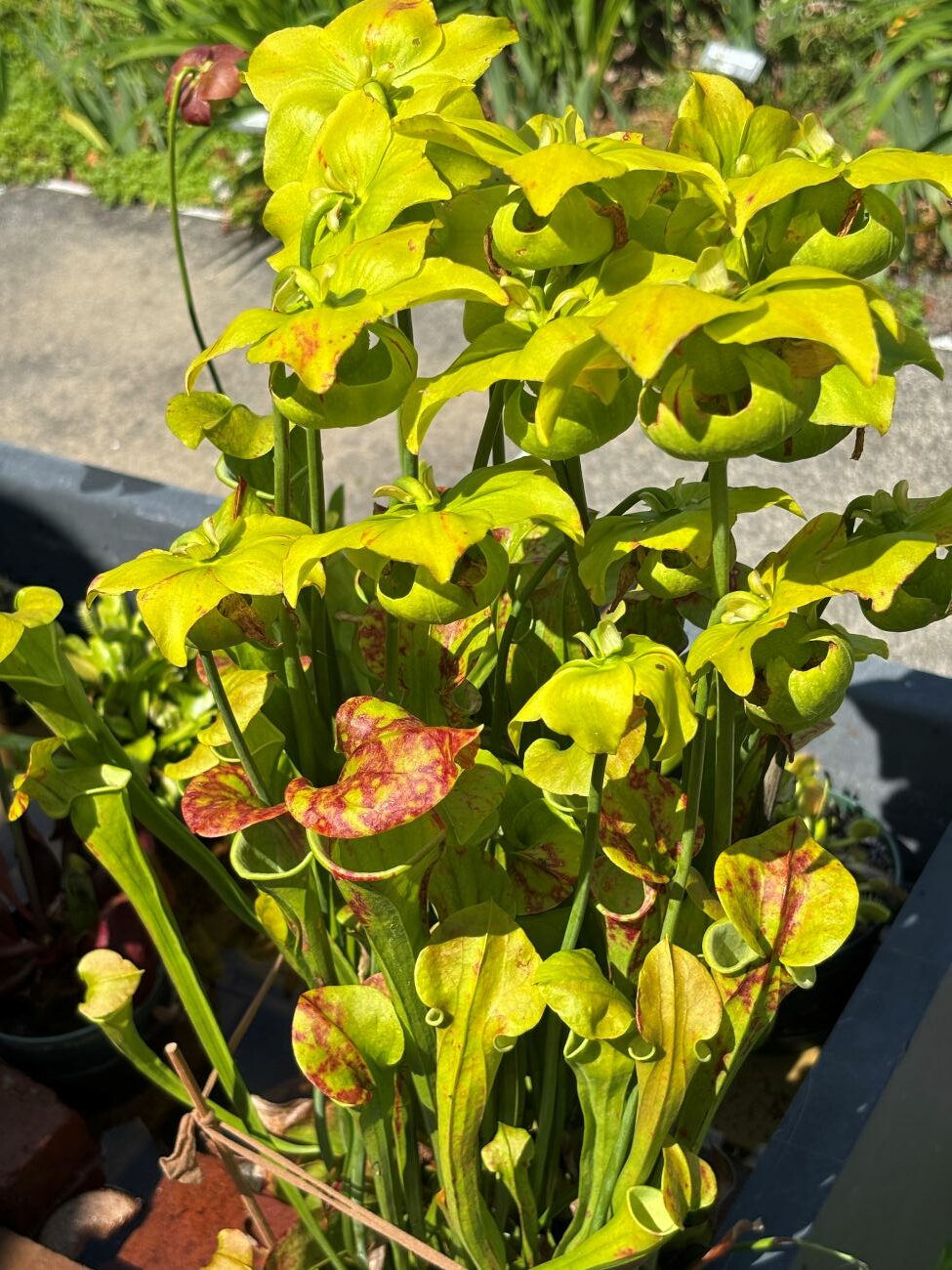
My current favorite is green pitcher plant. Its pitchers are tall, and it flowers prolifically. It is said to be endangered in its native habitat, the Southeastern United States, but I found the seeds I collected from mine easy to germinate. It is said to be hardy, but I don’t dare test it. So I put it with many others, which I also think might be marginal but may need winter dormancy, in coolers in my garage, where they are buffered from temperature fluctuations. They do freeze. In a particularly bitter cold snap, I move the coolers into my mudroom just in case the low gets too low but then back out to the garage as soon as I can, so they don’t break dormancy.
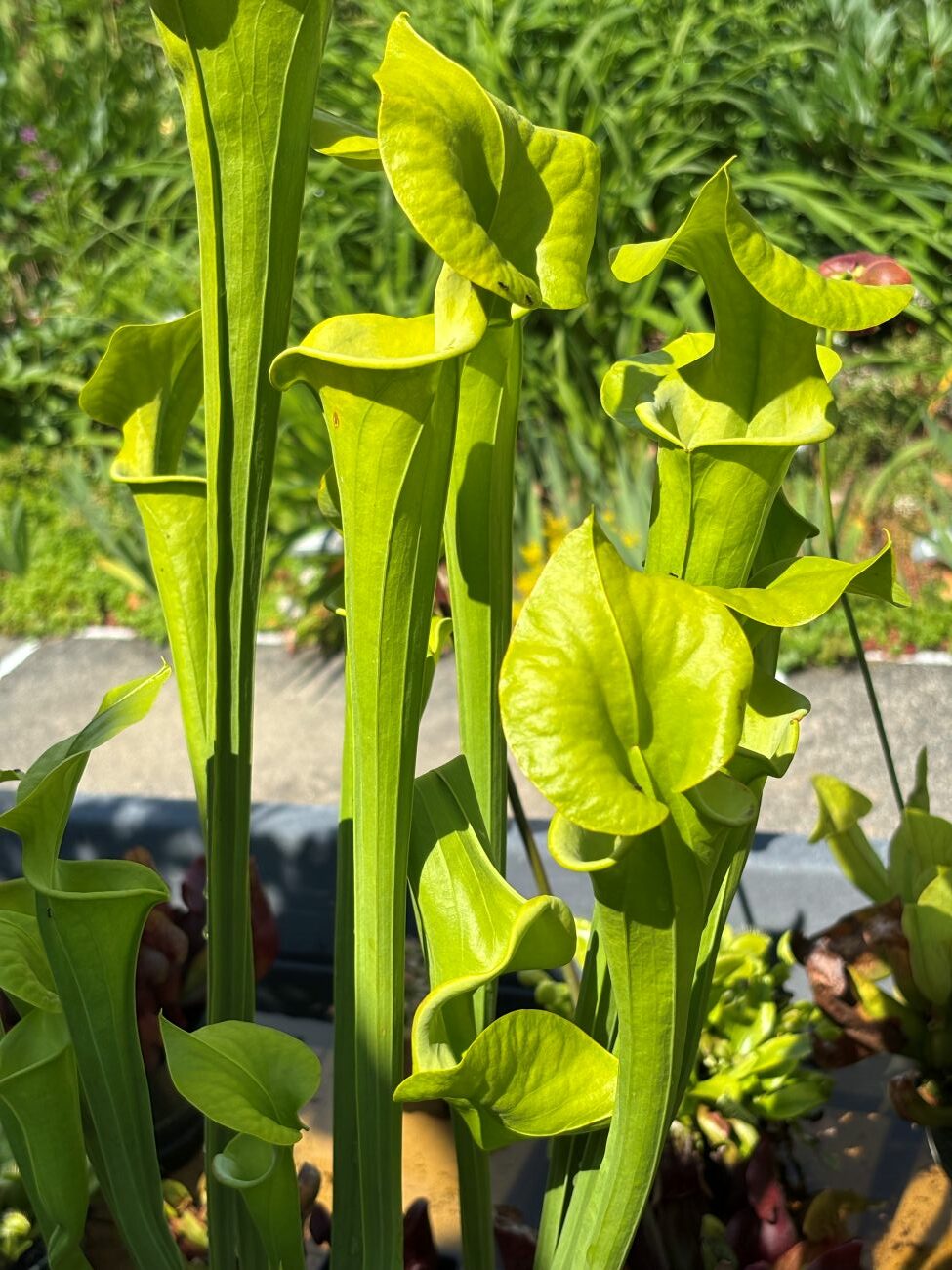
Yellow pitcher plant is also from the Southeast and said to be hardy but also goes into the cooler for the winter.
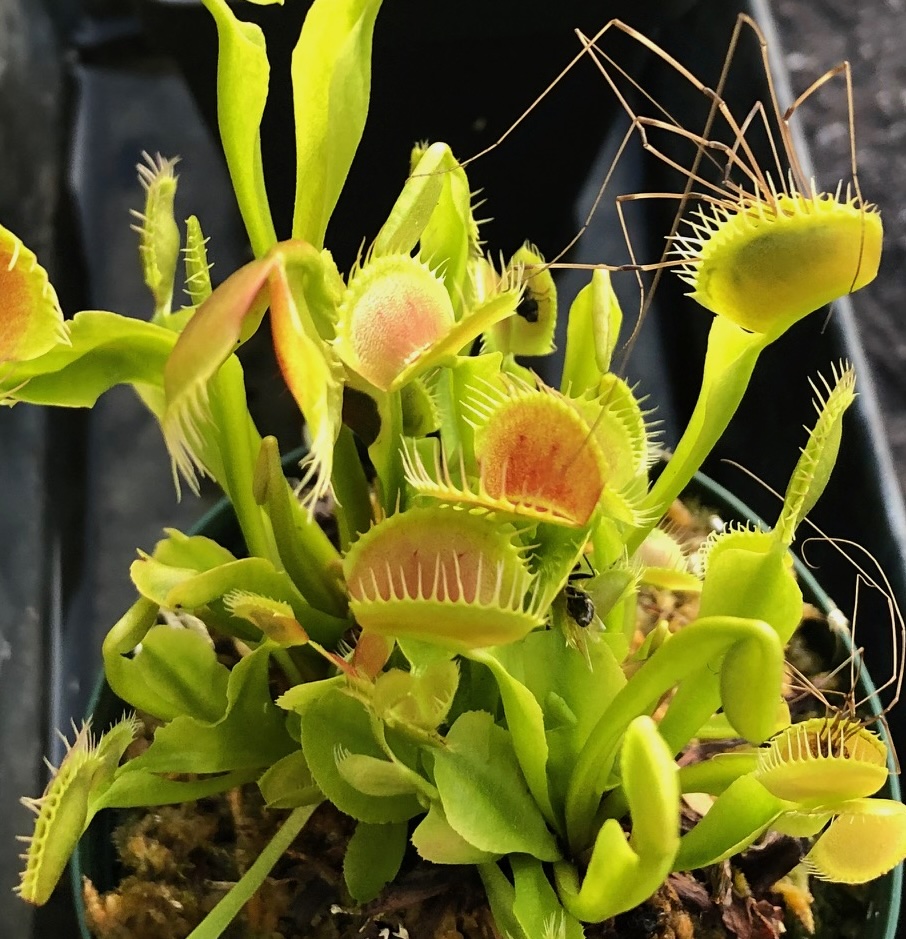
Venus flytraps need a winter dormancy to do well and thrive outside in the summer.
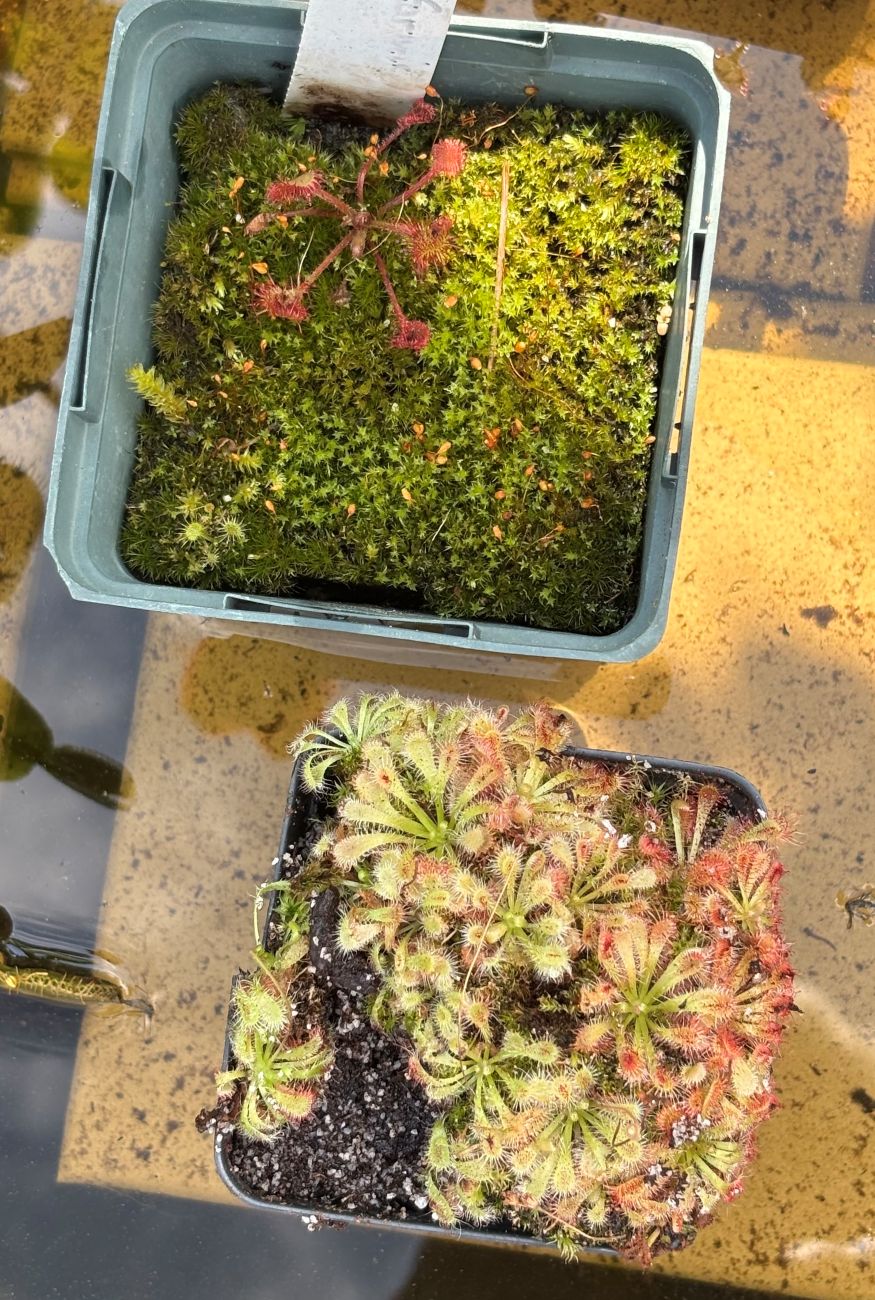
In the front is the tender spoon-leaved sundew (Drosera spatulata, Zones 8–10), and behind it is a single Tracy’s sundew (Drosera filiformis, Zones 5–8), a sundew native to the Eastern United States from Nova Scotia to the Gulf Coast.
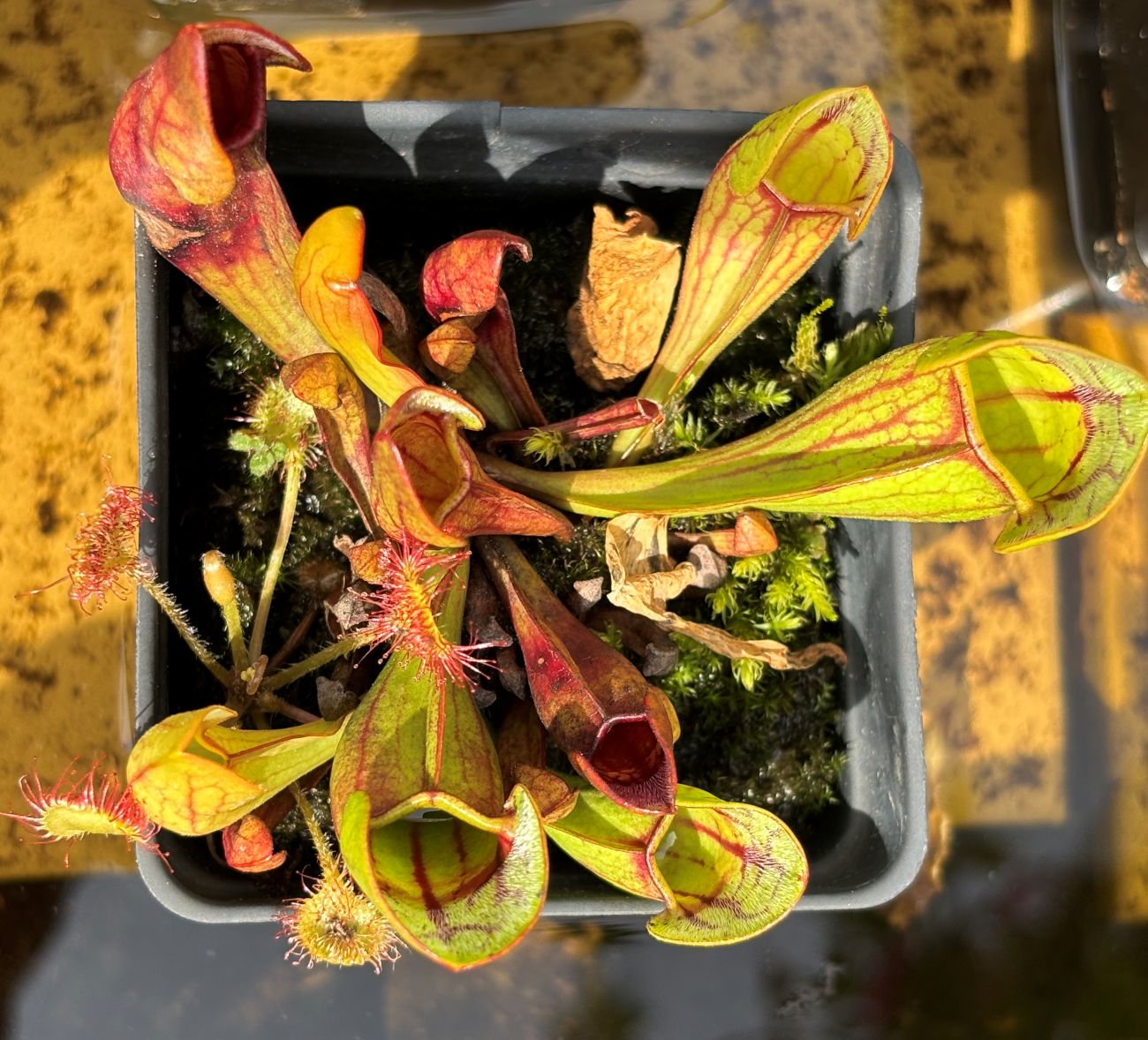
My Tracy’s sundew seems to come back from seed (in the previous picture by itself in a bed of self-seeded sphagnum moss, and in this picture self-seeded with a purple pitcher plant).
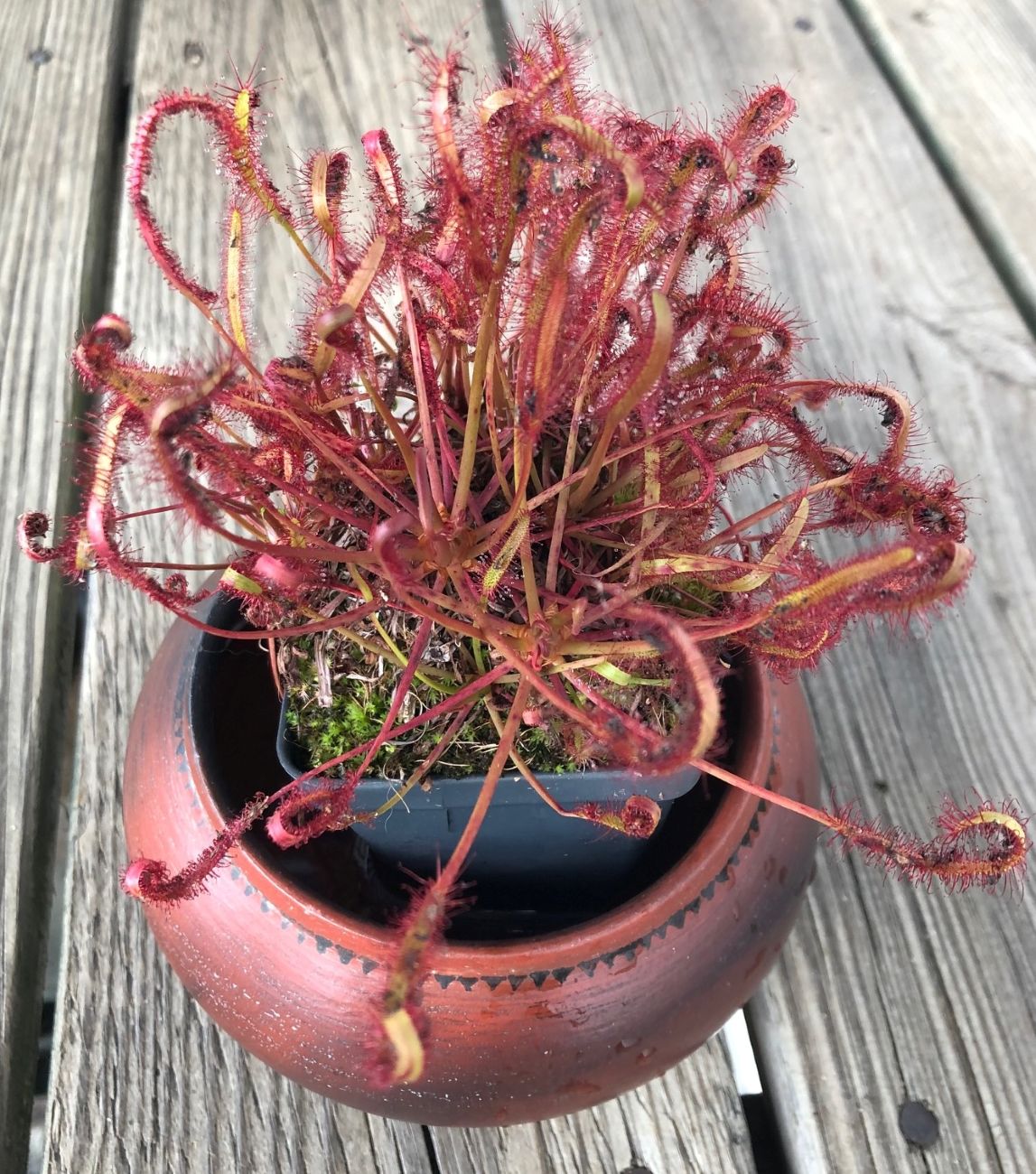
My favorite sundew, Cape Sundew (Drosera capensis, Zones 7–10) got too dry earlier this spring, but I am now nursing it back to its former glory, seen here in 2021. The other is doing well as a clump in the previous photo. Both tender spoon-leaved sundew and Tracy’s sundew overwinter indoors by a cool window.
Thanks for sharing this wonderfully unusual collection with us, Harriet!
We want to see YOUR garden!
Have photos to share? We’d love to see your garden, a particular collection of plants you love, or a wonderful garden you had the chance to visit!
To submit, fill out the Garden Photo of the Day Submission Form.
You can also send 5–10 photos to [email protected] along with some information about the plants in the pictures and where you took the photos. We’d love to hear where you are located, how long you’ve been gardening, successes you are proud of, failures you learned from, hopes for the future, favorite plants, or funny stories from your garden.
Do you receive the GPOD by email yet? Sign up here
Fine Gardening Recommended Products
Gilmour 5/8″ x 25′ Round Weeper Soaker Hose
Fine Gardening receives a commission for items purchased through links on this site, including Amazon Associates and other affiliate advertising programs.
Lightweight garden hose is made of 100% recycled vinyl for clog resistant, consistent soaking in the garden or around foundations. Can be installed above or below ground to efficiently deliver water directly to plant roots. Can be linked with other hoses to create your own DIY garden drip irrigation system, and is flexible for easy storage and space saving.
Hunter Industries MP-1000-90 Hunter Nozzle
Fine Gardening receives a commission for items purchased through links on this site, including Amazon Associates and other affiliate advertising programs.
– 8′ to 15′ radius with an adjustable arc of 90° to 210°, radius can be reduced by up to 25% to fit landscape needs
– Double-pop technology flushes the nozzle during start-up and shutdown to prevent clogging
– Wind-resistant, multi-directional streams provide even coverage
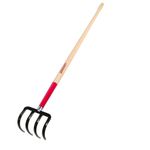
Razor-Back Potato/Refuse Hook
Fine Gardening receives a commission for items purchased through links on this site, including Amazon Associates and other affiliate advertising programs.