
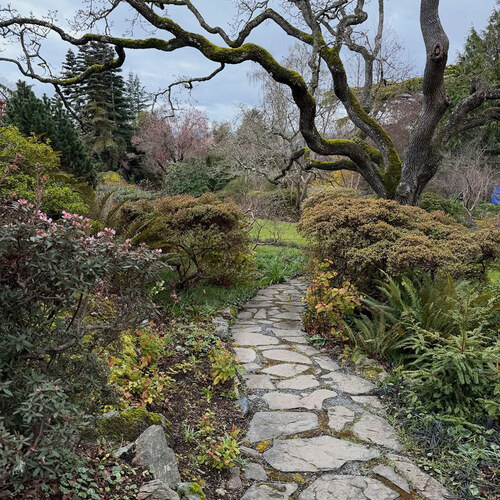
Happy Friday GPODers!
We are finished with Cherry Ong’s incredible late winter tour of The Butchart Gardens on Vancouver Island in British Columbia, but we’re not leaving Cherry or the island just yet. Today we are enjoying photos she took while visiting Abkhazi Garden in the capital city of Victoria.
Lesser known than Butchart, this 1-acre garden has a history that is just as interesting. The garden was built in 1946 by Prince Nicolas Abkhazi, who fled the Republic of Georgia during the Russia Revolution, and wife Princess Marjorie (‘Peggy’) Abkhazi. After a time of separation during World War II, they reunited in New York before settling down in Victoria. After the couple’s deaths, The Land Conservancy of British Columbia purchased the property to preserve the history of the Abkhazis and the incredible gardens they created together. Since then, it has been affectionately known as “The Garden that Love Built,” and the public can enjoy the beautiful gardens and stay for a high tea in the beautiful Tea House.
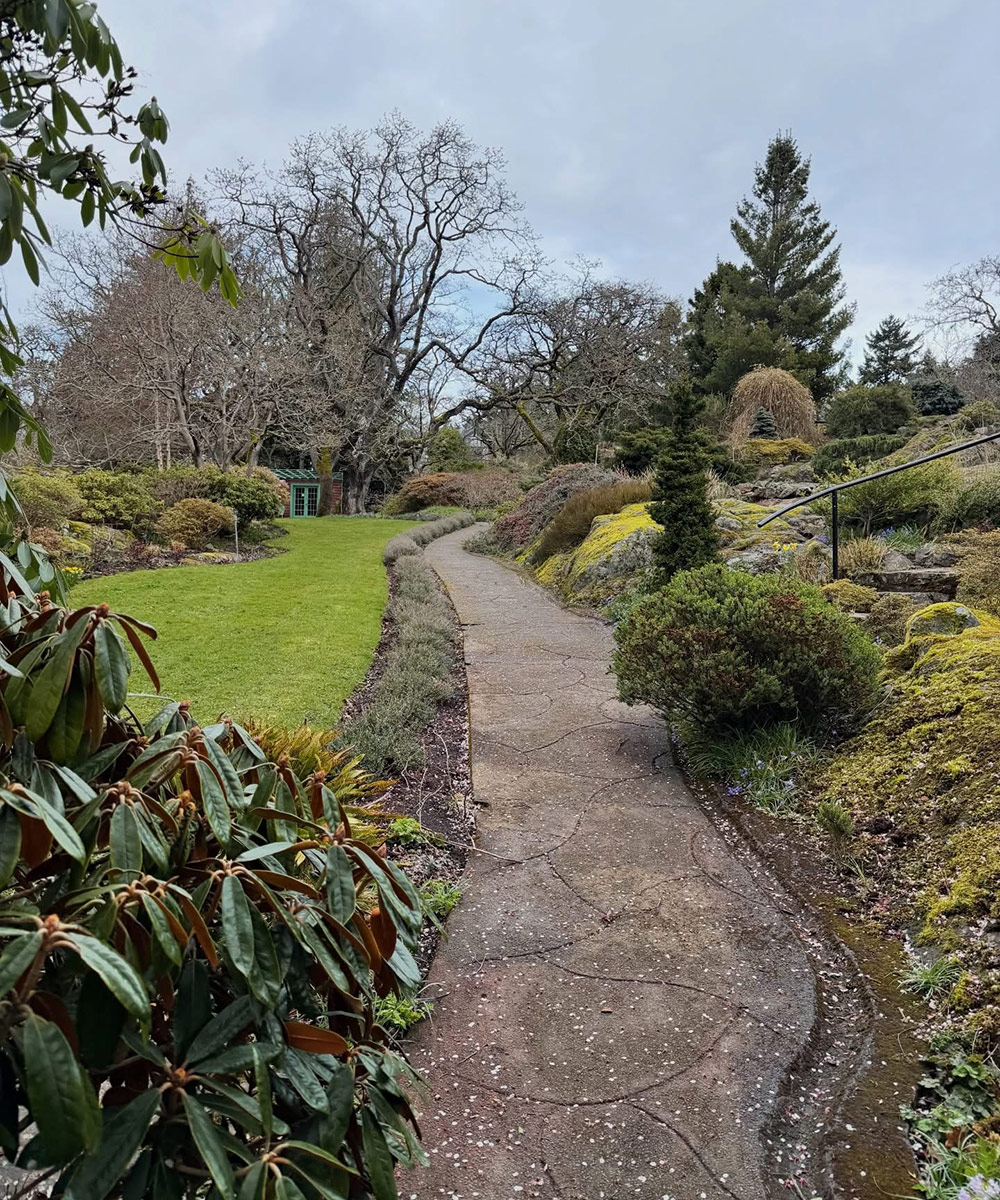 One of the many highlights in this garden are the various flowering trees and shrubs that line the generous garden paths. During the winter you won’t find these plants in bloom, but their lasting structure and foliage still provide plenty of interest to enjoy.
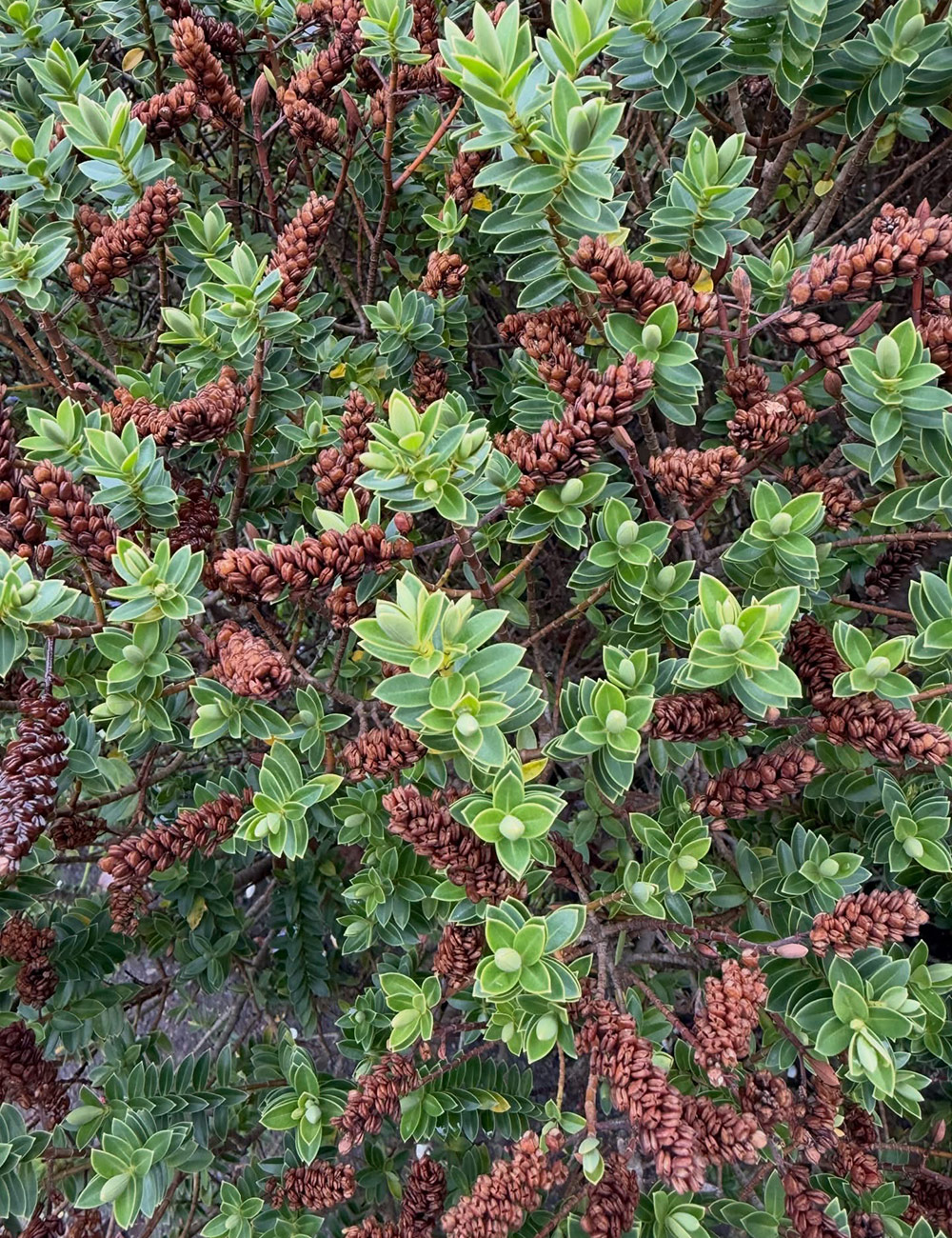 In the subdued landscapes of late winter texture often takes center stage, and the Abkhazi Garden has some out-of-the-ordinary texture powerhouses. This appears to be a Rakai hebe, or shrubby veronica, (Veronica rakaiensis, Zones 7–10), which has a fascinating foliage growth pattern.
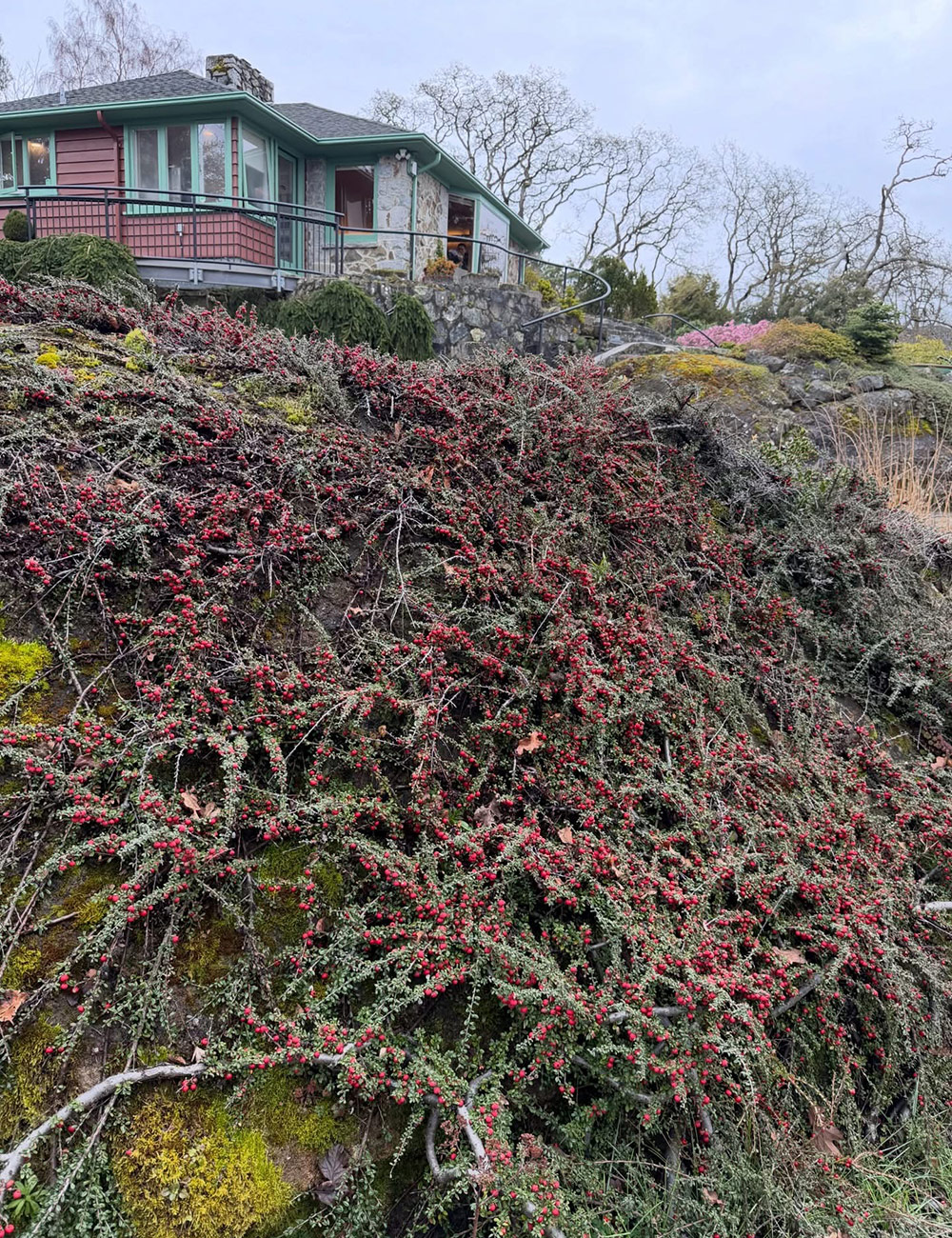 Sloped beds at the gardens also provide plenty of trailing and crawling opportunities that are even more note-worthy when flowers aren’t stealing attention. The pattern that this rockspray cotoneaster (Cotoneaster horizontalis, Zones 5–7) is creating over these boulders is magnificent.
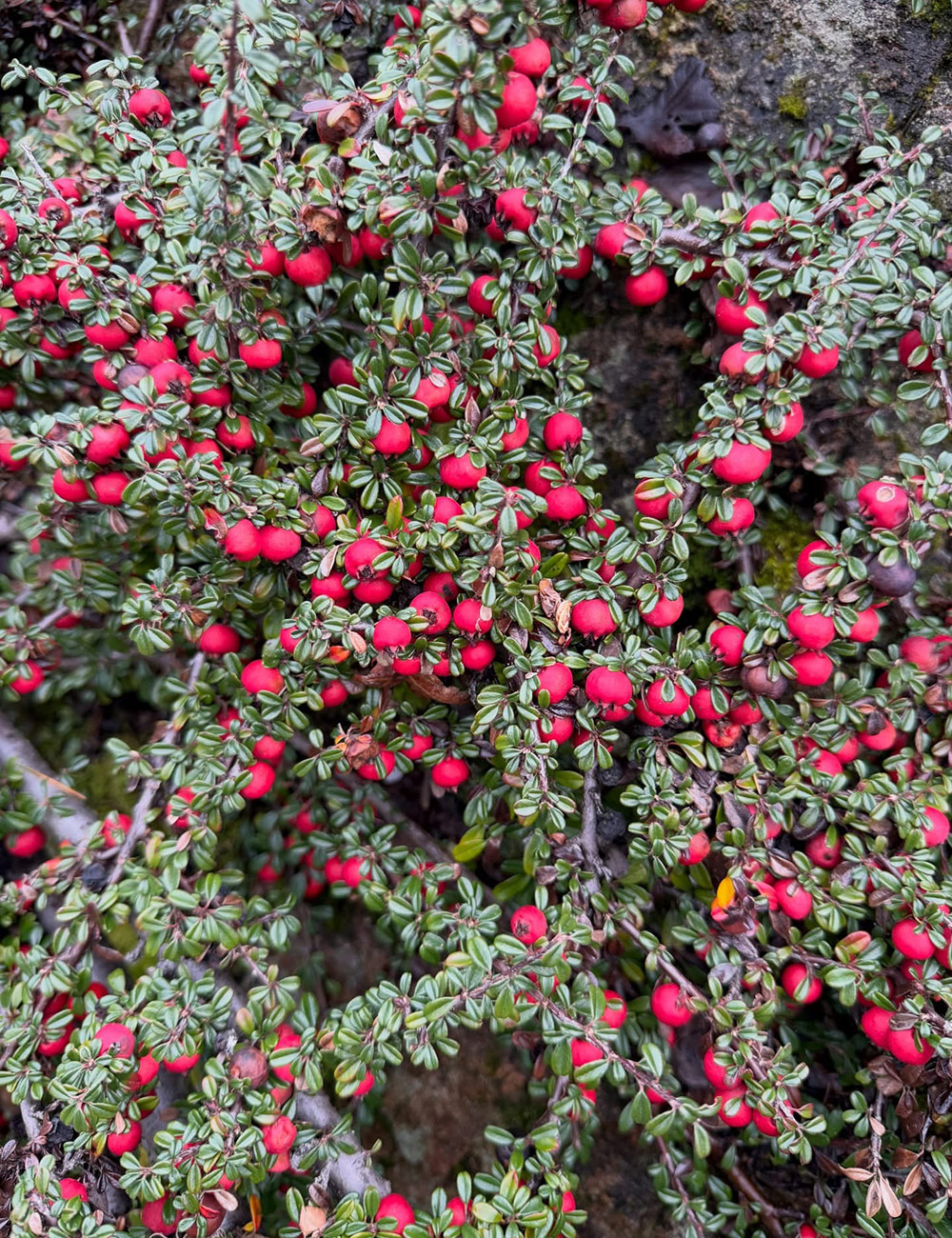 And a closer look at the cotoneaster gives a better look at those stunning, bright red berries.
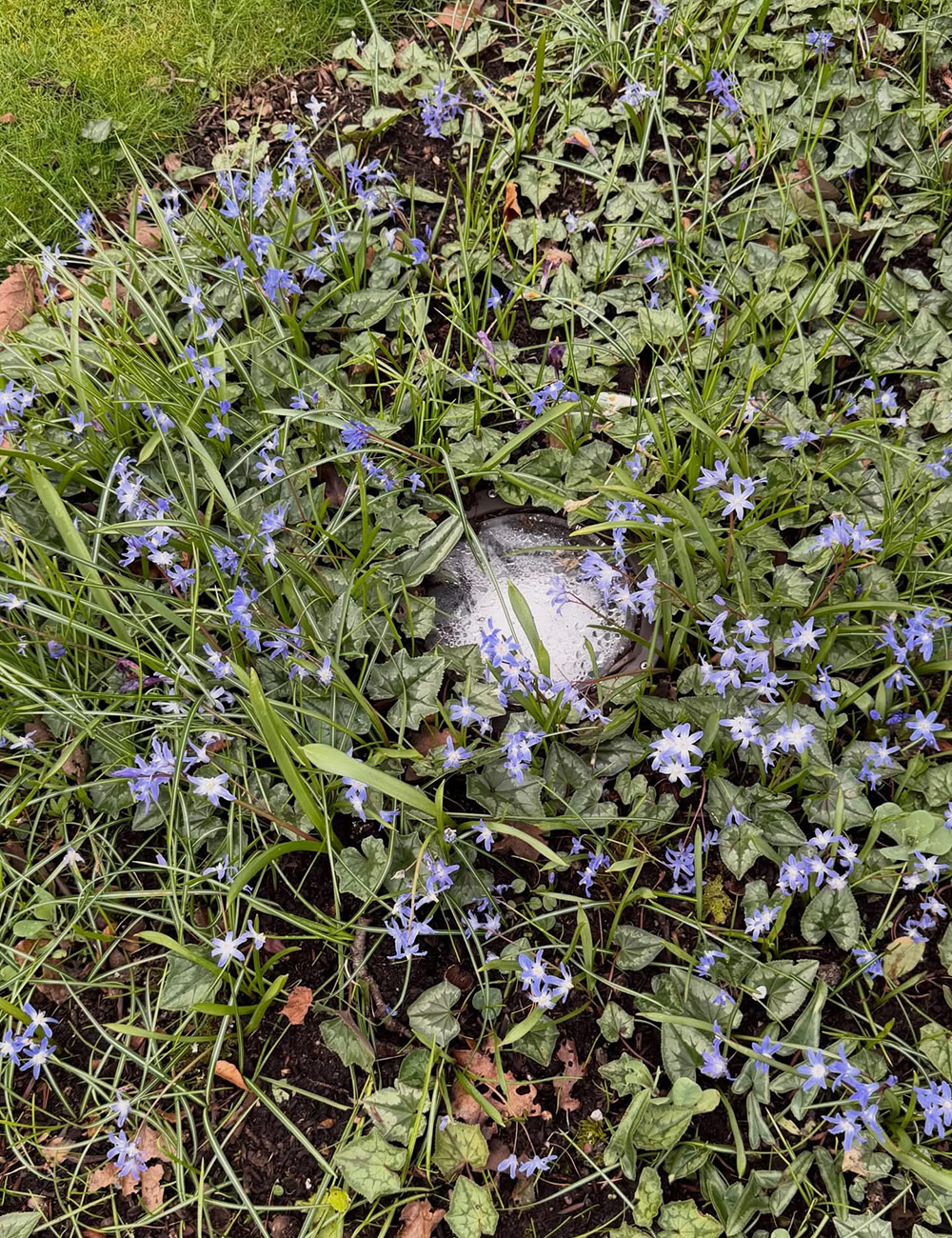 Foliage and berries are some of the most beloved garden elements in winter, but there are some flowers that can add color to our landscapes before spring. Hellebores and snowdrops are popular options, but Abkhazi Garden is showcasing a lesser-known early bloomer: glory of the snow (Chionodoxa forbesii, Zones 3–8).
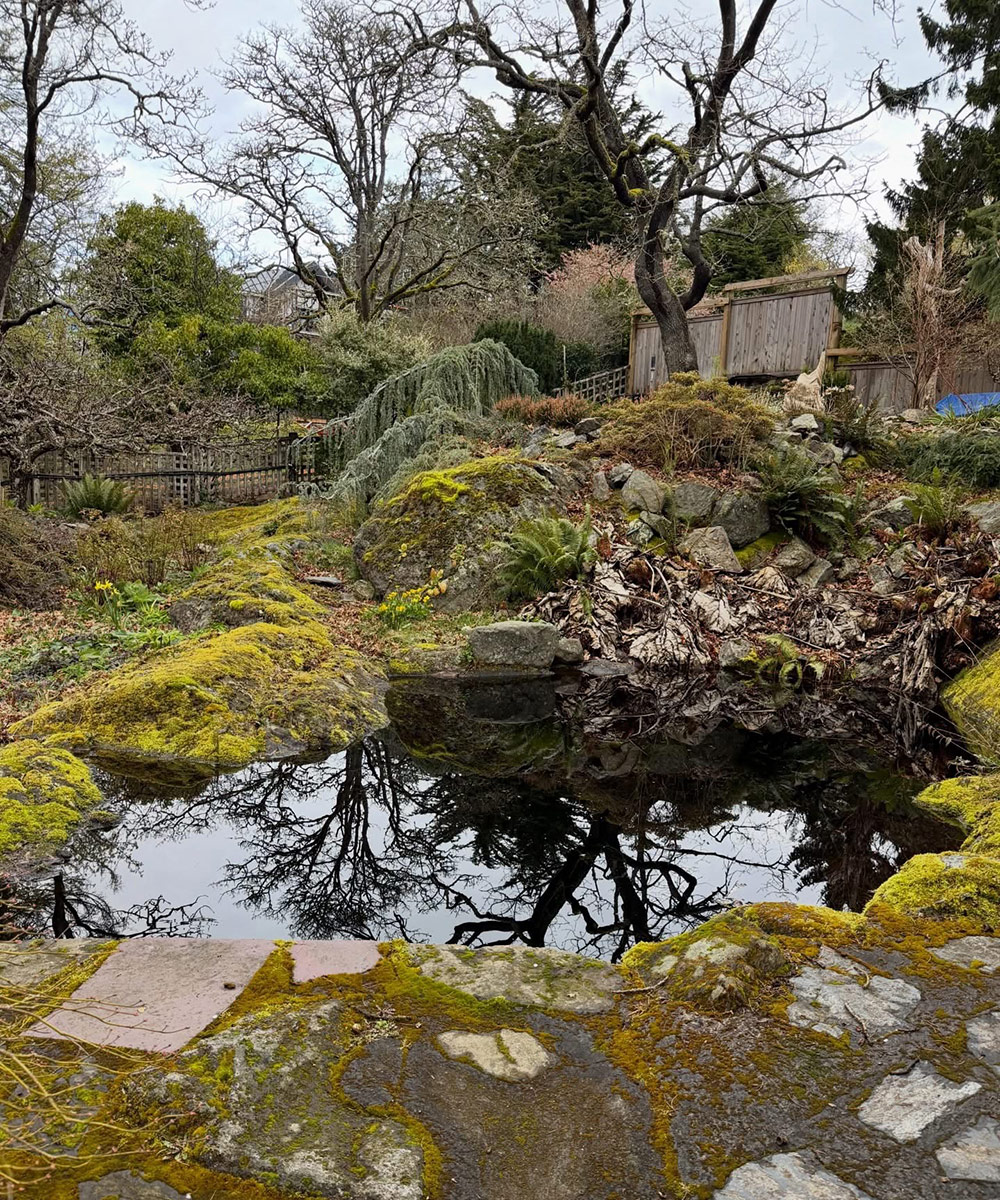 This garden pond is much much lush and vibrant during the peak season, but still provides a beautiful moment of reflection during winter (literally). The bare branches of the many trees in and around the garden create stunning patterns in the water’s reflection.
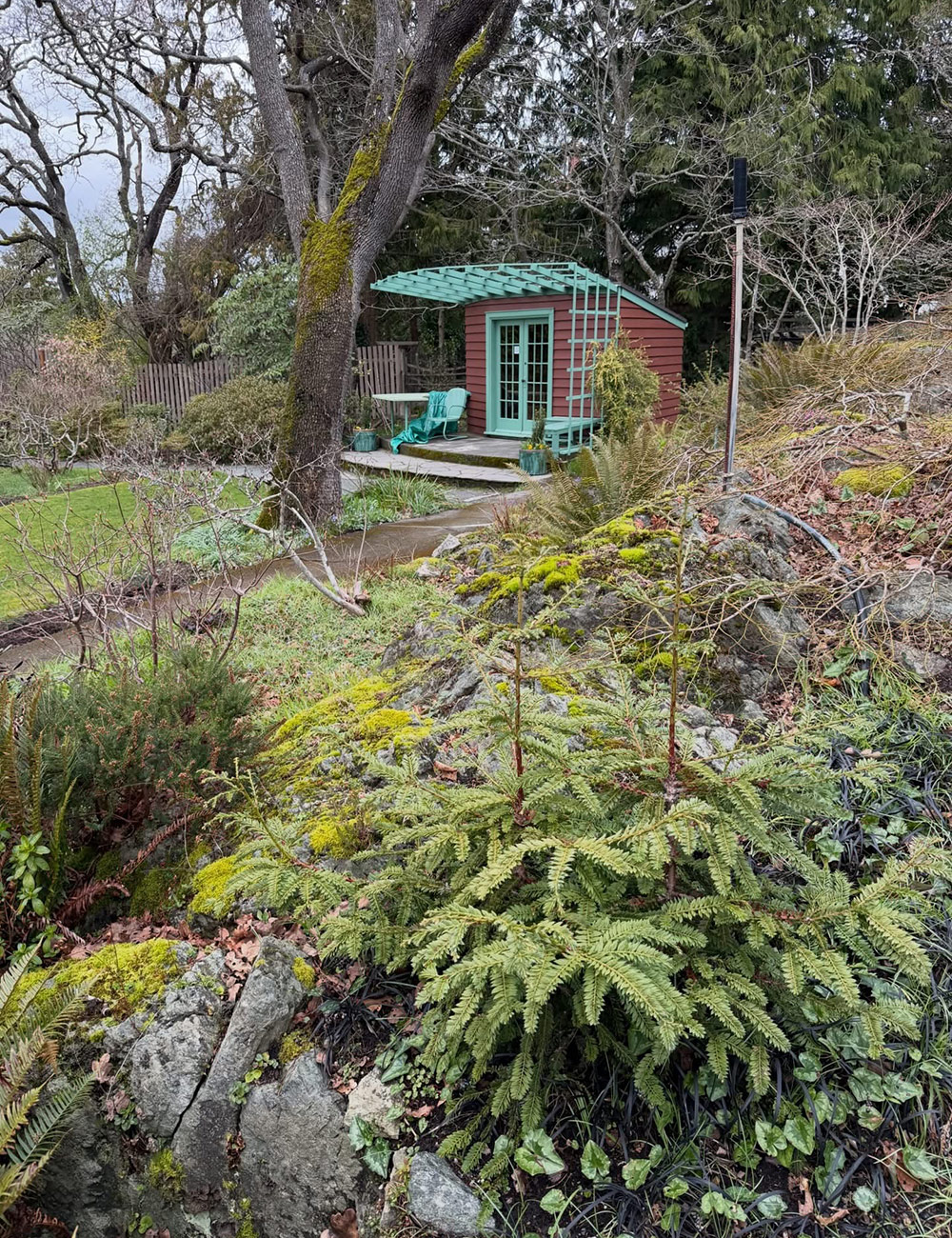 It was completely restored in 2002, but the summerhouse in the garden matches the original structure that was built for the Abkhazis in 1946.
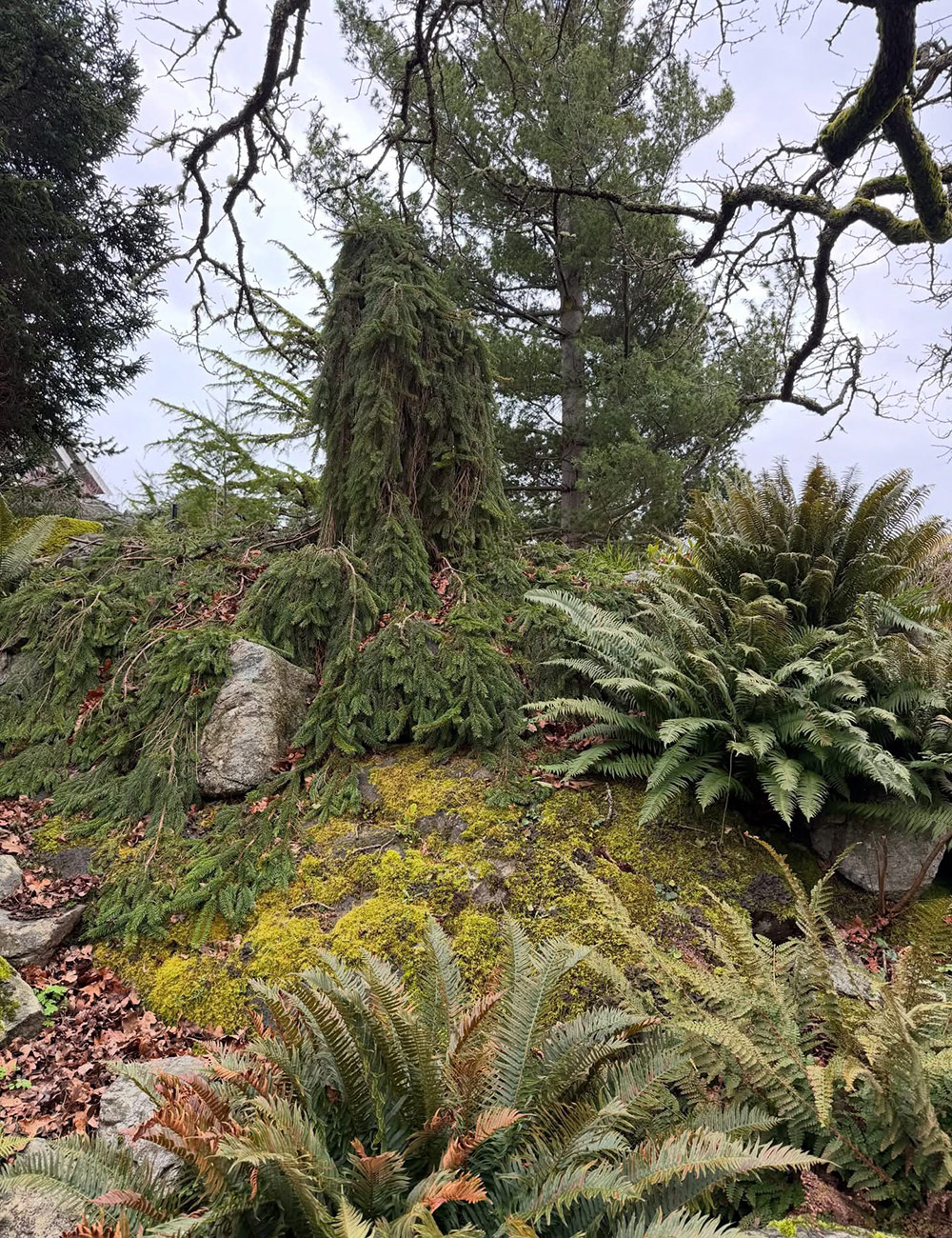 Another great example of a delightful trailing plant making a home of the sloped beds is this weeping Norway spruce (Picea abies ‘Pendula’, Zones 3–7), which looks marvelous with some fern companions.
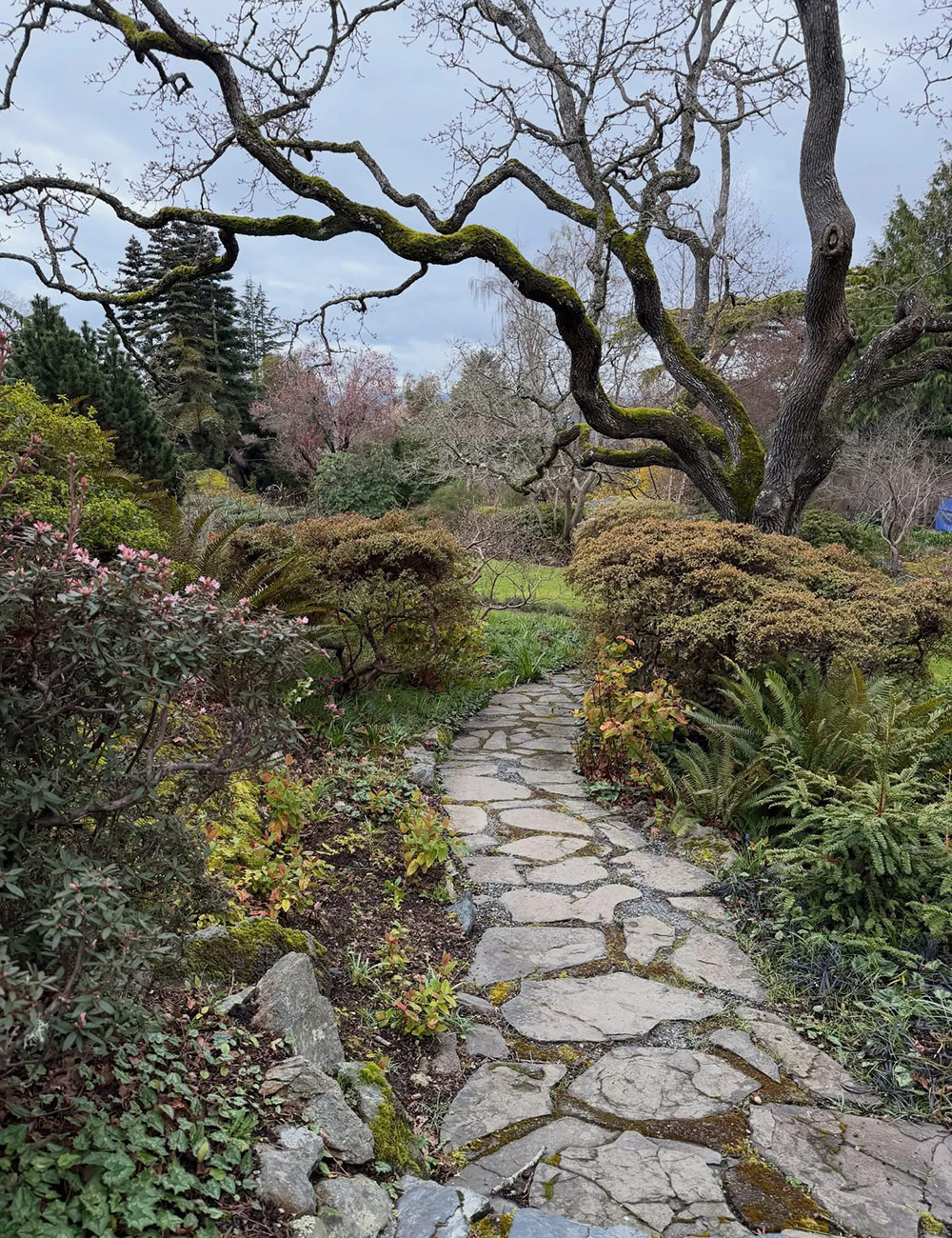 Anyone familiar with Vancouver Island knows that the best word to describe its diverse landscape is lush, and the Abkhazis perfectly reflected this in the intense greenery of the garden. Even in the cold of late winter, the beds and borders are delectably verdant.
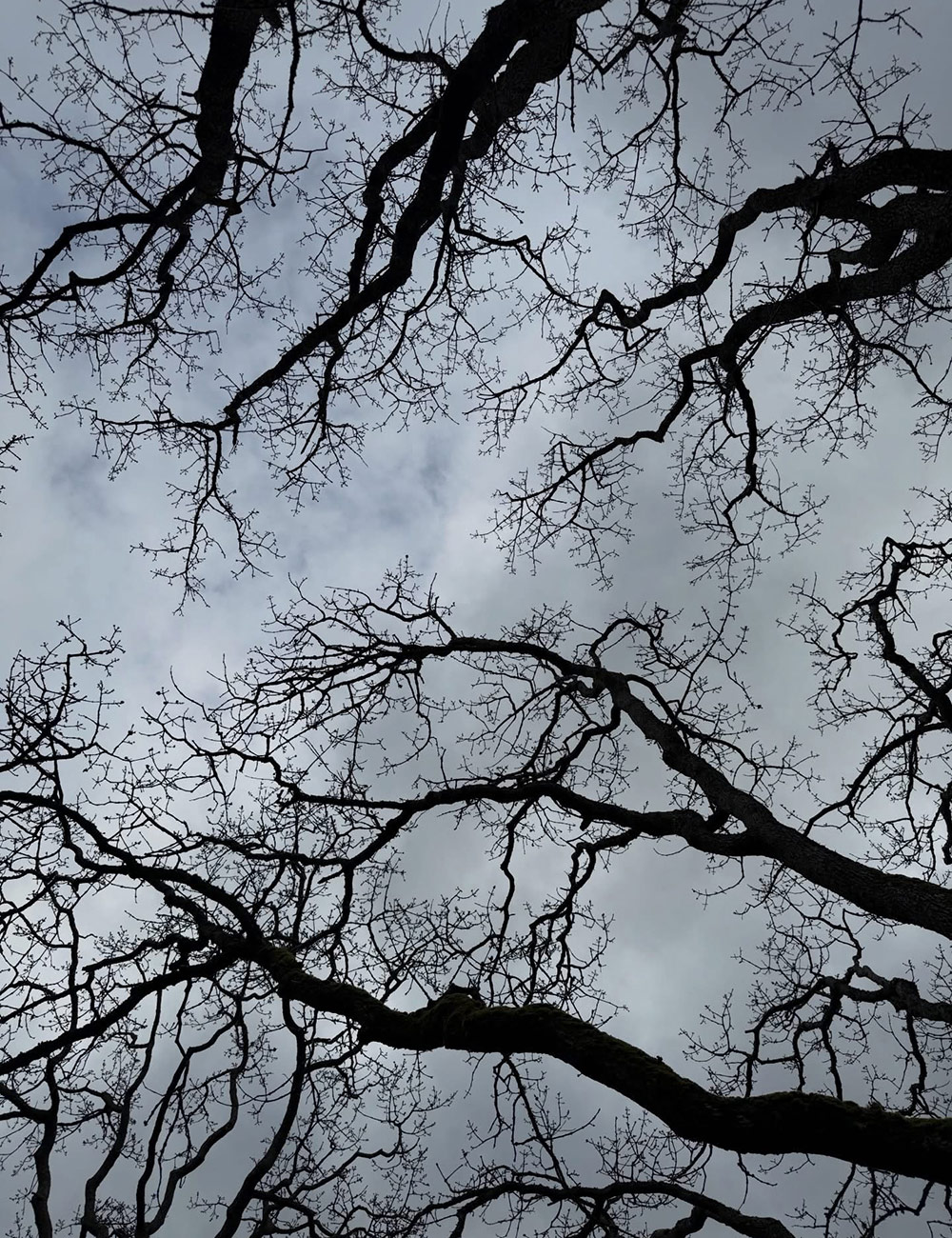 One of the most iconic plants in the garden are, as Cherry put it, “The legendary Garry oaks (Quercus garryana, Zones 6–9).” These massive oaks, which grow to 40 to 90 feet tall, are native to the Pacific coast, but are most prevalent in the Pacific Northwest. The Abkhazi Garden on Vancouver Island is at the very end of their native range.
Thank you so much again for sharing an incredible assortment of photos from two stellar gardens on Vancouver Island, Cherry! It has been such a treat to see these botanical havens through your lens, and I hope we get to see a spring update from your stunning home garden soon.
Some incredible spring gardens have been rolling into the GPOD submission form and inbox that I thrilled to start sharing next week, but we also still appreciate seeing photos from public garden visits. If you’re doing any garden travel this year, consider sharing some photos with the blog. Follow the directions below to submit your photos to Garden Photo of the Day!
We want to see YOUR garden!
Have photos to share? We’d love to see your garden, a particular collection of plants you love, or a wonderful garden you had the chance to visit!
To submit, fill out the Garden Photo of the Day Submission Form.
You can also send 5–10 photos to [email protected] along with some information about the plants in the pictures and where you took the photos. We’d love to hear where you are located, how long you’ve been gardening, successes you are proud of, failures you learned from, hopes for the future, favorite plants, or funny stories from your garden.
Do you receive the GPOD by email yet? Sign up here
Fine Gardening Recommended Products

The Regenerative Landscaper: Design and Build Landscapes That Repair the Environment
Fine Gardening receives a commission for items purchased through links on this site, including Amazon Associates and other affiliate advertising programs.
2024 Nautilus Award Gold Medal Winner! This awe-inspiring guide weaves together permaculture design, food resiliency, climate adaptation, community organizing, and indigenous wisdom that you can implement in your own backyard.
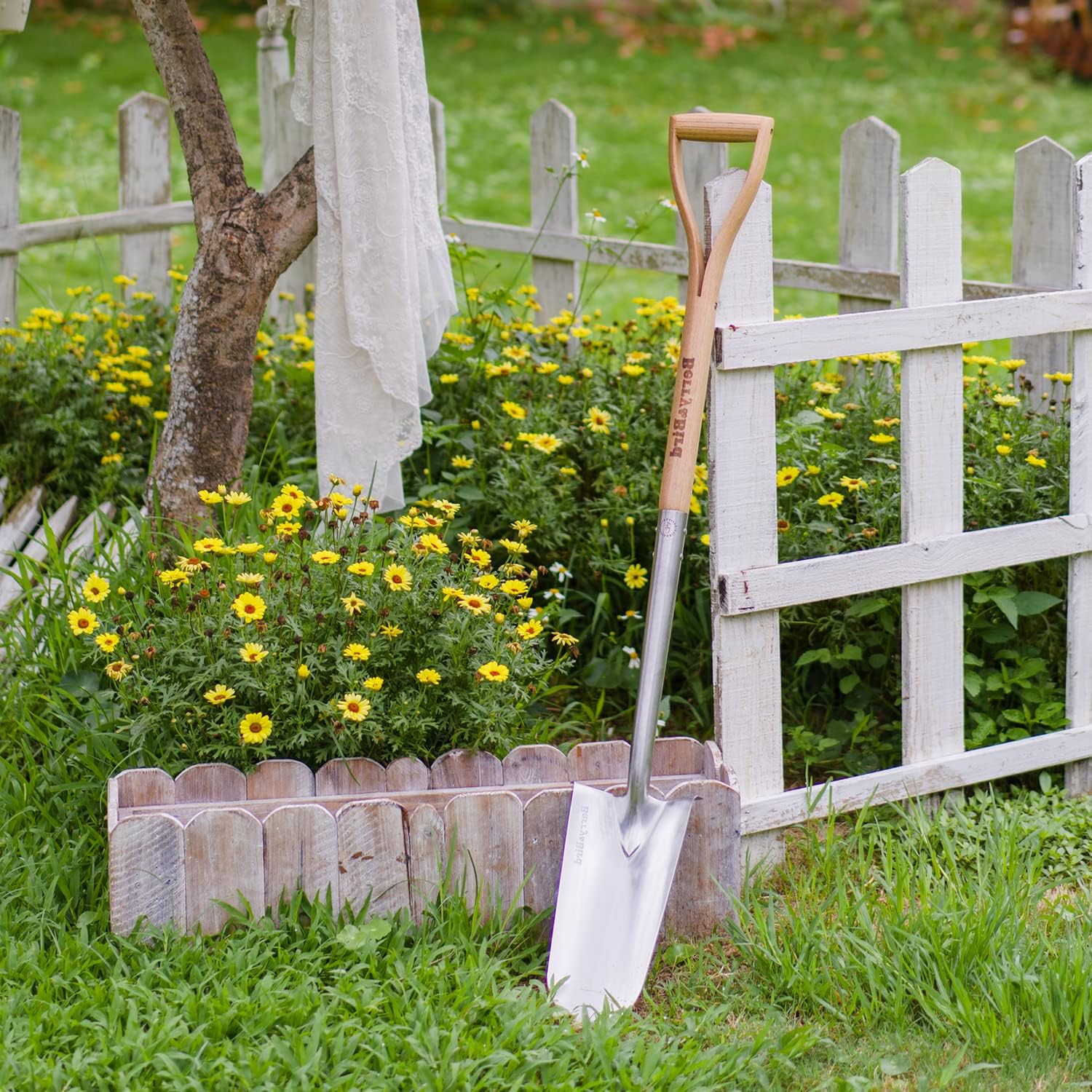
Berry & Bird Rabbiting Spade, Trenching Shovel
Fine Gardening receives a commission for items purchased through links on this site, including Amazon Associates and other affiliate advertising programs.
Ideal Tool for All Gardeners Use: Our heavy duty trenching shovel is designed by a professional gardening tool designer. Lifetime Durability: This heavy duty drain spade is made of high-quality stainless steel, it is very strong and durable, even if it is used for high-strength work, it will not bend. Ergonomic Wood Handle: The handle of this planting spade is made of ash hardwood harvested from FSC-certified forests and has an ergonomically streamlined design, making it very suitable for everyone’s hands. Multi-Use: This digging shovel is generally used for digging trenches, digging holes, transplanting, edging, moving compost, cutting thick turf and furrowing. The sharp blade allows you to cut, scoop, dig, lift and dice in hard soil.
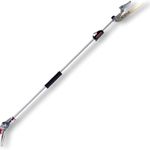
ARS Telescoping Long Reach Pruner
Fine Gardening receives a commission for items purchased through links on this site, including Amazon Associates and other affiliate advertising programs.
Telescopes from 4 to 7′. Cut and Hold (160) Blades. Drop forged blades for unsurpassed long lasting sharpness. Lightweight, 2.3 lbs., for continued use. Perfectly balanced for easy pruning.