
Hi GPODers!
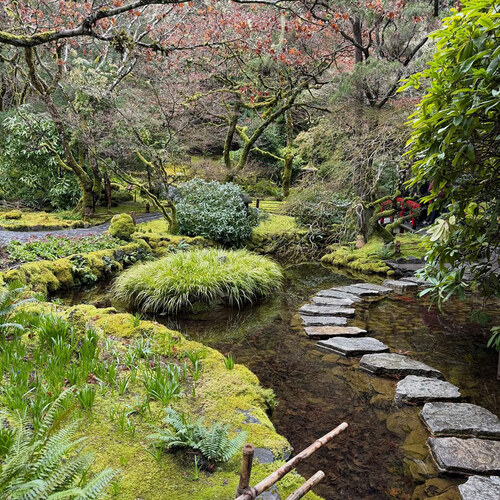
I took some time off last week and was in need of some submissions to bridge the gap of my absence, so I asked our favorite garden traveler, Cherry Ong, to share some garden photos she has collected over the past couple of months. I hope you all enjoyed her photos of the Sunken Garden at The Butchart Gardens on Vancouver Island that were shared last week, as we are continuing a tour of this botanical wonderland in British Columbia with more of Cherry’s fantastic photographs and her marvelous eye for moments of beauty in any garden. Today we’re focusing on the Japanese Garden, which was a feast of fabulous foliage in the final days of winter.
Scenes from The Japanese Garden at The Butchart Gardens. Still my fave garden among all the garden rooms at Butchart—any time of the year. The last two photos are of great interest to me at this visit—the garden border edging has been renewed where needed and it is a work of art.
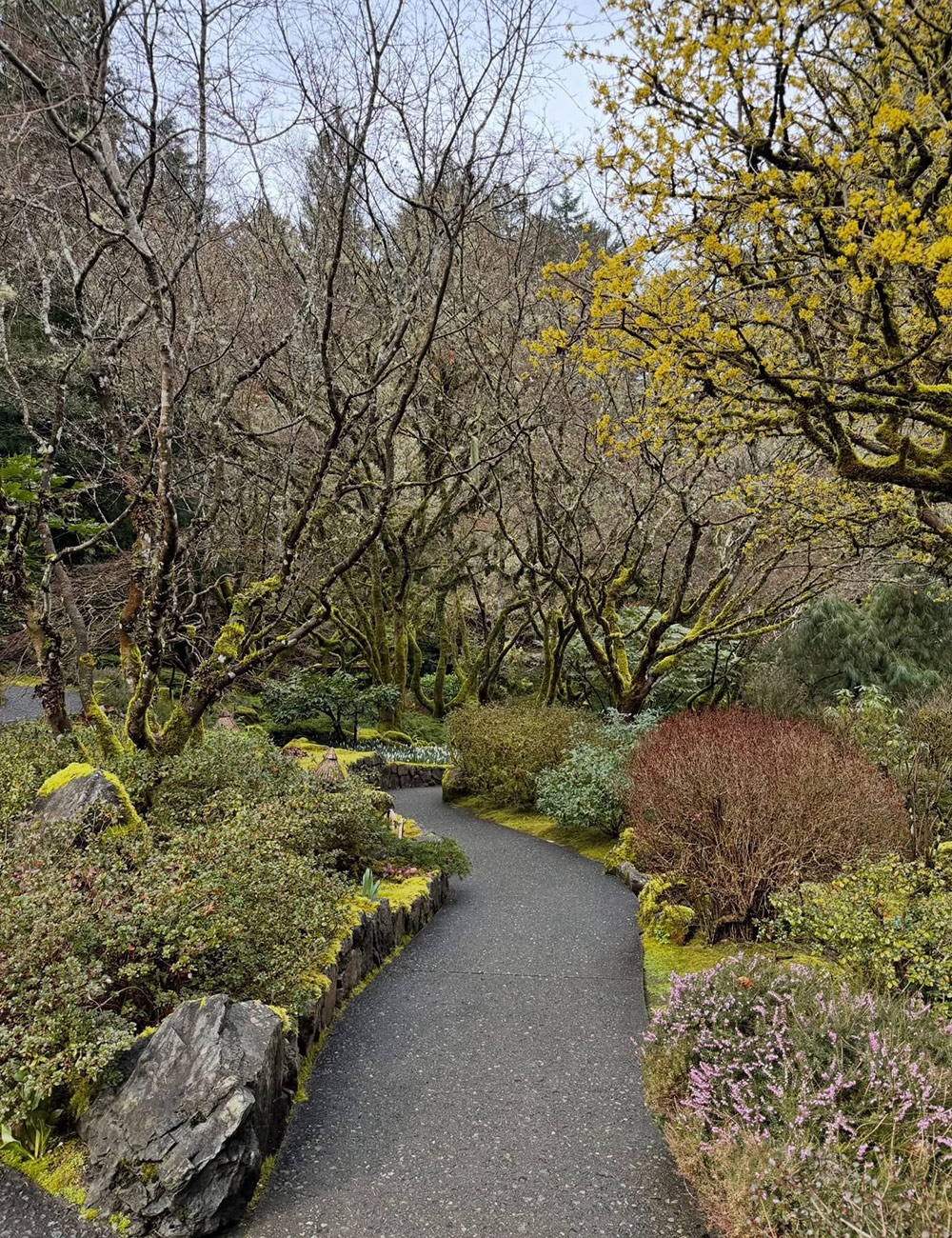 In late winter, the Japanese garden is more subdued than the bright foliage colors in the peak season, but bare branches and plenty of evergreens keep the space—designed to emulate natural landscapes—full of fascinating shapes and forms.
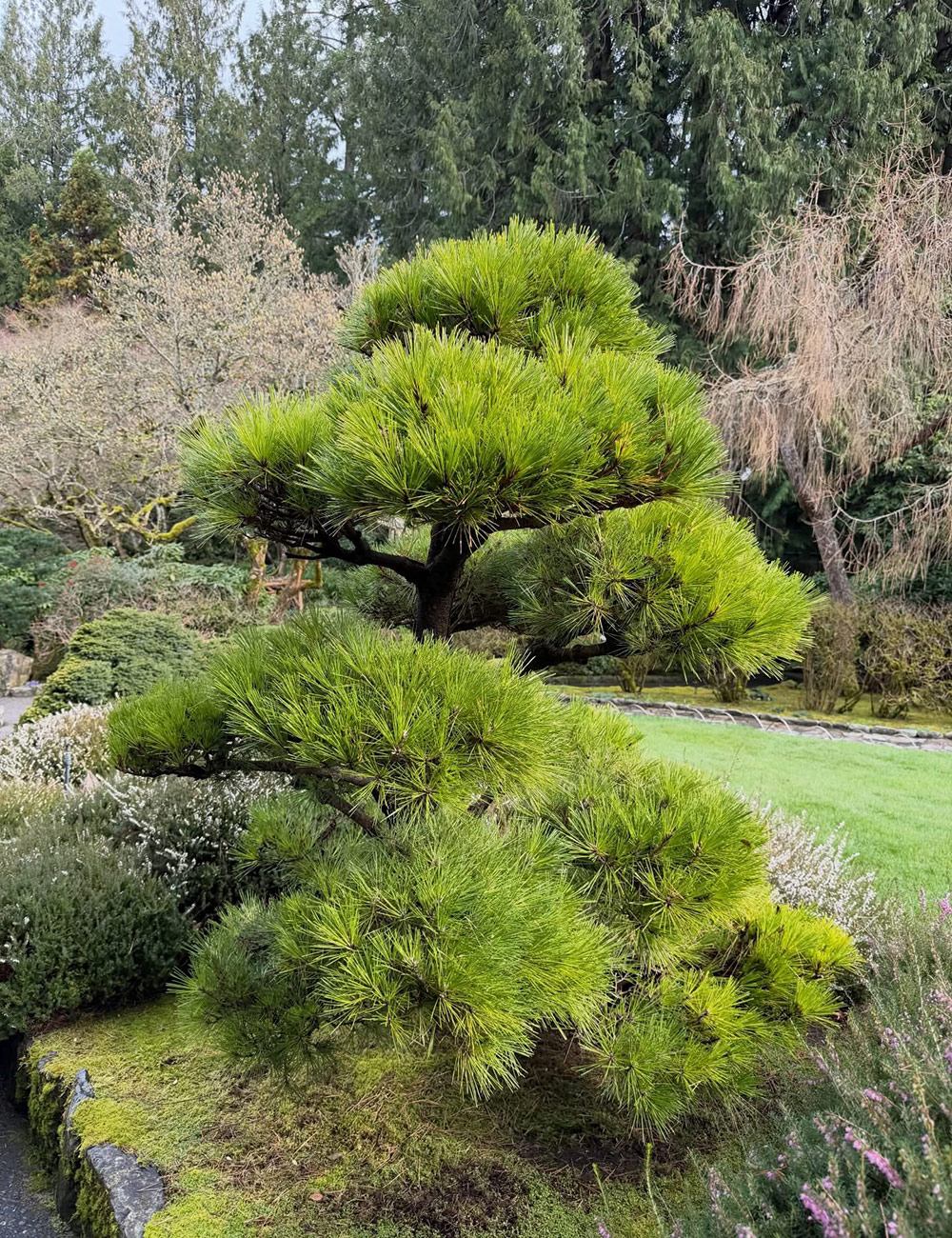 If you’re ever lucky enough to visit Japan, you will notice an abundance of pine trees and other types of conifers. Six different species of pine trees can be found in Japan, but one of most prevalently featured in Japanese gardens in the west is the Japanese black pine (Pinus thunbergii, Zones 5–8). The straight species can grow up to 60 feet tall, but there are also fabulous dwarf varieties and pruning techniques that keep these massive trees fit for smaller spaces.
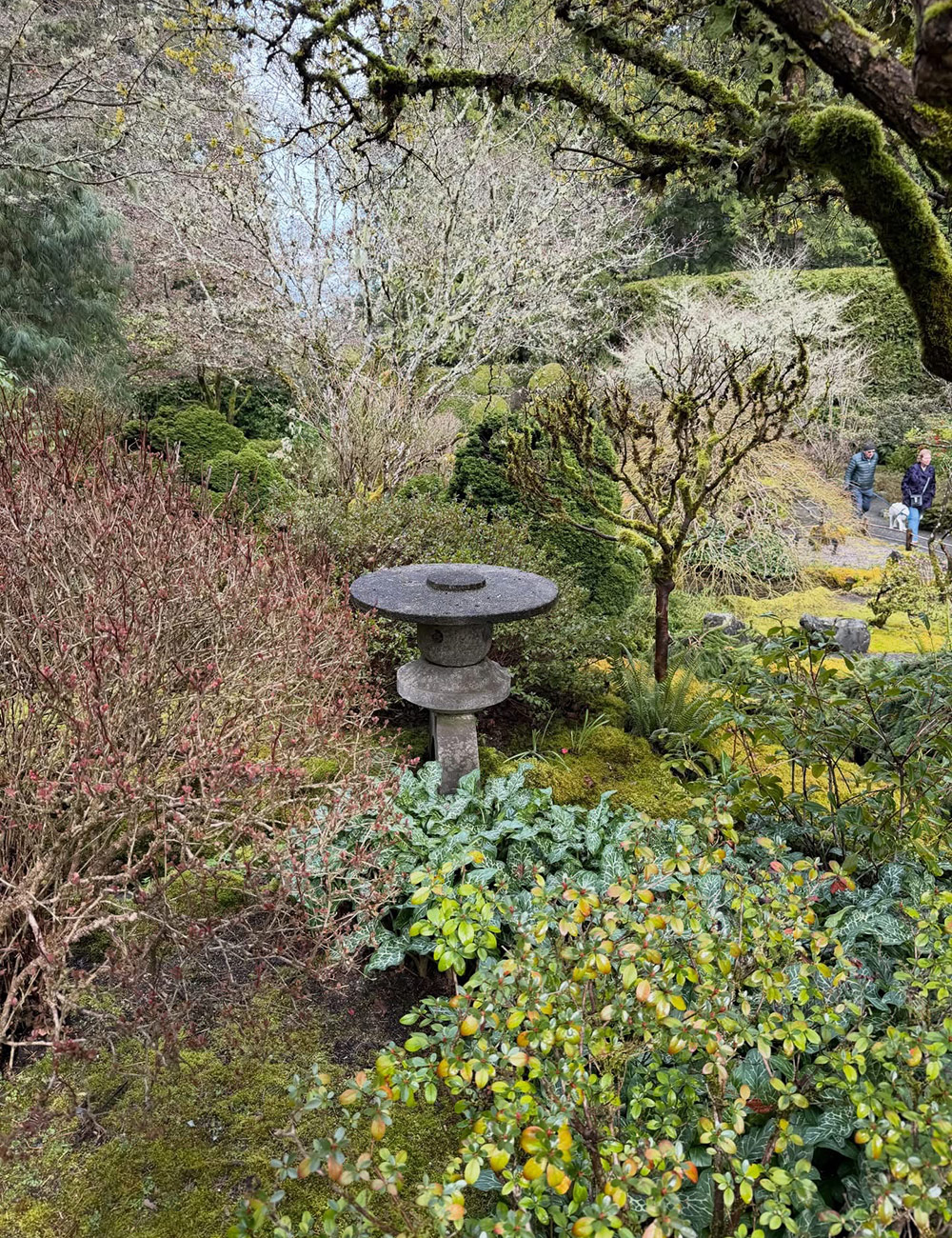 Along with the fantastic shapes and forms that can be admired in the late season, wonderful texture is on display in abundance.
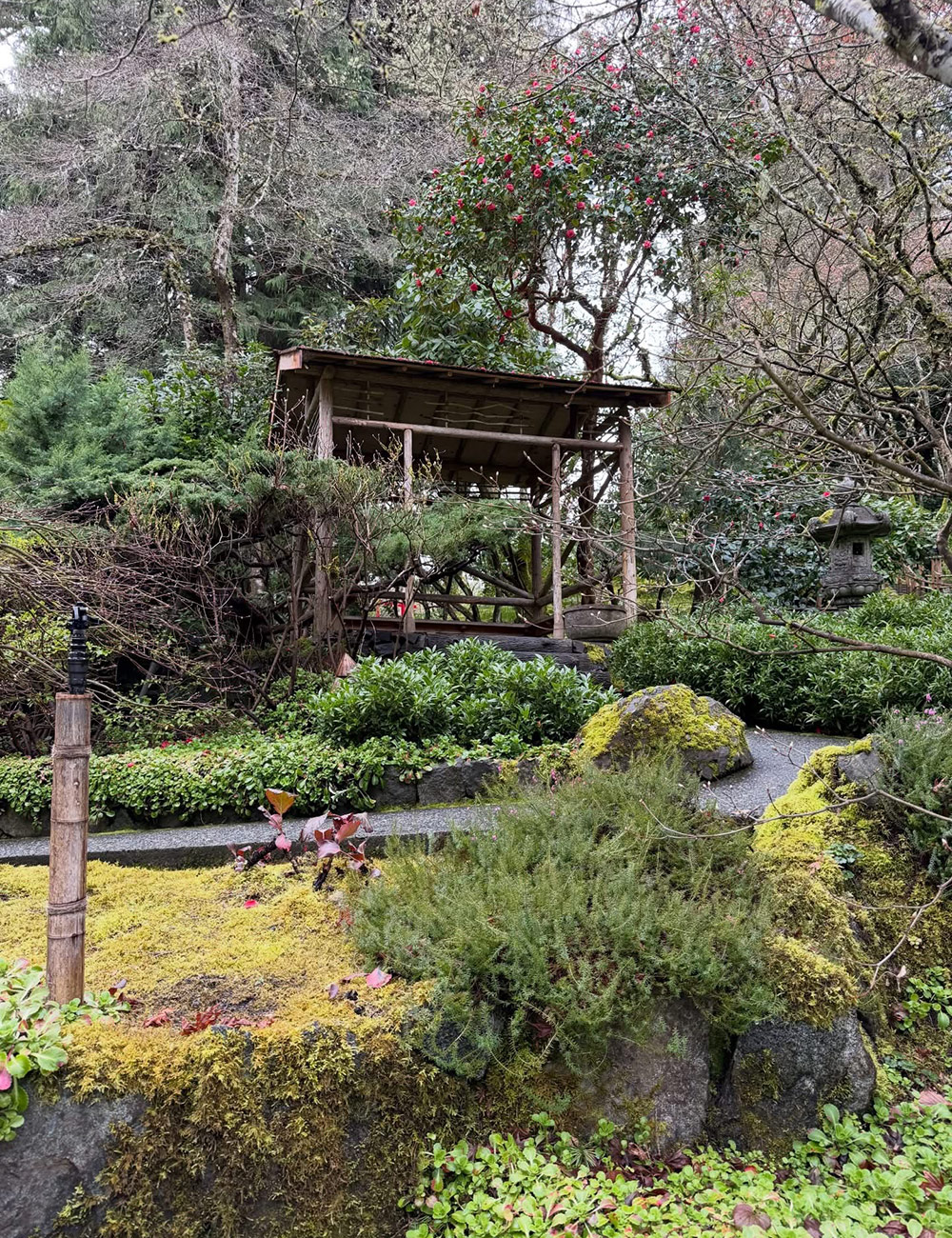 Japanese garden design looks to create miniature versions of lush natural landscapes, but it also encourages the use of man-made structures that provide protected spaces for peaceful contemplation.
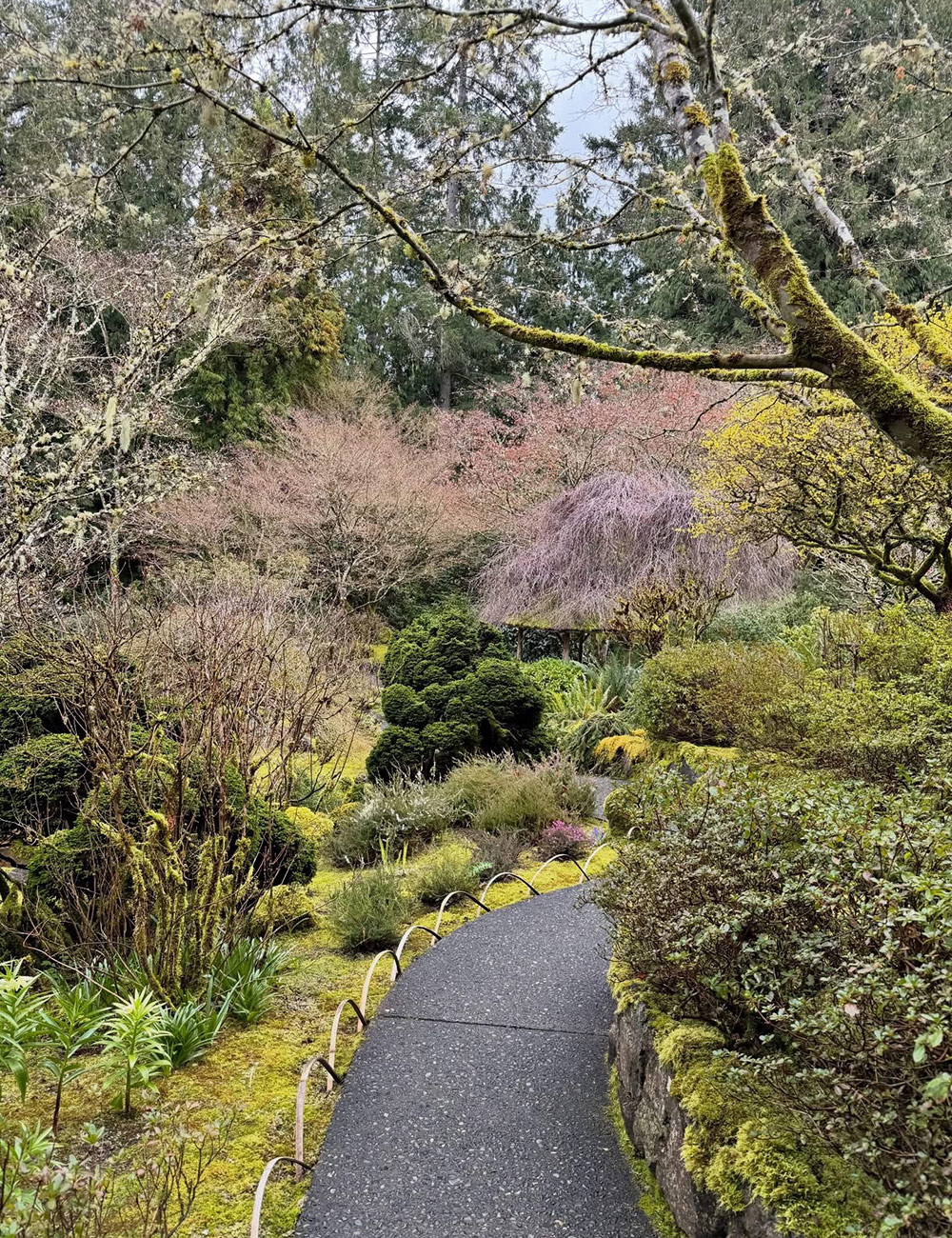 It is not hard to see why this is Cherry’s favorite landscape in The Butchart Gardens. Without a flower in sight, and with plenty of branches still bare, there are layers upon layers of interest to be enjoyed around every corner.
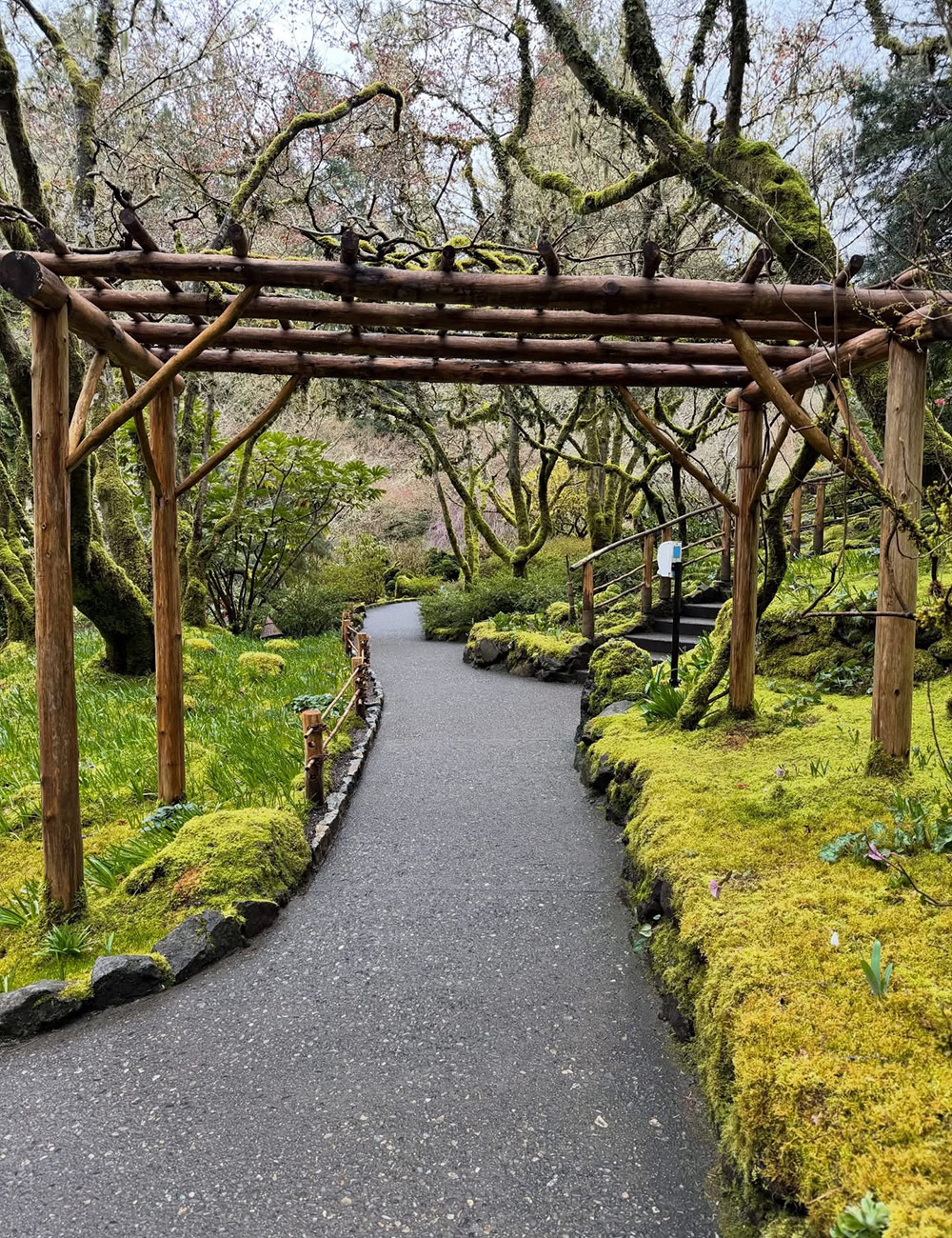 Another gorgeous structure in the garden that is a perfect example of hardscaping done right. This pergola will support climbing plants in the peak season, creating some great vertical interest, while matching the natural aesthetic of the garden’s design. It will likely blend in seamlessly when more plant growth emerges, but can be better admired in the late winter landscape.
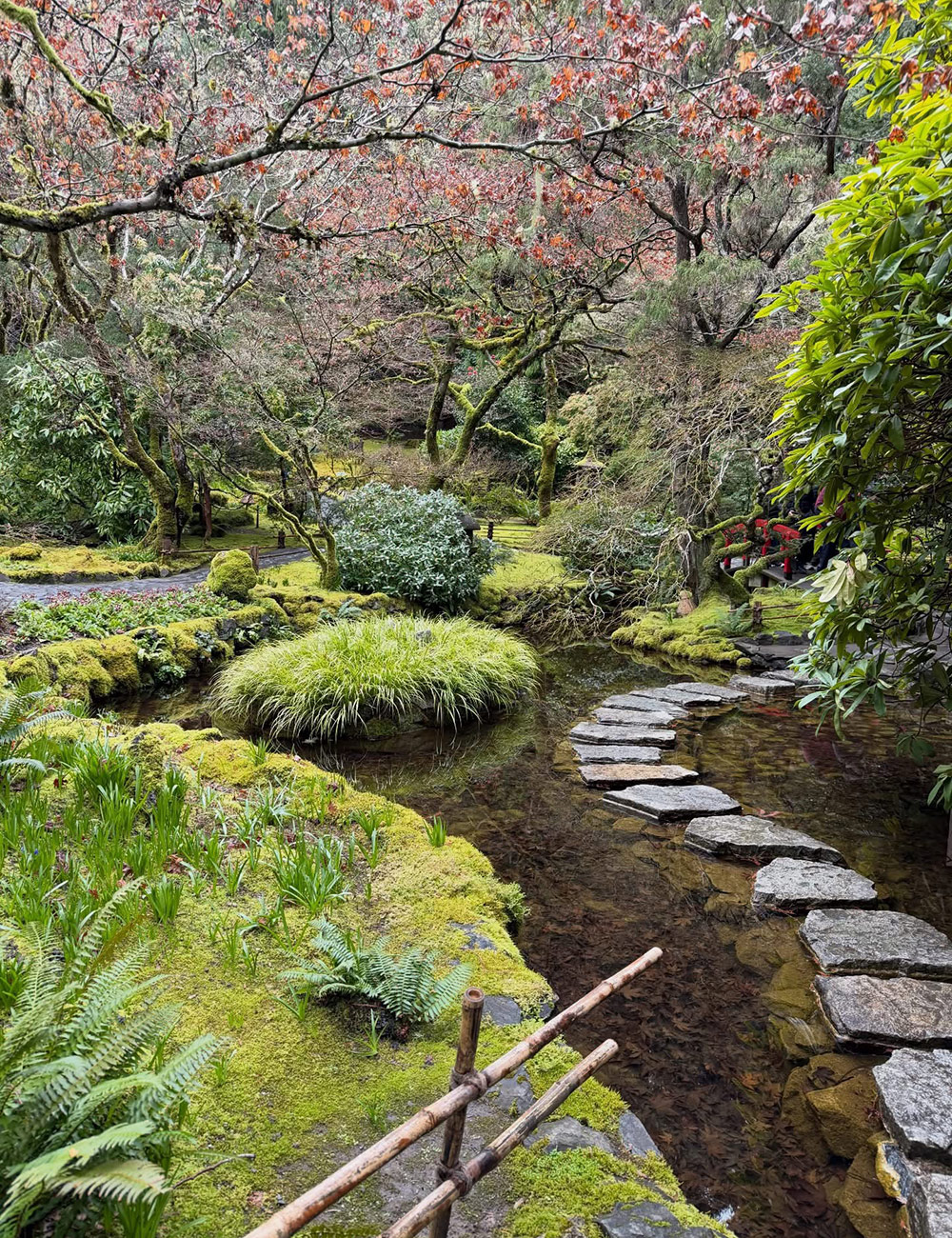 The marvelous moss that can be found in abundance in the Pacific Northwest is right at home in a Japanese garden. These large carpets of green might have you forgetting that these photos were taken in late winter!
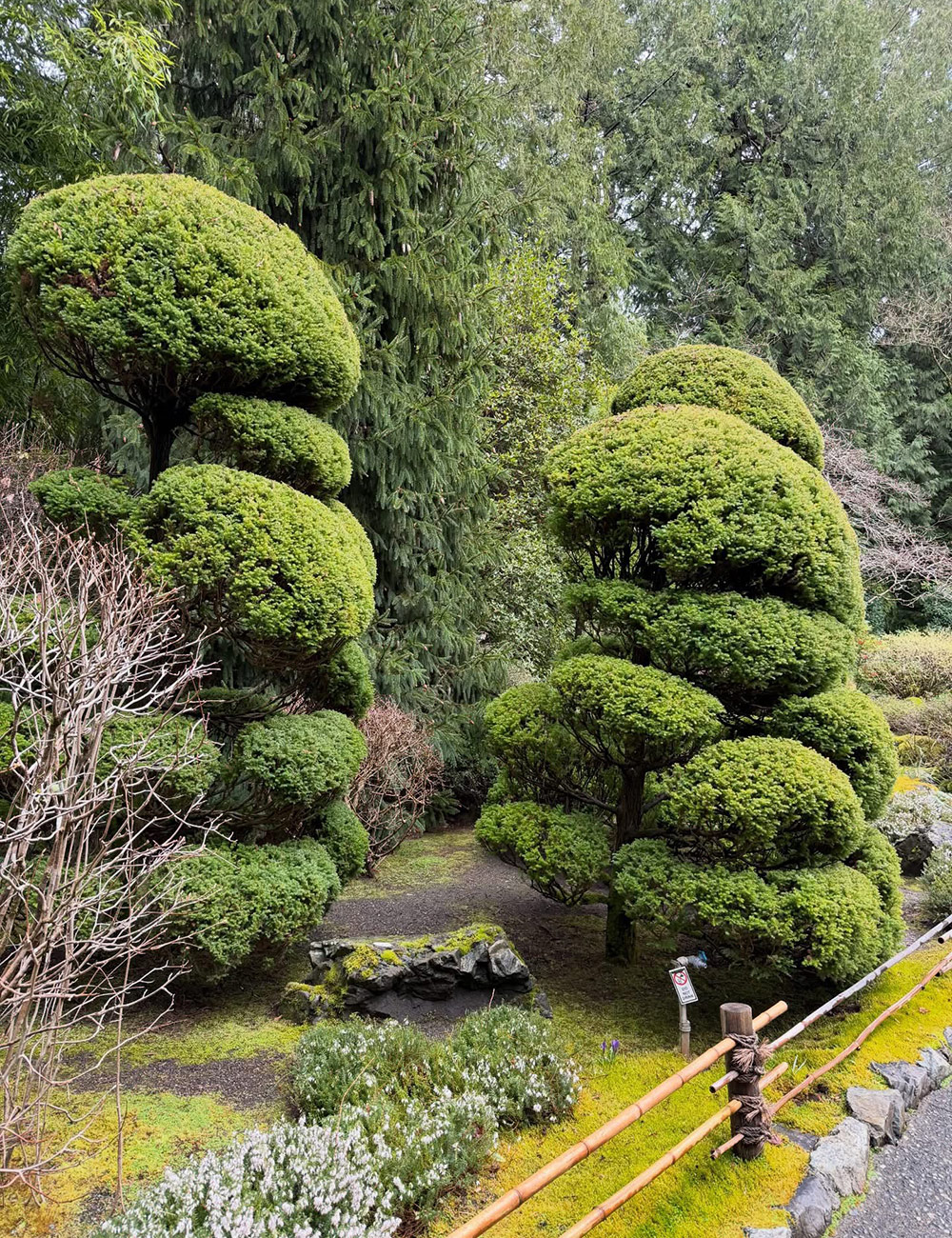 We already saw one gorgeous example of cloud pruning (Niwaki) in the Japanese black pine, above, but this signature technique in Japanese garden design can be found throughout Butchart’s Japanese Garden.
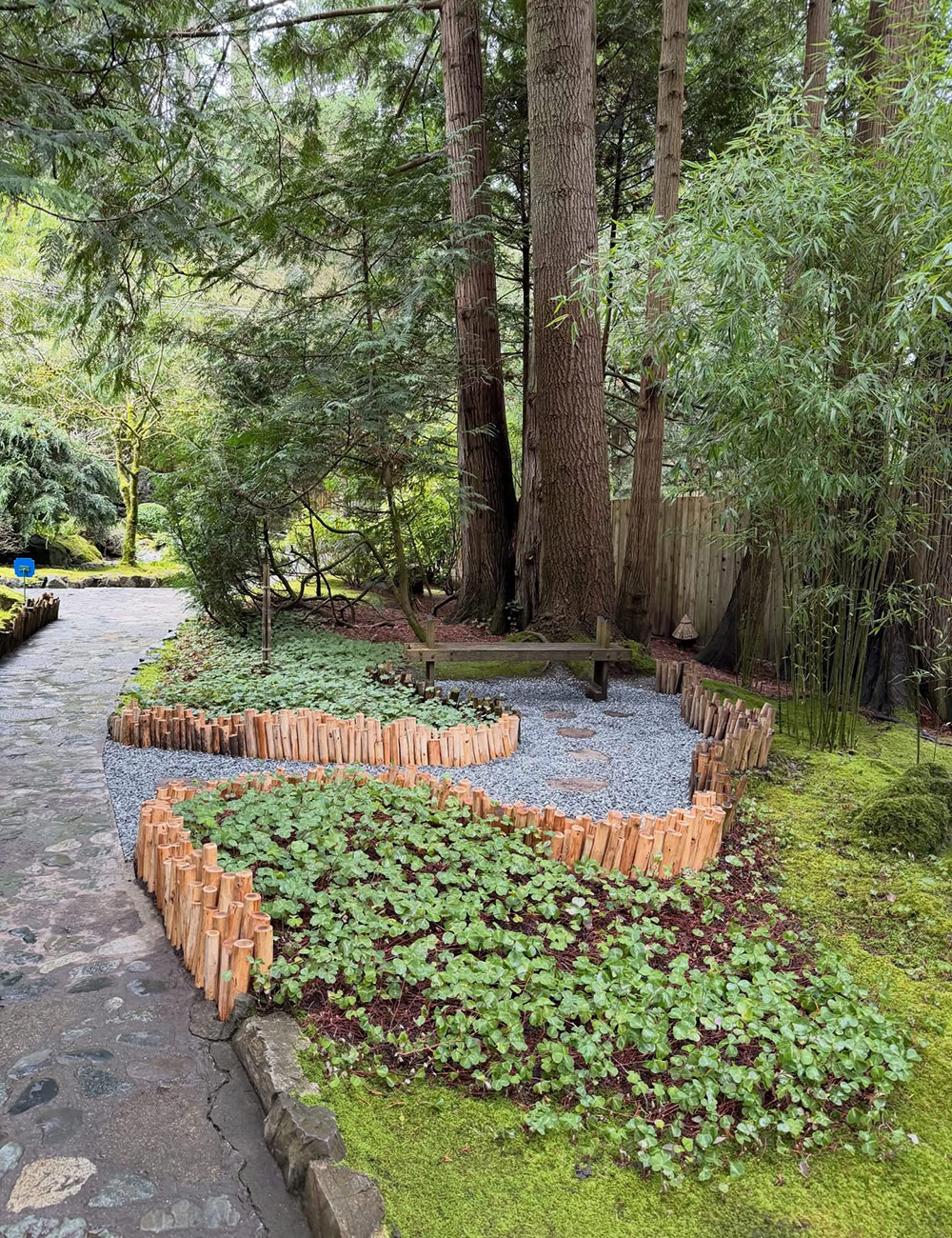 Finally a look at that incredible edging that Cherry mentioned in her intro! Cut branches are not an uncommon material for bed edging, but this creative arrangement of various lengths piled together transform the edging into an artistic addition to this section of path.
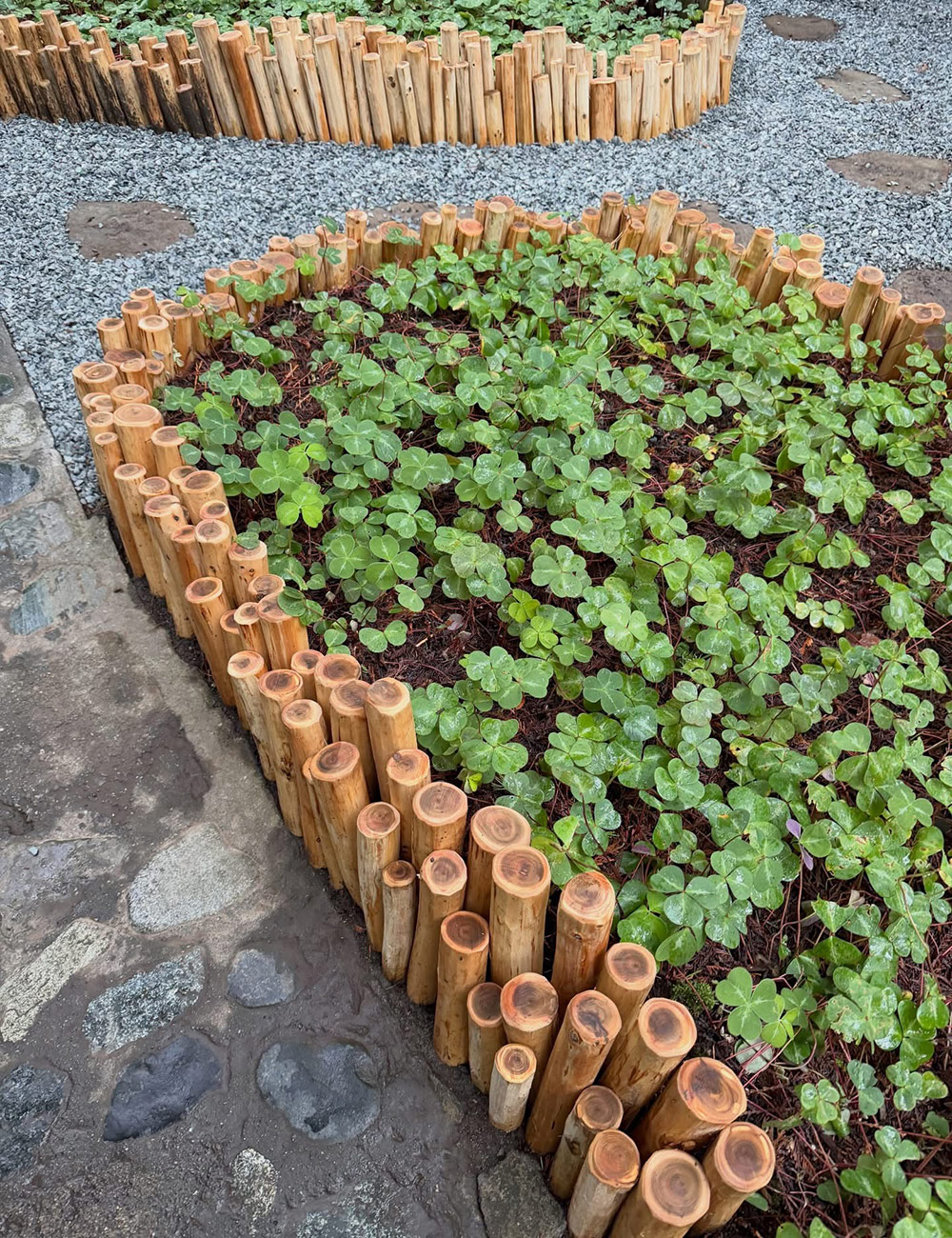 And a closer look at that incredible edging!
Thank you so much for sharing a wonderful array of garden photos with us, Cherry! Seeing these spectacular gardens through your lens is only bested by enjoying these spaces in person, and I’m thrilled that we have three more days of your gorgeous garden photos revel in.
Cherry is sharing some glorious garden interest from late winter, but I’m looking forward to seeing more spring color arrive on Garden Photo of the Day in the coming weeks. If spring is blooming in your garden, please consider sharing photos with the blog. Follow the directions below to submit your photos to Garden Photo of the Day!
We want to see YOUR garden!
Have photos to share? We’d love to see your garden, a particular collection of plants you love, or a wonderful garden you had the chance to visit!
To submit, fill out the Garden Photo of the Day Submission Form.
You can also send 5–10 photos to [email protected] along with some information about the plants in the pictures and where you took the photos. We’d love to hear where you are located, how long you’ve been gardening, successes you are proud of, failures you learned from, hopes for the future, favorite plants, or funny stories from your garden.
Do you receive the GPOD by email yet? Sign up here
Fine Gardening Recommended Products
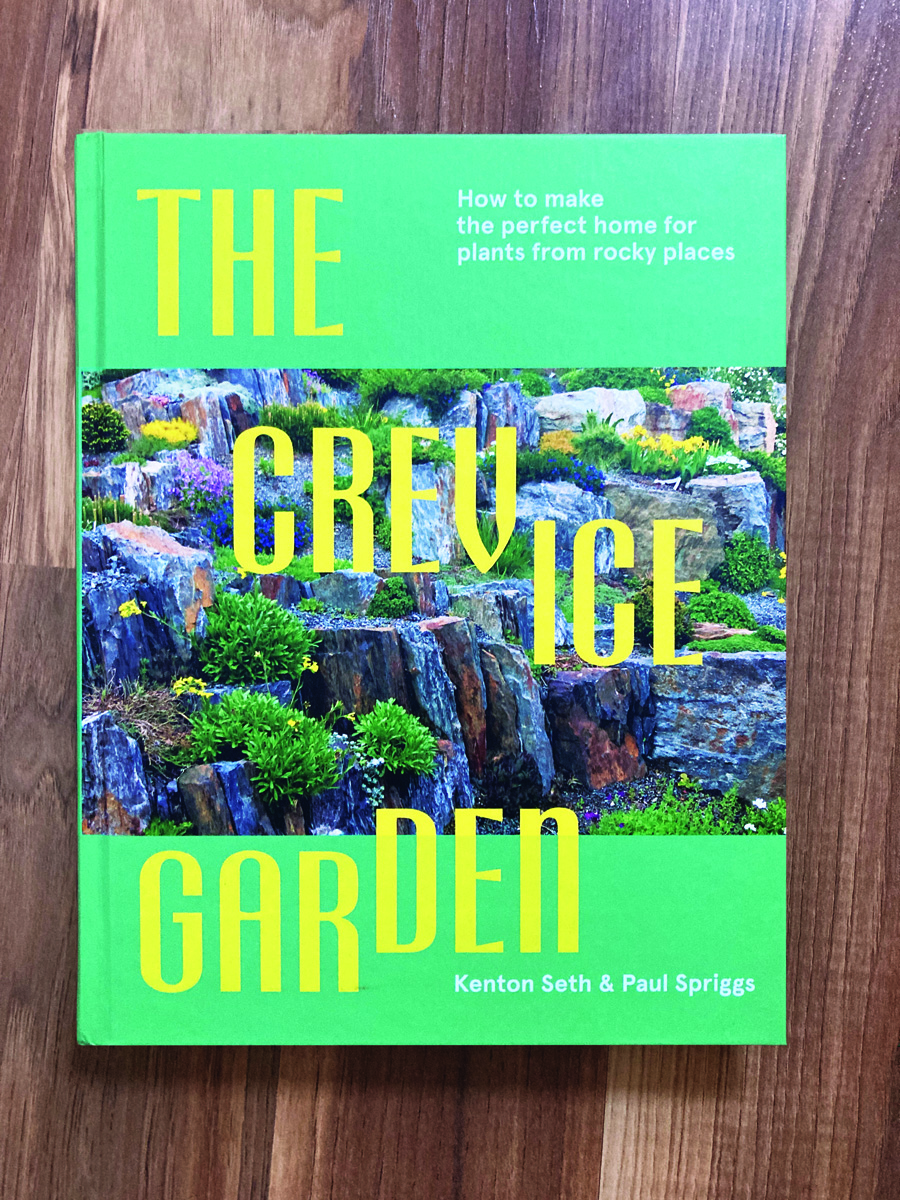
The Crevice Garden: How to make the perfect home for plants from rocky places
Fine Gardening receives a commission for items purchased through links on this site, including Amazon Associates and other affiliate advertising programs.
A crevice garden replicates the environmental conditions of mountain tops, deserts, coastlines, and other exposed or rocky places on earth. These striking garden features provide perfect conditions for the plants native to these far-off places, bringing the cultivation of these precious gems within everybody’s reach.
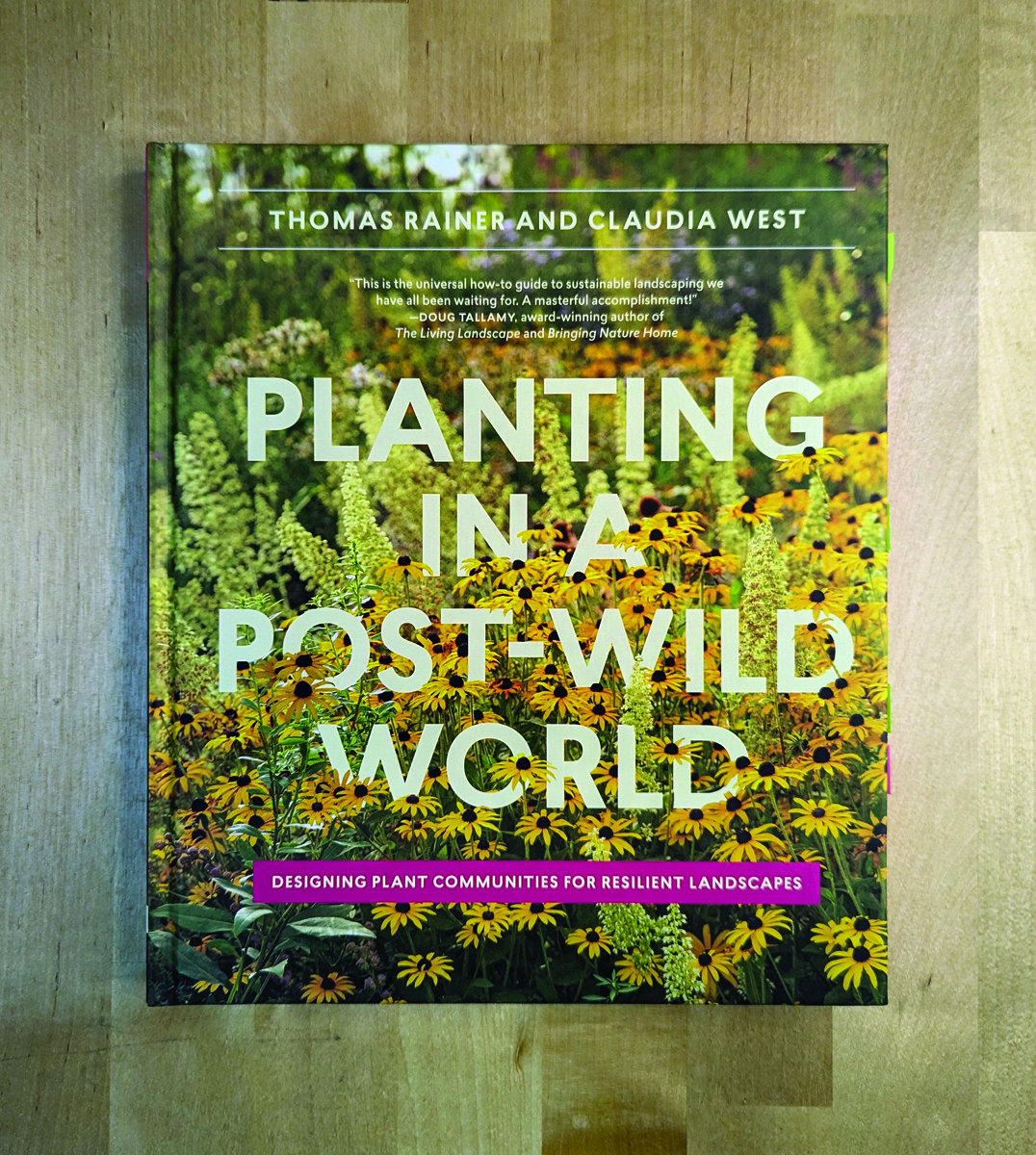
Planting in a Post-Wild World: Designing Plant Communities for Resilient Landscapes
Fine Gardening receives a commission for items purchased through links on this site, including Amazon Associates and other affiliate advertising programs.
Featuring gorgeous photography and advice for landscapers, Planting in a Post-Wild World by Thomas Rainer and Claudia West is dedicated to the idea of a new nature—a hybrid of both the wild and the cultivated—that can nourish in our cities and suburbs.
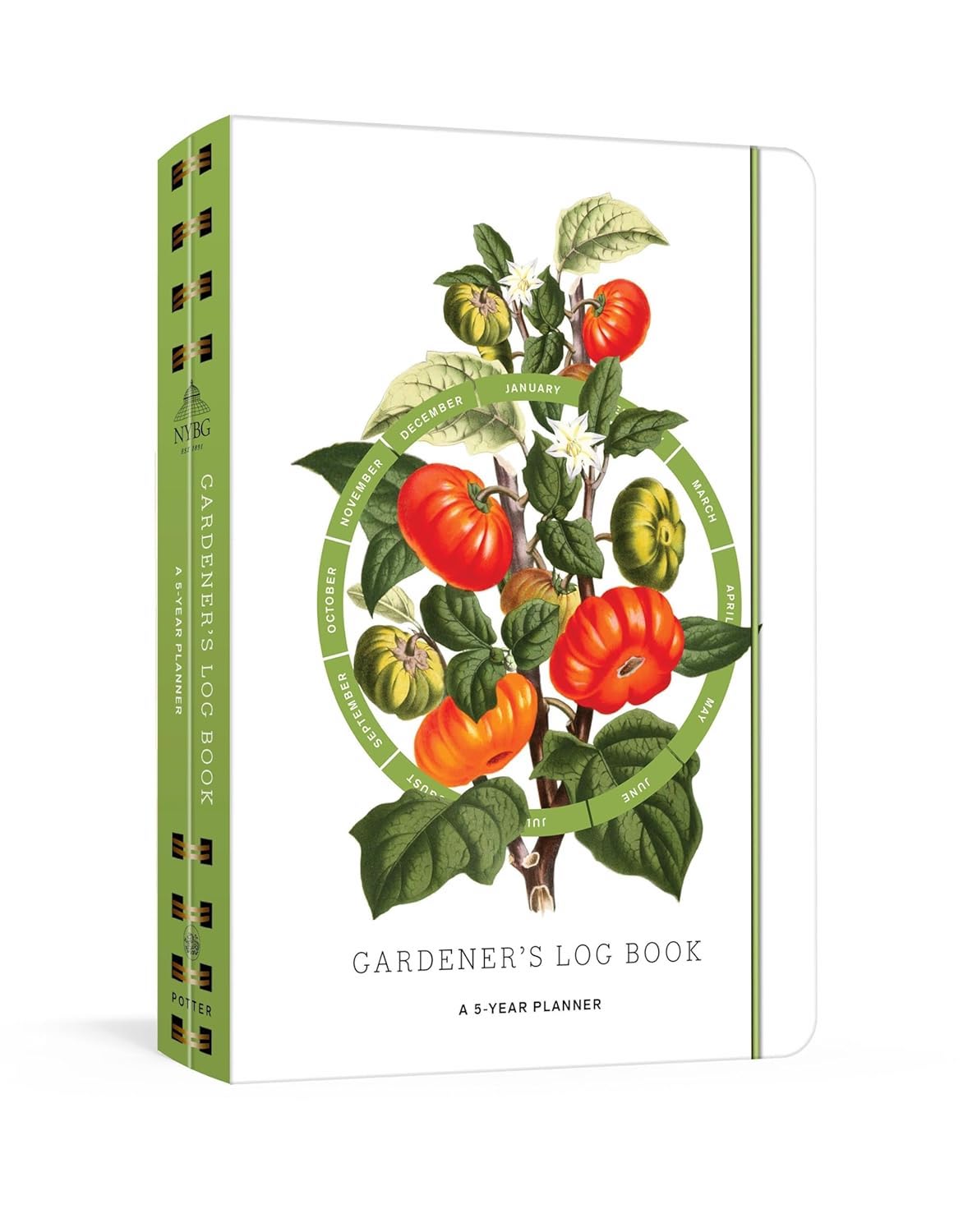
Gardener’s Log Book from NYBG
Fine Gardening receives a commission for items purchased through links on this site, including Amazon Associates and other affiliate advertising programs.
This weatherproof five-year log book includes the following features:
· Sturdy waterproof cover to protect pages from rain and muddy soil
· Lined pages and gridded paper for plotting beds
· Five years of 12-month bloom and harvest grids for recording what you planted and when
· Authoritative appendices on composting, pruning, pest and disease control, and container gardening
· Useful reminders by season on fertilizing, mulching, and transplanting
· Space for listing your favorite sources and suppliers.