
Create a beautiful spring garden for the Mountain West
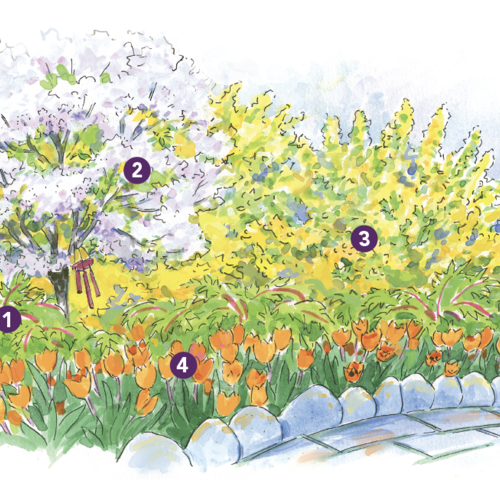
Mountain West regional reporter Mary Ann Newcomer, a gardening expert from Idaho who lectures and writes extensively about her region, shares a spring planting plan thoughtfully curated for the region’s climate. Cold-hardy dwarf sour cherry puts on a show of white blossoms in spring, complemented by the bright golden foliage and classic heart-shaped blooms of ‘Hearts on Fire’ bleeding heart. Golden currant and ‘Shogun’ species tulips add colorful flowers that make this spring garden layout a Mountain West standout.
Spring garden layout plant list
Read on for details about each numbered plant in the illustration above, and learn how to recreate this expert design in your own landscape.
See More: Design Ideas for the Mountain West
1. ‘Hearts on Fire’ bleeding heart
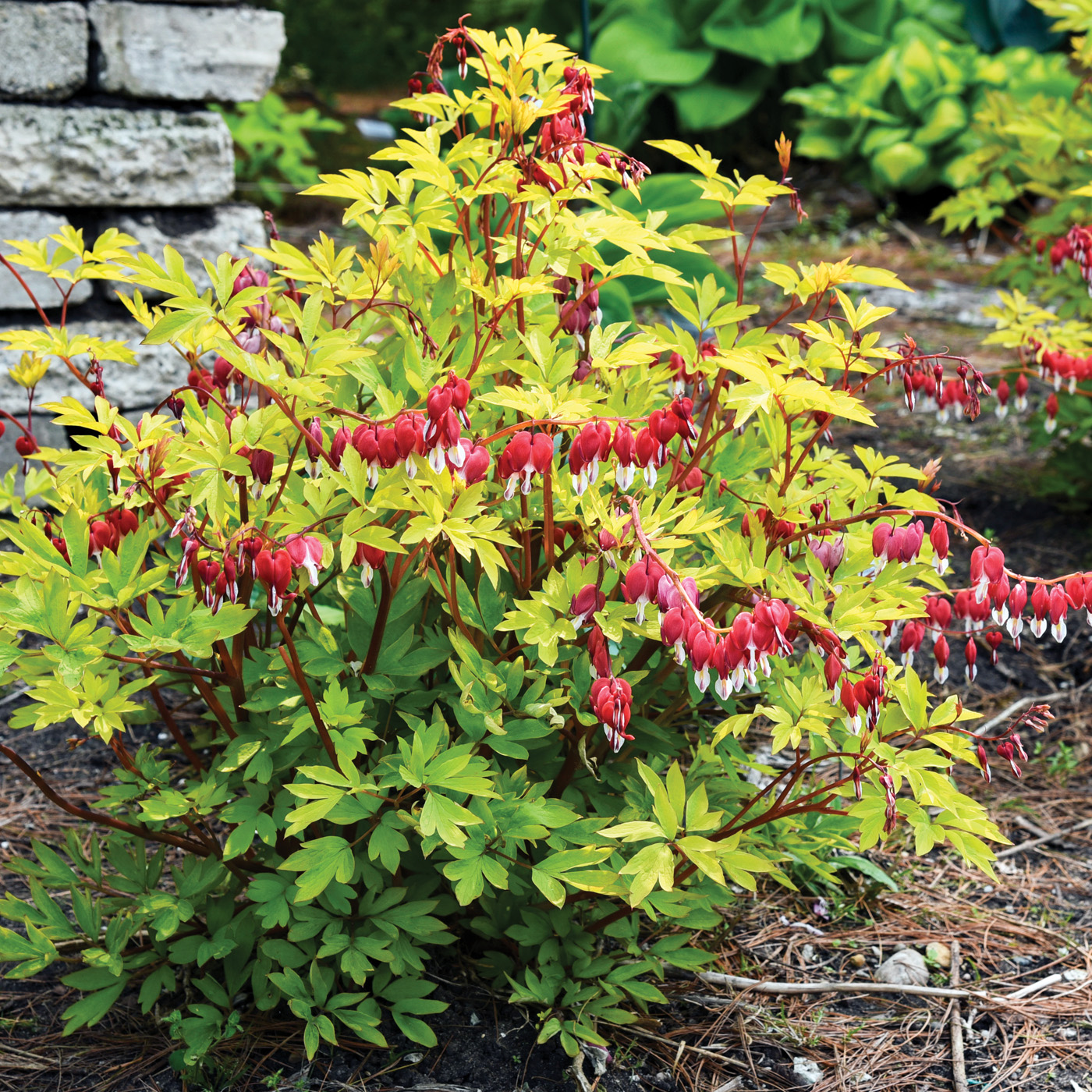
Lamprocapnos spectabilis ‘Hearts on Fire’ (syn. Dicentra spectabilis ‘Hearts on Fire’)
- Zones: 3–9
- Size: 18 to 24 inches tall and 24 to 36 inches wide
- Conditions: Partial to full shade; average to moist soil
- Native range: China, Japan, and Siberia
This early-emerging perennial sets my heart afire with its golden leaves arrayed on arching, dark red-orange stems. Its heart-shaped blooms show up in late spring, much to the delight of the local bees, who have no problem hanging upside down to extract nectar. Deer, however, take little interest.
Bleeding heart plants tend to go dormant by late summer, but never fear. They are simply resting up for next year’s show. Make sure this shade lover gets a moderate amount of water, as it does not tolerate being overly dry. An annual top dressing of compost will help it thrive. Some morning sun is fine, but plants should be shaded by afternoon.
2. ‘Carmine Jewel’ bush cherry
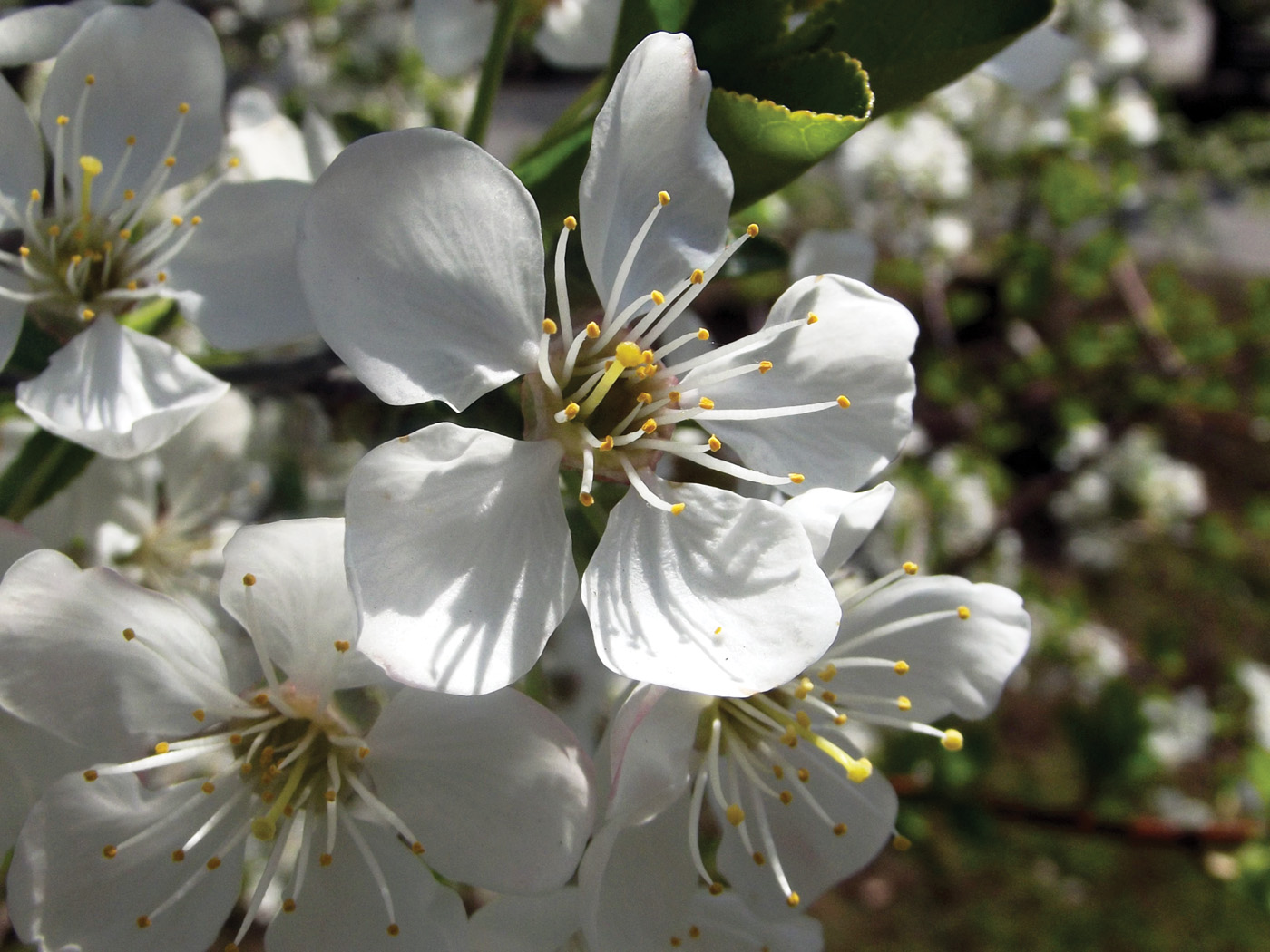
Prunus ‘Carmine Jewel’
- Zones: 3–8
- Size: 6 to 7 feet tall and wide
- Conditions: Full sun; consistently moist, well-drained soil
- Native range: Hybrid of species native to Europe and western Asia
This cold-hardy, dwarf sour cherry puts on a showy display of lovely white blossoms between March and April. The luscious, deep red fruit that follow in summer are a bit smaller than standard cherries and have a tangy aftertaste, perfect for baking and preserves. Highly productive and one of the first varieties to ripen in midsummer, ‘Carmine Jewel’ should yield about 10 to 15 pounds of fruit from a well-established plant.
Although sour cherries are self-pollinating, planting them together with additional varieties for cross-pollination can increase yields. I grow mine in a jumbo pot as a focal point near the garden entrance. If deer browse your landscape, consider covering the tree’s canopy with netting.
Read More: Fruiting Shrubs for the Mountain West
3. Golden currant
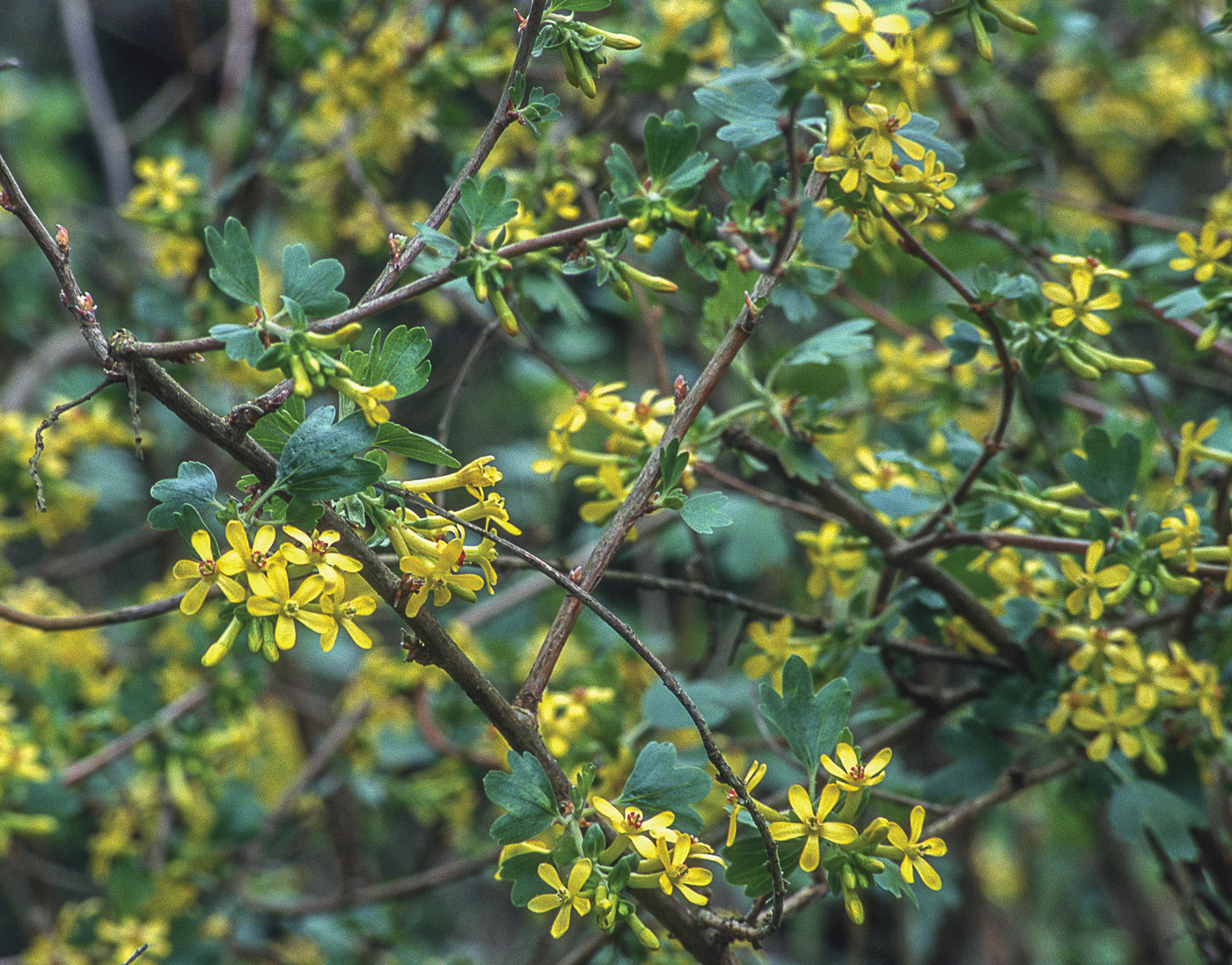
Ribes aureum
- Zones: 4–8
- Size: 4 to 8 feet tall and 3 to 6 feet wide
- Conditions: Full sun to partial shade; moderately moist, well-drained soil
- Native range: Central and western North America
We are certain the birds gifted us with the 5-foot-tall golden currant that was growing on our wild hillside when we moved in; we have since watched several others spring up nearby. This sturdy shrub is a garden party plant for the birds and bees. The berries can be eaten fresh or used for jam and syrup, but we’ve never been able to harvest more than a spare handful at a time, because wildlife is always first in line. The trumpet-shaped, vibrant yellow blossoms with eye-catching red centers have a light clove fragrance. In this spring combo, I especially love the way golden currant’s glowing blossoms echo the bright foliage of the bleeding heart and the yellow stamens of the bush cherry.
Read More: Pollinator Plants for the Mountain West
4. ‘Shogun’ tulip
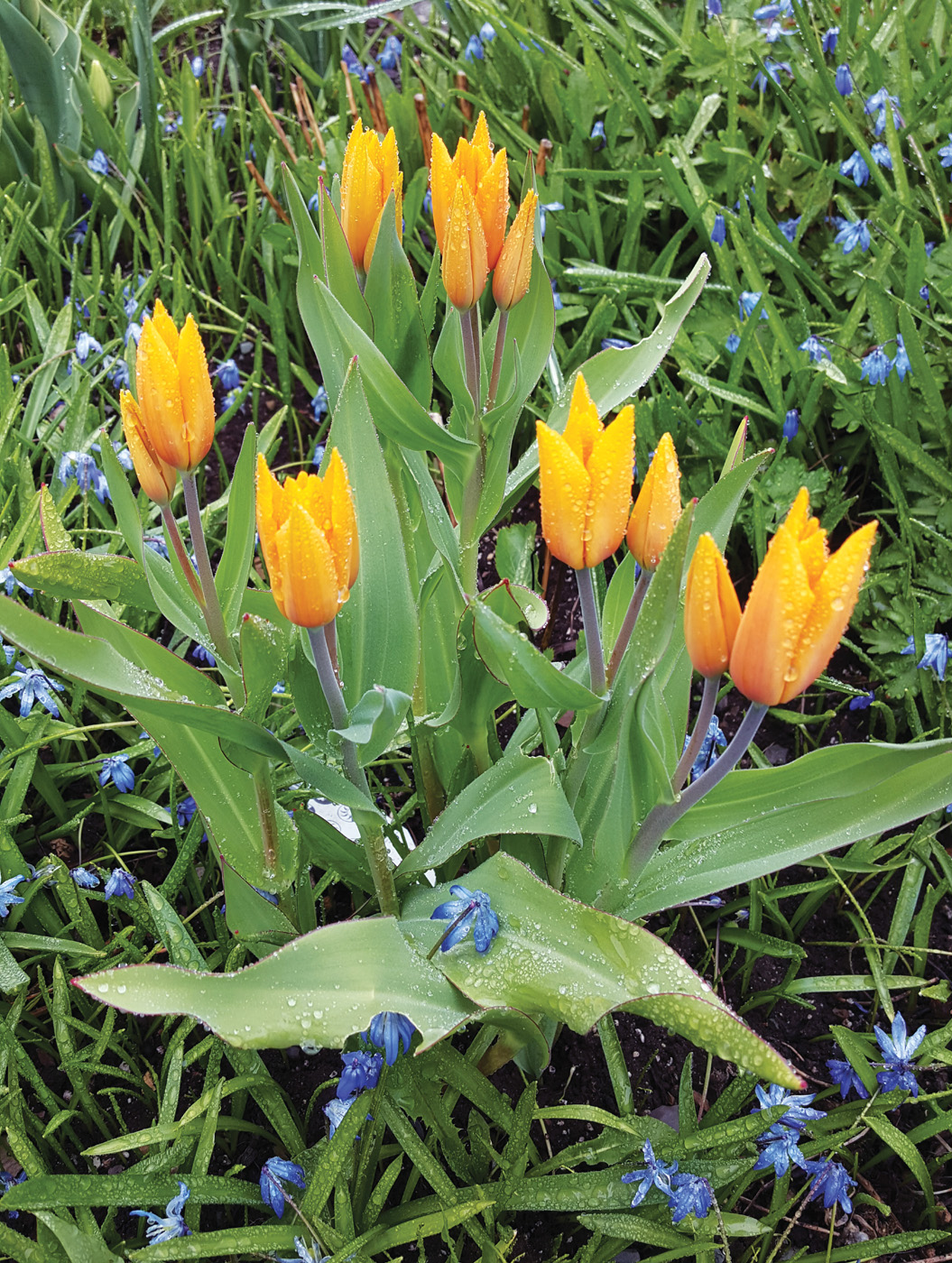
Tulipa praestans ‘Shogun’
- Zones: 3–8
- Size: 8 to 12 inches tall and 4 to 6 inches wide
- Conditions: Full sun; well-drained soil
- Native range: Steppe regions of Asia
Species tulips are a win-win solution for gardens in our region, since many originated in the rugged, high-altitude mountains of Tajikistan. After showing off in the spring garden, the dormant bulbs love our region’s hot, dry summers. In fact, it’s best not to plant them too close to turf that is regularly watered.
The lily-shaped flowers of ‘Shogun’ are the color of ripe cantaloupe flesh, sometimes accented with tiny red spots, and reveal dark blue-black stamens when they are fully open. Species tulips are drought tolerant, somewhat deer resistant, and well suited for crevice gardens and the front of the border. Over time, they may even multiply and perennialize.
See More from the Summer Issue of Fine Gardening!
Fine Gardening Recommended Products
Gardener’s Supply Company Summerweight Fabric Plant Cover
Fine Gardening receives a commission for items purchased through links on this site, including Amazon Associates and other affiliate advertising programs.
Ideal for summertime pest control, this garden cover effectively screens out Japanese beetles, potato beetles, cabbage worms, leaf miners, carrot flies and most vine borers. It transmits 97.6% of the light to your plants without allowing heat build-up, and it provides cold protection down to 41° F, to extend your growing season.

Lee Valley Mini Garden Shear Set
Fine Gardening receives a commission for items purchased through links on this site, including Amazon Associates and other affiliate advertising programs.
These shears have a distinctive finger rest that not only aids grip but allows greater freedom of movement than a conventional handle design. They have a durable powder-coat finish to resist rust and wear, and a simple clasp that locks the spring-action stainless-steel blades closed. The set includes one pair of round-nose shears measuring 5 1/2″ overall with 1″ blades for cutting stems up to 3/8″ in diameter, and one pair of 6 1/2″ needle-nose shears with 2″ fine-tip blades for precise work.
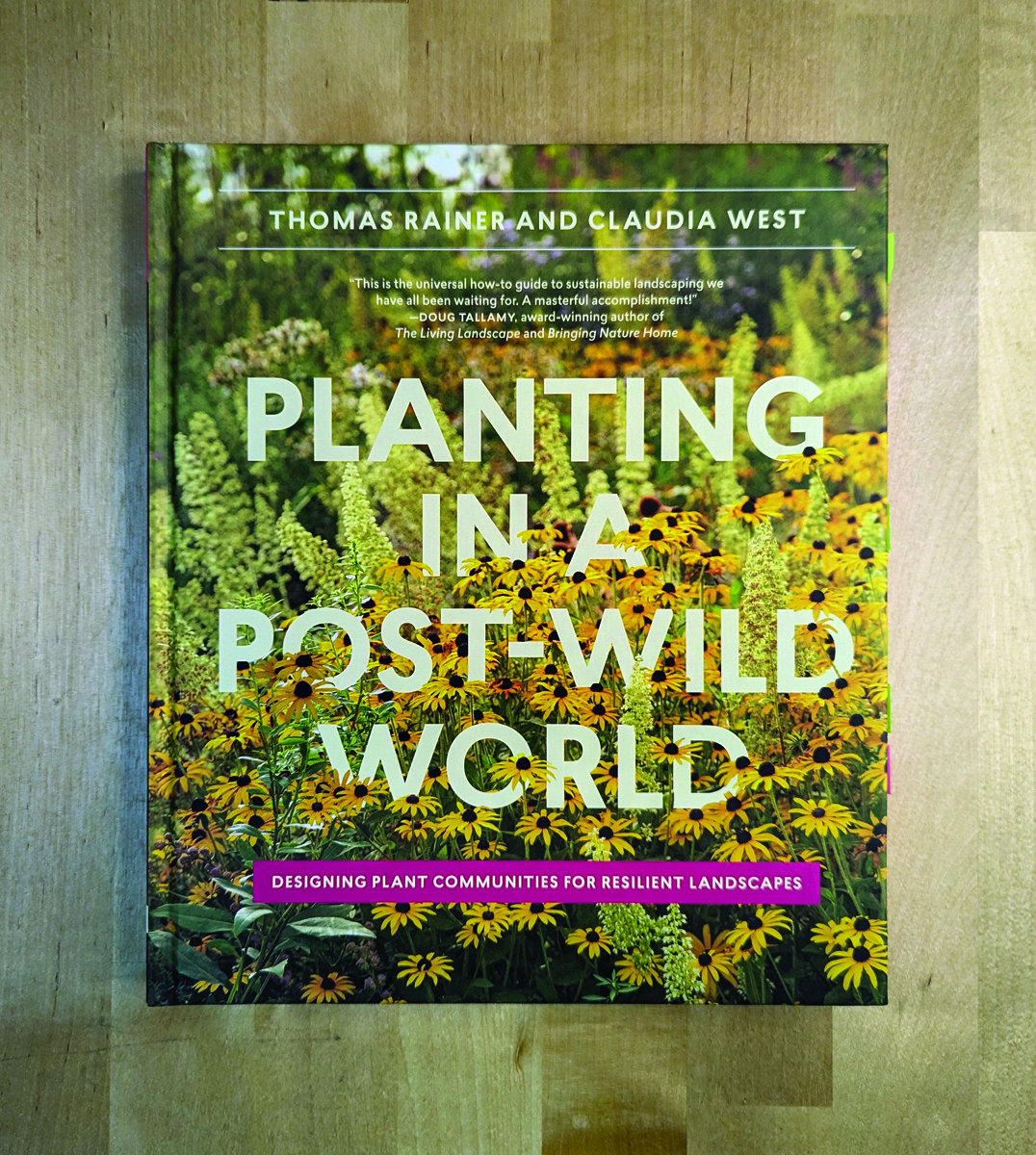
Planting in a Post-Wild World: Designing Plant Communities for Resilient Landscapes
Fine Gardening receives a commission for items purchased through links on this site, including Amazon Associates and other affiliate advertising programs.
Featuring gorgeous photography and advice for landscapers, Planting in a Post-Wild World by Thomas Rainer and Claudia West is dedicated to the idea of a new nature—a hybrid of both the wild and the cultivated—that can nourish in our cities and suburbs.