


Azalea varieties are versatile and colorful shrubs that can flourish in more places than you’d expect
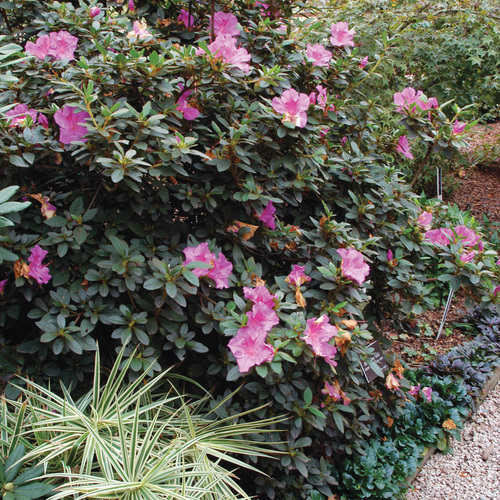
Coming from the Southeastern United States, it is hard for me to imagine a garden without azalea varieties in the mix. Their ubiquity can sometimes cause them to be overlooked for the stellar performers that they are. Azaleas are a diverse group of plants, ranging from low-growing evergreens to tall, towering deciduous shrubs, all with an unmatched range of flower colors. There is likely an azalea that can fill almost any niche in the garden. While there are about 15 to 18 species native to the United States, all of which are deciduous and primarily confined to the coastal states, the majority of the azalea varieties grown in gardens are hybrids of evergreen Asian species.
Read More: What’s Wrong with Your Azalea? Symptoms of Common Problems
Azaleas were once considered their own separate genus, but modern taxonomists consider them to be part of the Rhododendron genus today. They can be found growing from the subtropics into quite cold places, but most plants in cultivation tend to grow best in warmer Zone 6 to 9 locations. In areas with extreme heat and little to no winter dormancy (Zone 9), azaleas can suffer, while in the colder end of their zonal range, the plants can die from a cold snap.
There are thousands of azalea selections that have been named and introduced. Most are historical footnotes, but a few older varieties have stood the test of time and are still among the best. New cultivars are being introduced regularly; some of the most exciting ones are deciduous hybrids, which are expanding our concept of what azaleas can be.
AZALEAS AT A GLANCE
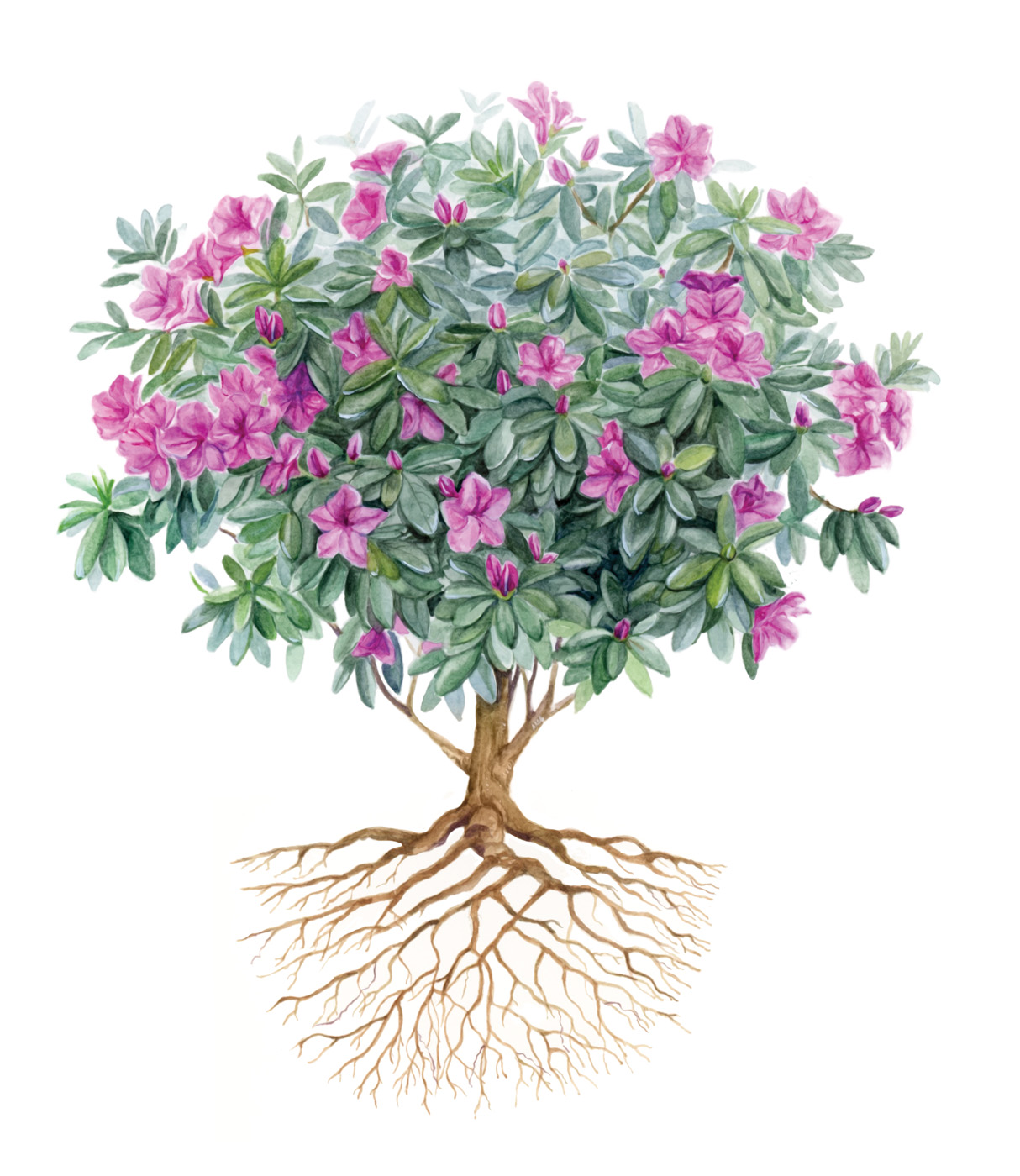
Rhododendron spp. and cvs.
Zones: 3–9
Size: Ranges widely from 2 to 15 feet tall and wide
Conditions: Full sun to partial shade; moist, acidic, well-drained soil
Native range: East Asia, Eastern United States, and Europe
Growing tips: Once situated, most azaleas are quite drought tolerant and will always prefer drier soils to ones that are too wet, which can cause root rot even in established plants. For best results in heavy soils, plant them on a slope or with the top of the root ball above the surrounding grade. Azaleas have shallow, fibrous root systems and benefit from a regular top dressing of compost and a 2- to 3-inch layer of mulch.
Classic standbys: Azalea varieties with timeless appeal
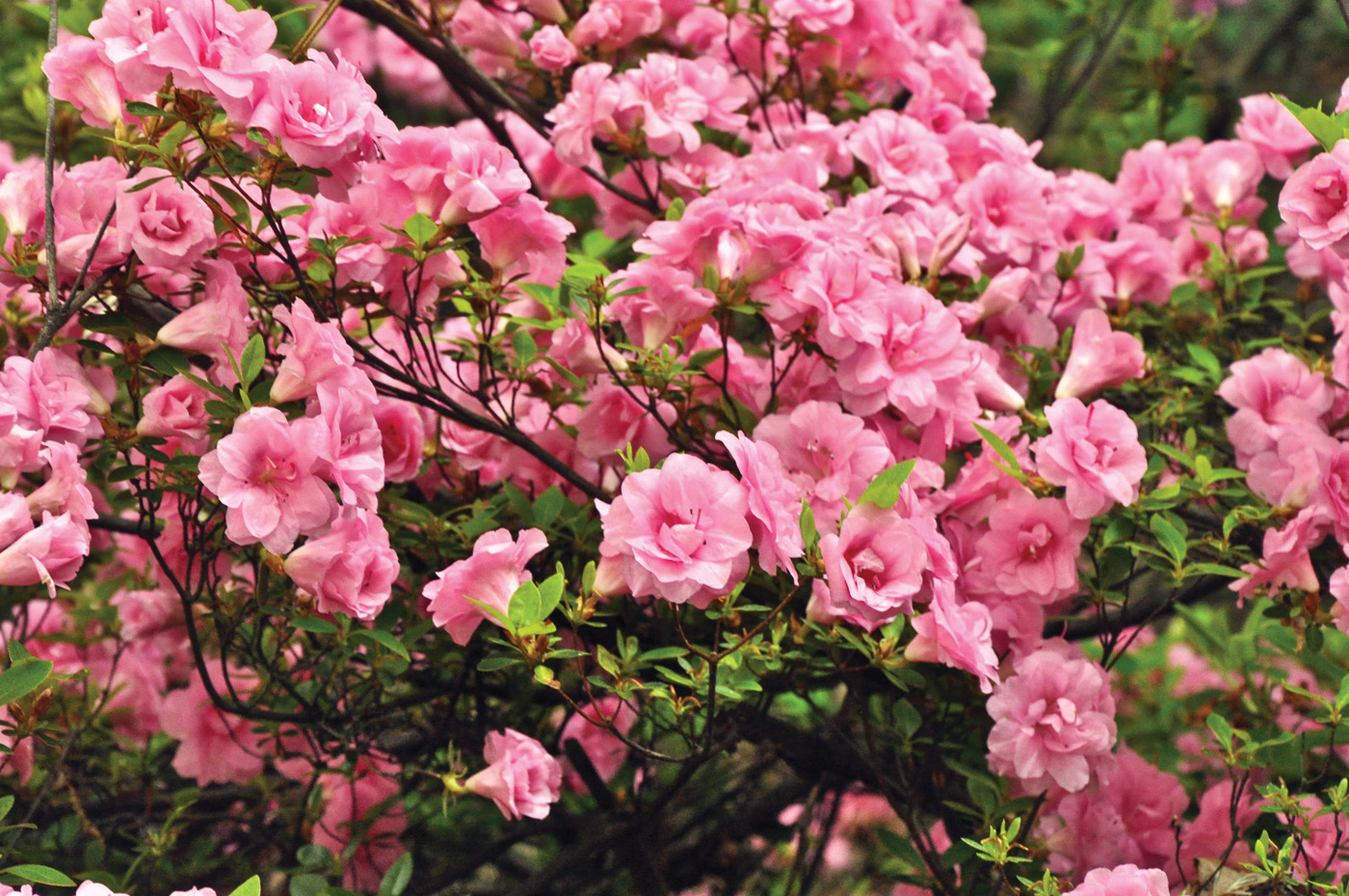
‘Rosebud’ azalea brings classical beauty to cold climes
Rhododendron ‘Rosebud’
Zones: 5b–9
Size: 2 to 4 feet tall and 4 feet wide
Native range: Hybrid
Although there are several azaleas named ‘Rosebud’, only one can commonly be found in nurseries, and this old Gable hybrid has remained a go-to for good reason. It forms a low, dense mound of evergreen foliage, which is covered in mid-spring with lots of 2-inch-wide, hose-in-hose (with one whorl of petals inside another) pink blooms.
The double flowers look like sweetheart rose buds and give a subtly distinct texture to the plant, even from a distance. The Gable hybrids were bred to be more cold tolerant than most other selections on the market when they were developed in the mid-twentieth century, and ‘Rosebud’ extends the range of small evergreen azaleas a full hardiness zone colder than most others.
| GOOD TO KNOW |
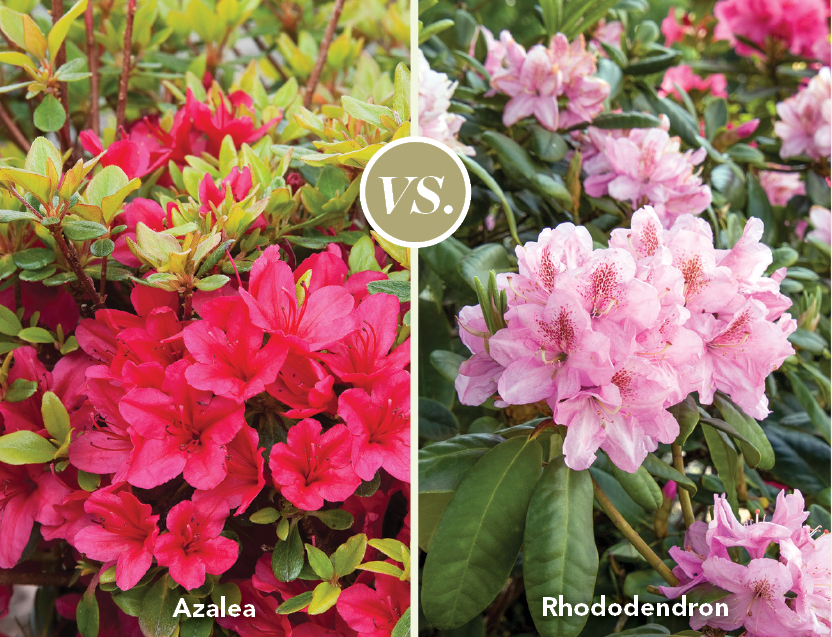
What’s the difference between azaleas and rhododendrons?
A square is always a rectangle, but a rectangle isn’t always a square. In the same manner, an azalea is always a rhododendron but not vice versa. So what exactly differentiates them? Keep in mind that while these differences tend to hold true, there is a reason why these groups are merged together, and separating them out can sometimes be tricky even for an expert.
| FEATURES | AZALEAS | RHODODENDRONS |
| Size | Usually smaller shrubs | Often larger shrubs, but can also be small (particularly the deciduous species) |
| Leaves | Can have appressed (flat-lying) hairs on the backs of leaves | May have scales or dots on the backs of leaves |
| Flower Stamens | Typically 5 to 6 | 10 or more |
| Flower Shape | Funnel-shaped | Often bell-shaped |
| Deciduous/Evergreen | Evergreen or deciduous | Mostly evergreen, some deciduous |
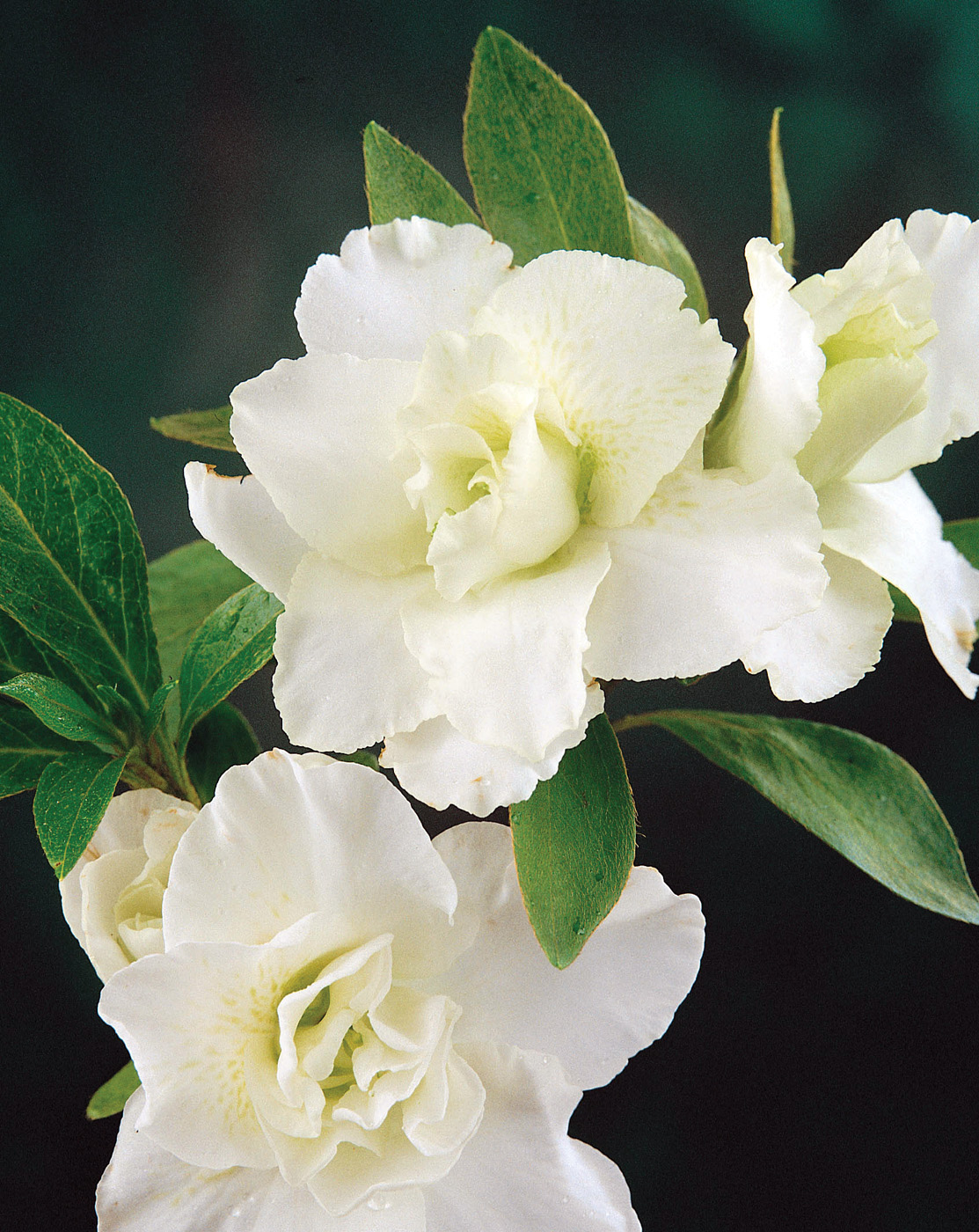
‘Glacier’ azalea may be the best-performing white-flowered variety out there
Rhododendron ‘Glacier’
Zones: 6–9
Size: 5 to 6 feet tall and wide
Native range: Hybrid
The U.S. National Arboretum has been breeding and introducing plants for over a century, but their azalea breeding program of the 1930s and 1940s was perhaps the most prolific. During that period, they introduced 440 different evergreen azaleas to the market. Many of these introductions are still mainstays, and ‘Glacier’ is among the cream of the crop.
Young plants often grow taller than wide but will spread out over time. In very early spring, large 3-inch-wide white flowers with greenish spots deep in their throats adorn the plant. Time-tested ‘Glacier’ tolerates sun better than many other white-flowered varieties, which often look bleached out by midsummer.
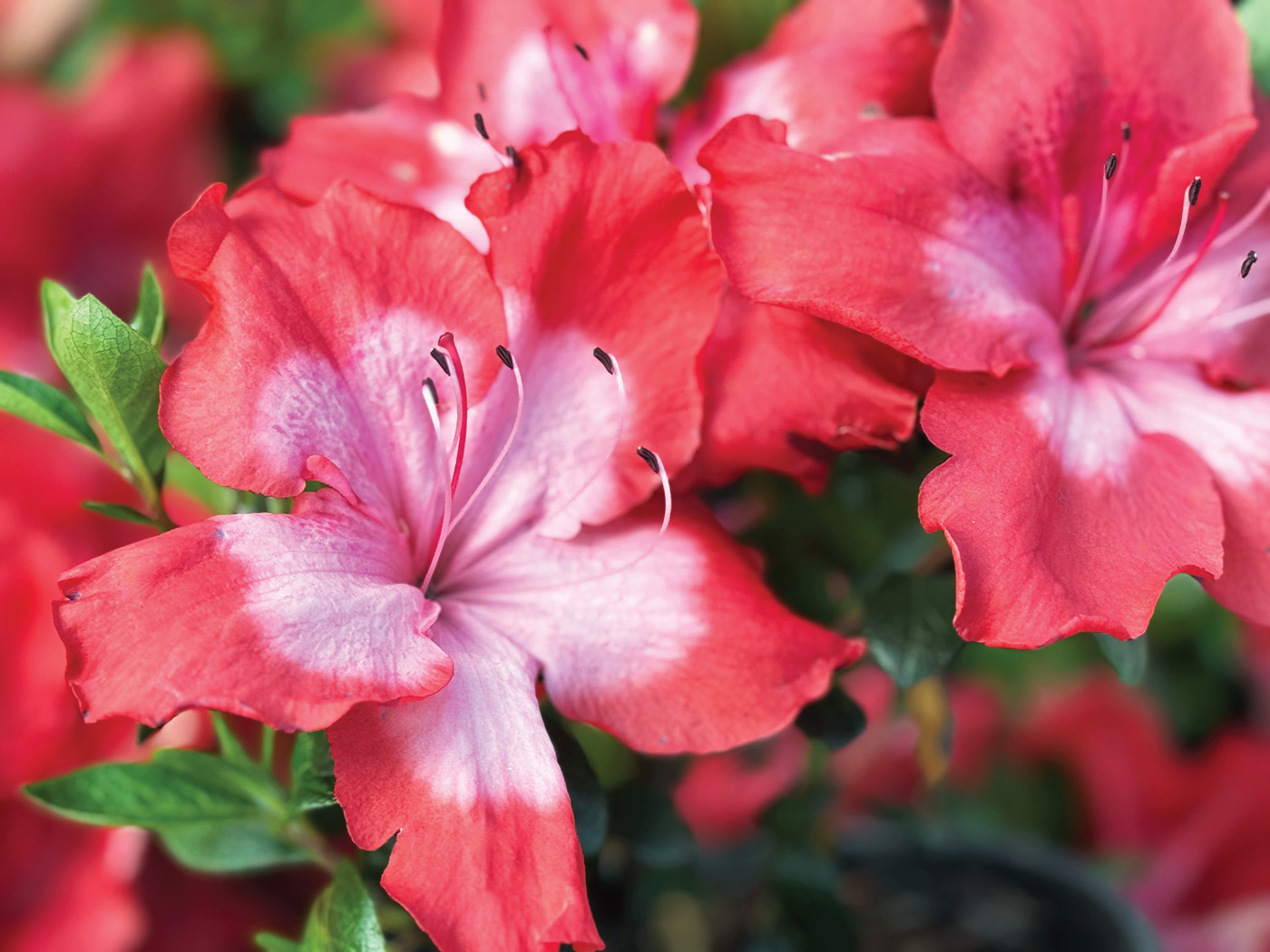
A showy picotee, ‘Fascination’ makes a bold statement in late spring
Rhododendron ‘Fascination’ (syn. Rhododendron ‘Harris Fascination’)
Zones: 7–9
Size: 3 to 4 feet tall and wide
Native range: Hybrid
Part of what makes evergreen azaleas such prized landscape plants is their endless variety of flower colors and forms. Few other plants can match the exotic and distinctive look of ‘Fascination’. This relatively late-flowering azalea is worth growing for the huge 4-inch-wide blossoms alone. But add in the soft pink color of the blooms with their dark red border, and this variety becomes a standout. Although the name is technically ‘Fascination’, you can expect to find it listed as
‘Harris Fascination’ more often than not, to distinguish it from others with the same name.
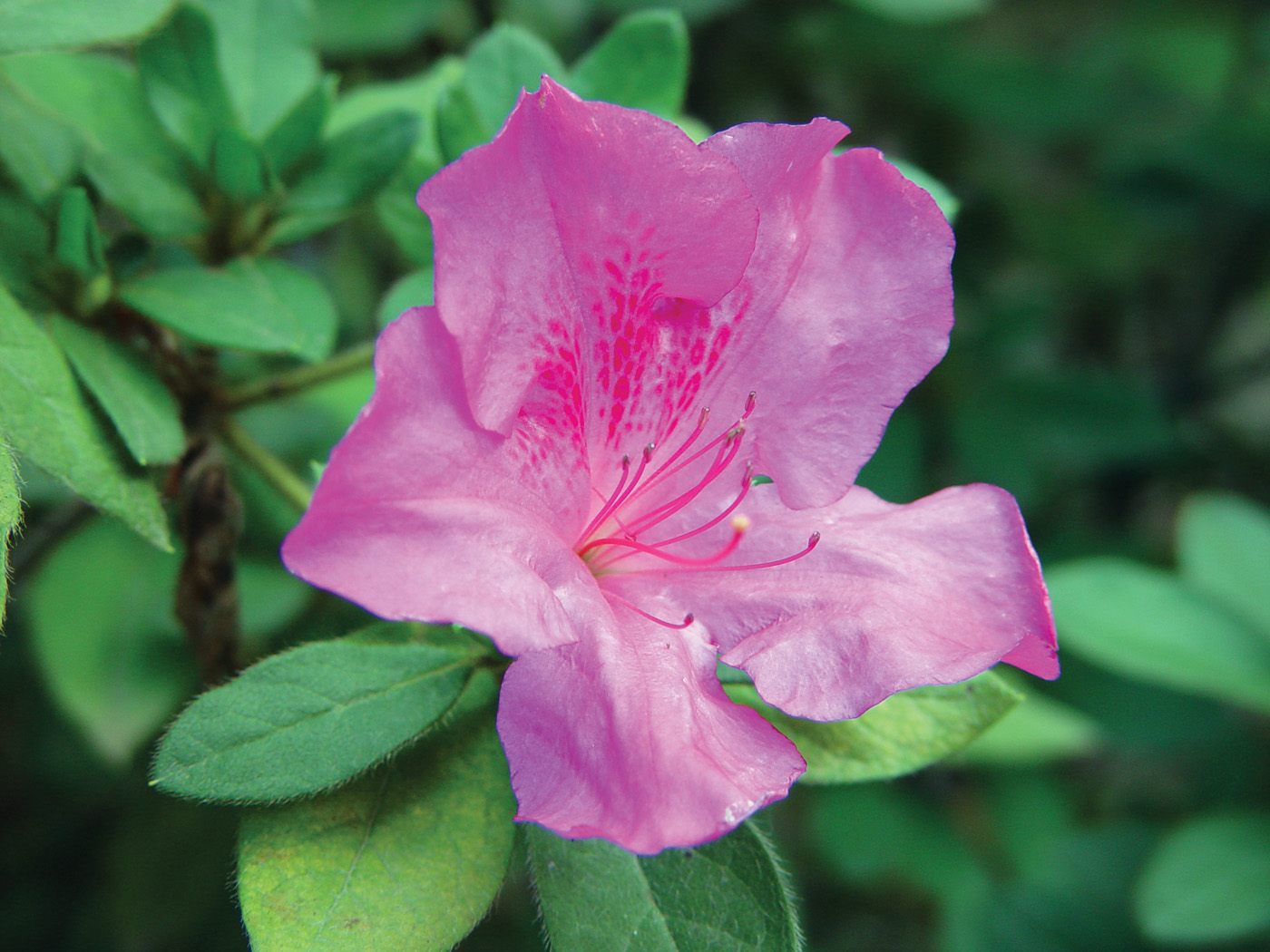
Plant Autumn Royalty® Encore azalea for a taste of springtime in fall
Rhododendron ‘Conlec’
Zones: 6–10
Size: 4½ to 5 feet tall and 4 feet wide
Native range: Hybrid
An event that marks a true shift in horticulture is usually noted only in hindsight, but from the moment the first Encore azaleas were released, it was obvious that evergreen azaleas would never be the same. Using a Taiwanese azalea species, R. oldhamii, which flowers in late summer and into fall, a nurseryman in Alabama created the first reblooming azaleas, which flower in spring and then again at the close of the growing season.
Autumn Royalty®, a winner of the American Rhododendron Society’s Azalea of the Year award in 2004, was among the first introduced in the late 1990s and remains one of the best available. It grows as a somewhat upright shrub (photo p. 39) with largish foliage that is smothered in 3½-inch-wide purple flowers. Encore azaleas will reflower best if planted in full sun to very light shade.
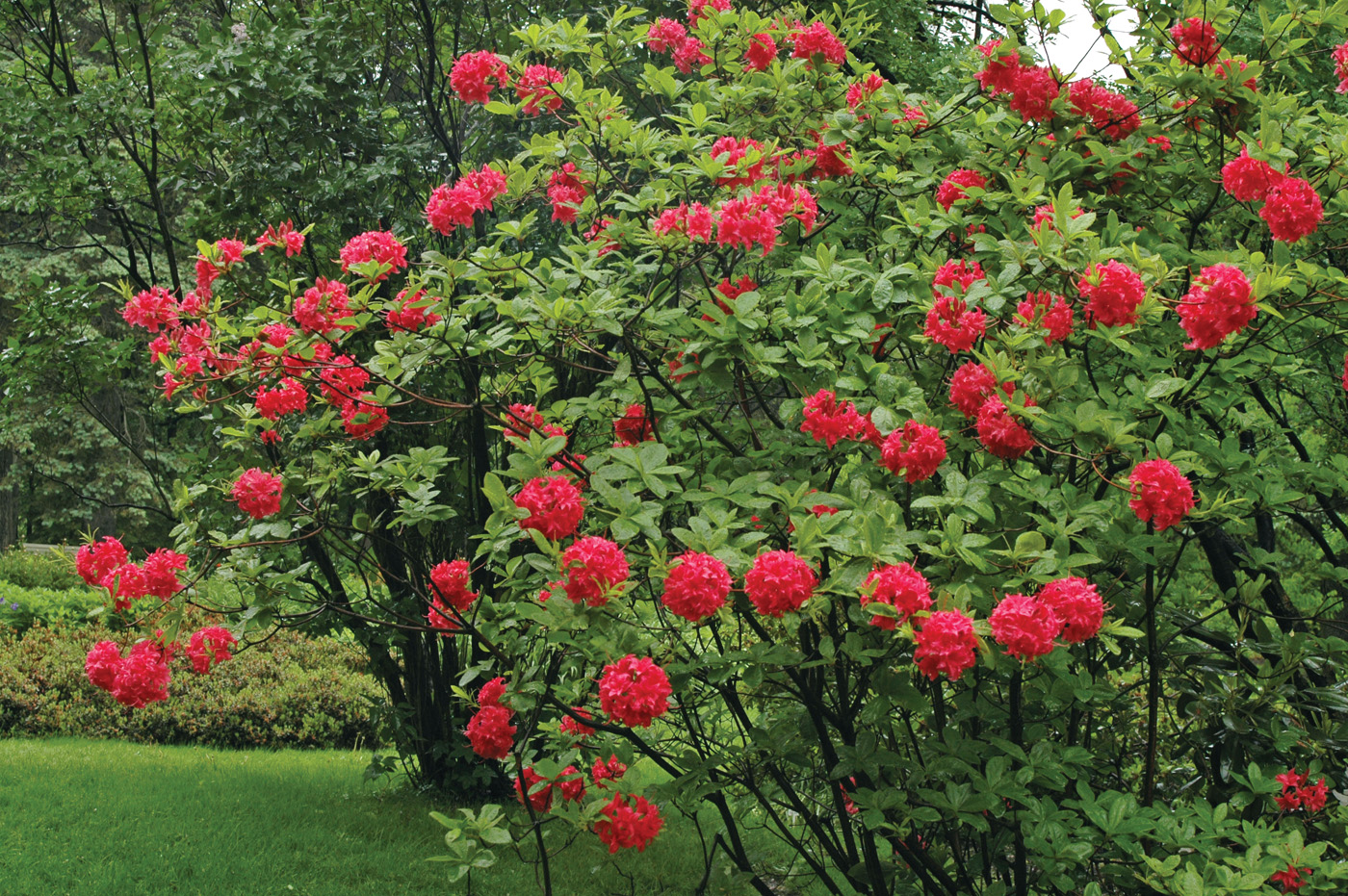
‘Homebush’ is a century old and still one of the top varieties
Rhododendron ‘Homebush’
Zones: 5–9
Size: 4 to 6 feet tall and 4 to 5 feet wide
Native range: Hybrid
The Knap Hill hybrid deciduous azaleas have a venerable history beginning in the 1870s in England. Among the original named introductions was ‘Homebush’ in 1926. One hundred years later, this is still perhaps the most widely grown deciduous azalea hybrid in the United States. Large trusses of semidouble, rich pink flowers with a hint of purple top the very upright stems just before and while the leaves are emerging. Like other deciduous azaleas, ‘Homebush’ is less prone to root rot than evergreen types but still needs good drainage.
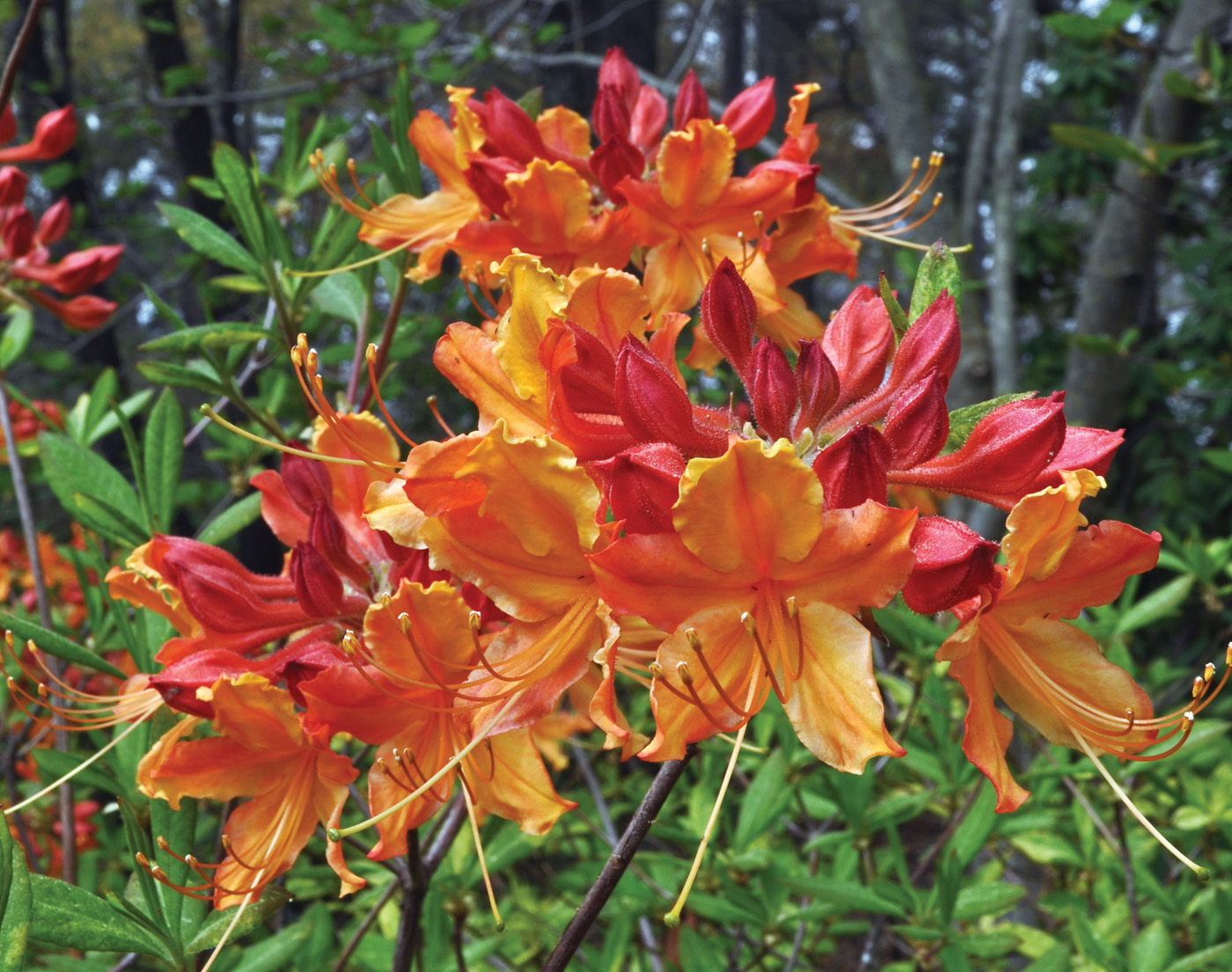
The neon orange blooms of ‘Don’s Variegated’ Florida azalea are just the beginning
Rhododendron austrinum ‘Don’s Variegated’
Zones: 5b–10
Size: 6 to 10 feet tall and 4 to 8 feet wide
Native range: Lower Southeastern United States
To most people, an azalea is an evergreen shrub, and they struggle to think outside this box. At least, that is my only theory as to why our native deciduous azaleas and their hybrids are not grown in every garden. There are few plants that can match the sheer saturation of flower color that these azaleas often produce.
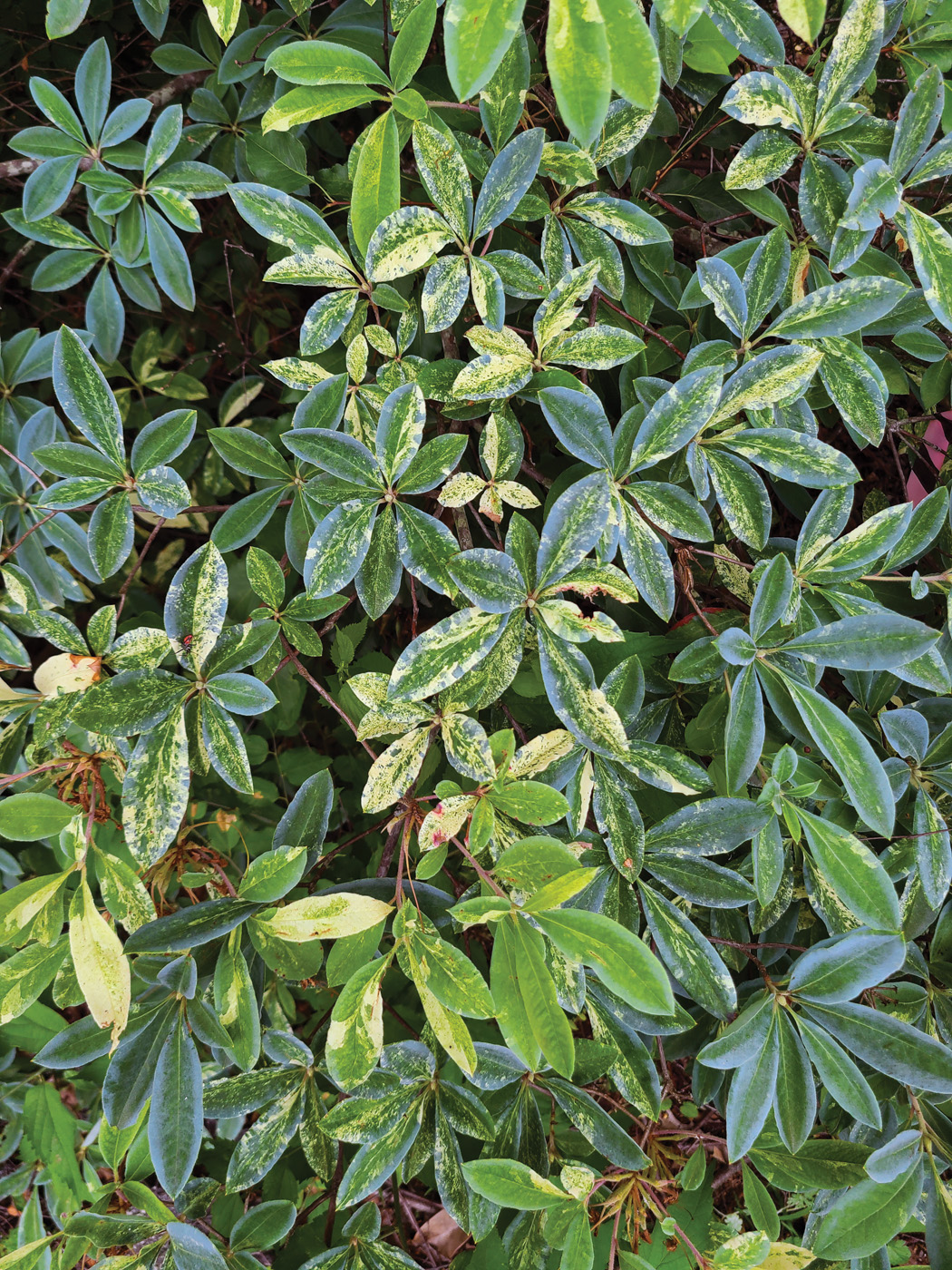
‘Don’s Variegated’ has been around for many years and is well-known for its blaze of rounded orange trusses, which open on bare stems before the leaves emerge. The flowers provide valuable nectar for the first hummingbirds and butterflies to appear in spring. This selection offers further seasonal interest with leaves speckled with flecks of creamy yellow for a subtle summer show.
| Azalea Pruning Tip |
Pruning azaleas is easier than you think. There is no need to prune azaleas for health reasons other than to remove crossing branches or an unruly shoot or two. If you must prune, do it within a month after flowering finishes. You won’t hurt the plants if you prune later in summer, but you risk cutting off next spring’s flower buds.
If you inherit a huge, overgrown azalea or you’ve neglected yours too long, don’t worry. You can cut it back almost to the ground, and it will regrow from the stumps. You won’t have any flowers the following spring, but the rejuvenated plant will surprise you with how quickly and densely it grows back.
Learn More: A Guide to Growing Great Azaleas
Newer or underused azalea varieties worth seeking out
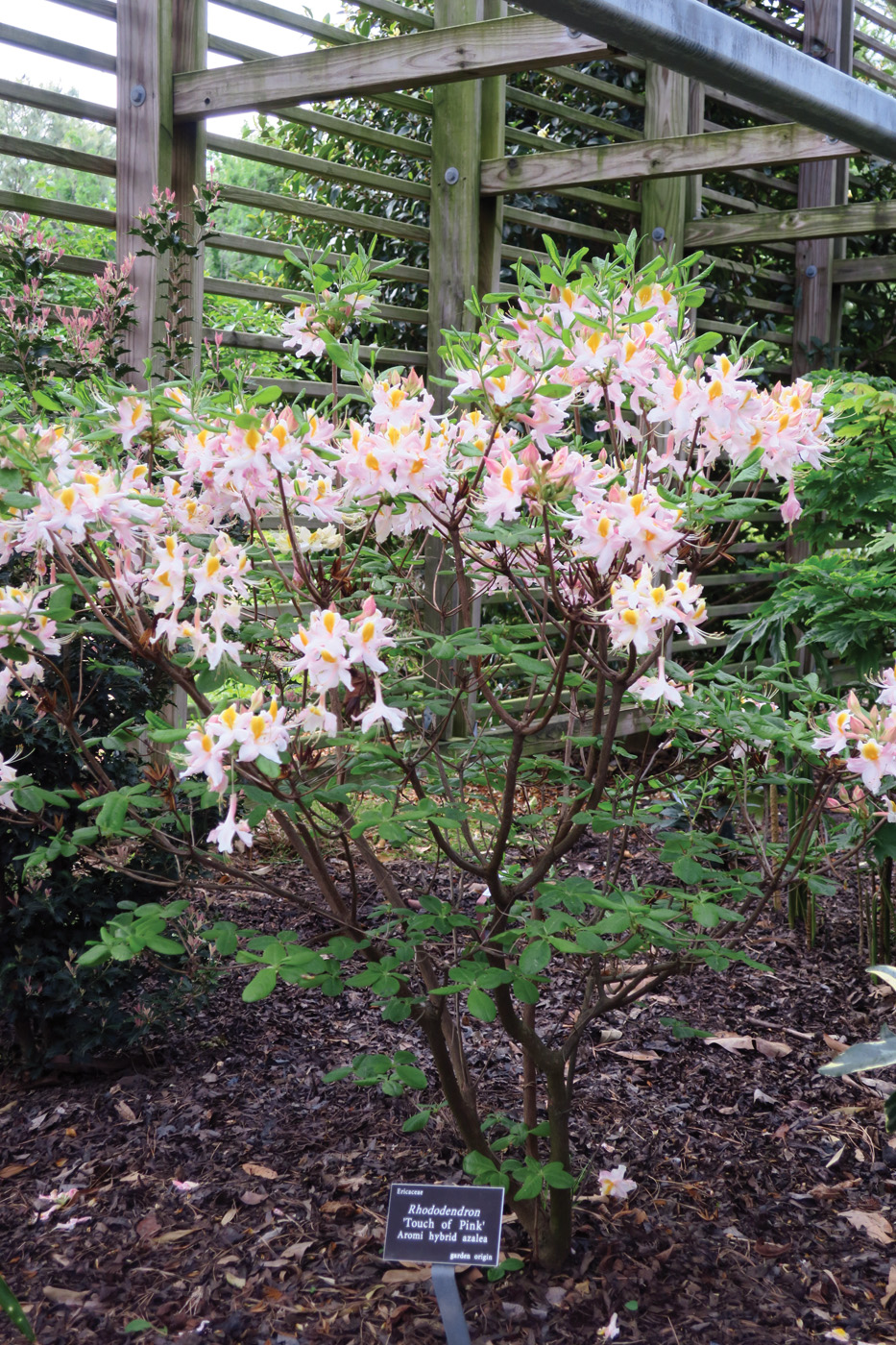
‘Touch of Pink’ brings soft color to hot spots, and smells good as well
Rhododendron ‘Touch of Pink’
Zones: 6b–9
Size: 6 to 8 feet tall and 4 to 5 feet wide
Native range: Hybrid of native species
The deciduous Aromi series of azaleas from southern Alabama was bred for extreme heat tolerance, disease resistance, and fragrance—the last of which is often undervalued in azaleas. ‘Touch of Pink’, one of the 100 or so Aromi hybrids, combines all of those traits with style. Flowers grow as large as a whopping 4 inches wide and appear in clusters atop the bare branches in spring. The white flowers are blushed with pink, and the upper petals are streaked with gold. It is truly one of the signature delights that this variety offers when its enticing, spicy-sweet fragrance wafts through the garden.
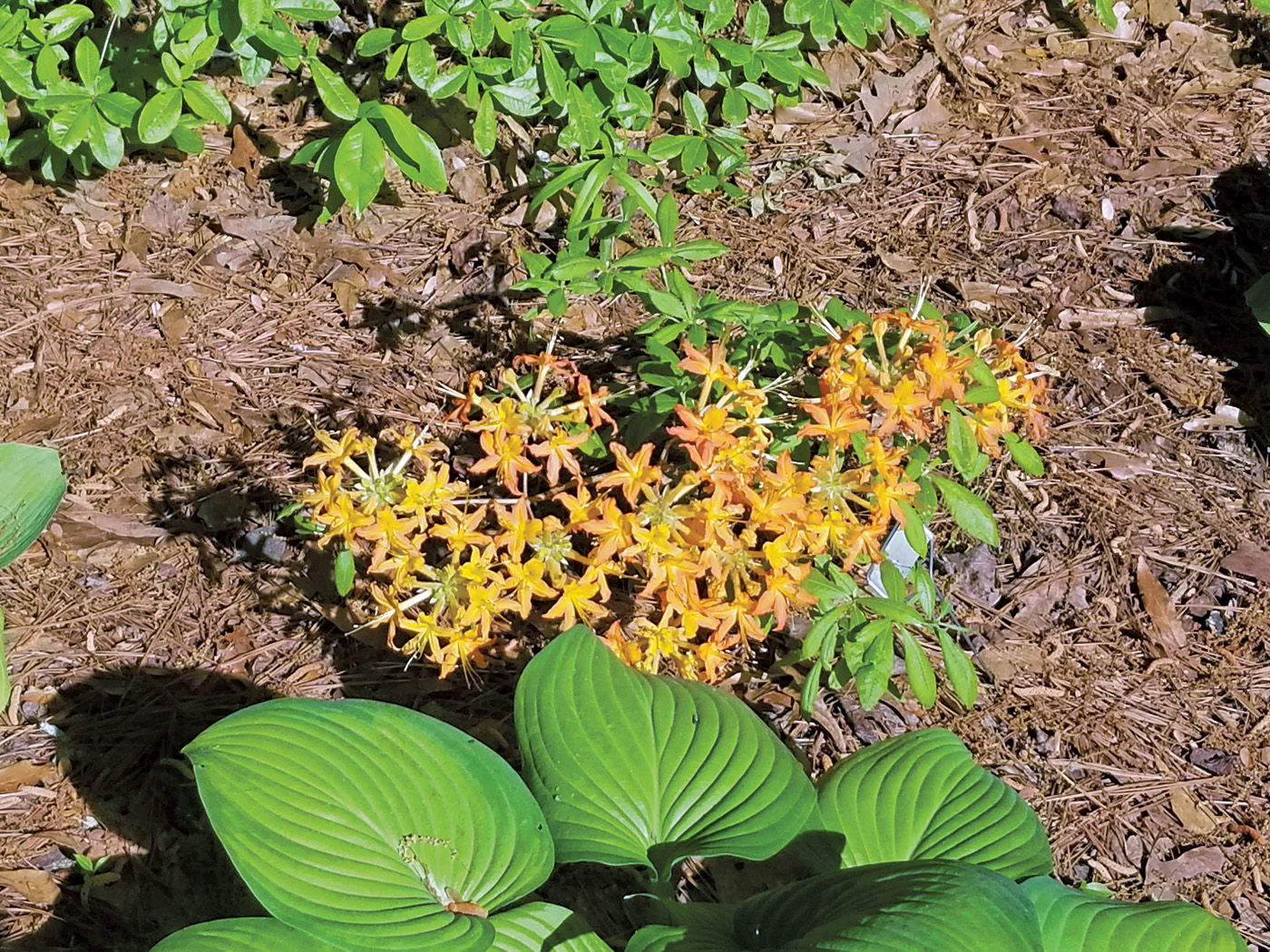
The creeping habit of ‘Orange Carpet’ accentuates its bright blooms
Rhododendron ‘Orange Carpet’
Zones: 6–10
Size: 2 feet tall and 4 feet wide
Native range: Hybrid of native species
Deciduous azaleas don’t have the wide variety of forms that their evergreen cousins do. Invariably, they are upright plants that usually grow either taller than they do wide, or ultimately spread as wide as they grow tall. This presumed hybrid between two native species breaks the mold by spreading out horizontally rather than growing vertically. Cheery orange flowers cover the plant and are a beacon to early arriving butterflies and hummingbirds. First discovered in Georgia about 65 years ago, this plant isn’t exactly new. However, its popularity is slowly growing, and it can take many years for a nursery to have enough plants to offer for sale.
Learn More: 10 Flowering Evergreen Shrubs
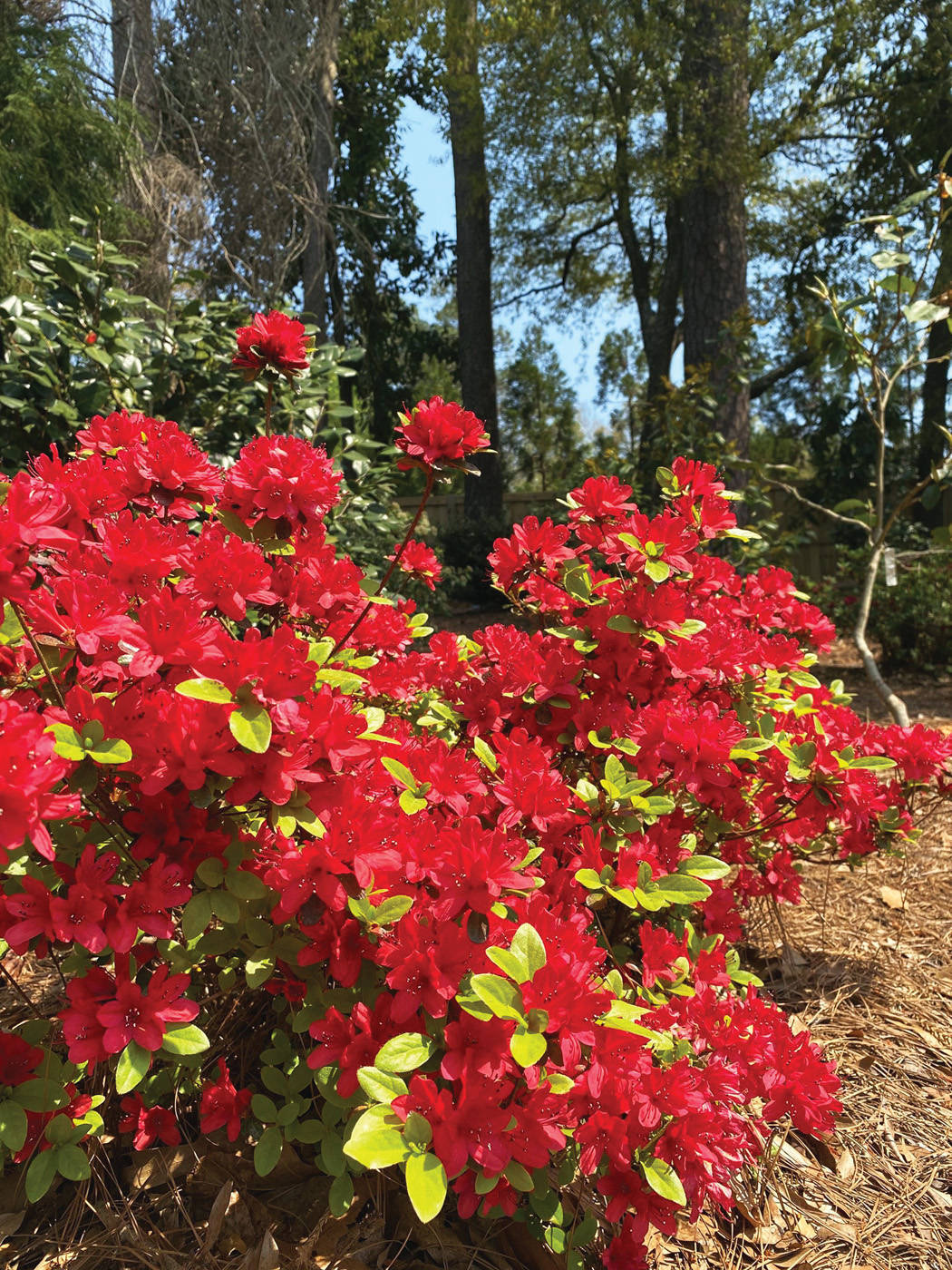
‘Wolfpack Red’ azalea will wow you with its arresting color and disease resistance
Rhododendron ‘Wolfpack Red’
Zones: 6b–9
Size: 2 to 3 feet tall and 3 to 4 feet wide
Native range: Hybrid
The Carla hybrid azaleas, released in the late 1970s and 1980s, were bred for superior root rot resistance, heavy flowering, and good drought tolerance. While some have continued to be mainstays in nurseries, ‘Wolfpack Red’ is not well-known. It forms a durable, low-growing shrub with dark green evergreen foliage topped with deep, rich red flowers.
Its dense form rivals that of other low-growing evergreen shrubs like dwarf Japanese hollies (Ilex crenata cvs., Zones 5–9) but with the added benefit of a spectacular spring show. Befitting the goals of its breeding program, this is still one of the more rot-resistant varieties available today, and the flower color can’t be beat.
Learn More: Underused Rhododendrons
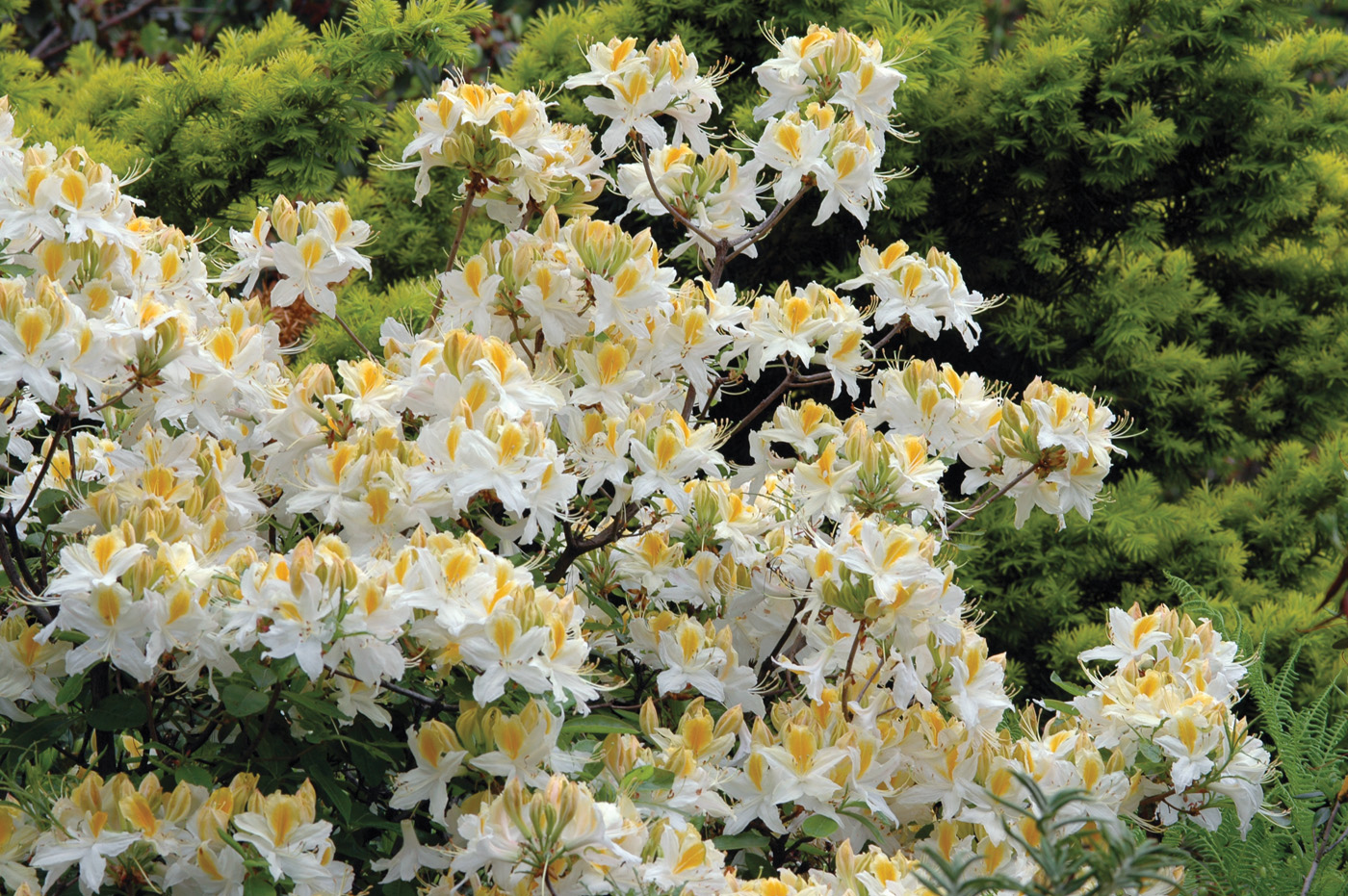
‘Northern Hi-Lights’ delivers sunny spring cheer to the coldest regions
Rhododendron ‘Northern Hi-Lights’
Zones: 3–9
Size: 4 to 8 feet tall and 4 to 5 feet wide
Native range: Hybrid
The University of Minnesota has a deciduous azalea breeding program with the goal of bringing these shrubs to the coldest regions of the United States. Known as the Lights series, it consists of azaleas that retain their heat tolerance but also exhibit extreme cold hardiness so that they can be grown almost anywhere in the country. ‘Northern Hi-Lights’ was released over 30 years ago but deserves much wider recognition for its dense clusters of white flowers, each of which has a brushstroke of yellow highlighting the top petal.
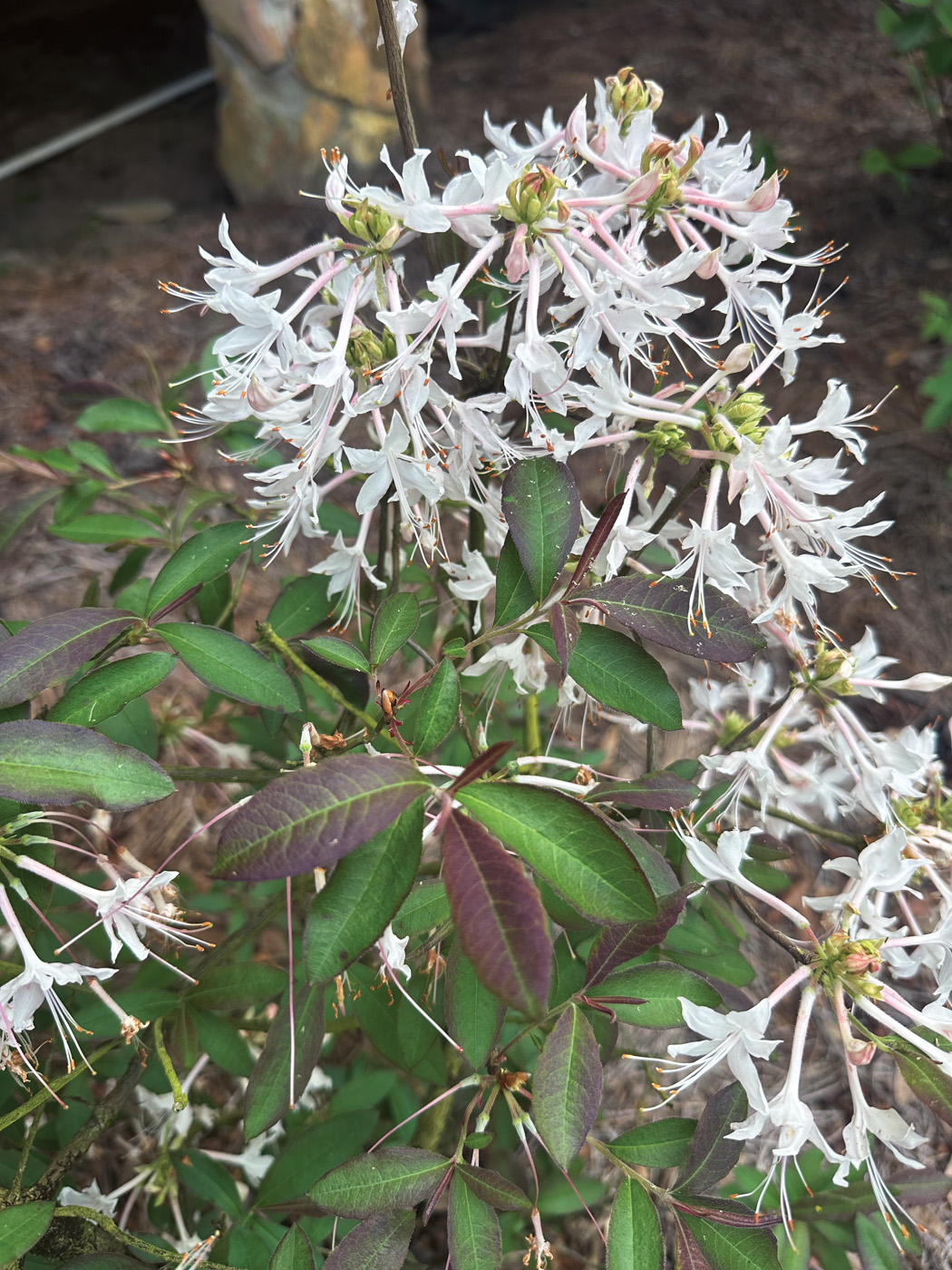
‘Chocolate Drop’ mountain azalea features fantastic foliage on a native favorite
Rhododendron canescens ‘Chocolate Drop’
Zones: 6–9
Size: 6 to 8 feet tall and 4 to 6 feet wide
Native range: Southeastern United States
This deciduous species, known commonly as Piedmont azalea or mountain azalea, grows along the southeastern coast and Piedmont region of the United States and is the most abundant native species of azalea in the wild. Plants usually have a somewhat open habit and thin branches, which allow the narrow, tubular flowers, which are white to pink and grow in loose clusters, to seemingly float along woodland edges.
‘Chocolate Drop’ is a recent breakthrough to the ranks of named selections of this species. New foliage emerges burgundy just as the white flowers with a blush of pink are at their peak. The foliage loses much of its color later in the season, becoming olive green as summer progresses.
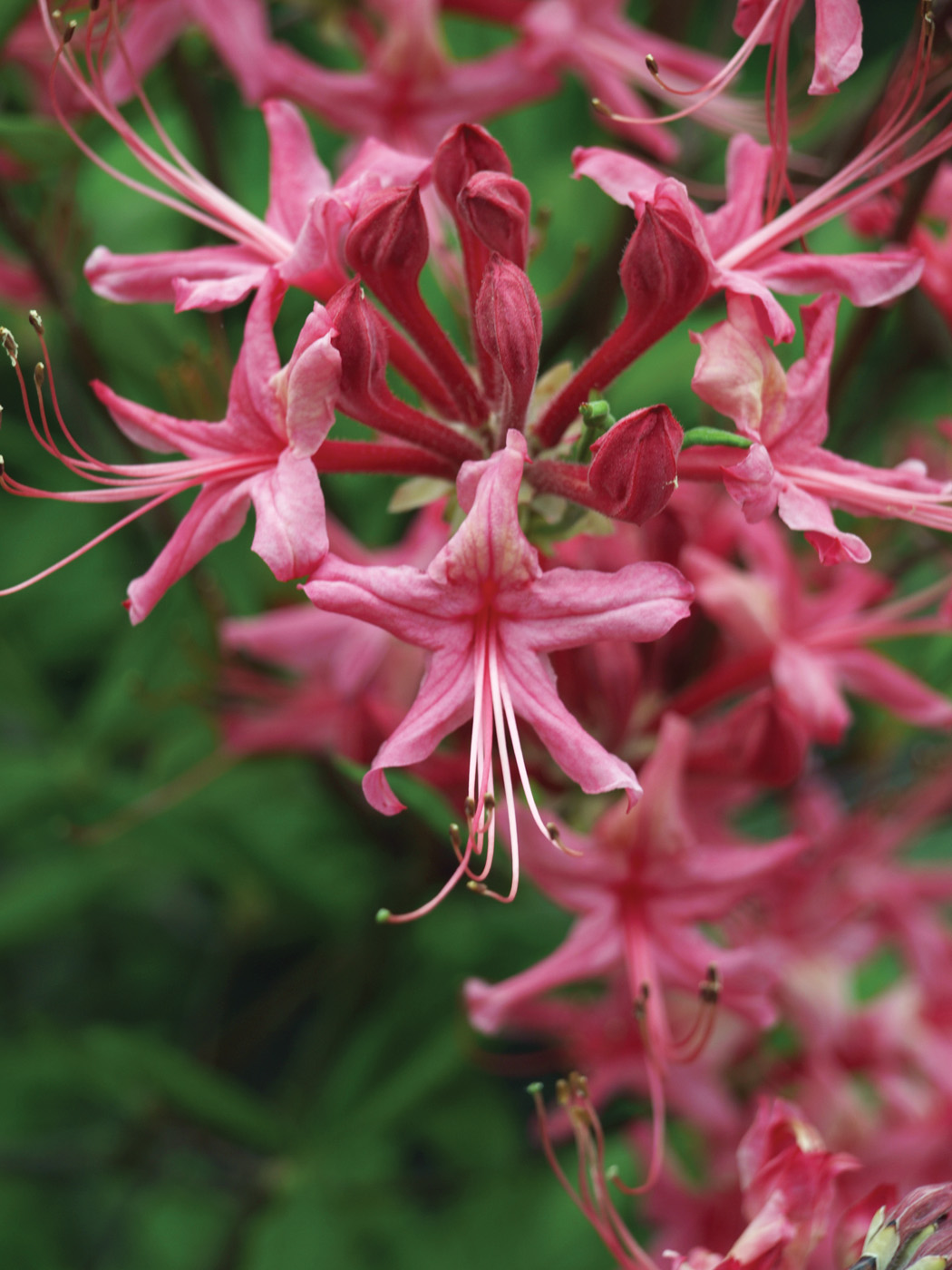
Its skinny petals, long stamens, and vivid color give ‘Clyo Red’ a unique flair
Rhododendron x bakeri ‘Clyo Red’
Zones: 5–9
Size: 6 to 10 feet tall and 4 to 6 feet wide
Native range: Hybrid of native species
‘Clyo Red’ is a naturally occurring deciduous hybrid between the soft pink R. canescens and vivid yellow to orange-red R. flammeum of the Southeastern United States. It possesses deep pink flowers that pop in the landscape. Although originally considered a superior selection of R. canescens when it was found in the wild, its growth habit and foliage point to the hybrid nature of the plant. Either way, it is an outstanding addition to the woodland garden.
| Azalea Plant Sources |
The following mail-order sources may offer some of the plants featured in this article:
- Colesville Nursery, Ashland, VA; 804-798-5472; colesvillenursery.com
- MrMaple, East Flat Rock, NC; 828-226-5684; mrmaple.com
- Rocky Knoll Farm, Springfield, OR; 503-389-0520; rockyknollfarm.com
- White Flower Farm, Litchfield, CT; 800-503-9624; whiteflowerfarm.com
- Wilson Bros. Gardens, McDonough, GA; 770-573-1778; wilsonbrosgardens.com
- Woodlanders Botanicals, Aiken, SC; 803-648-7522; woodlanders.net
Botanical Illustration by Jessica Daigle
Fine Gardening Recommended Products

The Regenerative Landscaper: Design and Build Landscapes That Repair the Environment
Fine Gardening receives a commission for items purchased through links on this site, including Amazon Associates and other affiliate advertising programs.
2024 Nautilus Award Gold Medal Winner! This awe-inspiring guide weaves together permaculture design, food resiliency, climate adaptation, community organizing, and indigenous wisdom that you can implement in your own backyard.
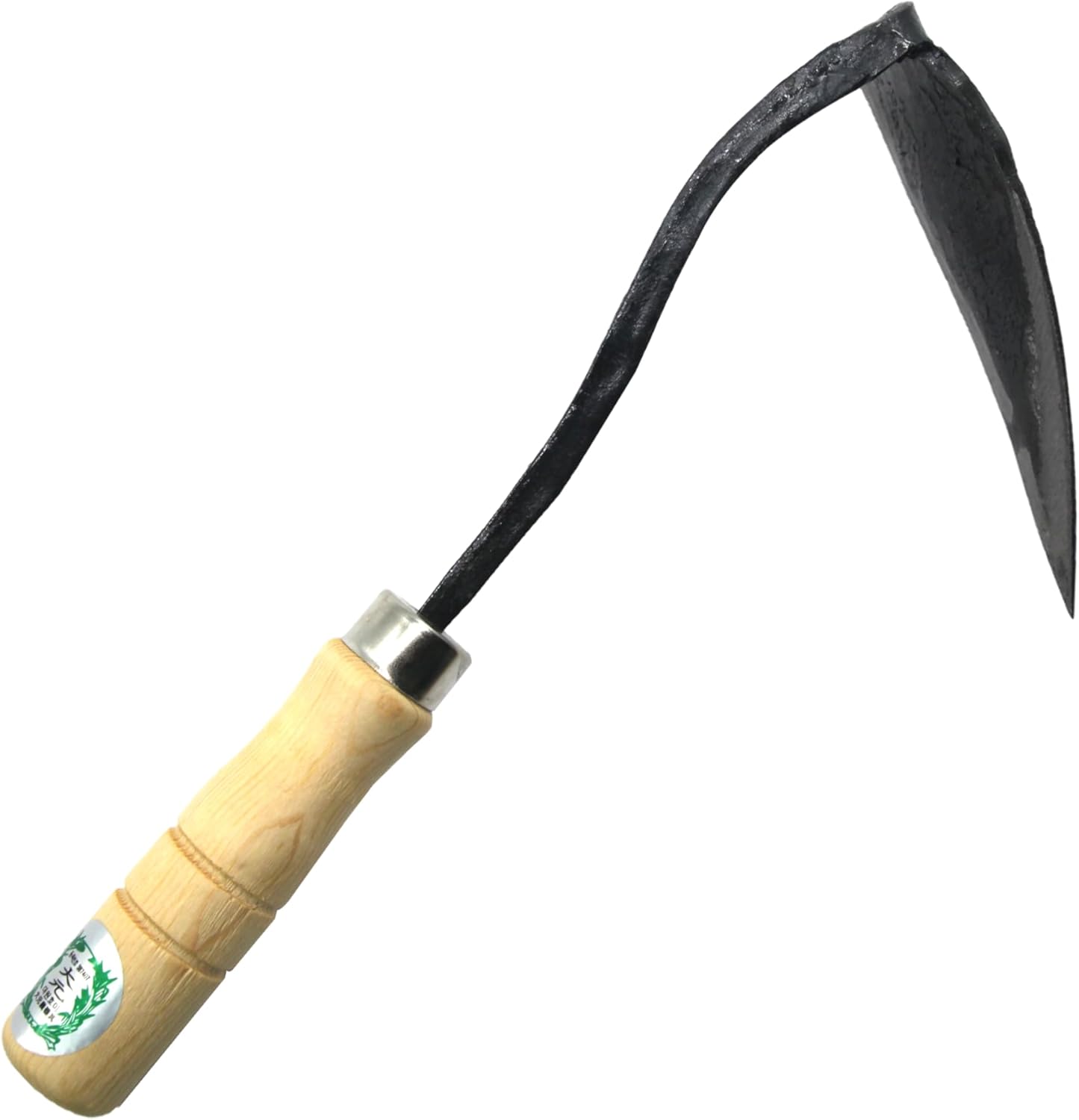
Ho-Mi Digger – Korean Triangle Blade
Fine Gardening receives a commission for items purchased through links on this site, including Amazon Associates and other affiliate advertising programs.
Versatile Tool: The Easy Digger Korean Triangle Blade Ho Mi Ho-mi is a versatile gardening tool designed for leveling and digging in home and garden settings. Efficient Design: Its unique triangular blade shape allows for easy soil penetration and efficient leveling of garden beds or landscaping areas. Durable Construction: Crafted with sturdy materials, this tool ensures long-lasting performance and reliability.
Ergonomic Handle: The comfortable handle provides a secure grip, reducing hand fatigue during extended use. Compact Size: Its compact design makes it easy to maneuver in tight spaces and store when not in use.