




First gardens are always an exercise in discovery. Figuring out your design aesthetic and what you want out of a landscape is a process that happens over time. Like most new gardeners, when I started creating a garden at my southeastern Wisconsin home near the shore of Lake Michigan, I didn’t get it right the first time or even the second time. In addition to the challenge of finding the right mix of plants, I was paralyzed by the pressure of choosing a design style that I would want to live with for years to come.
As my interest in horticulture grew, I immersed myself in gardens, visiting them and studying them in books and magazines. It seemed that every space brought new inspiration that fought with other ideas. So I decided to stop limiting myself to one style. I didn’t need my entire yard to be cut from the same cloth. More garden areas would be established over time, and they could incorporate disparate design aesthetics if I wanted.
The problem, of course, is that the property—an acre and a third in total—is still small enough that you can view it all at one time, so the varied styles needed to make sense together. More than that, I needed to be able to care for everything.
The solution was to divide the property into three separate maintenance areas.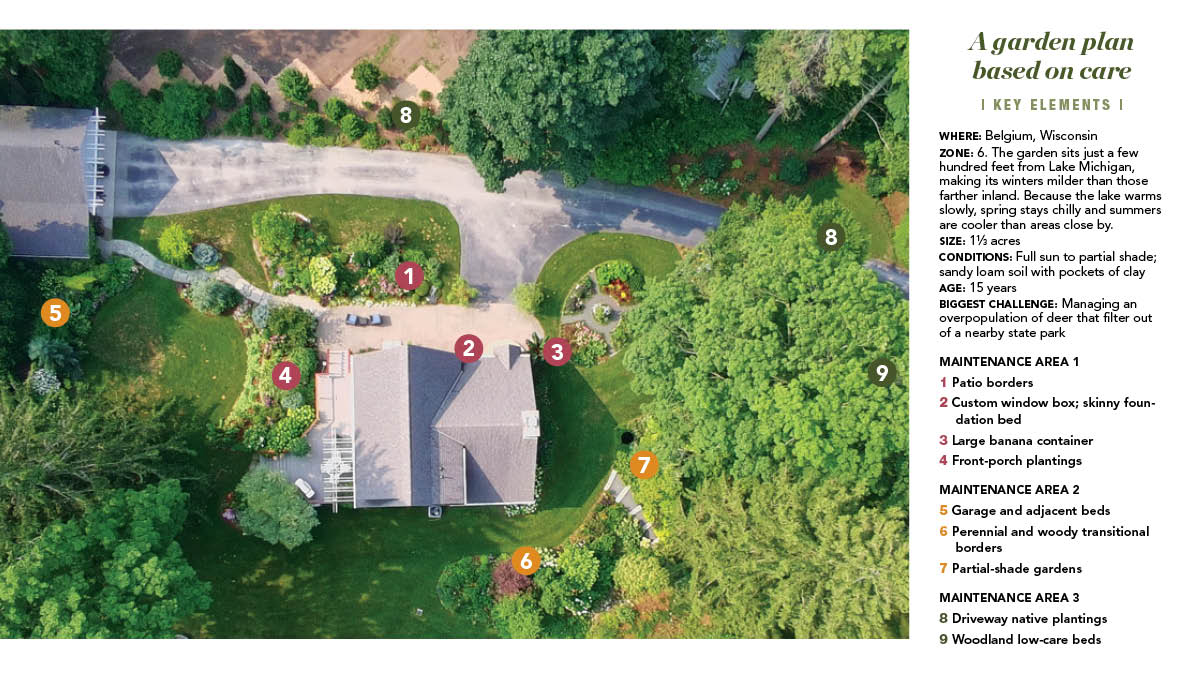 Keep the Neediest Plants Close at Hand
My plan, that was formed as new garden areas were created over the course of two decades, was based both on practicality and the feeling I wanted in each spot. Long winters here in Wisconsin elicit a desire to pack in as much punch as possible during the short growing season. And I crave nonstop color and flowers, particularly in the areas we frequent the most. These beds and borders fall into what I call Maintenance Area 1, which requires the most care.
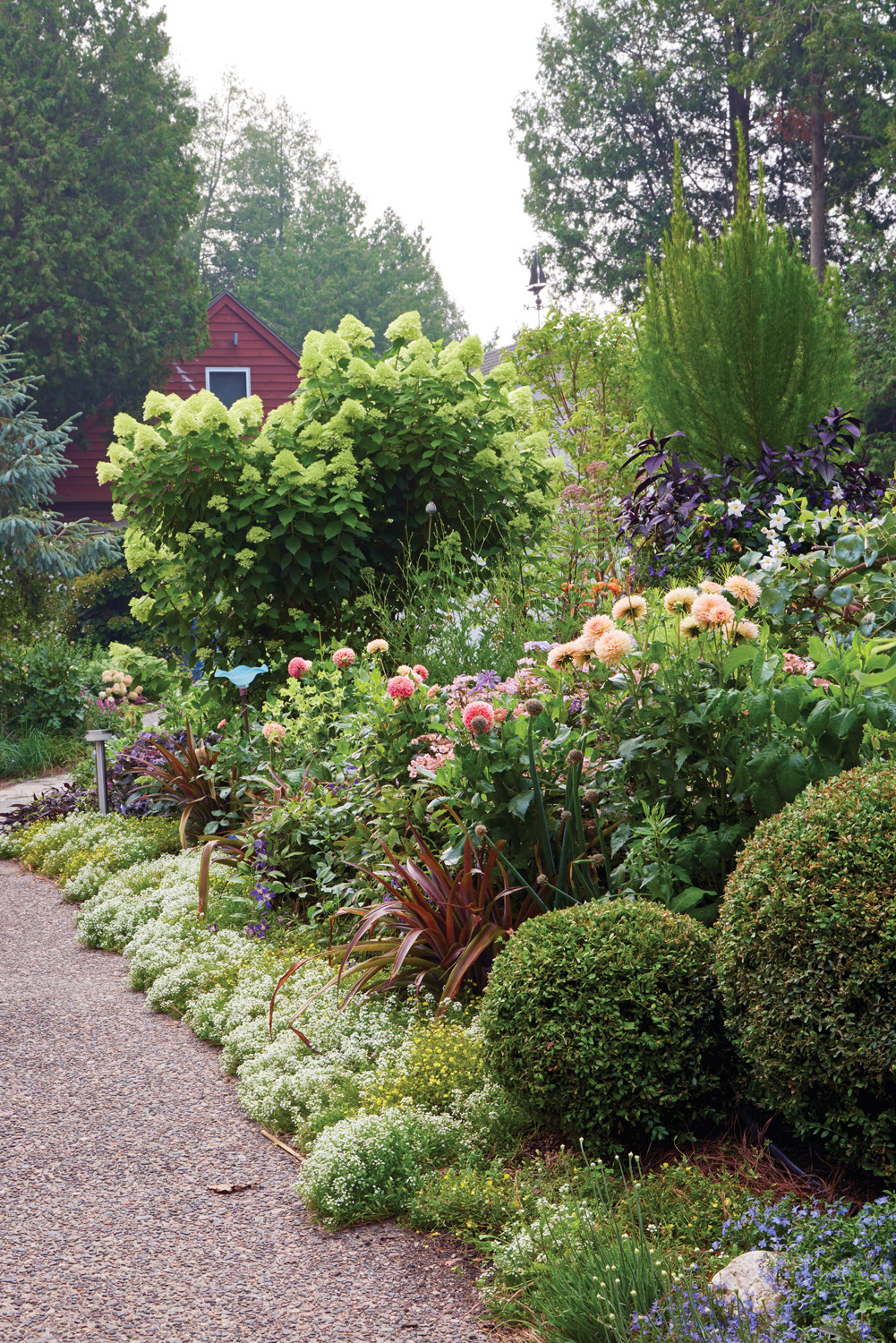
The patio and deck that flank the house—the first garden area I developed and the one that took a few tries to get right—are spaces where we entertain guests and enjoy summer cocktail hours but also where we start and end each day. This high-visibility spot was therefore perfect for a riot of eye-catching color that, admittedly, hovers on the edge of chaos.
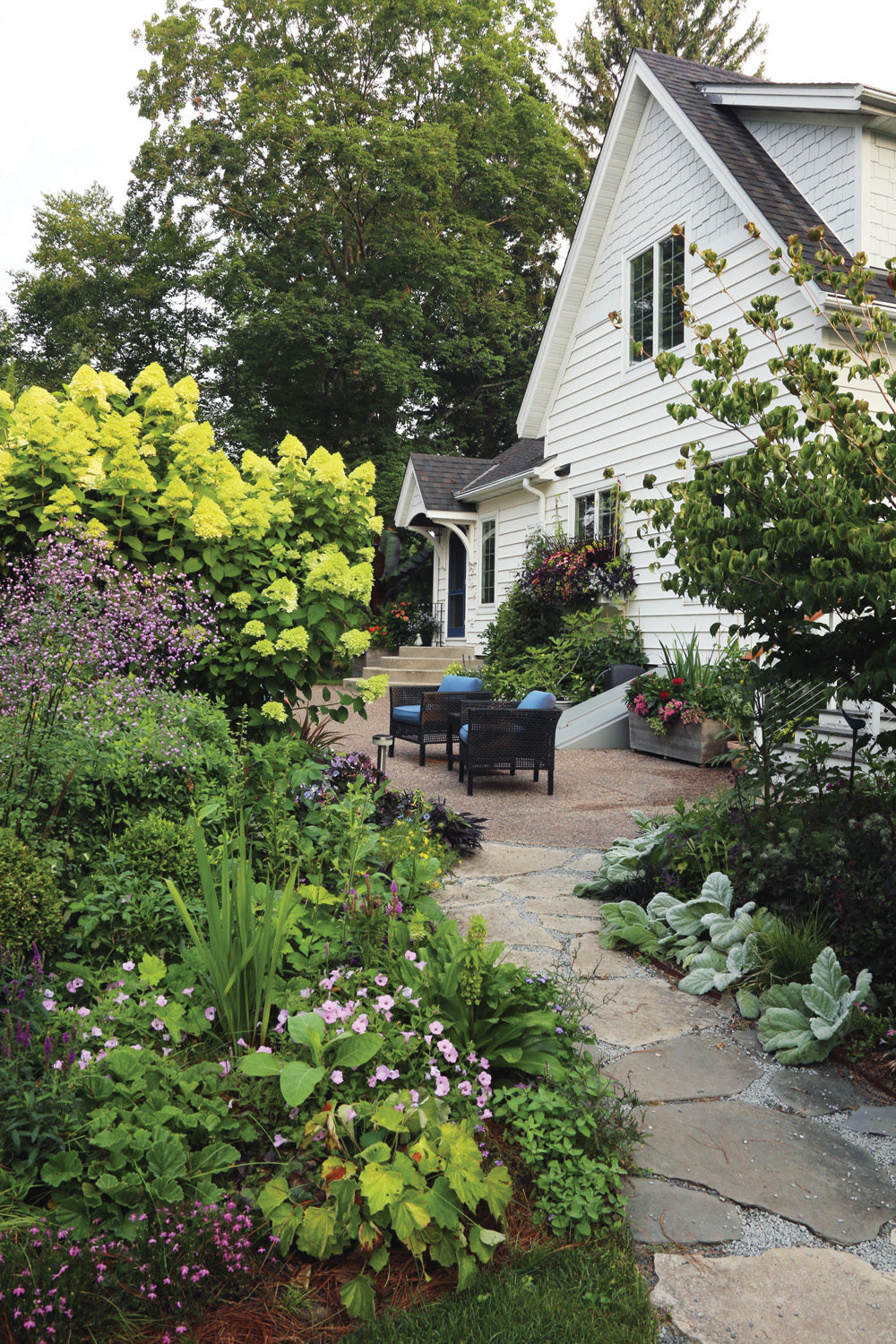
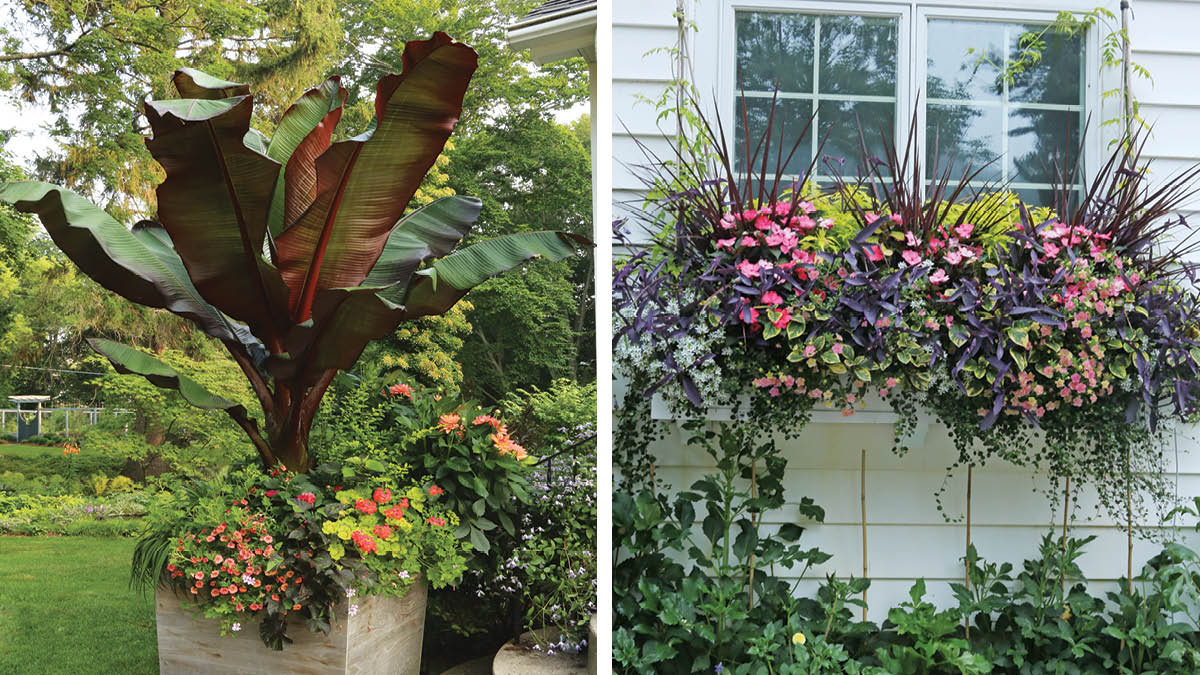
I call on a changing cast of annuals and tropicals to fill in around the shrubs and perennials that create the framework of the patio and deck beds. These plants require a good amount of tending in the form of watering, fertilizing, deadheading, and occasional pruning. Growing these high-maintenance plants in a place where I can’t help but notice them is not just about maximizing what they have to offer. It also helps me to stay on top of the routine care they require. Basically it’s the opposite of “out of sight, out of mind”: A plant in need of attention is hard to miss when you pass it daily.
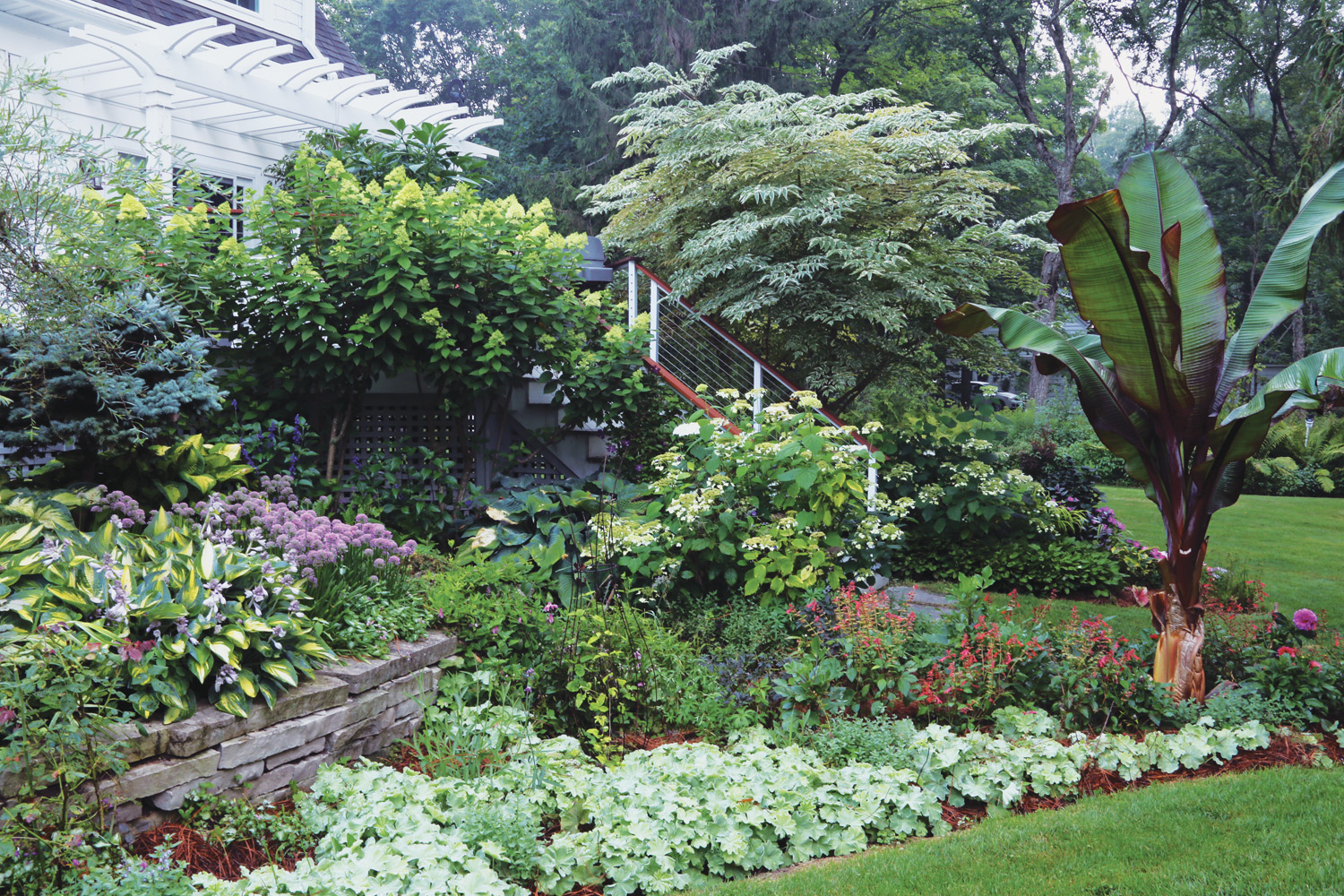
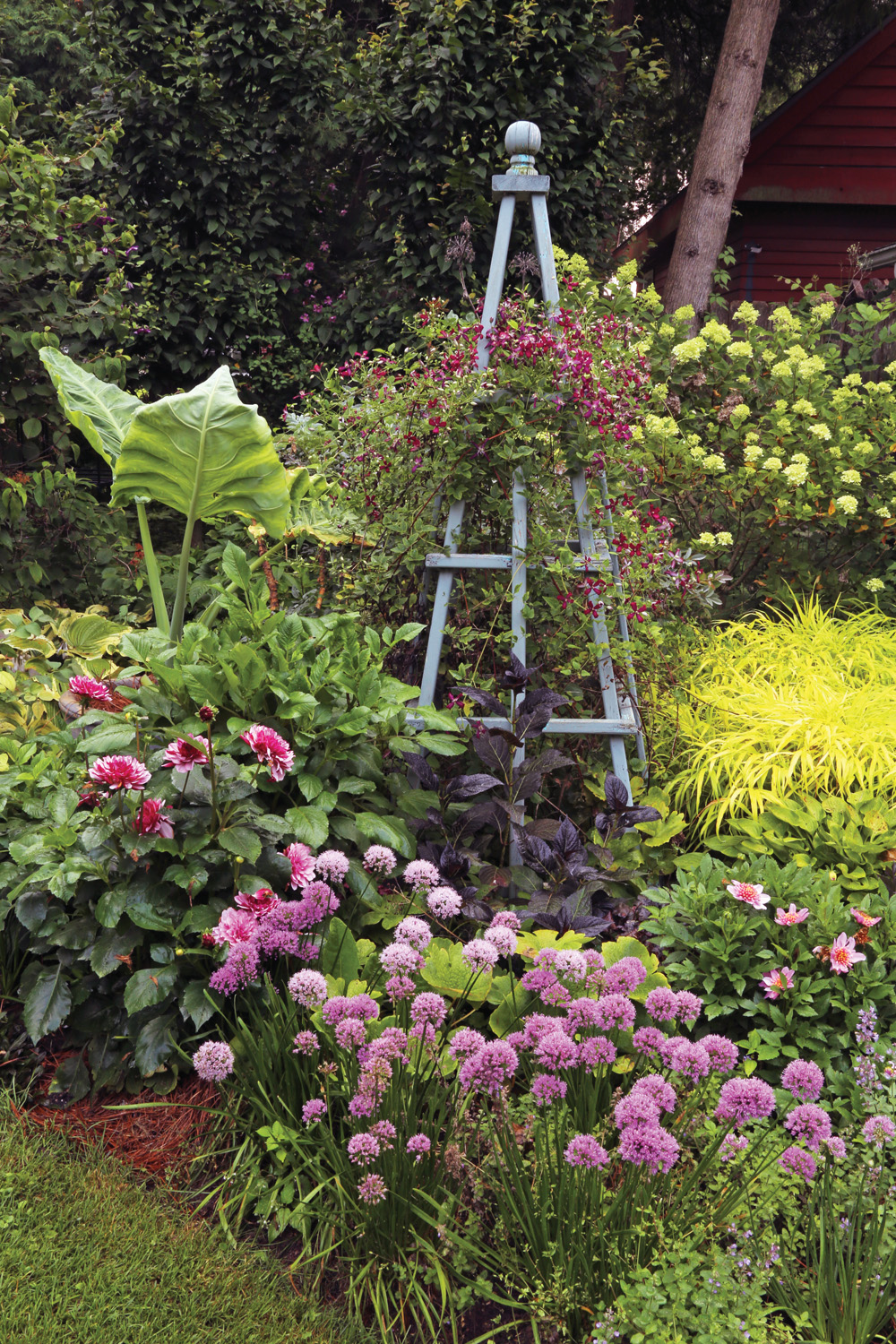
Dozens of dahlias (Dahlia spp. and cvs., Zones 8–11) are responsible for a decent amount of the mid to late summer color in these beds. In general, the varieties I grow are short enough to require only minimal staking, but frequent deadheading is needed along with occasional fertilizing. Featured plants that support the dahlia show for the entire growing season tend to change every year, satisfying a compelling need to experiment with growing new plants in different combinations. Repetition helps bring order to an admittedly busy border, so planting the front edge with multiples of a single bold plant like ‘Mila’ pineapple (Ananas ‘Mila’, Zones 8–10), ‘Navajo Princess’ mangave (Mangave ‘Navajo Princess’, Zones 9–11), or ‘Herbalea Wild Magic’ basil (Ocimum basilicum ‘Herbalea Wild Magic’, annual) visually calms the space. A variety of annuals are woven throughout the border, including several forms of chartreuse flowering tobacco (Nicotiana spp. and cvs., Zones 10–11) that help to cool down the color scheme and provide cohesion too.
Some large containers add to the display, all within easy reach of a hose, a key component of this high-maintenance area. Only a skinny bed between the patio and the house (as well as the custom window box) have drip irrigation on a timer; everything else is hand-watered as needed. After getting established, the in-ground plantings only need water when it’s particularly dry, and because they’re big, the containers typically don’t need a daily drink until late summer.
Create a Transition Space with Moderate Maintenance
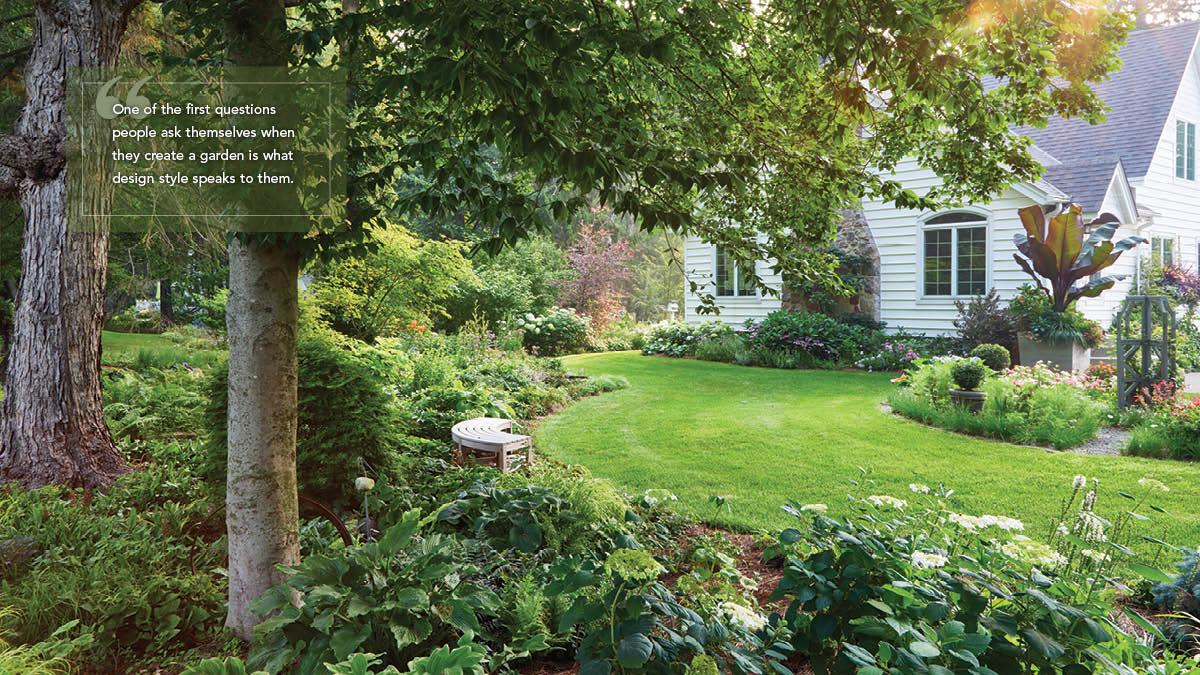
My desire for a modern cottage-style garden full of color is satiated in the patio borders, which is a good thing because it would be nearly impossible to maintain any additional spaces planted in this way. But adjacent spots are still visible from the house, so I needed a transitional space that I dubbed Maintenance Area 2. My goal for this middle ground was to strike a balance between the high-maintenance borders and the rest of the garden in a subtle way, so that you can walk through the landscape without noticing a line of demarcation. And with that comes a reduction in upkeep.
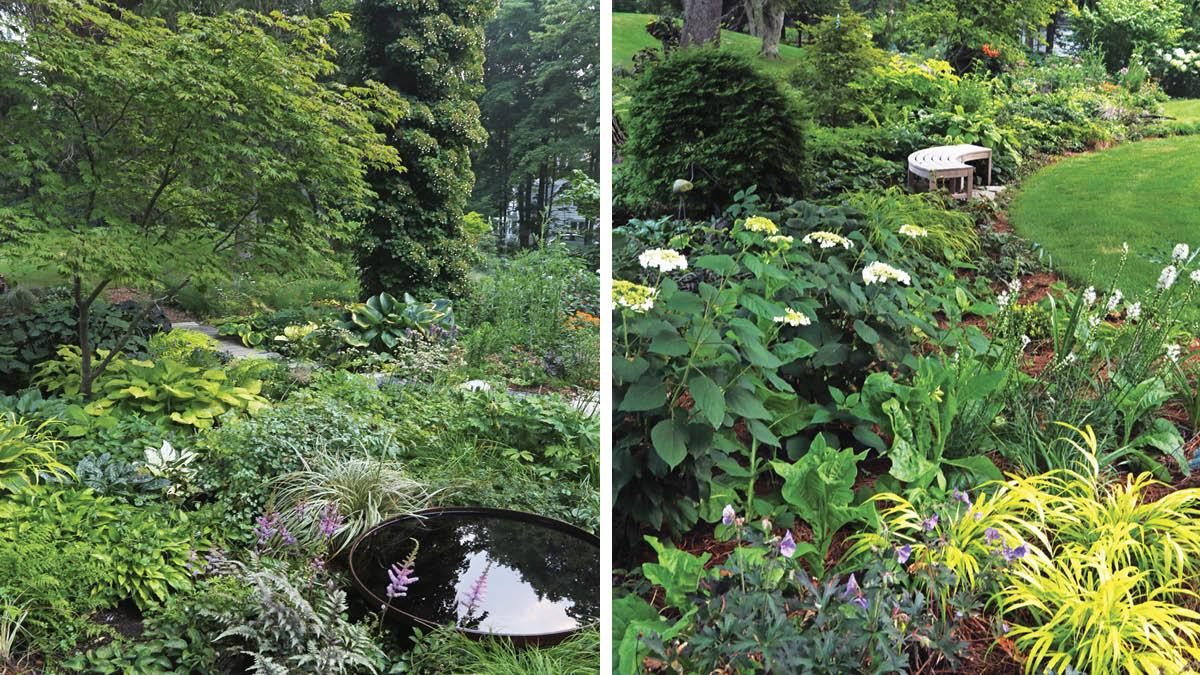
Perennials, which I rely on heavily throughout the entire landscape, are more prominent in these areas, where stone paths and lawn carry you from the outdoor living area to other parts of the yard. I’m not afraid to bring in perennials that might need a bit more attention, because we pass through these areas often. A variety of veronicas (Veronica spp. and cvs., Zones 4–9), for example, are planted along the frequently traveled path to the garage and provide nearly nonstop flowers. They do need to be sheared back after the first bloom and deadheaded throughout summer. A large swath of lady’s mantle (Alchemilla mollis ‘Thriller’, Zones 3–9) is a favorite of mine, both for its scalloped, dew-catching foliage but also for the cloud of chartreuse flowers it produces in early summer. I cut the whole plant back after it flowers, and within two weeks, fresh new foliage that will look good for the rest of the season emerges. Interspersed within these perennials are elements of the patio garden. Dahlias are dotted throughout, and other less-needy flowering annuals—some that readily reseed—intermingle with catmint (Nepeta × faassenii and cvs., Zones 4–9) and additional workhorse perennials. This provides a thread of cohesiveness among all the beds and borders.
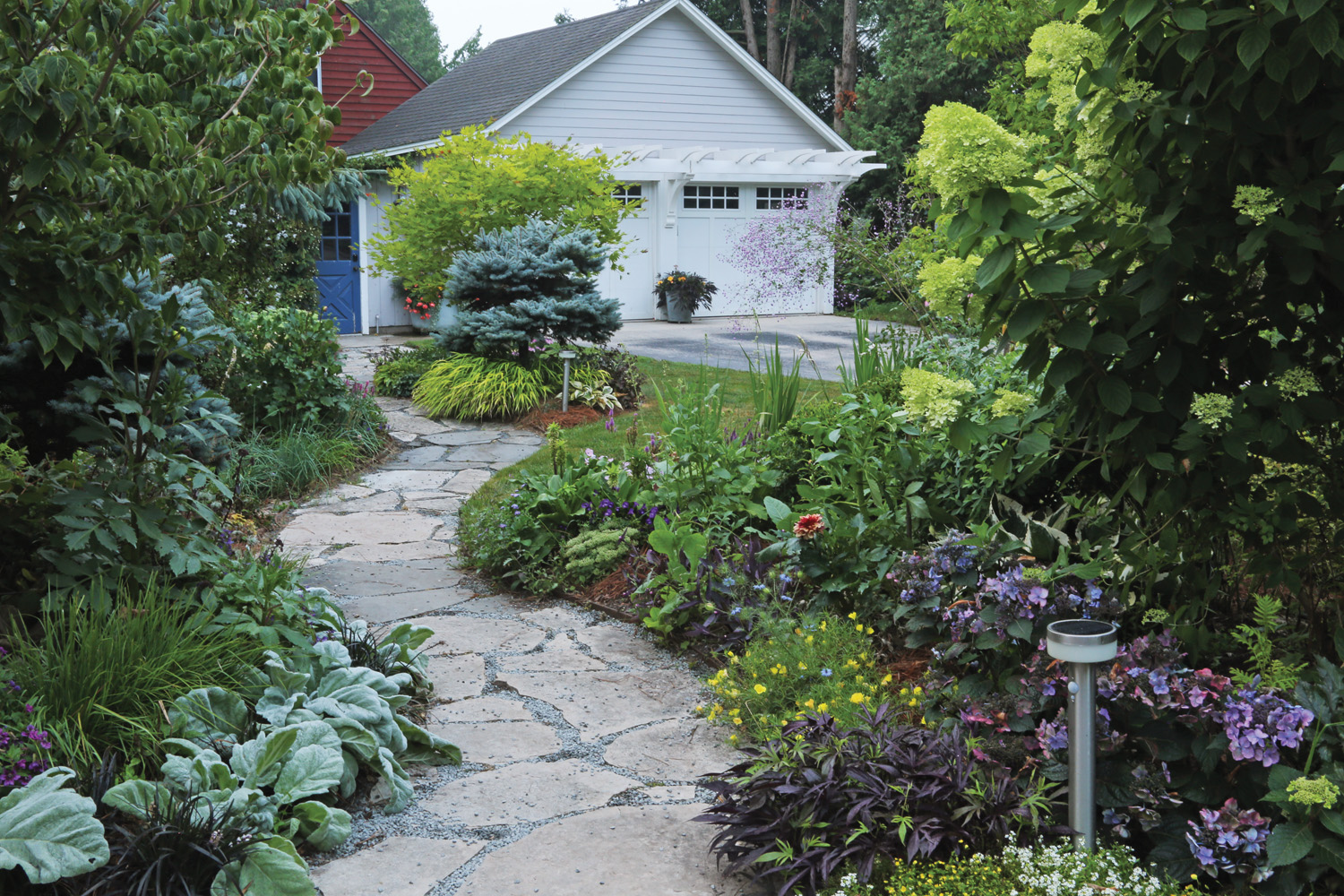
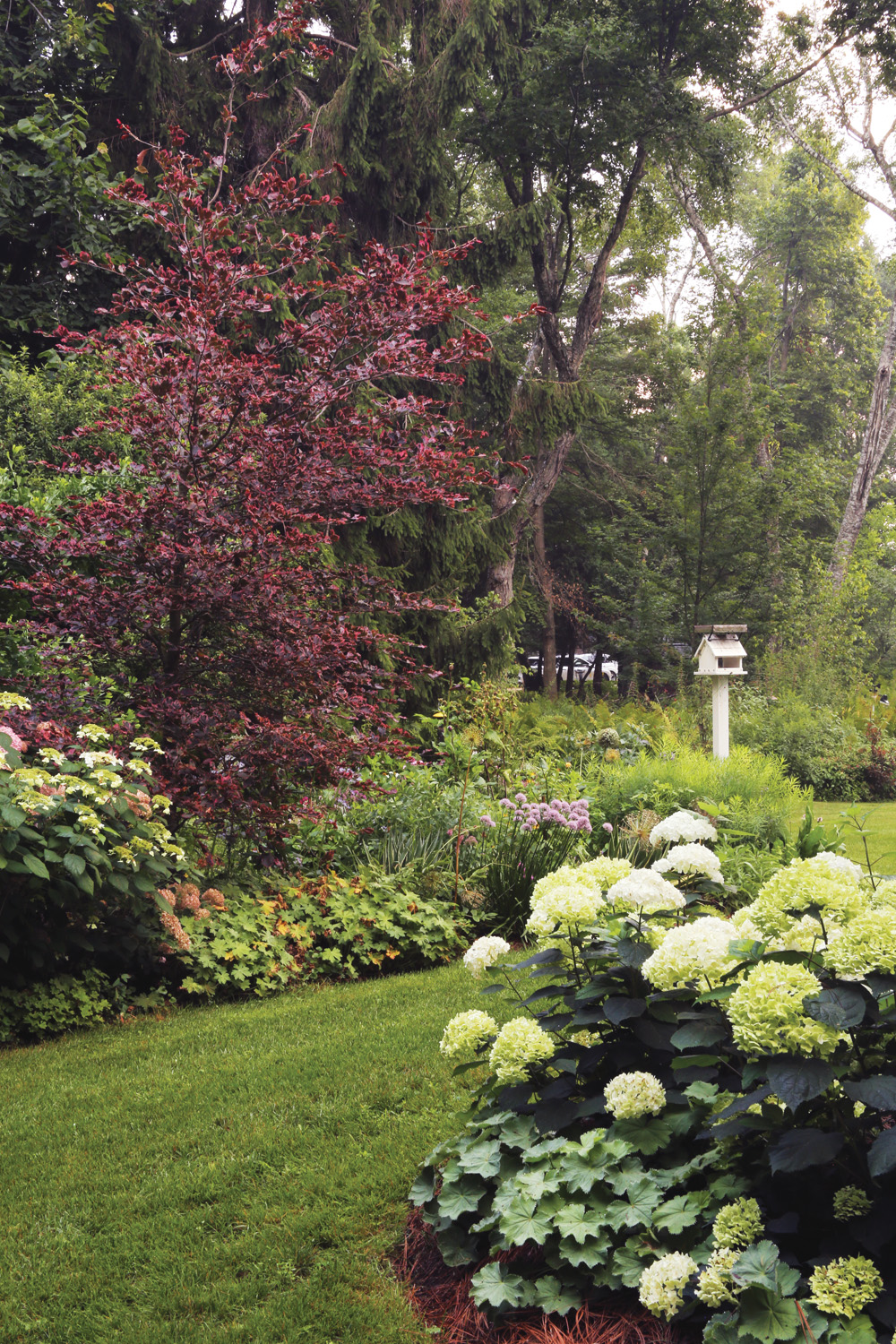
I’ve also incorporated more shrubs and trees in this transitional maintenance area, including colorful hydrangeas, deciduous gems with vibrant foliage, and even evergreens for interest during the long, gray winters. In some cases, these trees—along with actual garden trellises—are called into service as support for my clematis (Clematis spp. and cvs., Zones 4–9) collection. The vines help soften the transition between maintenance areas by incorporating a vertical floral element that references the patio garden. A partial-shade border on the other side of the house is another take on the mid-maintenance part of the garden. Chockablock with hostas, ferns, Japanese forest grass (Hakonechloa macra and cvs., Zones 5–9), and more, the care and moisture needs here are reduced by the judicious use of ground covers, which eliminate weed competition and the need for mulching. Deadheading or, in the case of some hostas, removing flower stalks and applying deer repellent, make up most of the season-long care.
The Farther You Walk, the Lower the Maintenance
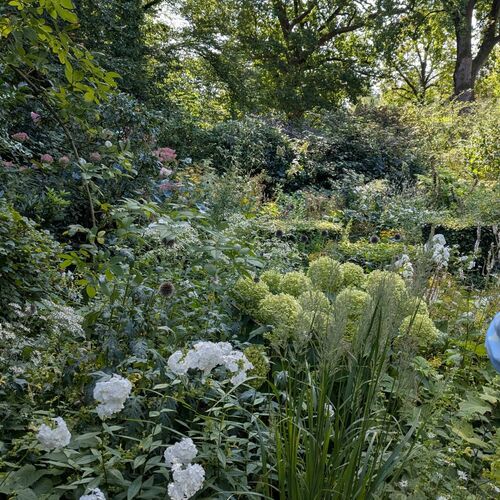
I never intended to continue creating gardens in the far reaches of the yard, but when dozens of ash trees (Fraxinus pennsylvanica, Zones 3–9) succumbed to borer damage over several years, the landscape changed permanently. It became clear that my options were to create more garden spaces, or fight aggressive and unwanted species in newly sun-filled areas. I didn’t want any more high-maintenance gardens, but I did have a growing love of natural garden design. A free-flowing border of mostly tough perennials and showy grasses was exactly what I craved for this new place, eventually coined Maintenance Area 3. Thankfully the transitional beds I’d already established (in Area 2) made it easy to add this sustainable style into the mix, even though it has little in common with the colorful, modern cottage scheme by the house.
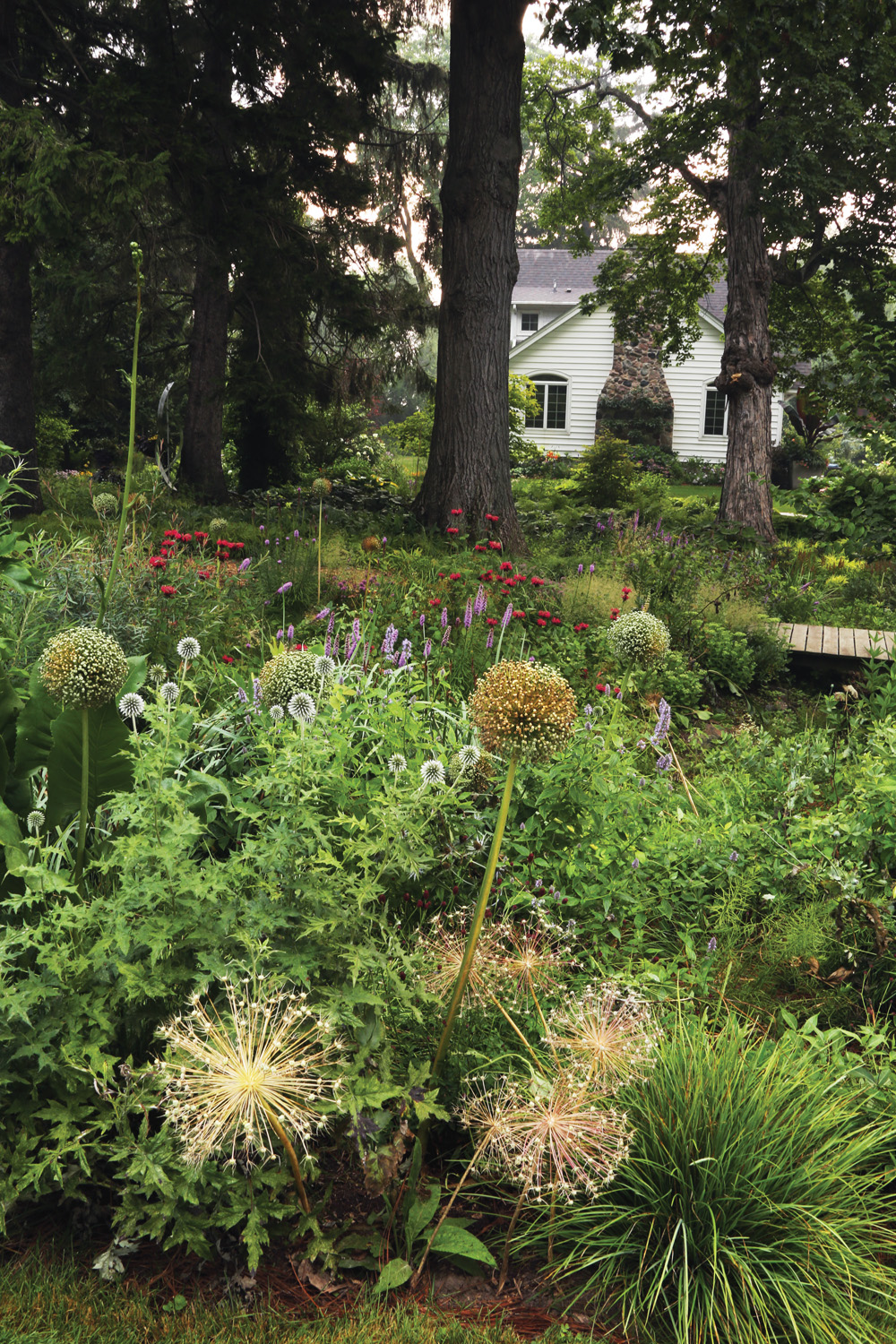
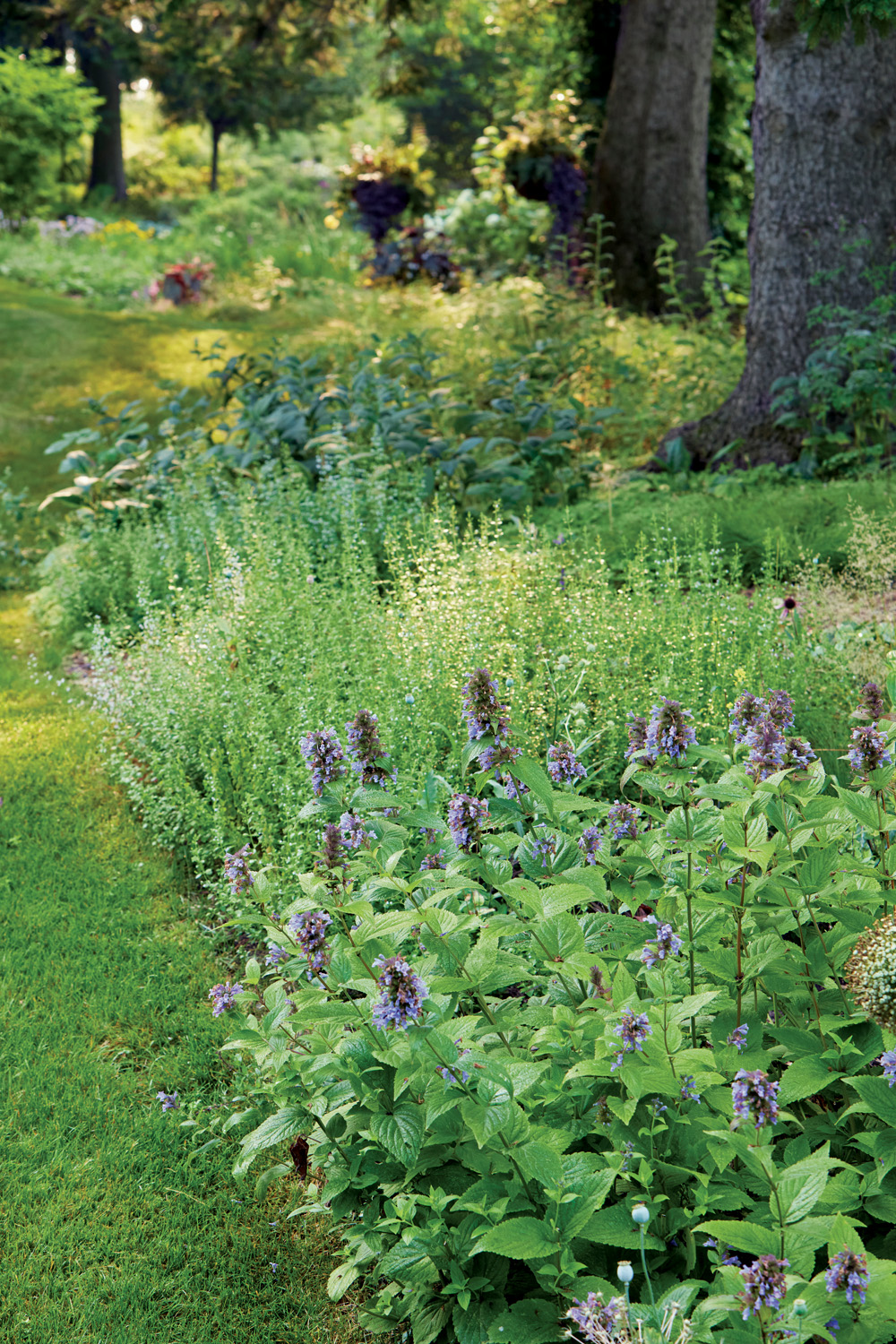
In addition to opening up an entirely new palette of plants to work with—a blessing for an admitted plant lover with collector tendencies—the new garden area on the far west side of the property was a good test of the design skills I’d been honing over many years. Positioned at the driveway entrance with a native prairie within view, this area is also a way to gradually introduce visitors to what lies beyond. The bar for plants in this area is high. They need to be drought tolerant after establishment because several hoses have to be connected to reach the spot; devoid of a need for any amount of coddling, including deadheading or staking; and very deer resistant, as the neighborhood herd routinely saunters down the road just feet away.
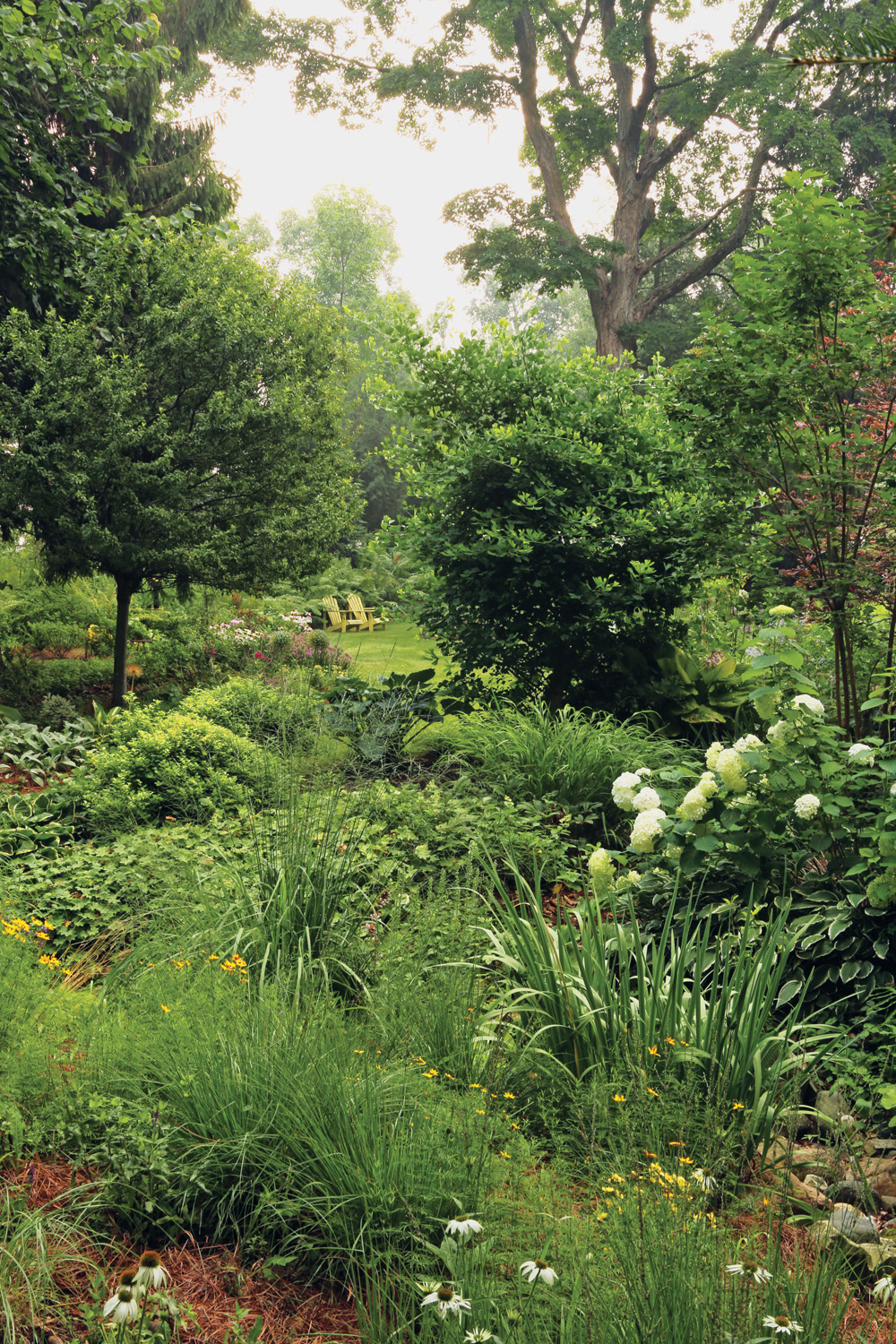
Many native plants and nativars—Culver’s root (Veronicastrum virginicum, Zones 3–8), coneflowers (Echinacea spp. and cvs., Zones 3–9), and baptisia (Baptisia australis and cvs., Zones 4–9), to name a few—fit the brief. Select grasses and other tough nonnative plants including ‘Montrose White’ calamint (Calamintha nepeta ssp. nepeta ‘Montrose White’, Zones 5–7) and short-stalked catmint (Nepeta subsessilis, Zones 4–9) are perfect here too (photos p. 35). As with other areas of the garden, shrubs, both native and ornamental, play an important role in creating structure and height that helps block the view of the road. In addition, I bring in a few of the easy-care annuals that are dotted throughout the rest of garden, including flowering tobacco. The chartreuse flowers help carry your eye through the entire expanse of the yard, again making what might otherwise feel detached seem cohesive.
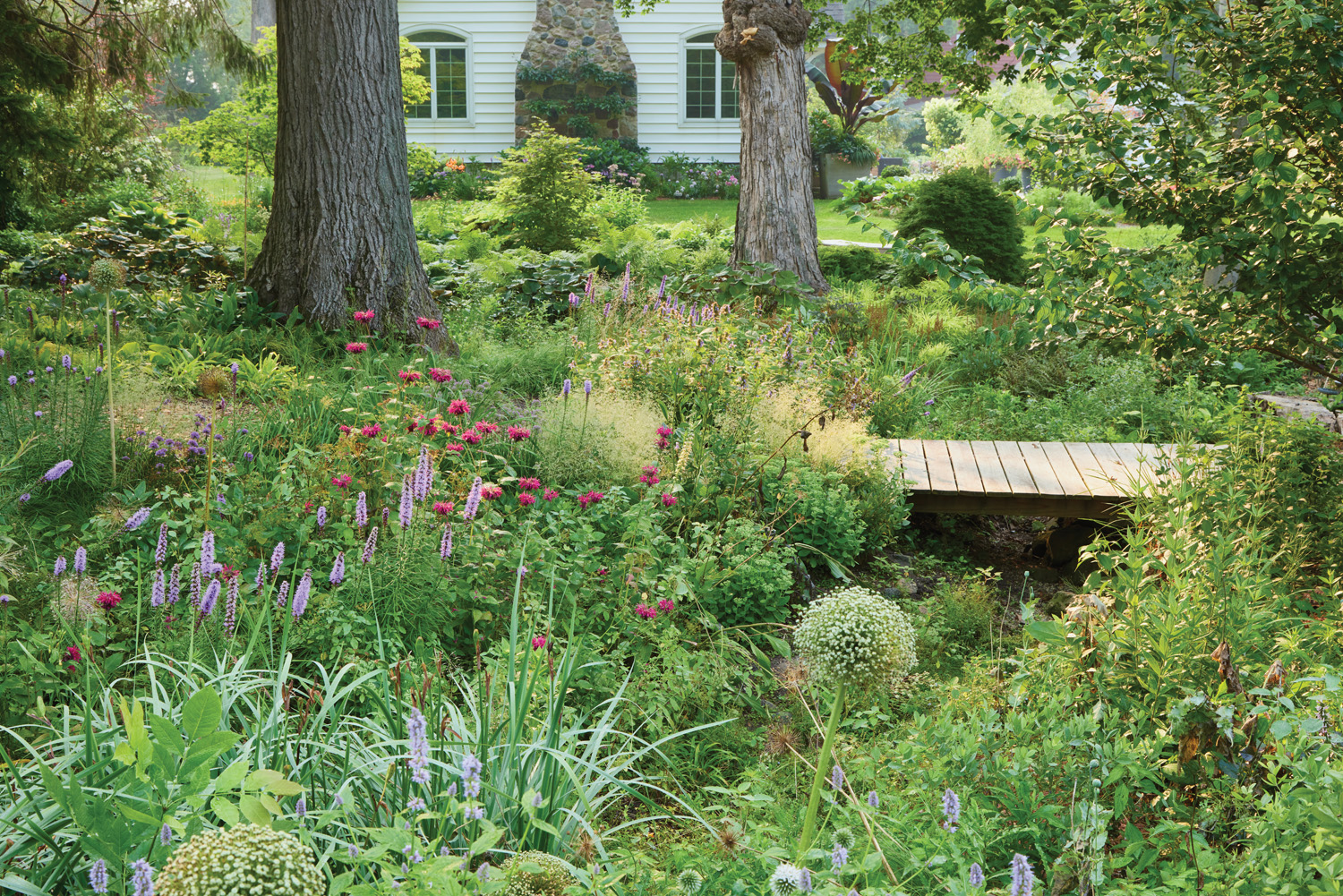
Most of the care in Maintenance Area 3 happens in spring, with an annual chop and drop of perennials left standing for winter and a few aggressive weeding sessions. Although it was planted about five years ago, weed seeds that blow in can create a problem. But once the bulk of the interlopers have been dealt with, I can walk away from this part of the garden for most of the year, with only occasional tidying up.
One of the first questions people ask themselves when they create a garden is what design style speaks to them. I realized I could never be pigeonholed into choosing just one aesthetic, and trying to limit myself was preventing me from having my dream. It turns out that with a practical approach to garden maintenance, I really could have it all in just one yard.
Erin L. Schanen is a lifelong gardener who chronicles her journey through “The Impatient Gardener” blog and YouTube channel. She lives and gardens in southeastern Wisconsin.