

Landscape designers and homeowners are often faced with solving design problems with difficult constraints in compact urban gardens. At times we need to solve screening problems or soften hardscape surfaces in constricted areas where a planting bed may be a slim 1 to 3 feet deep. Other times there is no bed at all, and the only way to soften fences or walls is to add plants in containers. I had a tight garden space up against my neighbors’ garage wall that needed a fresh idea and greening.
The design problem
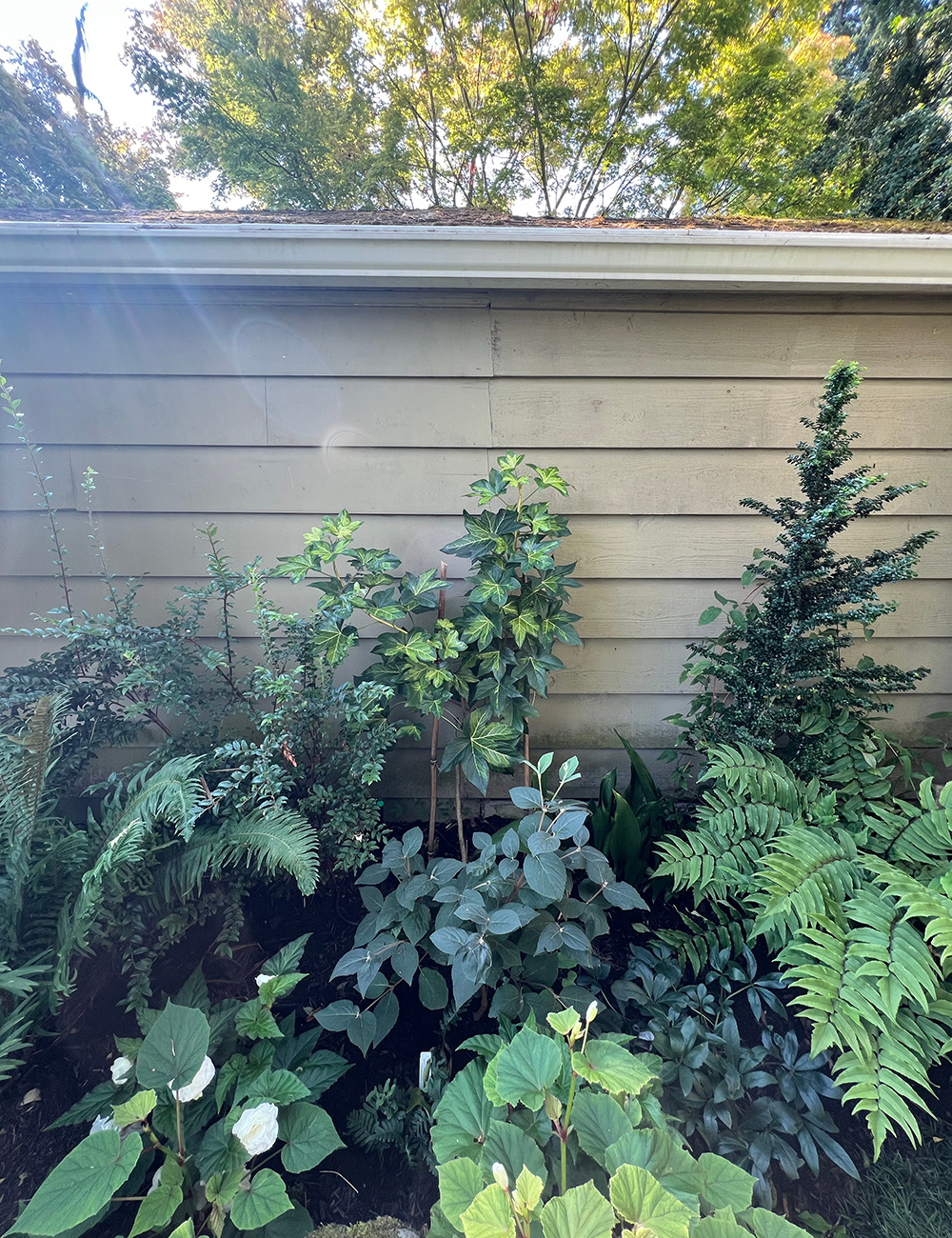
The bed in front of the wall had been stuffed with random plants for several years as I was trying to come up with the perfect tall shrub to fill in across the mundane backdrop. The planting bed was relatively shallow, tapering to 2 feet on one end. I had two garden tours scheduled to visit, and as the tour dates approached, I began to worry that I did not have time to make the space feel interesting and lush. Ideally, I wanted plants to soften the entire wall. This was also a constricted space next to the exit gate in my backyard, and I wanted something fun for people to remember on their way out of the garden. Sometimes the best solutions come while under pressure!
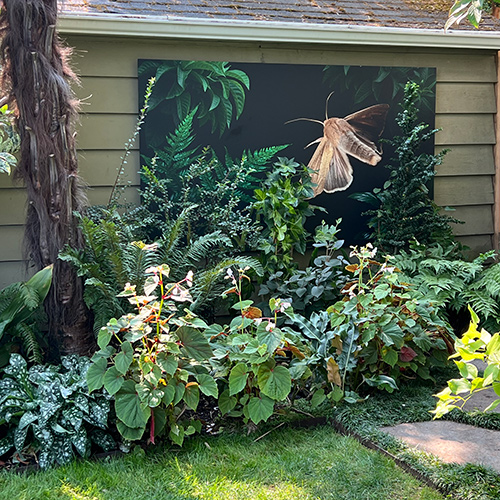
Why not create the illusion of a scene behind the short plants already living in the space? I was also interested in advocacy for insects and imagined a giant-sized bee or moth flying through that space. Playing with scale can throw the viewer off-balance and create surprise and delight.
What is trompe l’oeil?

The French term trompe l’oeil literally translates to “to deceive the eye.” The goal is to make a two-dimensional surface appear three-dimensional, or to create an illusion of depth and reality on a wall or ceiling. Artists have used this technique since ancient Roman times, as seen in the garden murals of the Villa of Livia. It continued through the Renaissance in works like Andrea Pozzo’s The Apotheosis of St. Ignatius, where painted ceilings mimicked expansive skies and grand architectural spaces even though the surface was flat.
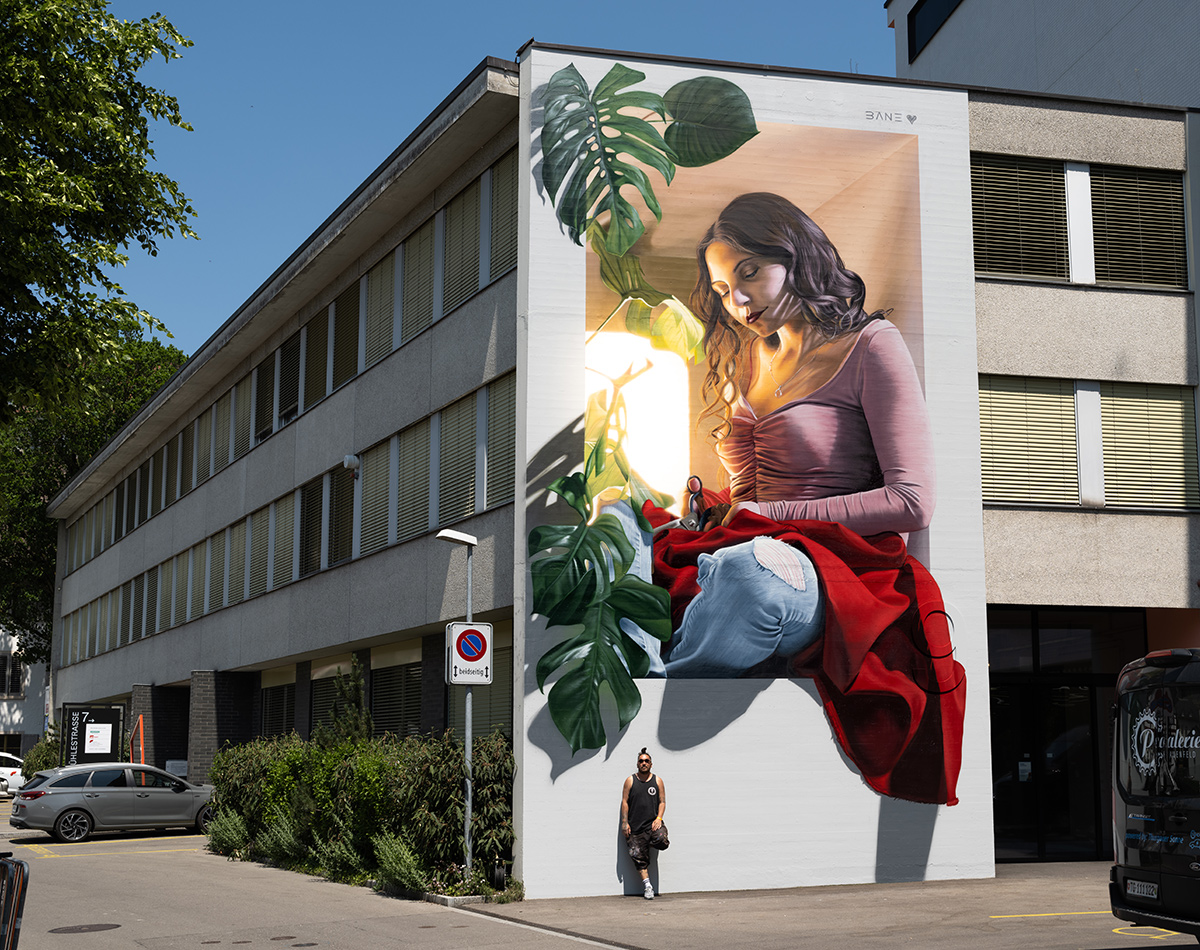
Today, Swiss artist Fabian Bane Florin brings the same approach to modern buildings. He uses trompe l’oeil to catch viewers off guard, give meaning to public spaces, and connect each site to its past or its future.
How to create a photorealistic trompe l’oeil mural
Designing artwork for the outdoors can be challenging. Ideally, materials would hold up to rain, wind, sun, and freezing temperatures for many years. Taking this into account and the fact that I am not a painter, I decided to do a printed photorealistic mural. A printshop in Seattle helped me find the perfect materials for my outdoor project, where we have a lot of wet weather, some snow, and hot sun.
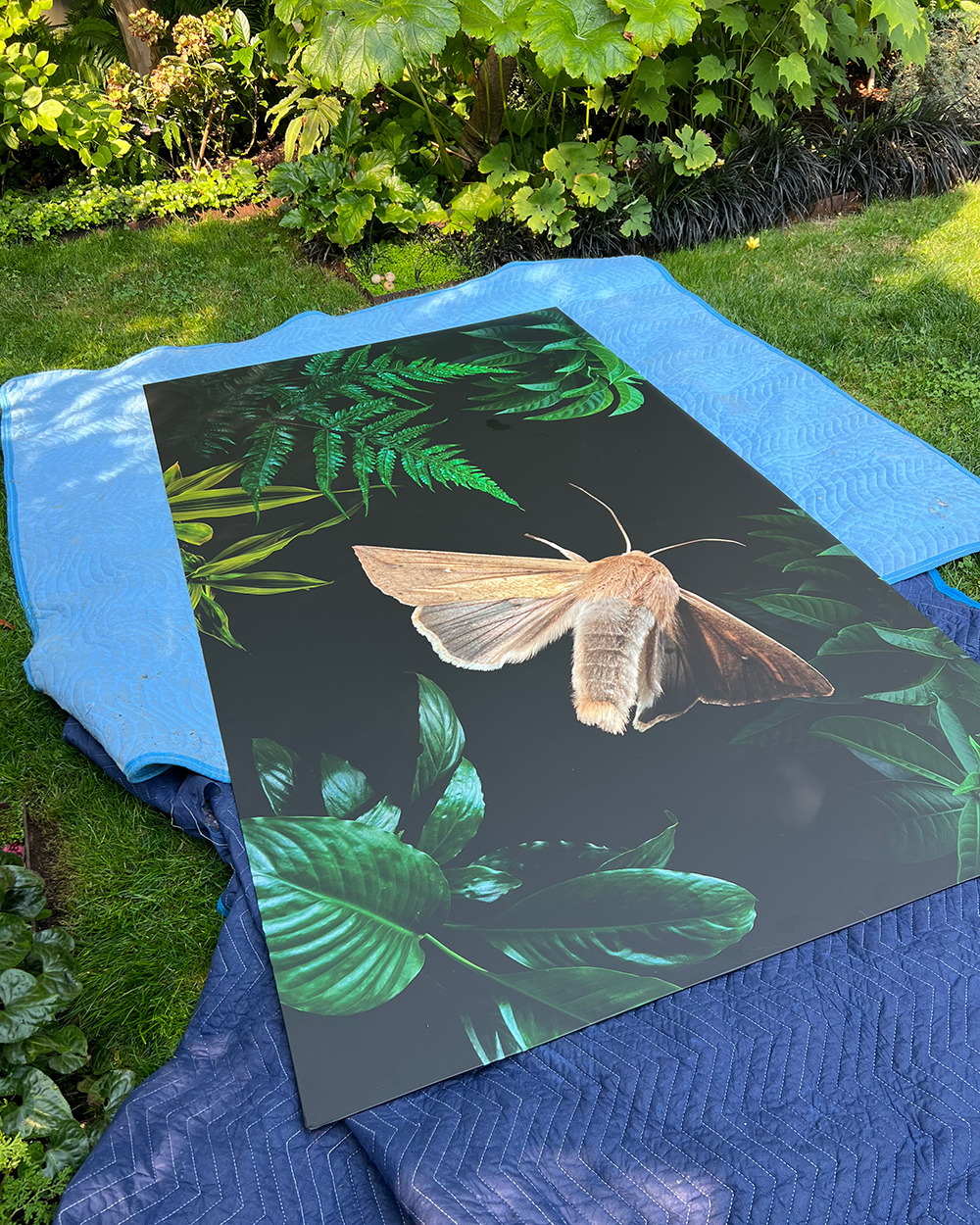
The garage wall surface was painted lap siding, so I needed a flat surface to print on. My choices for a canvas were marine plywood, plexiglass, foam core, polycarbonate twin wall, and aluminum sheet. I chose 1/8-inch-thick aluminum sheet because the surface was smooth, it was lightweight, and it did not need extra framing to keep the 4×7-foot sheet from warping.
The printing ink is used in creating outdoor signage, so it would hold up outside for many, many years. To attach it, we mounted 2×2 cedar strips onto the garage wall and fixed the panel to the strips with industrial strength Velcro. The mural could easily be removed to maintain the wall behind if needed.
What makes for the successful integration of a Trompe L’oeil mural in a garden?
Consider the house architecture and the garden style when designing imagery. My garden space has rusted steel beds, giving it a modern aesthetic, and has hardy tropical plants with a maximalist garden feel. The exposure is part shade because it is on the east side of my house and because of all the layered plantings, including palms, bananas, bamboo, and ferns, with pops of chartreuse and white in the perennials. When pulling together plant images, I searched for plants mimicking my garden style. I found an image of a loquat tree (Eriobotrya japonica, Zones 8–10), which I had growing in the garden, and other images of plants within my color palette. I wanted a black background, to make the space feel like it was receding during the day and to feel nocturnal for the moth that was the central subject.
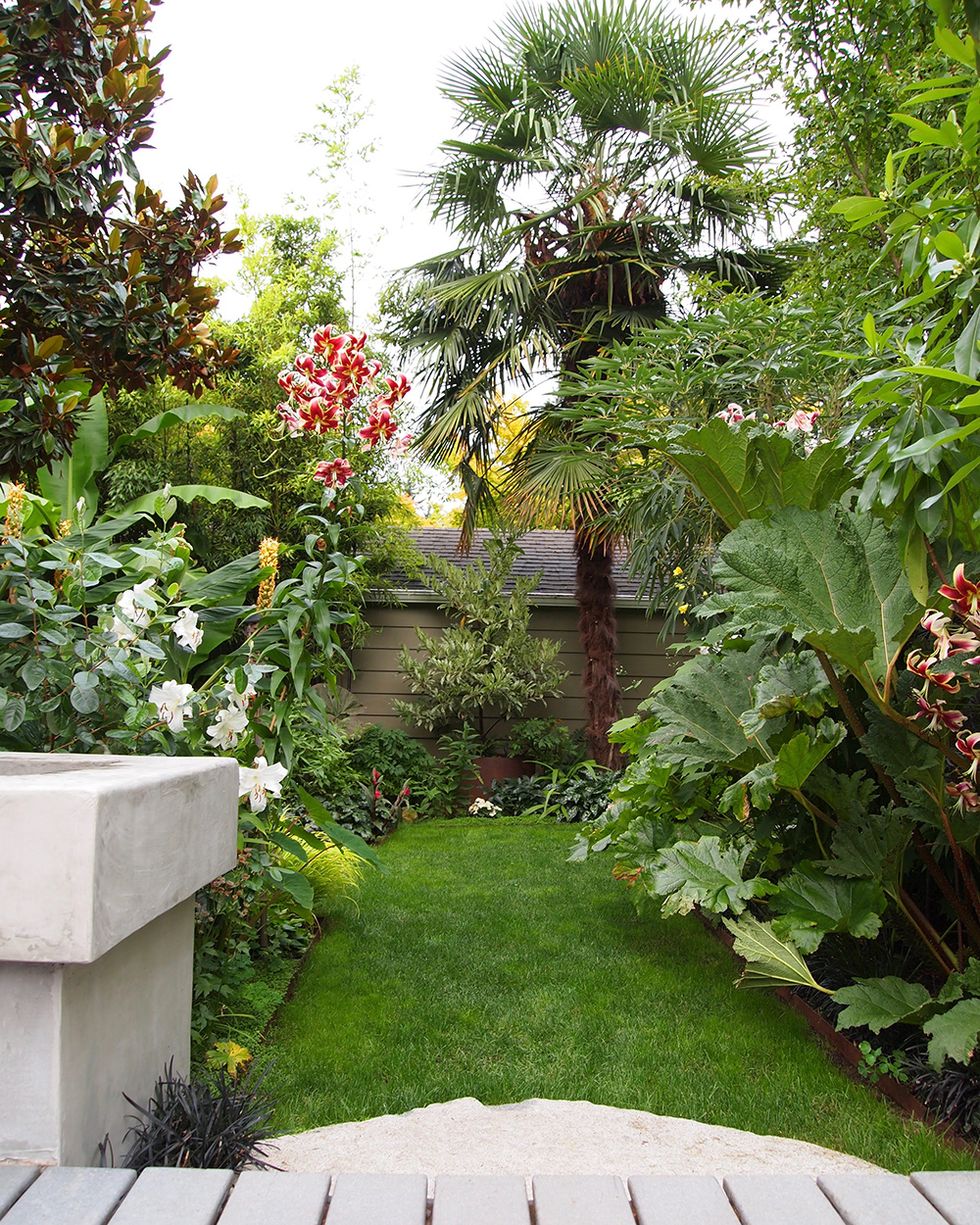
Plant images are available for purchase on websites like Getty Images and iStock. Look for isolated images (on a black, white, or no background) if you want to combine them easily onto a common background. I purchased the moth image from nature photographer John C. Abbott and paid a fee for the right to use it in this particular project.
Photo resolution should be 300 DPI, and file sizes need to be large if you are blowing photos up, to keep the resolution high and the images crisp. The plants in this photo mural are 5,000–6,000 pixels, and the moth is 8,000–10,000 pixels. I wanted to clearly see the iridescent hairs on the moth’s wings but wanted the plants to fade back. Be careful to avoid AI-generated plants and fauna if you are aiming for a trompe l’oeil effect. I found them to be cartoonlike, and they did not read as authentic.
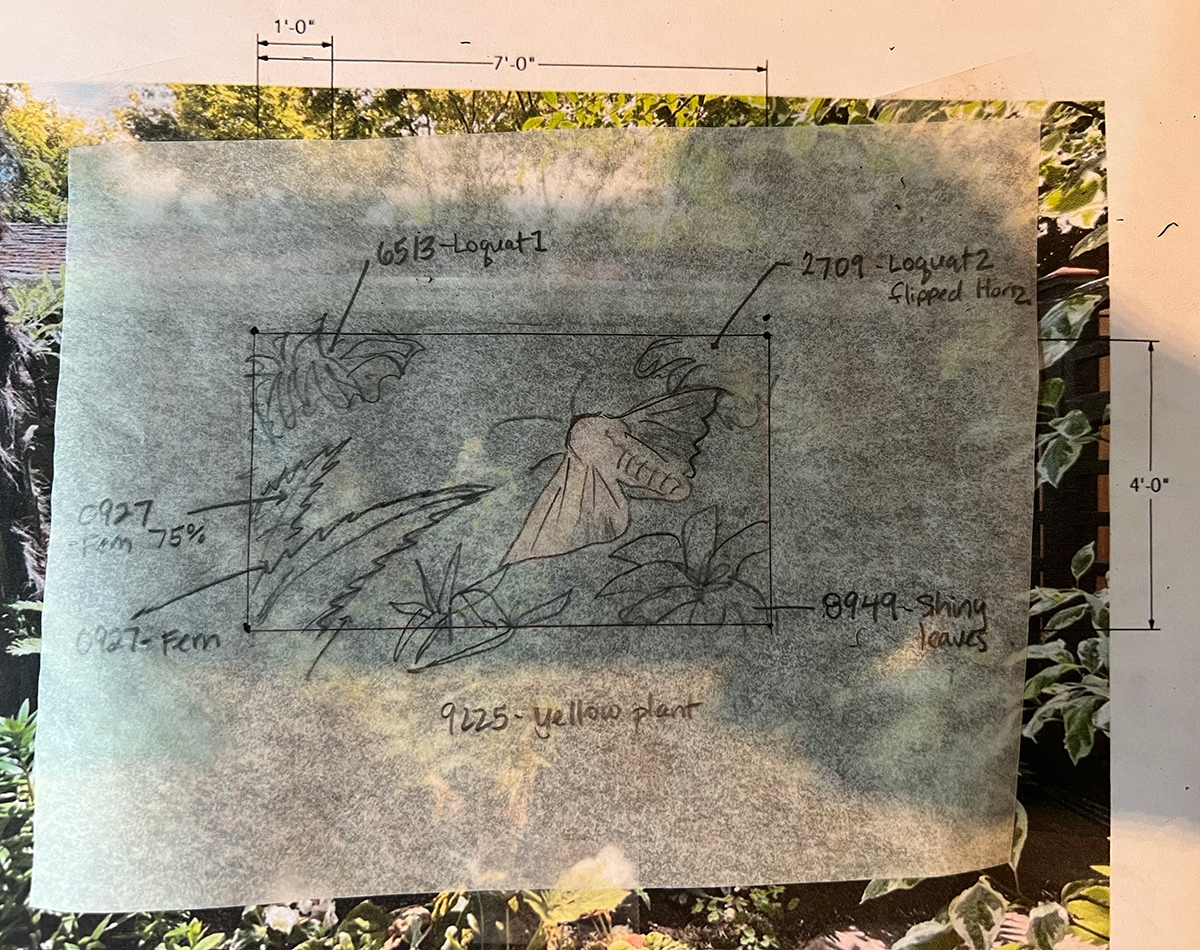
After plotting a design layout, I enlisted my colleague, Amanda Crowley, who has experience in graphic design, color editing, and printing. She laid out my photos in a file and prepped the design for printing. However, you do not need experience to experiment with free platforms like Canva, which will allow you to compose your design and do some simple photo editing. I checked several proofs before the image went to print to make sure colors transferred from the screen into reality.
So many opportunities for adding a unique garden mural
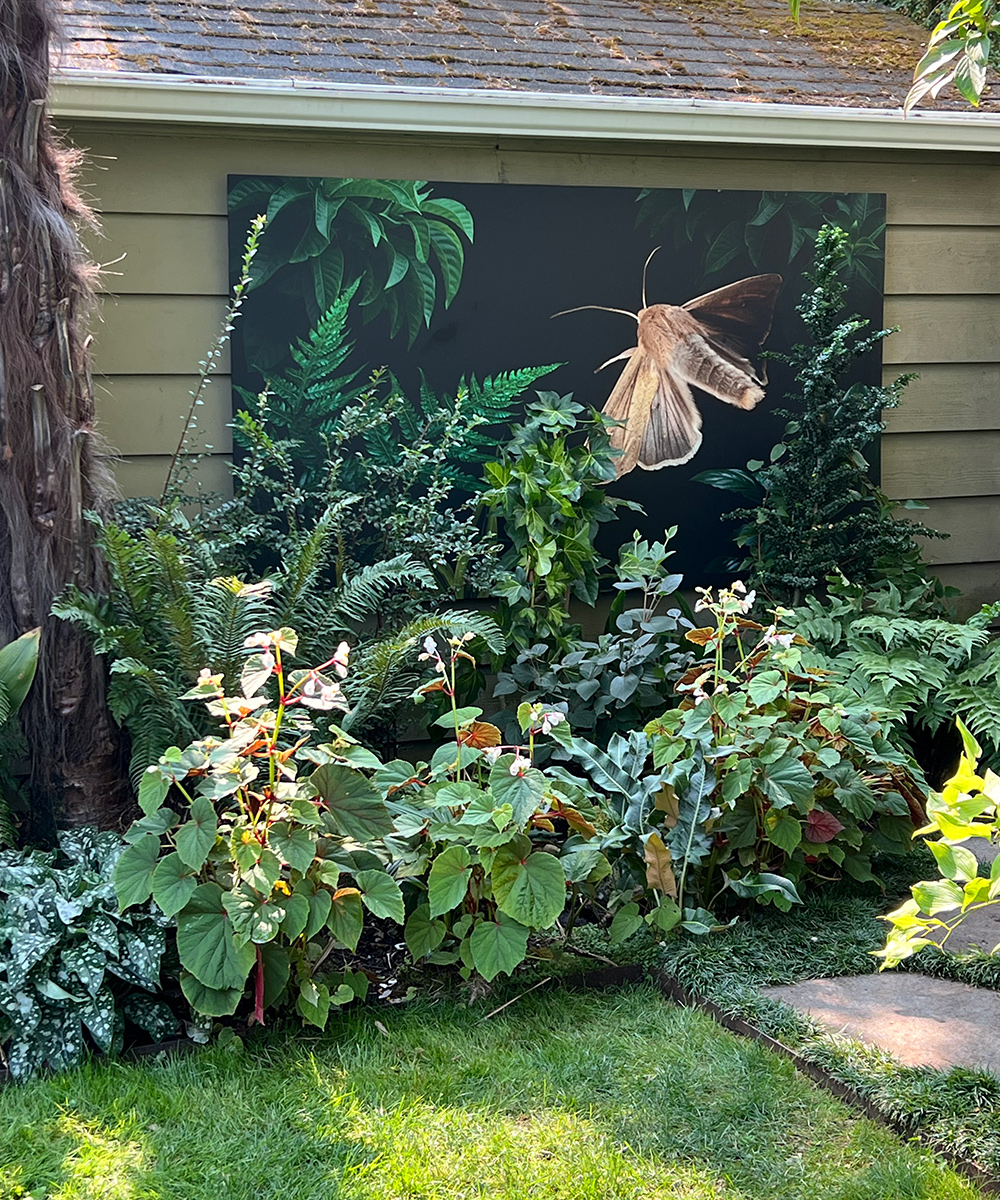
The possibilities for using garden photorealistic murals are vast and customizable. They can be applied to a fence panel, or used as a background for a pergola wall, a screen on a deck, or a decorative touch on a large blank house wall. Imagery can be realistic, graphic, painterly, or a combination of all three.
The important idea is to create a theme congruent with the garden and the homeowners’ interests and preferences. When designing, ask yourself what images bring you happiness and/or take you to another place? Do you prefer a funky urban vibe, or a refined old-world look? Do you want to emphasize themes in nature? Imagine a two-story foxglove going up a blank wall on the side of your house or a giant sparrow next to a tree at the top of your patio steps. A small meadow could go on for acres up against a wall with the right artwork behind it! A photorealistic mural can set the stage and deepen the theme of your garden style.
Increase the enjoyment of being in your garden by reexamining unattractive, vertical garden spaces, and see them as an opportunity to have fun with a customized, photorealistic trompe l’oeil mural. The fun is in imagining what you want and then creating it!
More garden art inspiration:
Discuss this article or ask gardening questions with a regional gardening expert on the Gardening Answers forum.
And for more Pacific Northwest regional reports, click here.
Lisa Bauer is the owner of Chartreuse Landscape Design in Seattle.
Photos, except where noted: courtesy of Lisa M. Bauer
Fine Gardening Recommended Products
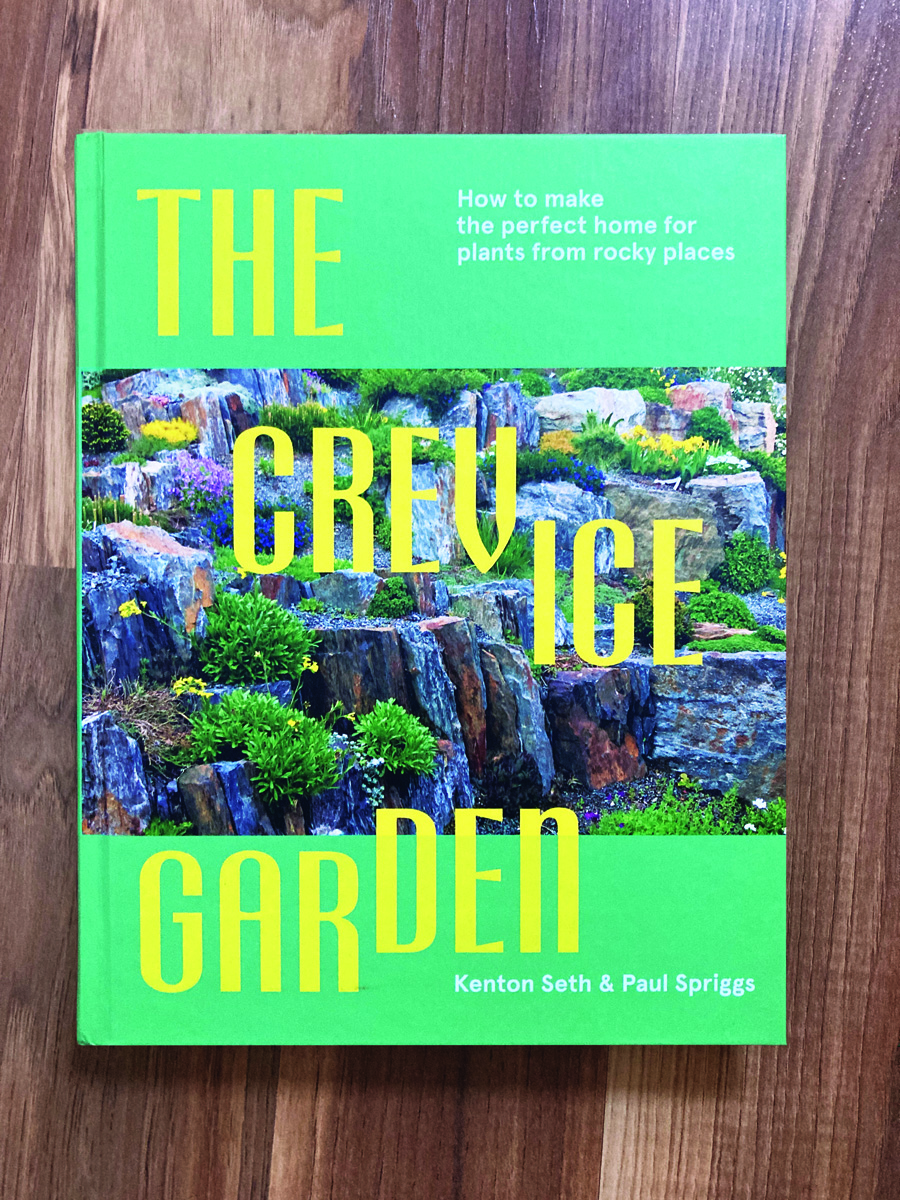
The Crevice Garden: How to make the perfect home for plants from rocky places
Fine Gardening receives a commission for items purchased through links on this site, including Amazon Associates and other affiliate advertising programs.
A crevice garden replicates the environmental conditions of mountain tops, deserts, coastlines, and other exposed or rocky places on earth. These striking garden features provide perfect conditions for the plants native to these far-off places, bringing the cultivation of these precious gems within everybody’s reach.

SHOWA Atlas 370B Nitrile Palm Coating Gloves, Black, Medium (Pack of 12 Pairs)
Fine Gardening receives a commission for items purchased through links on this site, including Amazon Associates and other affiliate advertising programs.
Lightweight and close-fitting for excellent dexterity. Machine washable. Breathable back of hand to reduce perspiration. Designed for easy movement and continuous wear. Ideal for aerospace, assembly, automotive, construction, final fix, gardening, manufacturing, operating machinery, packaging, precision handling, tiling, warehousing.
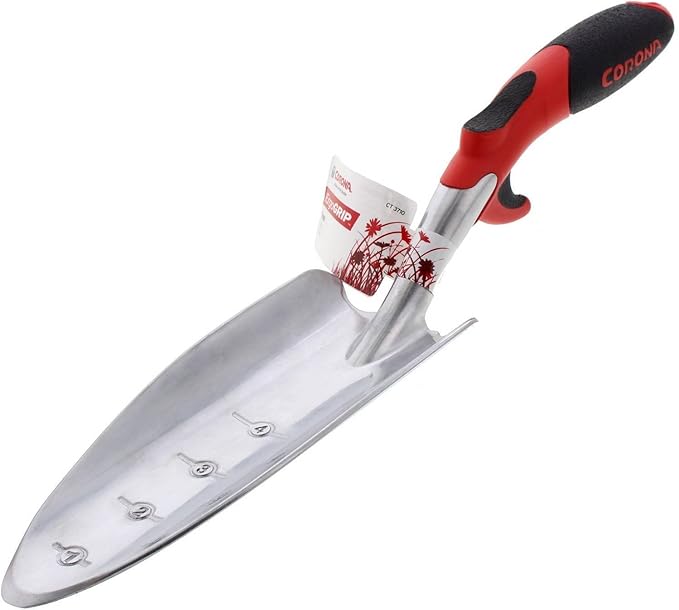
Corona E-Grip Trowel
Fine Gardening receives a commission for items purchased through links on this site, including Amazon Associates and other affiliate advertising programs.
Handle Material: Aluminum. Handle Length: 14-1/2 in. Overall Length: 14.5 in. Head Material: Aluminum. Handle Color: Red.