

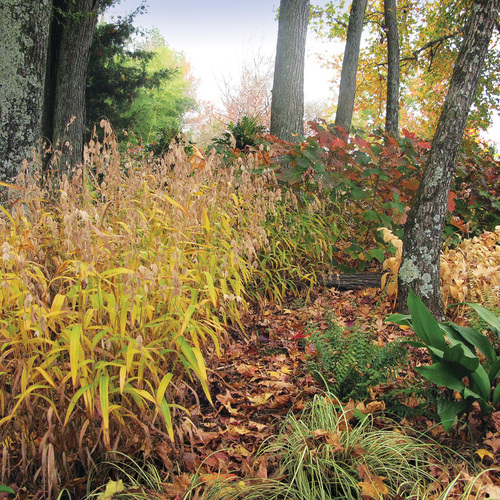
Grasses are beloved landscape staples, known for their fine foliage, structure, movement, and seasonal interest. Many require full sun to thrive, but several species do perform well in lower light conditions. These plants are excellent choices for woodland edges, beneath tree canopies, or along the north side of buildings. Grasses and grasslike plants can also be the perfect fix for compacted soil, runoff, or spots with lackluster color and texture. The following selections would be easy to incorporate in a variety of different and challenging situations.
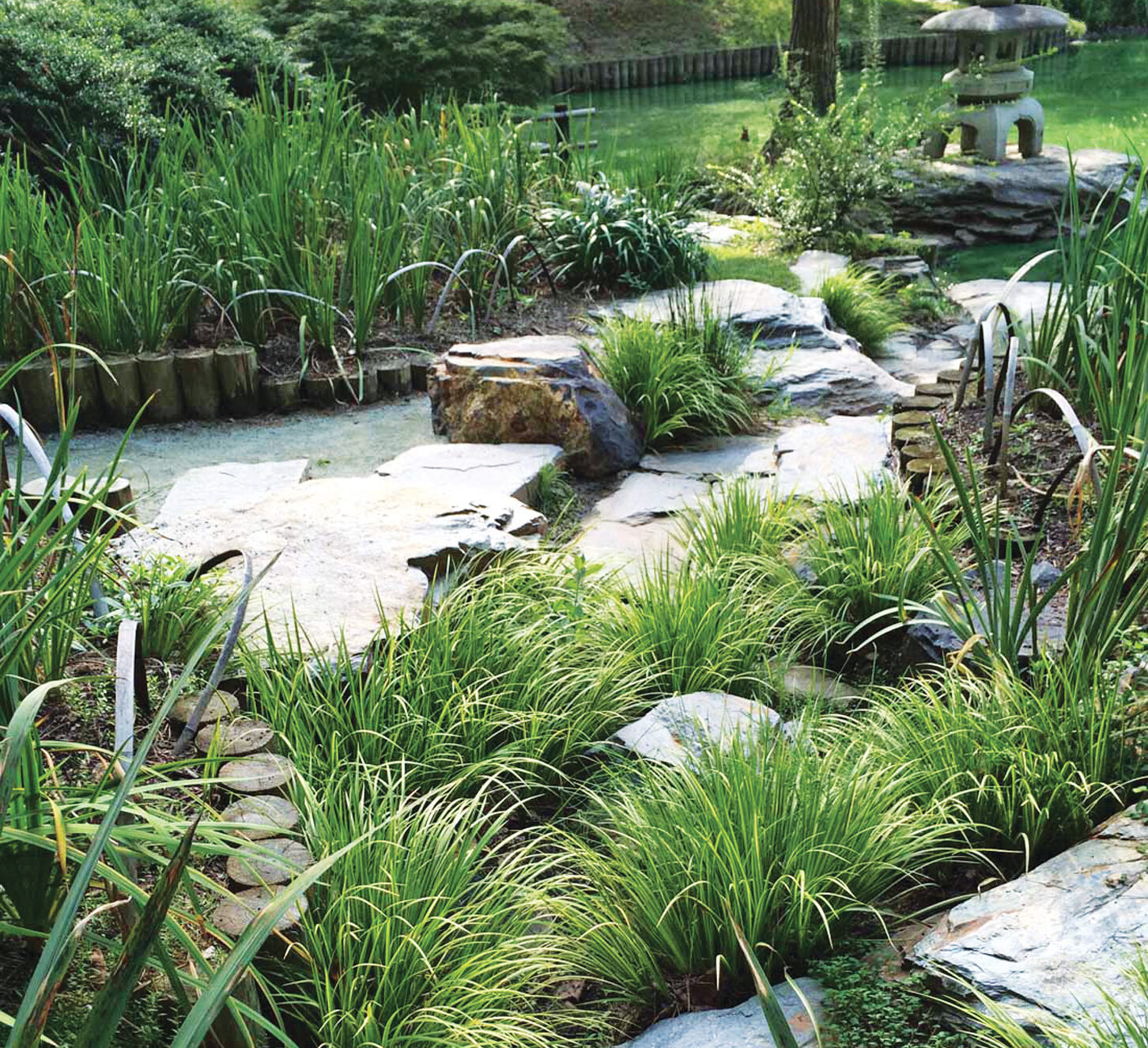
6 Ways to Use Ornamental Grasses in the Garden
More than just beautiful, a shade-tolerant grass or grasslike plant may be just the thing you’re looking for to deal with a stubborn problem in your garden. If not, the right plant will still boost its productivity and value. The following are just some of the many roles these versatile gems can fill in the landscape.
|
1. Design versatility: Any of these grasses, including ‘Ogon’ sweet flag (pictured), can provide fine texture, vertical structure, and movement, making them work well in many situations and with a variety of neighbors. |
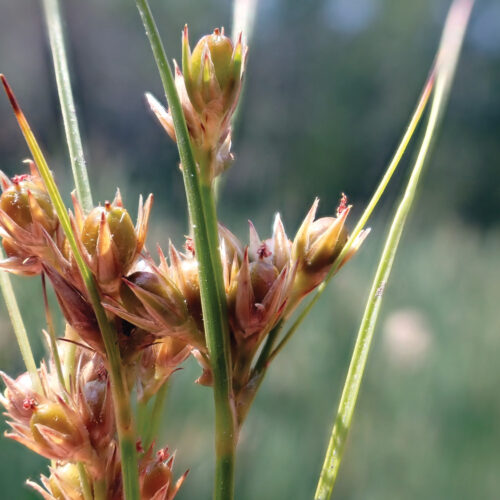 |
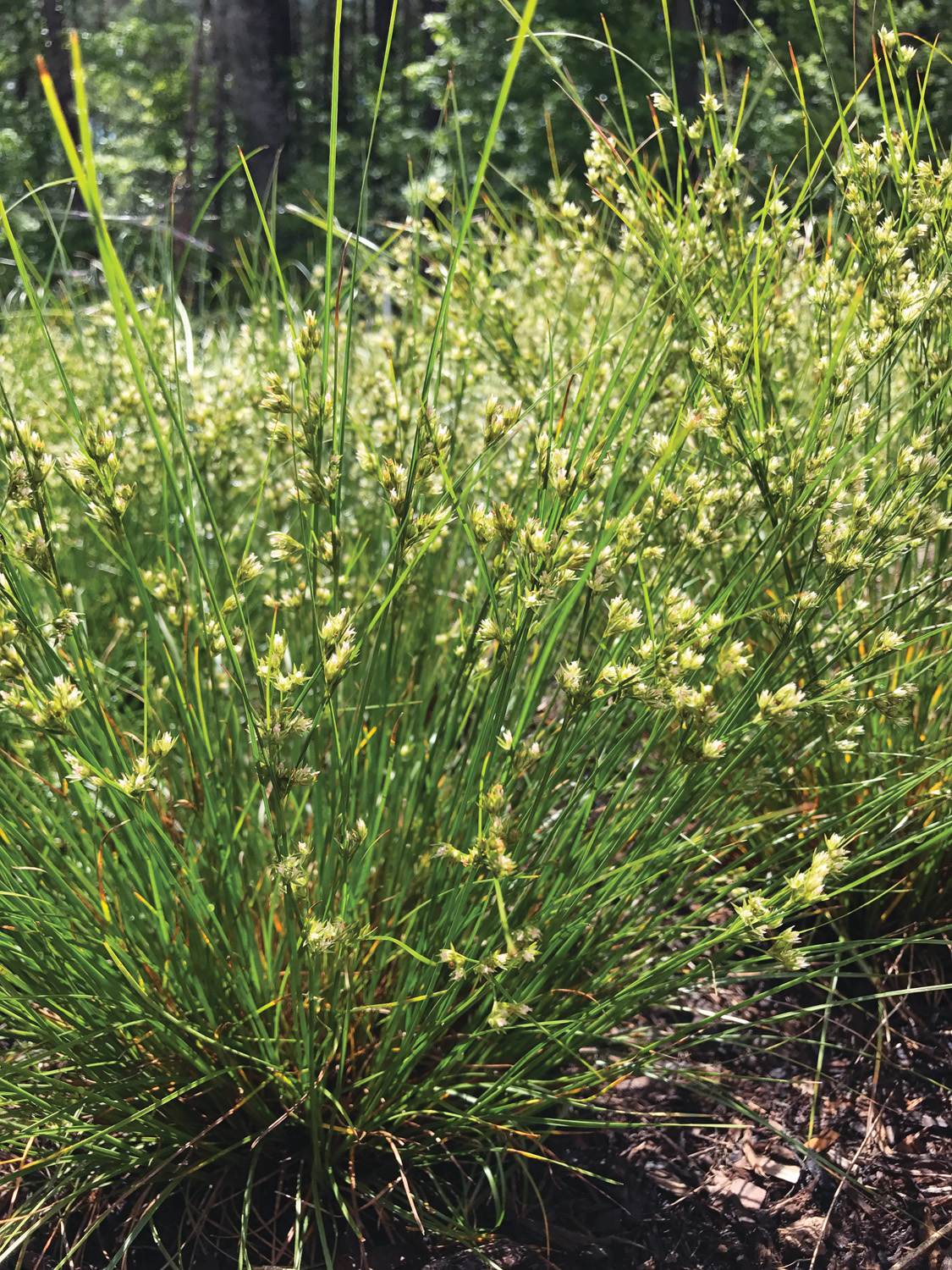
2. Wildlife value: Path rush (pictured), bottlebrush grass, and many others provide food and shelter for pollinators and birds with their flowers, dense foliage, and seed heads. |
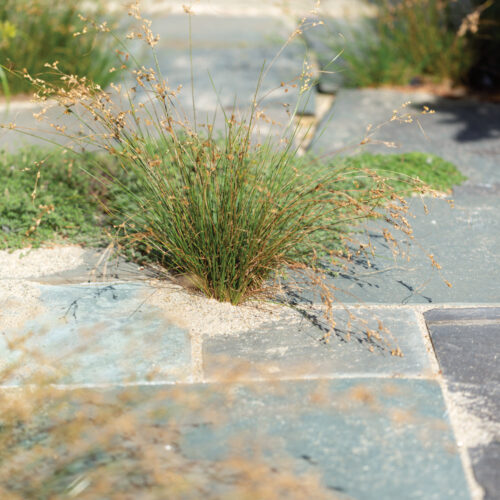 |
3. Tough-spot filler: Species like wavy hair grass and path rush (pictured) perform reliably with minimal upkeep in difficult conditions, such as compacted soil or green roofs. |
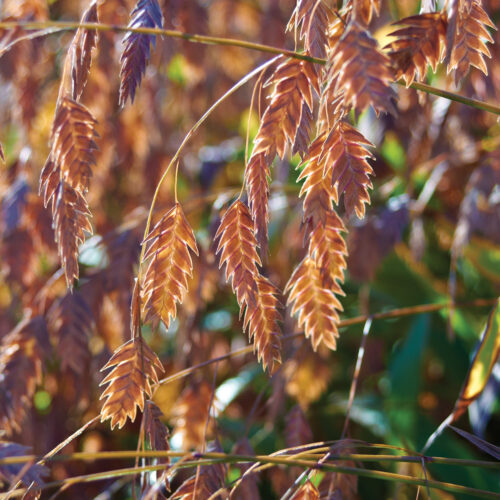 |
4. Seasonal interest: Northern sea oats (pictured) and Korean feather reed grass offer foliage with changing colors and textures throughout the year, as well as ornamental seed heads in autumn. |
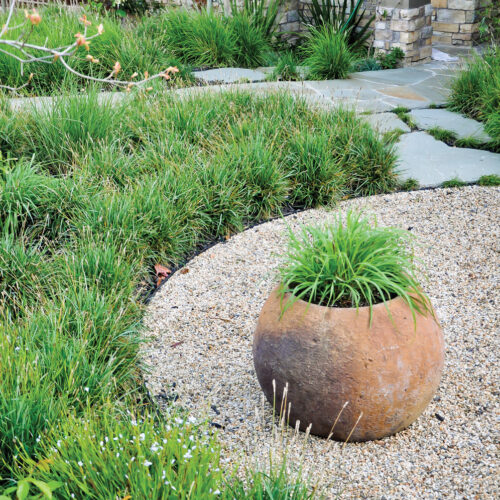 |
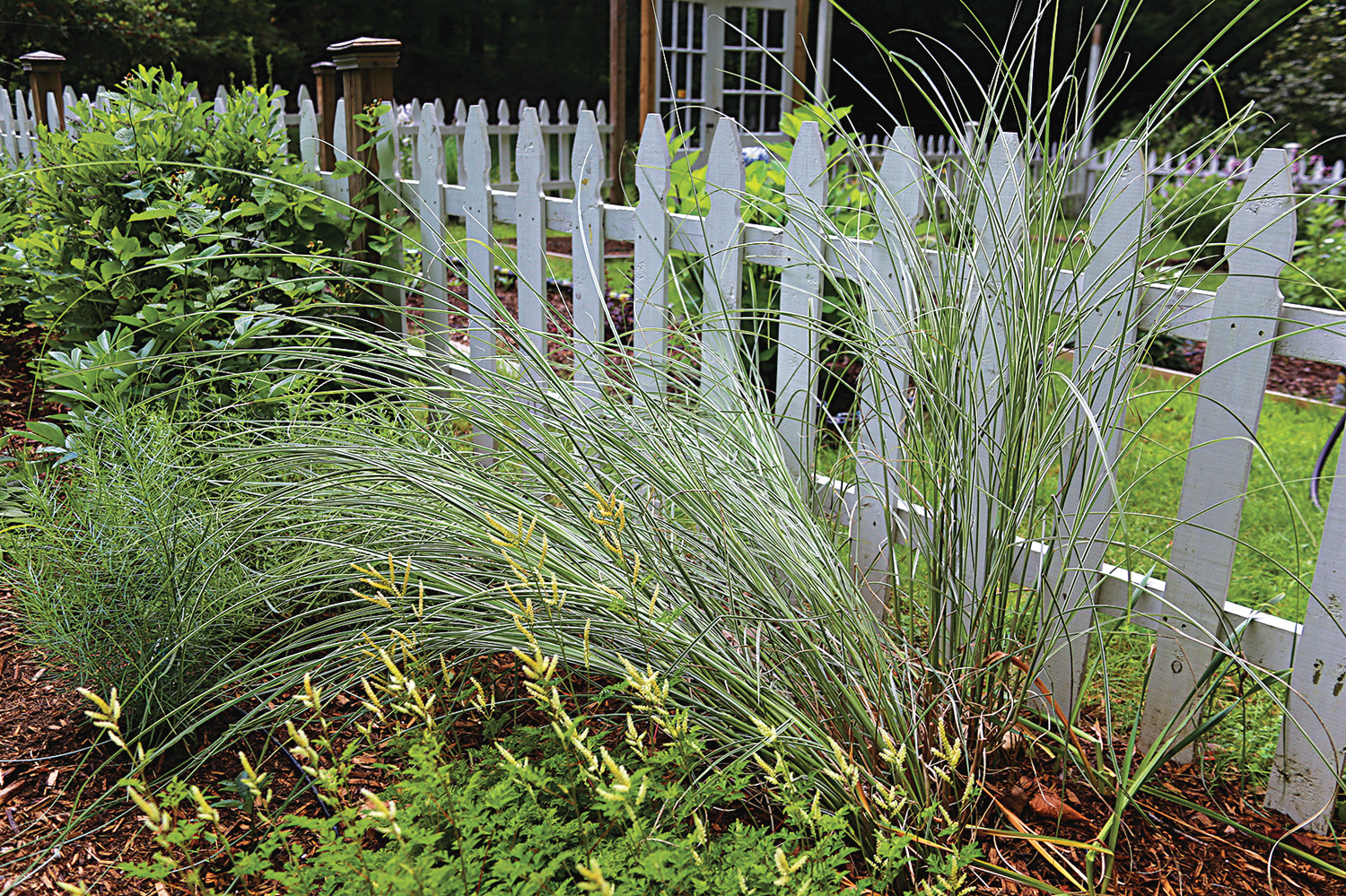
5. Ground cover and weed suppression: ‘Greenlee Hybrid’ moor grass (pictured), and ‘Ogon’ sweet flag create dense mats that suppress weeds while adding ornamental value. |
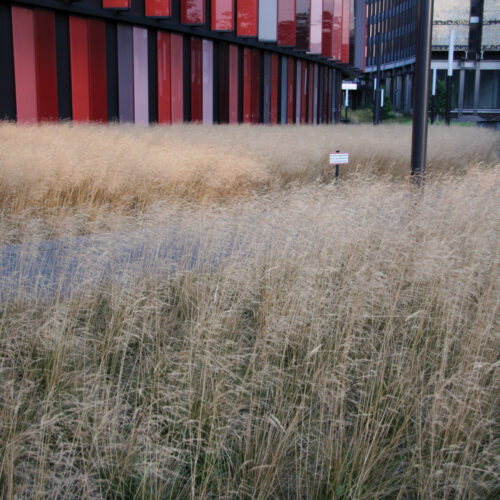 |
6. Erosion control: Drifts of grasses like ‘Goldtau’ tufted hair grass (pictured), and bottlebrush grass help stabilize soil and reduce runoff. |
Large Grasses
Choose a bigger selection to add height, wildlife habitat, and that wow factor to shade designs in need of delicate movement from swaying stems.
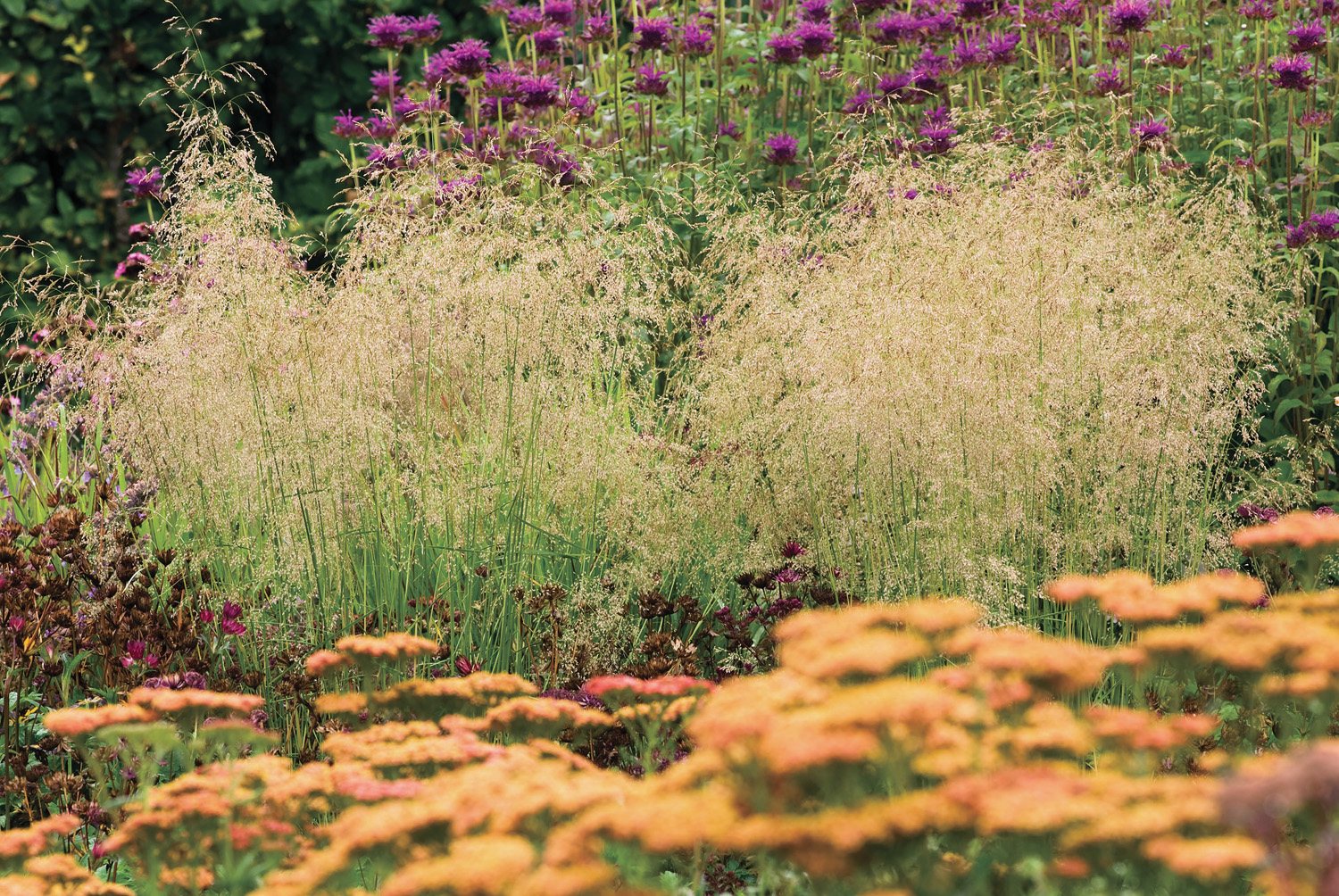
Add some brightness to the shade with ‘Goldtau’ tufted hair grass
Deschampsia cespitosa ‘Goldtau’
Zones: 4–9
Size: 1 to 3 feet tall and 2 to 3 feet wide
Conditions: Full sun to partial shade; moist, well-drained soil
Native range: Asia, Europe, and North America
This clump-forming grass has fine semievergreen foliage and a soft, airy form. ‘Goldtau’ develops chartreuse-yellow flower heads that emerge in early summer, mature to bronze, and remain attractive into winter. It prefers cool climates, moist, well-drained soil, and partial shade, though it tolerates sun in milder regions. In hotter areas, afternoon shade is a must. It is best used in groups or with shade-loving companions like ferns or hostas (Hosta spp. and cvs., Zones 3–8). I have seen this plant thrive in woodland gardens, where it adds lightness and texture. Keep its soil cool and moist for the best performance.
Problem-solving qualities: Helps absorb and filter moisture in rain gardens, supports pollinators, and provides very fine texture and color in designs.
Great Shade-Tolerant Companions for ‘Goldtau’ tufted hair grass:
|
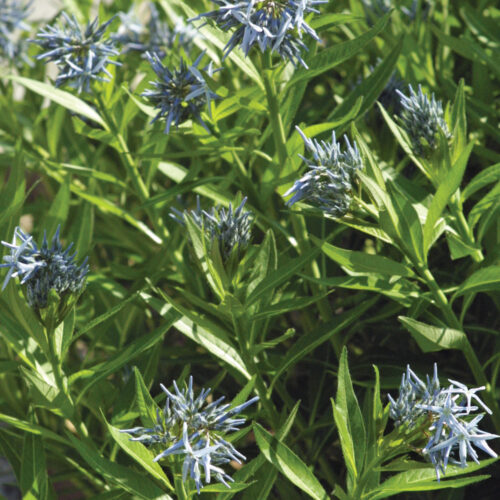
Eastern bluestar (Amsonia tabernaemontana, Zones 3–9) |
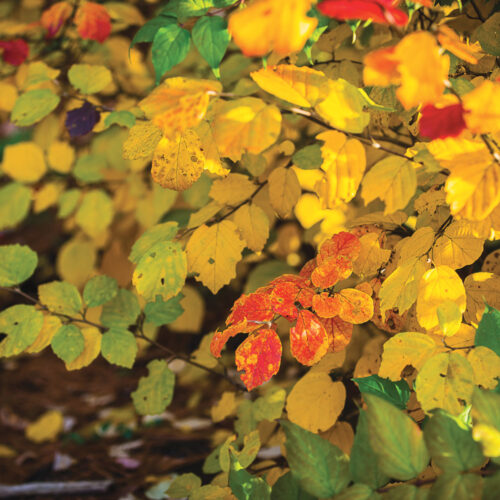
Dwarf fothergilla (Fothergilla gardenii, Zones 5–8) |
 |
 |
Dripping panicles of northern sea oats charm in midsummer and fall 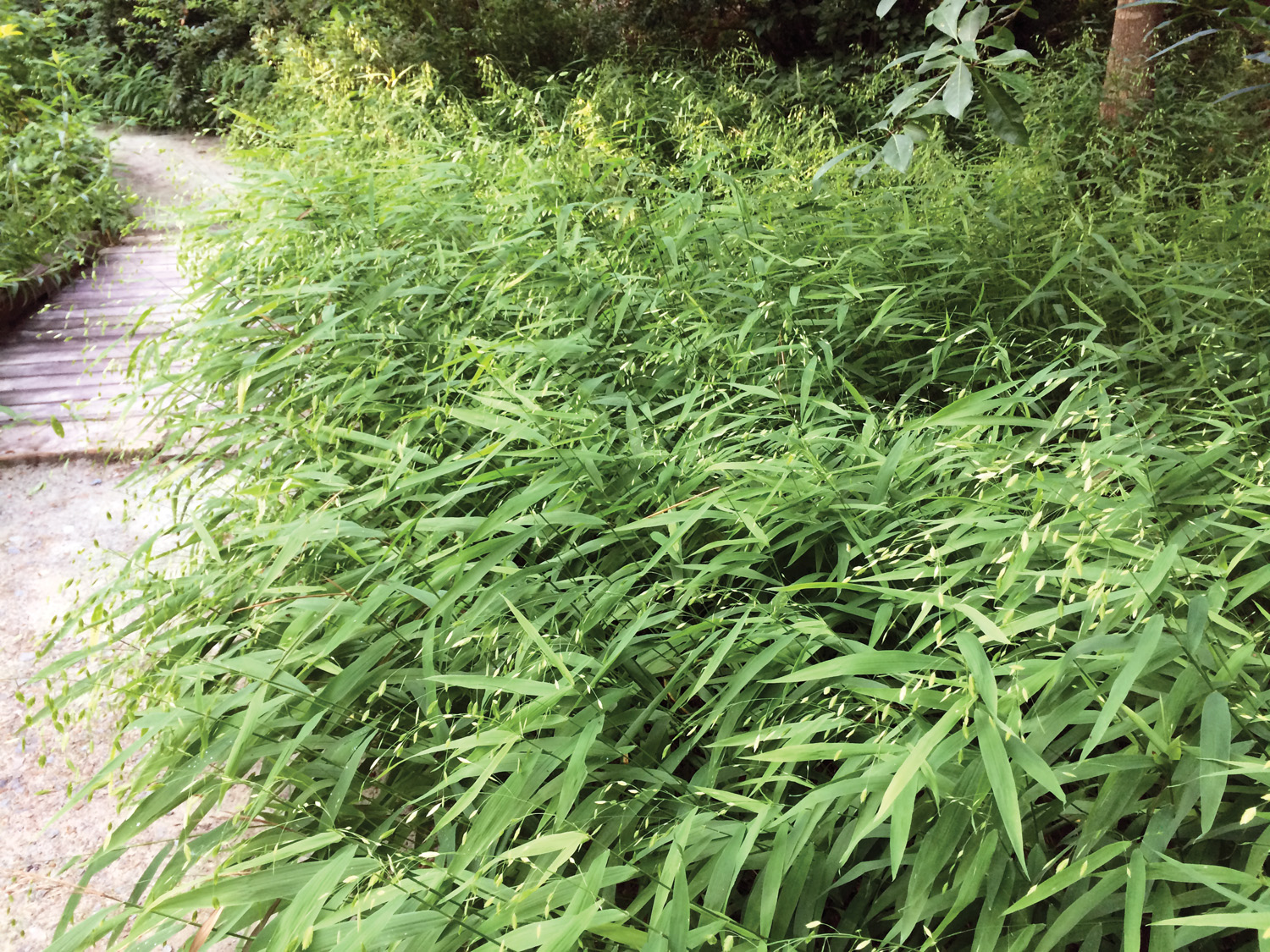
Chasmanthium latifolium
Zones: 3–8
Size: 3 to 5 feet tall and 1 to 2½ feet wide
Conditions: Full sun to partial shade; moist to dry, well-drained soil
Native range: Eastern United States and northeastern Mexico
Durable and native, this grass is celebrated for its drooping, oat-like seed heads that emerge pale green in midsummer and turn tan in fall. The panicles catch the light perfectly and add texture to shaded spaces. In full sun, this plant can reach over 4 feet tall, but in shade, it stays shorter while still adding strong visual interest. While beautiful and durable, it reseeds aggressively and spreads by rhizomes, so plant it where spreading is welcome or easily managed. Removing seed heads can help limit its proliferation.
Problem-solving qualities: Excellent for erosion control along slopes or stream banks, provides shelter and food for wildlife, and tolerates compacted soils.
Great Shade-Tolerant Companions for northern sea oats:
|
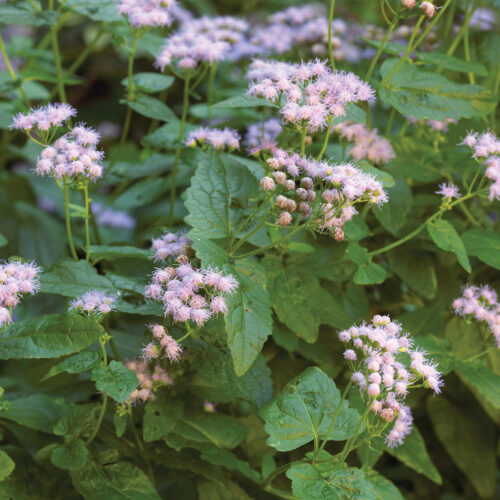
Blue mistflower (Conoclinium coelestinum, Zones 5–9) |
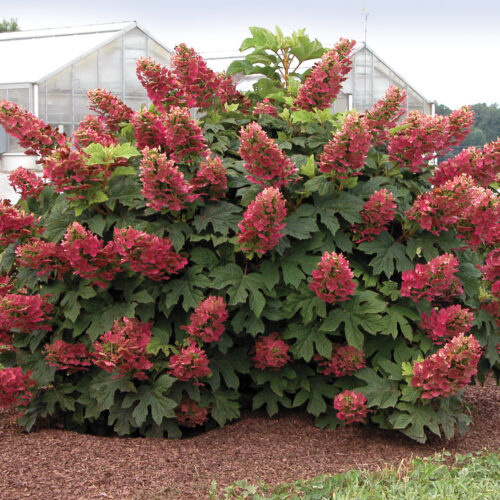
‘Ruby Slippers’ oakleaf hydrangea (Hydrangea quercifolia ‘Ruby Slippers’, Zones 5–9) |
 |
 |
Wavy hair grass provides big presence even in full shade
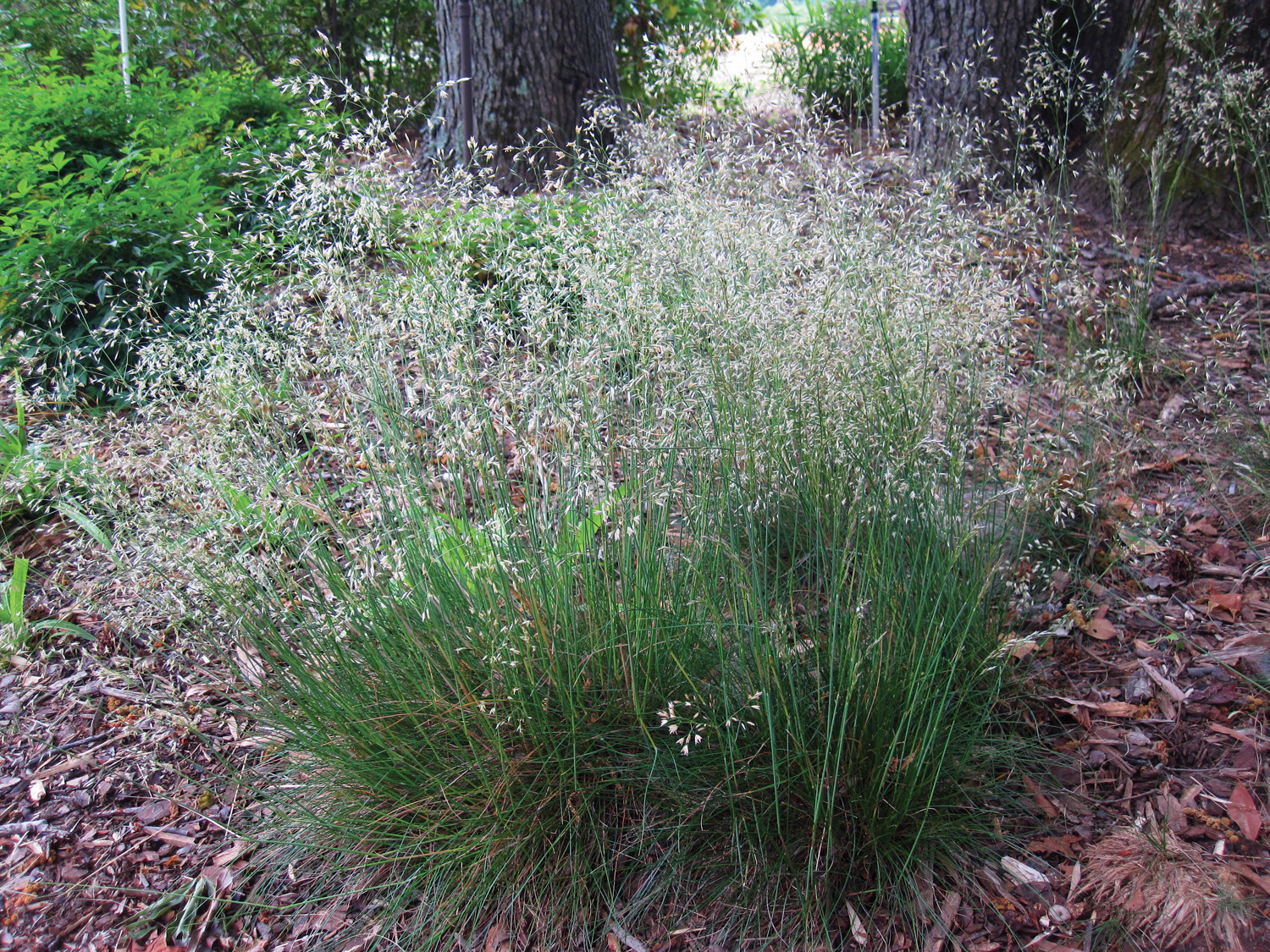
Deschampsia flexuosa
Zones: 4–7
Size: 1 to 3 feet tall and 1 to 2 feet wide
Conditions: Partial to full shade; dry to moist, well-drained soil
Native range: Asia, Europe, and North America
The fine green foliage of this exquisite native plant usually grows 1½ feet tall, topped by airy, bronze to purple panicles that hover well above the leaves. These panicles offer long-lasting seasonal interest and move beautifully in the breeze. While it prefers cooler climates, it will tolerate Southern summers if it is planted in full shade or among taller plants and provided with additional irrigation. Low-maintenance and adaptable to various soils, this grass is ideal for naturalizing, restoration, or green roofs. It performs well as a matrix plant or planted in masses and can be used to add softness to woodland edges and shaded slopes.
Problem-solving qualities: Adapts well to poor soils, provides year-round texture, and enhances biodiversity by attracting beneficial insects.
Great Shade-Tolerant Companions for Wavy hair grass:
|
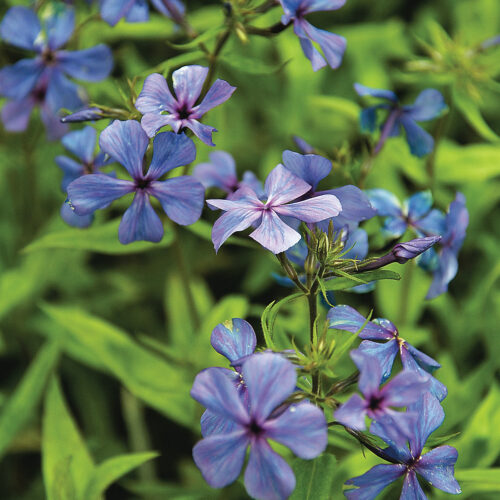
Woodland phlox (Phlox divaricata, Zones 3–8) |
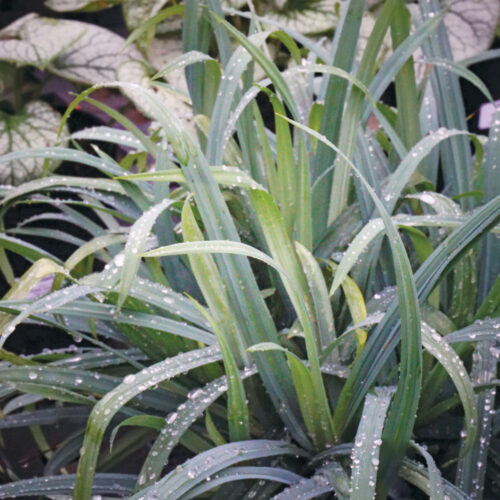
Bunny Blue® creeping sedge (Carex laxiculmis ‘Hobb’, Zones 5–9) |
 |
 |
Bottlebrush grass’s saw-toothed seed heads are sure to attract attention
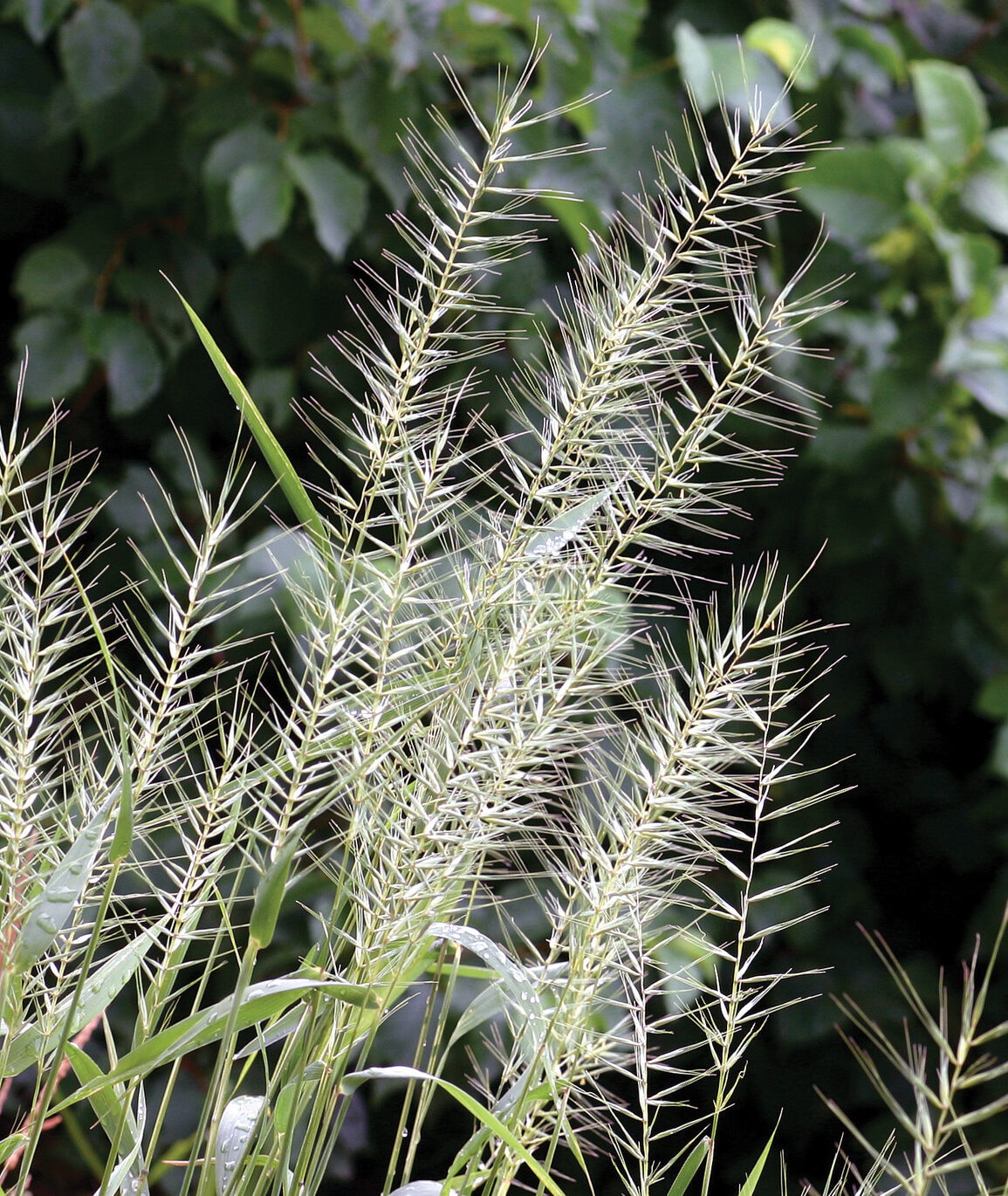
Elymus hystrix
Zones: 4–9
Size: 2½ to 4 feet tall and 1 to 1½ feet wide
Conditions: Full sun to full shade; dry to medium, well-drained soil
Native range: Northeastern and central United States and southeastern Canada
With its distinctive spiky seed heads that resemble soft bottle brushes, this grass brings unmatched texture and movement in midsummer. Formerly known as Hystrix patula, bottlebrush grass now resides in the Elymus genus. Narrow, deep green foliage grows up to 3 feet tall, with flower spikes rising up to 4 feet for layered visual interest. This perennial thrives in dry to mesic shade, tolerating clay, sand, and rich soils, making it a great choice for challenging spots where other grasses struggle. I’ve seen it perform especially well in woodland edges, open clearings, and restoration projects, where its adaptability and light, upright form shine. It’s a low-maintenance option for adding subtle struc-ture, habitat value, and movement to native shade gardens.
Problem-solving qualities: Provides cover for ground-nesting birds, tolerates drought, and works well for erosion control in dry shade.
Great Shade-Tolerant Companions for Bottlebrush grass:
|
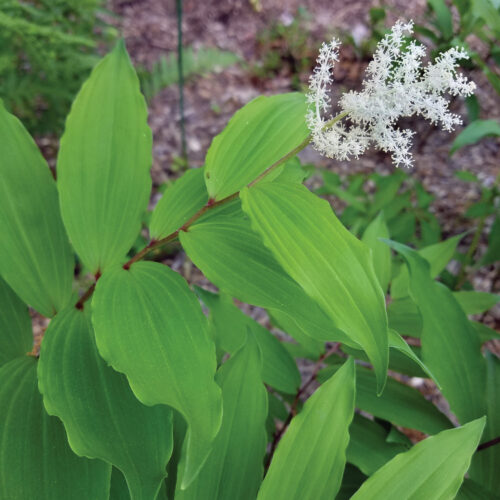
False Solomon’s seal (Maianthemum racemosum, Zones 3–8) |
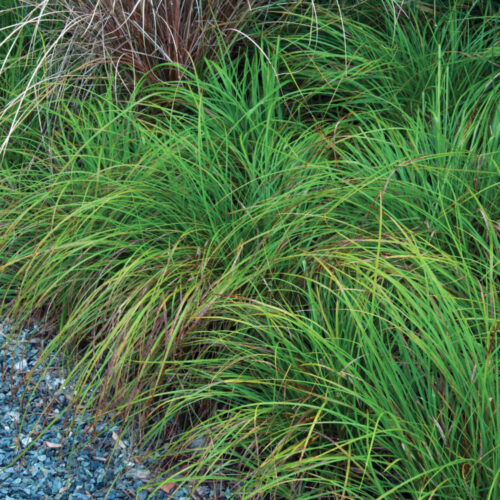
Pennsylvania sedge (Carex pensylvanica, Zones 3–8) |
 |
 |
Korean feather reed grass is a showy substitute for miscanthus
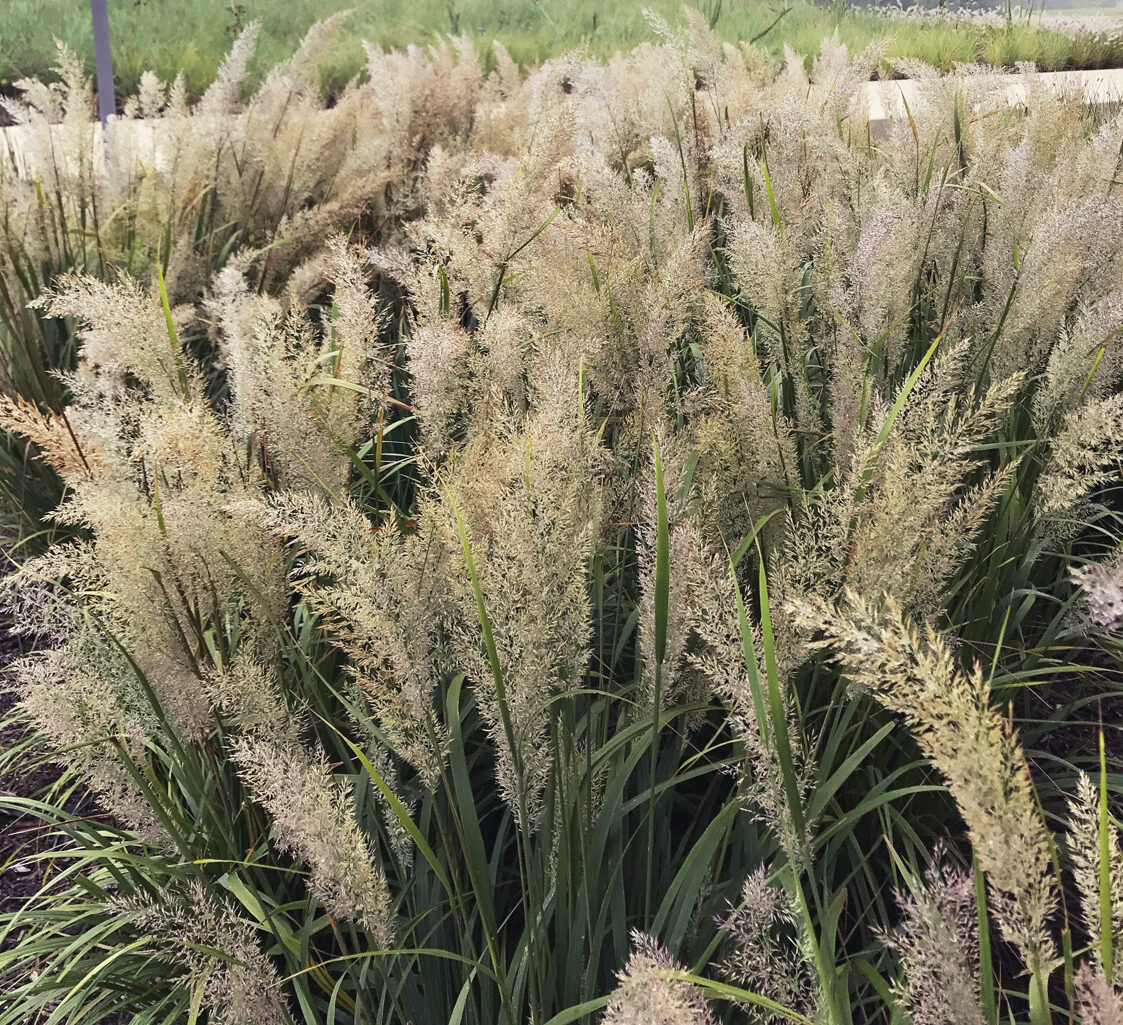
Calamagrostis brachytricha
Zones: 4–9
Size: 3 to 4 feet tall and 2 to 3 feet wide
Conditions: Full sun to partial shade; well-drained soil
Native range: Central to eastern Asia
This graceful grass was popularized in the horticultural trade largely through the efforts of plant geneticist Dr. Richard Lighty. It forms a 3-foot-tall, fountain-like mound of foliage with soft pink plumes that emerge in late summer and then fade to tan in fall. Adaptable and heat tolerant, it grows successfully in moist, well-drained soil and in both sun and shade. Ideal for mass plantings or as a singular focal point, Korean feather reed grass adds movement and texture to the landscape with its eye-catching plumes. Provide regular irrigation while it’s getting established. Afterward, this grass is a low-maintenance and dependable way to add subtle structure to a design.
Problem-solving qualities: Helps stabilize soil in moist areas, provides fall and winter interest, and attracts pollinators.
Great Shade-Tolerant Companions for Korean feather reed grass:
|
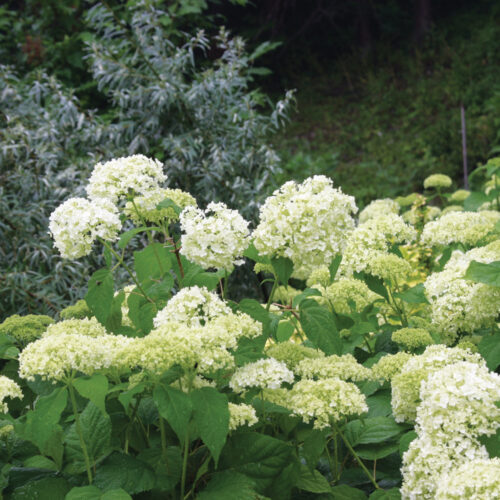
‘Annabelle’ smooth hydrangea (Hydrangea arborescens ‘Annabelle’, Zones 3–9) |
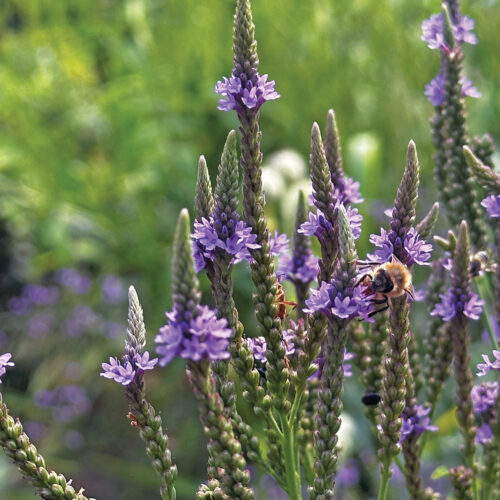
Blue vervain (Verbena hastata, Zones 3–8b) |
 |
 |
|
| TECHNIQUE | Fix the Flop: Keeping Grasses Upright
There’s nothing more disappointing than a prized ornamental grass falling over or splitting in the middle, ruining its architectural form. Some grasses struggle to stay upright in shaded environments. There are several reasons why your grass could be flopping, including excessive moisture, overfertilization, weak stems, and improper spacing. To mitigate these issues:
|
Small Grasses
These more compact options make great ground covers and edging plants. They thrive in areas where normal turf struggles to grow and an attractive soil stabilization solution is needed.
Path rush brings drama and flair with even the most challenging of soil textures
Juncus tenuis
Zones: 2–10
Size: 6 to 24 inches tall and wide
Conditions: Full sun to partial shade; medium to wet soil
Native range: North America
A tough, adaptable rush with fine, bright green foliage, this grasslike plant thrives in sun to partial shade and average to wet soils. Native across North America, it’s often found along roadsides and swamp edges, and is ideal for restoration, pond margins, or disturbed sites where spreading and reseeding are beneficial. Low-maintenance and reliable, it works well in both naturalistic and managed settings. Its upright foliage can be mowed high at 3 to 8 inches for a tidy look, and it even excels where soil compaction or poor drainage limits other plants.
Problem-solving qualities: Thrives in compacted soils; ideal for stabilizing banks and preventing soil erosion.
Great Shade-Tolerant Companions for path rush:
|
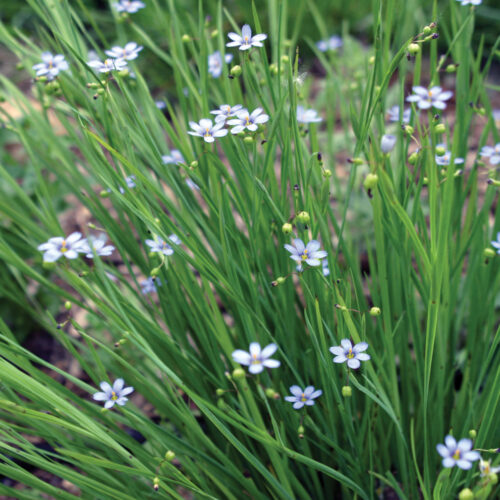
‘Lucerne’ blue-eyed grass (Sisyrinchium angustifolium ‘Lucerne’, Zones 4–8) |
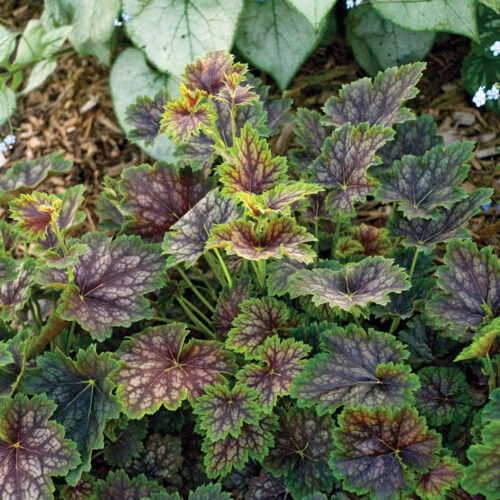
‘Marvelous Marble Silver’ heuchera (Heuchera americana ‘Marvelous Marble Silver’, Zones 4–9) |
 |
 |
The thick habit of ‘Greenlee Hybrid’ moor grass makes it perfect for use as a ground cover
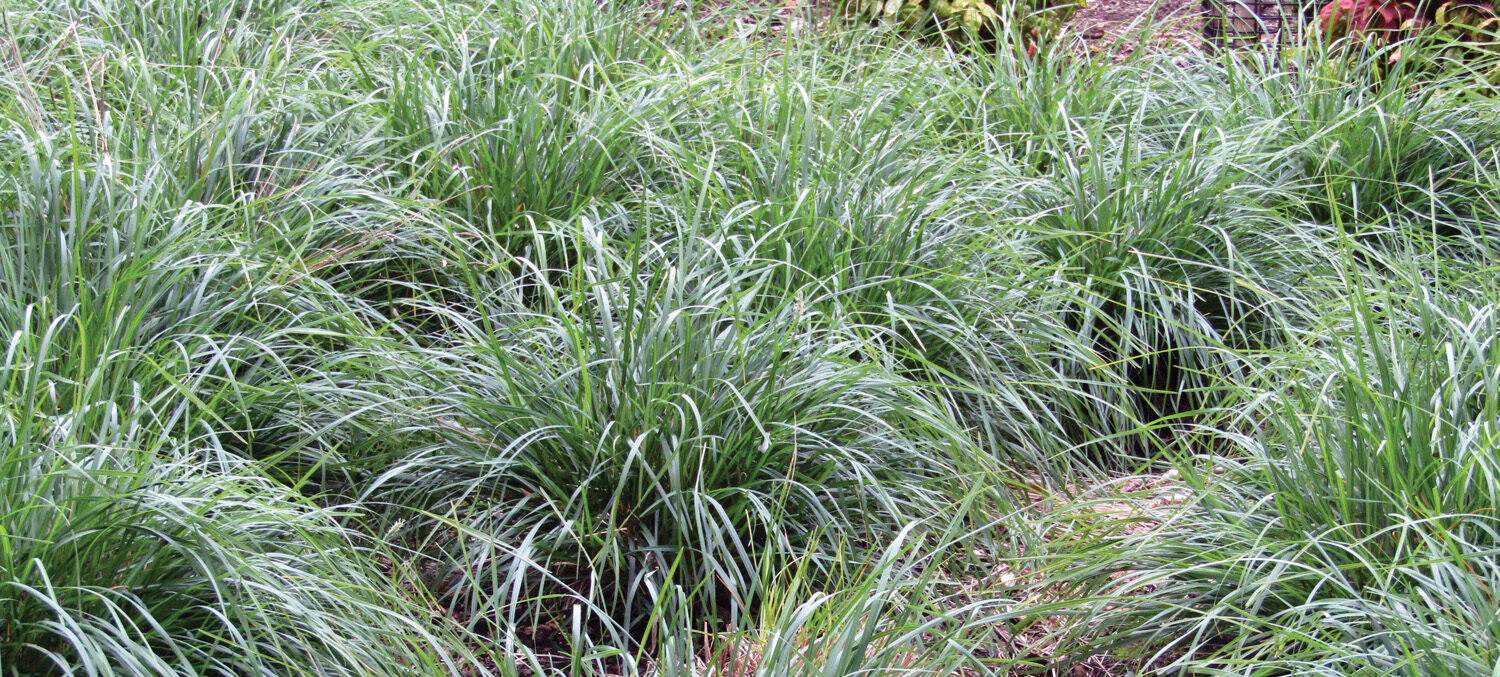
Sesleria ‘Greenlee Hybrid’
Zones: 5–9
Size: 8 to 12 inches tall and 12 to 18 inches wide
Conditions: Full sun to partial shade; dry to moist, well-drained soil
Native range: Hybrid
Selected by West Coast grass guru John Greenlee, this perennial has superb blue-green to yellow-green foliage and delicate midsummer blooms. Its upright mound of growth is taller than that of its parent blue moor grass (S. caerulea, Zones 5–8) and more compact than that of its other parent autumn moor grass (S. autumnalis, Zones 5–8), offering an overall tidy form with good texture. It grows well in light to partial shade and benefits from afternoon sun protection. Though drought tolerant once established, it looks best with steady moisture in warmer zones. In a mass planting, the strong growth and dense habit of ‘Greenlee Hybrid’ make it a dependable ground cover or matrix plant.
Problem-solving qualities: Forms a thick mat to suppress weeds, tolerates poor soils, and provides a low-maintenance, year-round ground cover.
Great Shade-Tolerant Companions for ‘Greenlee Hybrid’ moor grass:
|
Moon Falls™ sedge (Carex ‘ET CRX 904’, Zones 5–9) |
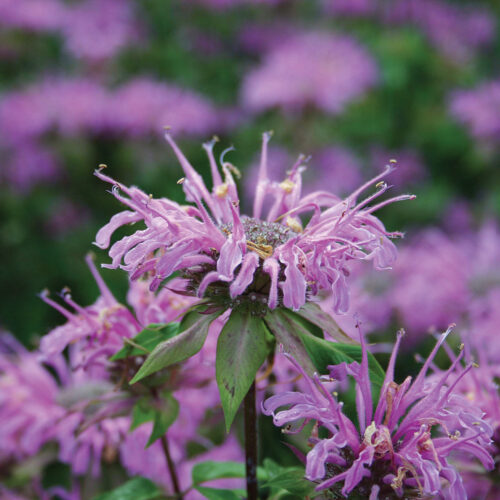
Wild bergamot (Monarda fistulosa, Zones 5–9) |
 |
 |
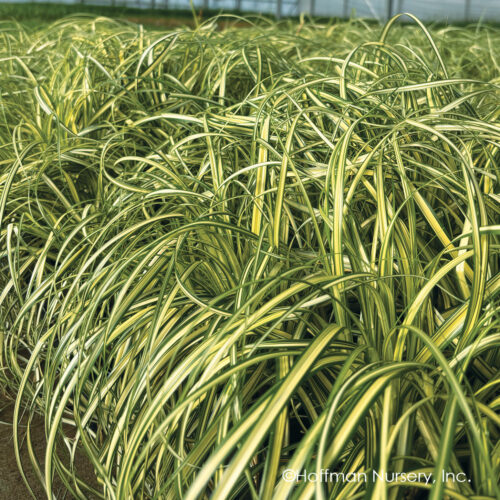
Bright, variegated ‘Ogon’ sweet flag adjusts to a variety of conditions
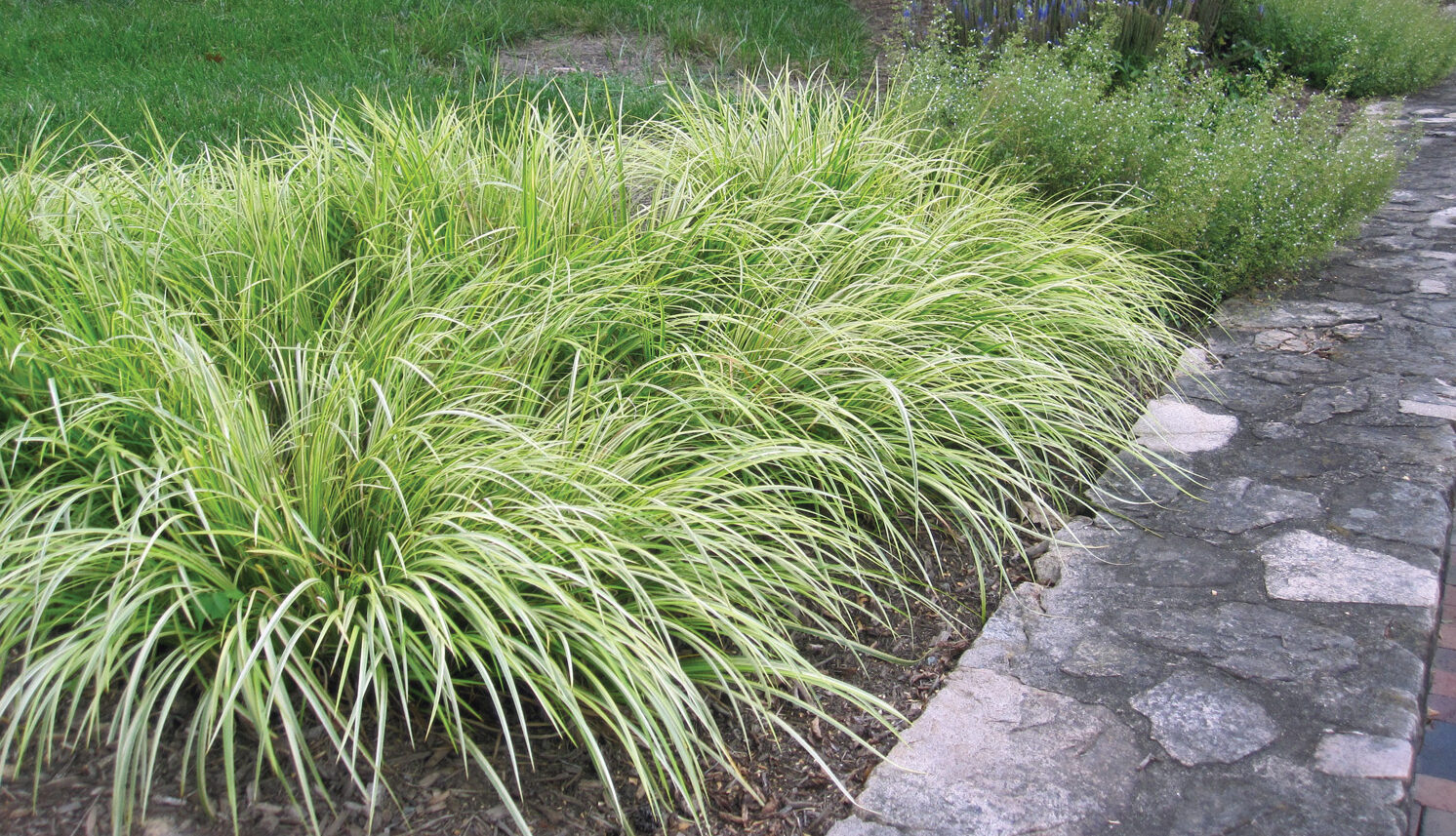
Acorus gramineus ‘Ogon’
Zones: 5–10
Size: 6 to 15 inches tall and wide
Conditions: Full sun to partial shade; medium to wet soil
Native range: Eastern Asia
Vivid gold-and-green blades give this grasslike plant a vibrant presence, adding color and texture to shaded or moist areas. It forms a tidy, tufted mat and spreads slowly by rhizomes, making it a suitable ground cover or accent plant near streams and ponds. It prefers consistent moisture but adapts to average conditions, although leaf tips may brown during dry spells. While not suited for standing water, it performs well in rain gardens or along pond edges. The color intensity shifts with light—it will turn more gold in brighter light and deeper green in shade. As a bonus, its citrusy-scented foliage adds sensory appeal.
Problem-solving qualities: Provides erosion control in wet areas, helps absorb water in rain gardens, and adds year-round visual interest with its evergreen foliage.
Great Shade-Tolerant Companions for ‘Ogon’ sweet flag:
|
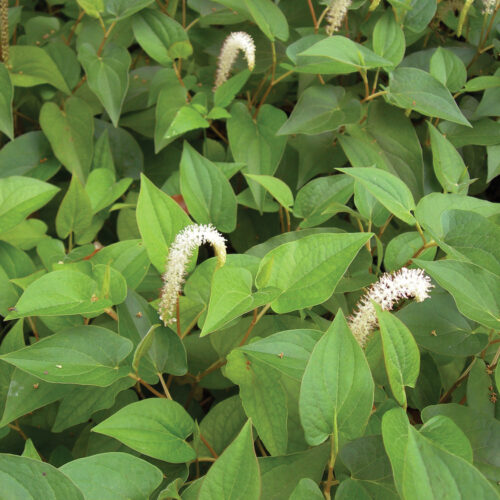
Lizard’s tail (Saururus cernuus, Zones 3–9) |
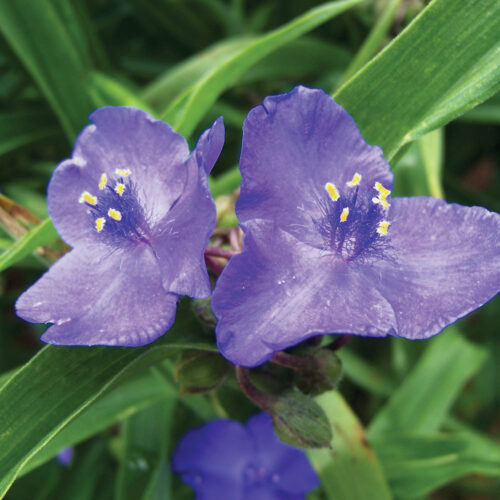
Virginia spiderwort (Tradescantia virginiana, Zones 3–9) |
 |
 |
| |Sources| The following mail-order sources may offer some of the plants featured in this article:Plant Delights Nursery, Raleigh, NC; 919-772-4794; plantdelights.com High Country Gardens, Clinton, UT; 801-769-0300; highcountrygardens.com Digging Dog Nursery, Albion, CA; 707-937-1130; diggingdog.com Wilson Bros. Gardens, McDonough, GA; 770-573-1778; wilsonbrosgardens.com Bluestone Perennials, Madison, OH; 800-852-5243; bluestoneperennials.com |
Alex Stanley-Stretch is a member of the management team at Hoffman Nursery in Rougemont, North Carolina, a wholesale grower specializing in ornamental and native grasses, sedges, and perennials.
Fine Gardening Recommended Products
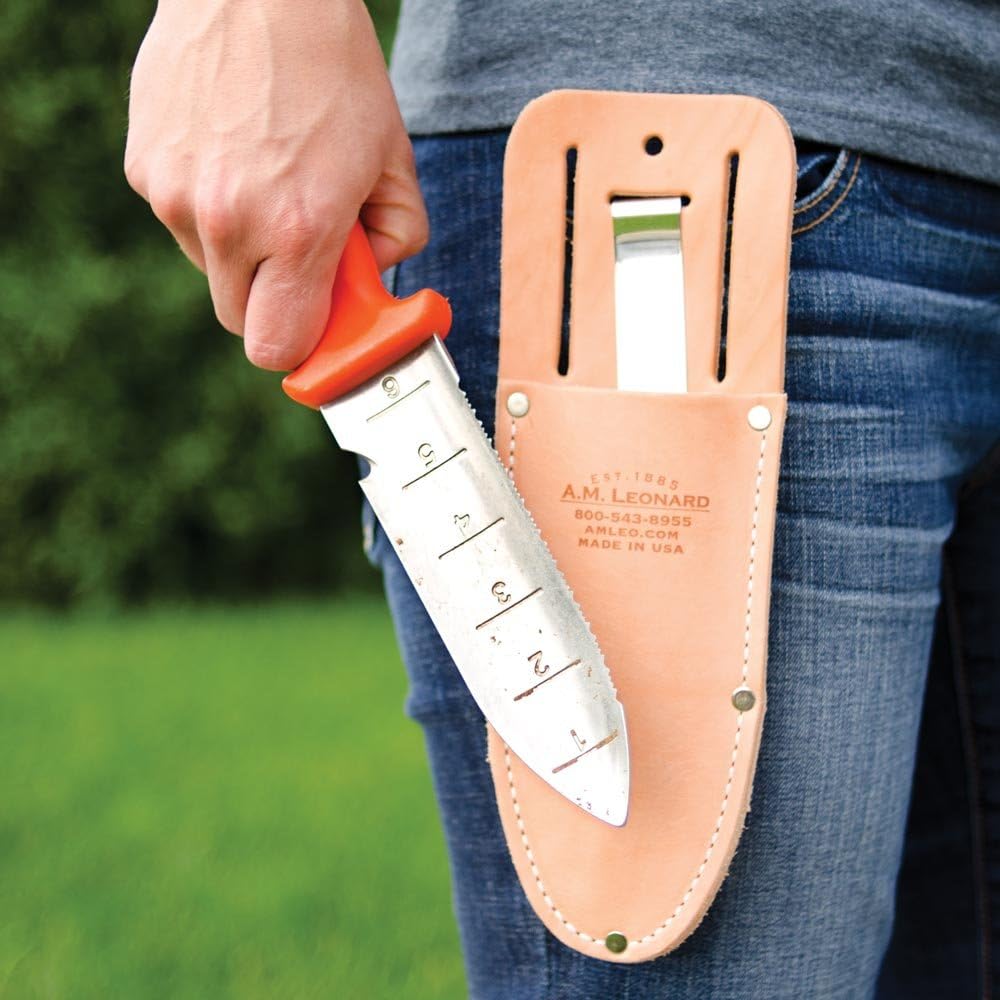
A.M. Leonard Deluxe Soil Knife & Leather Sheath Combo
Fine Gardening receives a commission for items purchased through links on this site, including Amazon Associates and other affiliate advertising programs.
MULTITASKING DUAL EDGES: a deep serrated edge and a tapered slicing edge ideal for tough or delicate cuts. DURABLE 6-inch stainless steel blade withstands 300 lbs of pressure. TWINE CUTTING NOTCH, DEPTH GAUGE MARKINGS & spear point – no need to switch tools when using this garden knife. LEATHER SHEATH: heavy duty, protective, clip on sheath to keep your knife convenient and secure. LIFETIME WARRANTY.

Attracting Beneficial Bugs to Your Garden, Revised and Updated Second Edition: A Natural Approach to Pest Control
Fine Gardening receives a commission for items purchased through links on this site, including Amazon Associates and other affiliate advertising programs.
This revised and updated edition of Jessica Walliser’s award-winning Attracting Beneficial Bugs to Your Garden offers a valuable and science-backed plan for bringing balance back to the garden. With this indispensable gardening reference—now updated with new research, insights, and voices—learn how to create a healthy, balanced, and diverse garden capable of supporting a hard-working crew of beneficial pest-eating insects and eliminate the need for synthetic chemical pesticides.